
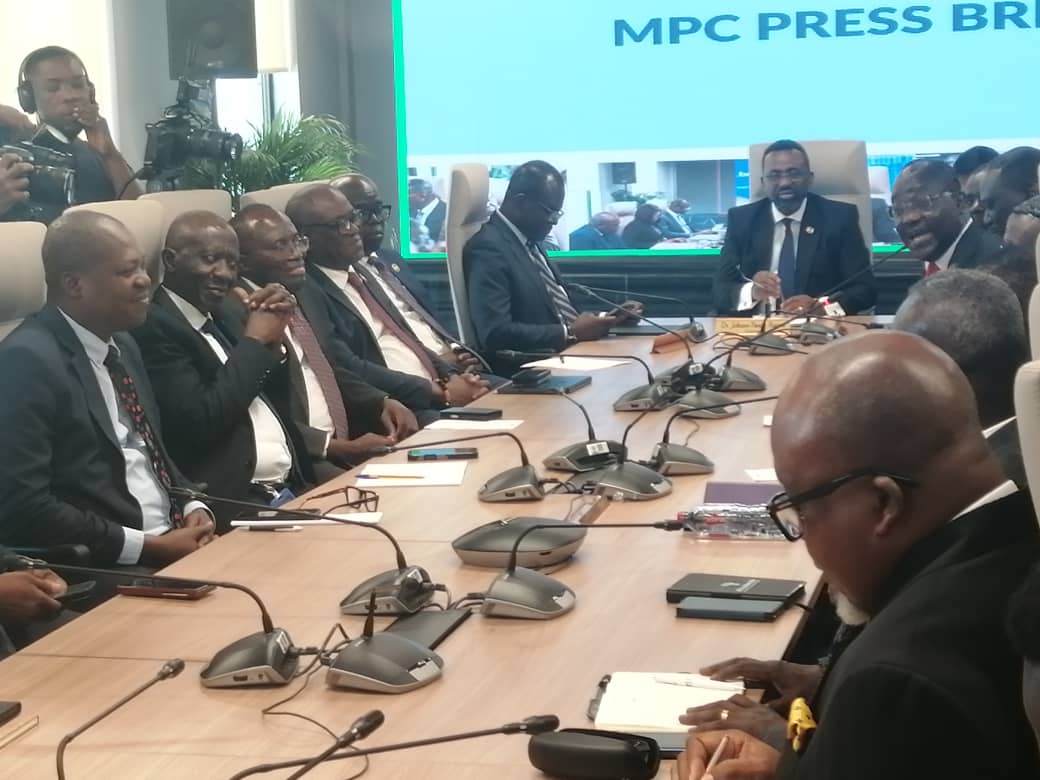
Speaking during the Bank of Ghana’s Monetary Policy Committee (MPC) press briefing, Central Bank Governor Dr. Johnson Asiama responded to questions from Investor News Guide Managing Editor Adnan Adams Mohammed, outlining the bank’s strategy to address international commodity price volatility, manage risk through hedging, and bolster domestic processing.
Addressing concerns over external exposure, Dr. Asiama highlighted how swings in global commodity markets directly impact Ghana’s balance of payments, particularly given the reliance on primary extractive and agricultural exports.
“Ghana, like many countries of its kind, is heavily exposed to commodity price movements, particularly developments in gold, cocoa and oil. These commodities have a significant impact on the economy, especially gold,” Dr. Asiama stated.
Underlining the vulnerabilities associated with export concentration, the Governor noted the influence of major global financial developments on domestic trade revenues.
“Gold accounts for about 68% of Ghana’s exports, so movements in gold prices have significant implications for the country. For instance, when the United States increases its monetary policy rate, it can have a direct impact on us because gold prices may fall. Once gold prices decline, our external accounts feel the impact immediately,” he explained.
Dr. Asiama confirmed that active measures are being taken to safeguard the economy against external shocks.
“It is therefore true that our economy is exposed to commodity price movements, and we have to take steps to mitigate that vulnerability. Last year, in relation to gold, we undertook a diversification of our portfolio. You cannot hold everything in one area because that makes you highly exposed to movements in commodity prices,” the Governor noted.
He detailed specific financial tools being implemented to stabilize export earnings: “We are therefore promoting diversification. There is also a hedging programme ongoing on the side of the Gold Board, including the use of derivatives and greater use of the futures market rather than relying solely on spot prices. These are some of the measures we are using to reduce our vulnerability.”
Highlighting broader structural economic initiatives, Dr. Asiama emphasized that expanded domestic processing capacity serves as a necessary buffer against raw commodity price dips.
“Another important measure is greater domestic processing. I spoke about this at the last MPC meeting. The government is looking at processing more of the three major commodities gold, cocoa and oil within the country,” he said.
“When I see the Tema Oil Refinery returning to production, that is a positive development because it helps reduce our vulnerability. I am therefore pleased that the government is pushing ahead with that programme. There is also discussion about processing more of our cocoa. I would like to see more cocoa processed into chocolate and other finished products, which could then be sold across Africa. These are some of the ways we can reduce our vulnerability.”
Pointing to developments in the mining sector, Dr. Asiama noted that expanded local refining capacity will strengthen external buffers.
“On gold, you may have heard that there are now two gold refineries in Ghana. If we are able to process a higher proportion of our gold exports domestically, it will bring significant benefits to the economy,” Dr. Asiama added. “The President spoke about this last year, and we agree that it is a strategic move. It will help reduce our exposure to commodity price shocks. So, we are pursuing several measures to address the problem.”
Responding to queries regarding central bank budgetary provisions and operational allocations raised during the briefing, Dr. Asiama reaffirmed fiscal discipline: “These are budgeted expenditures. It is something we planned for since last year, and therefore, we made provisions for it in the budget.”
