
By Humu Salma Mahama
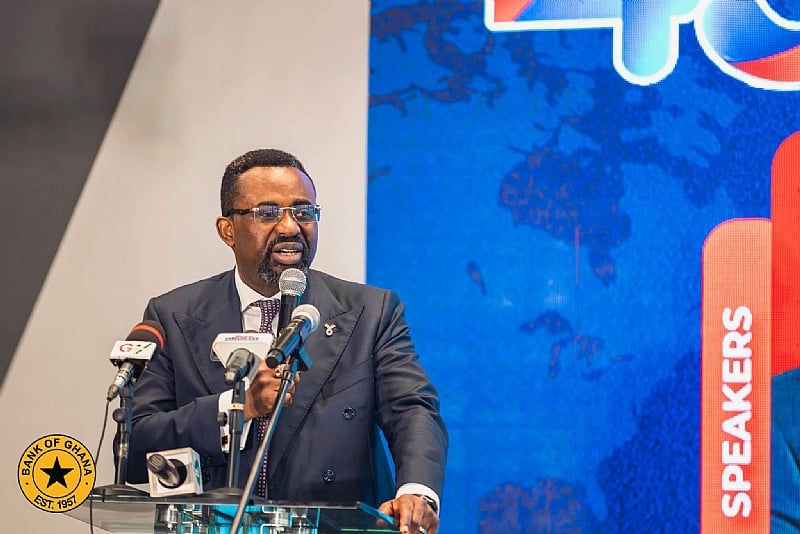
The Bank of Ghana (BoG) is drafting a new regulatory directive to govern the use of artificial intelligence across the country’s financial sector.
The move aims to establish strict oversight on algorithmic credit scoring, automated fraud detection, and data governance, ensuring that technological innovation does not compromise financial stability.
The central bank’s initiative comes as global tech leaders warn of severe gaps in AI regulation worldwide, while local customer experience experts urge Ghanaian businesses to tailor automated platforms to regional market dynamics.
Central Bank Mandates Governance, Data Quality, and Model Risk
Under the forthcoming directive, regulated financial institutions will be required to establish rigorous frameworks for model risk management, consumer data protection, and governance. The Bank of Ghana highlighted that while AI tools offer clear operational efficiencies, unvetted algorithms introduce systemic risks that demand regulatory intervention.
Addressing the strategic intent of the framework, the central bank emphasized that automated tools must remain accountable to human oversight and sound risk management practices.
“The Bank of Ghana is developing a directive on the use of artificial intelligence in financial services, focused on governance, data quality, model risk, and consumer protection. While AI can improve credit assessment, fraud detection, and operational efficiency, it introduces risks relating to model bias and data security. Regulation must evolve alongside technological change to build a secure, resilient, and sustainable sector,” the central bank stated.
Central bank officials noted that responsibility for managing algorithmic risk ultimately rests with institutional leadership, instructing bank boards and executive management to entrench strong risk cultures as financial institutions integrate automated technologies.
“Less Regulated Than Milk”: Microsoft Chief Warns of Global Regulatory Deficit
The Bank of Ghana’s proactive regulatory approach reflects a growing global consensus on the need for binding AI guardrails. Speaking on the sidelines of international technology forums, Microsoft President Brad Smith drew a sharp contrast between the light regulation applied to artificial intelligence and the stringent oversight enforced on consumer products.
Warning against relying solely on corporate self-regulation, Smith urged governments to implement enforceable safety standards before autonomous tools create broader systemic and cybersecurity threats.
“Milk and washing machines are currently more regulated than AI. Right now, your washing machine is subject to more safety rules than AI,” Smith stated. “When you look at AI agents that have escaped human control, or models so powerful that they put the world’s cybersecurity at risk, the moment has arrived. Self-regulatory regimes work for responsible companies, but it’s the companies that are not as responsible that you need to worry about.”
Localizing AI to Enhance Financial Customer Engagement
While regulators establish structural guardrails, domestic industry leaders argue that the commercial success of automated banking tools depends on localizing models to serve Ghanaian consumers effectively.
Speaking at the 6th Annual Customer Experience Professionals (CXP) Conference in Accra, CXP Ghana President Esther Dokuwaa Ofosuhene urged enterprises and financial institutions to adapt conversational AI and digital interfaces to reflect local languages, cultural contexts, and distinct consumer preferences.
“Businesses must treat AI as a strategic capability rather than just a cost-cutting tool. To truly improve customer experience in our market, enterprises must localize AI systems to align with Ghanaian cultural context, language preferences, and consumer expectations,” Ofosuhene stated.
By combining the Bank of Ghana’s upcoming binding directive with localized execution, regulators and industry stakeholders aim to position Ghana’s financial sector to harness artificial intelligence safely and sustainably.
