
A viral video depicting the assault of a student by teachers at Twene Amanfo Senior High Technical School in Techiman has sparked widespread public outrage, prompting swift disciplinary actions from the Ghana Education Service (GES) and urgent calls from Parliament for standardized, safe disciplinary measures in secondary schools.
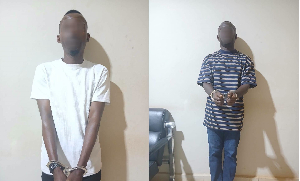
The incident unfolded after teachers caught a group of senior students allegedly extortion money and using metallic belt buckles to lash junior colleagues. Rather than following administrative protocol, the teachers took matters into their own hands, physically assaulting the offending students. Following the release of the footage, police in the Bono East Region arrested two of the teachers involved.
Appearing on Joy FM’s Super Morning Show on Monday, the Deputy Director-General of GES in charge of Quality and Access, Dr. Issahaque Munwaru, announced that the teachers would be stripped of their duties and surcharged for the victims’ medical bills.
“The teachers would have to be reprimanded, and they are also to be taken off their positions,” Dr. Munwaru confirmed. “The law does not permit anything that will inflict pain on the child… Any further misconduct along the same line will not receive the same level. It is going to be more punitive.”
Dr. Munwaru cautioned educators nationwide against employing painful or degrading punishments—such as frog jumping, standing under the hot sun, or carrying heavy loads—reminding staff that corporal punishment violates Part Three, Section Eight of the GES Code of Conduct.
“Every penal system is graduated and is also intended to be reformative,” Dr. Munwaru explained, adding that while the service is assisting law enforcement investigations, internal disciplinary mechanisms remain active.
In response to the public outcry and broader concerns over rising indiscipline across secondary schools, Parliament’s Committee on Human Rights issued an official statement on Monday urging the Ministry of Education, GES, and the National Commission for Civic Education (NCCE) to establish clear, safe disciplinary guidelines.
Signed by Committee Chairman Ernest Yaw Anim, the statement warned that persistent violence and uncontrolled conduct in schools threaten international child protection commitments and fundamental constitutional rights.
“The Committee takes a strong view of such action, as well as the increasing rate and trend of indiscipline stemming from second-cycle institutions in Ghana,” Anim stated. “The Committee believes there is an urgent need for the reintroduction of safe disciplinary standard measures to curb the rising culture of indiscipline.”
The committee emphasized that safeguarding child rights under Article 25(1) of the 1992 Constitution and Section 8 of the Children’s Act, 1998 (Act 560) is essential to protecting the sanctity of Ghana’s educational system and achieving Sustainable Development Goal 4 on quality education.
