
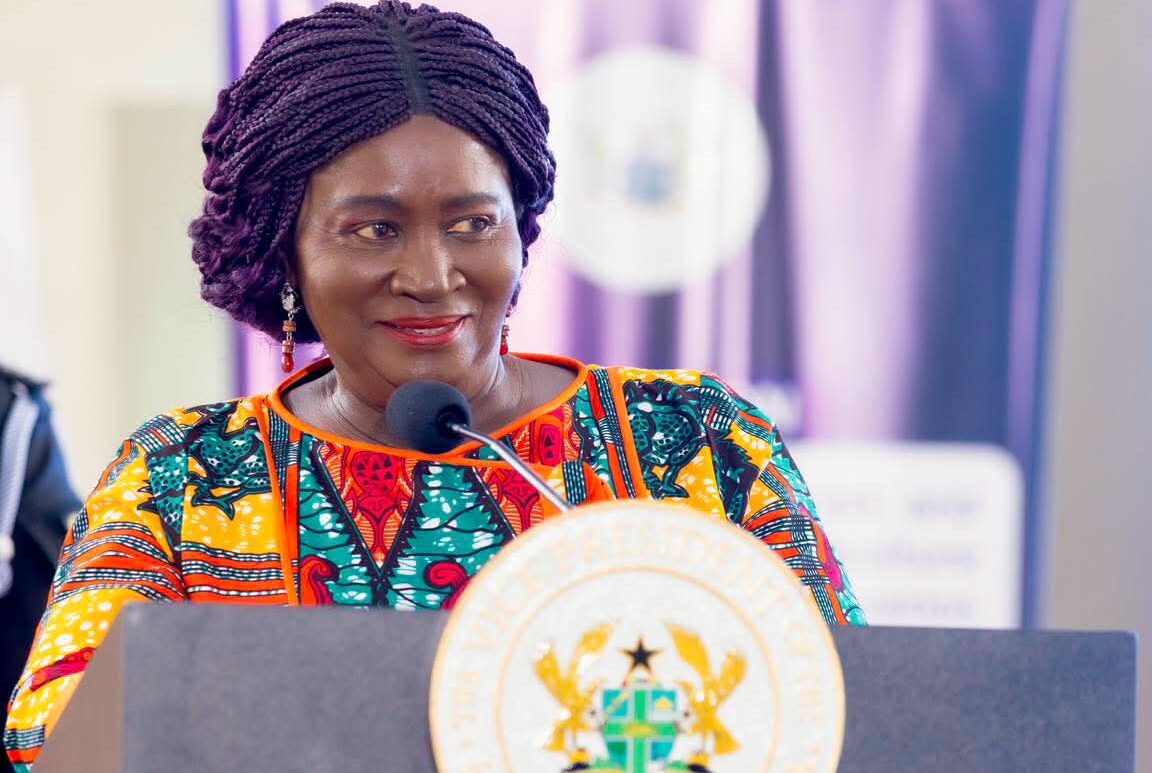
Vice President Prof. Jane Naana Opoku-Agyemang has called for the integration of traditional conservation practices, strict protection of fish breeding grounds, and stronger institutional resourcing following the historic launch of Ghana’s first-ever Inland Fisheries Management Plan.
Addressing stakeholders during the awards-giving session of the launch ceremony in Sunyani, the Vice President stressed that safeguarding freshwater ecosystems requires combining modern regulatory oversight with the accumulated wisdom of local fishing communities.
“Protecting fish nursery and breeding grounds is essential to ensuring the continued replenishment of our fish stocks, and we must draw on traditional practices and indigenous knowledge in sustainable resource utilization,” Prof. Opoku-Agyemang stated.
She also urged industry players and regulators to prioritize hygienic fish handling, preservation, and storage practices to curb post-harvest losses and guarantee safe, high-quality fish for consumers across the country.
The landmark policy, officially launched by the Minister for Fisheries and Aquaculture and Member of Parliament for Shama, Hon. Emelia Arthur, establishes a comprehensive governance framework for freshwater fisheries across all 16 administrative regions.
In her keynote address, Hon. Arthur acknowledged that Ghana’s fisheries management, conservation, and investment efforts have historically been skewed toward the marine sector, leaving inland water bodies underserved.
“Inland fishing activities take place across all sixteen regions of Ghana, and it is time we correct this historical imbalance by giving inland fisheries the recognition, institutional support, and investment they deserve,” the Minister said, noting the subsector’s critical role in national nutrition and rural employment.
Industry operators welcomed the policy shift, with the General Secretary and Acting President of the Canoe and Fishing Gear Owners Association of Ghana (CaFGOAG), Mr. Kenneth John Arthur, describing the plan as a major step toward balanced national governance.
While pointing out that marine fish catches have seen steady improvements over the past four years, Mr. Arthur maintained that long-term sustainability depends on giving equal attention to freshwater resources.
“Encouraging progress in the marine sector must go hand in hand with strengthened management interventions in the inland subsector so that both resources are sustainably managed for present and future generations,” he noted.
Implementation of the new plan is expected to rely on close collaboration among government agencies, traditional authorities, fisherfolk associations, and development partners to protect inland water bodies and boost rural livelihoods.
