
Ghana’s steady economic recovery could be derailed if the government fails to address growing operational losses in the energy sector and structural inefficiencies in cocoa production, according to the World Bank.
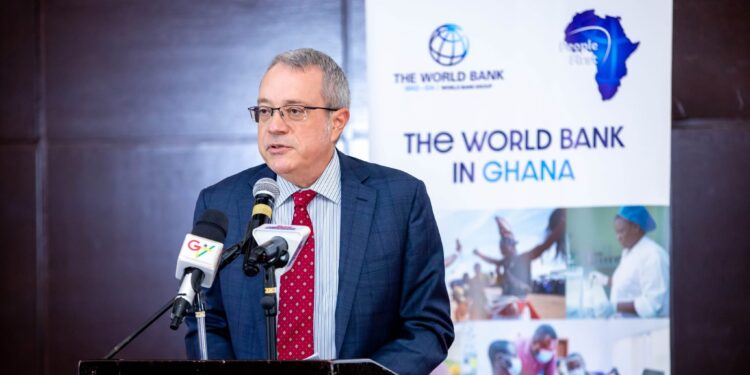
Speaking at the launch of the 10th Ghana Economic Update, World Bank Country Director Dr. Robert Taliercio O’Brien warned that domestic vulnerabilities in key infrastructure and commodity supply chains, combined with volatile global markets, pose a direct threat to the nation’s fiscal health.
Severe Energy Sector Deficits
The Bretton Woods institution highlighted lingering structural bottlenecks within state-owned energy enterprises as the primary domestic risk to macroeconomic stability. Financial leakage and slow reform implementation continue to drain public resources.
“Delays in energy sector recovery programs cost the country approximately $1 billion annually, a staggering sum,” Dr. Taliercio O’Brien emphasized during the presentation.
He warned that without urgent structural reforms to curb these energy sector losses, the progress achieved under Ghana’s International Monetary Fund (IMF) program could be compromised.
“Without decisive action in both areas, the fiscal gains achieved under the IMF program could quickly erode,” Dr. Taliercio O’Brien stated.
Financial Strain on Cocoa and Agriculture
Beyond energy, the update pointed to the severe operational pressures facing the Ghana Cocoa Board (COCOBOD). The Bank noted that inefficient management in the cocoa value chain not only strains public funds through quasi-fiscal risks but directly harms local farmers.
To restore resilience, the World Bank is advocating for modernizing amendments to the governing COCOBOD Act to introduce market-driven mechanisms.
“COCOBOD’s financial and operational inefficiencies are taking a toll on farmers and the public’s finances,” Dr. Taliercio O’Brien remarked. “We suggest that far-reaching reforms of the Act are needed to promote market-based principles and minimize quasi-fiscal risks.”
Exposure to Global Volatility
Alongside domestic challenges, the report notes that Ghana’s high export reliance on gold and cocoa leaves the country sensitive to external price swings and broader global instability.
“Ghana’s heavy export concentration in gold and cocoa leaves the country vulnerable to adverse price shifts that could rapidly reverse the external gains and pressure the exchange rate, inflation, and public finances,” Dr. Taliercio O’Brien noted.
He added that international tensions continue to threaten supply lines:
“Externally, the spillover effects from a prolonged Middle East conflict can exacerbate global trade disruptions, leading to higher energy prices, production costs, and broad inflationary pressures on the economy.”
Despite these challenges, the World Bank projects medium-term economic growth near 5%, provided Ghana accelerates domestic revenue mobilization and carries out sweeping structural reforms across energy and agriculture.
