
By Adnan Adams Mohammed
Efforts to reshape Ghana’s extractive industry have gathered fresh momentum as key political, regulatory, and policy leaders execute targeted initiatives aimed at reforming small-scale mining, fostering international cooperation, and training local youth for the mining workforce.
The developments reflect a growing emphasis on balancing resource extraction with strict environmental protection, institutional learning, and community capacity-building.
Minerals Commission Hosts Guinean Delegation for Environmental Dialogue
In a separate initiative targeting policy and governance, Ghana’s Minerals Commission hosted a high-level delegation from Guinea’s Ministry of Environment and Sustainable Development at its headquarters in Accra.
The Guinean representatives sought to study Ghana’s framework for regulating artisanal and small-scale mining (ASM), with a focus on government-led land reclamation initiatives and inter-agency oversight involving the Environmental Protection Agency, Forestry Commission, and Water Resources Commission.
Led by Minerals Commission Chief Executive Officer Isaac Tandoh, discussions highlighted Ghana’s integrated approach, which ties land restoration directly to alternative community livelihoods such as agriculture and technical training.
In an official reflection on the bilateral engagement, the Commission highlighted the value of cross-border institutional learning:
“The engagement underscores the importance of knowledge-sharing and institutional collaboration in advancing sound mining governance across the region. The Minerals Commission reiterates its dedication to strengthening regional partnerships that promote sustainable development across Africa’s mining sector.”
Deputy Minister Yusif Sulemana Unveils Trust Fund for Mining Skills
Complementing regulatory and political discussions, Deputy Minister of Lands and Natural Resources, Yusif Sulemana, announced an educational trust fund designed to equip young constituents with technical skills for the mining sector.
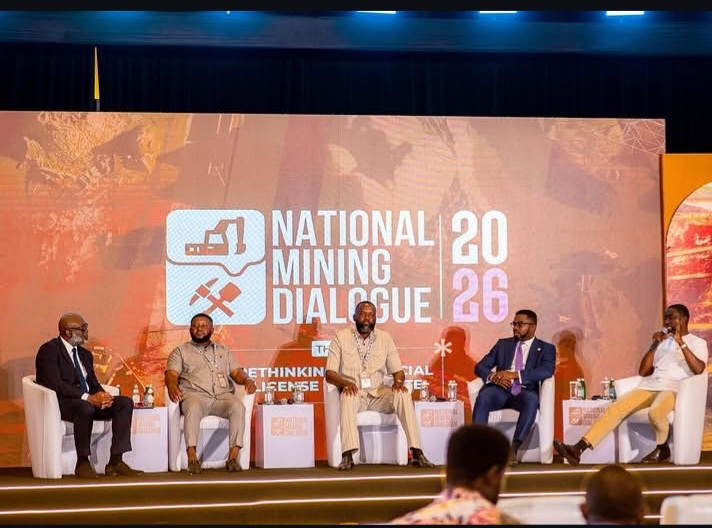
Speaking at a National Mining Dialogue organized by Asempa FM on the theme “Rethinking the Social License to Operate,” Sulemana stressed that host communities can only maximize local content policies if residents possess the necessary technical qualifications required by mining firms.
“Although companies can be encouraged to employ people from host communities, they cannot be compelled to do so if the residents lack the necessary qualifications,” Sulemana explained.
He urged stakeholders to proactively address skill gaps to ensure host communities are not left behind during recruitment exercises: “So, it behoves us as stakeholders to train our people and give them the requisite skills and knowledge so that when these companies come, they are able to absorb them.”
Dr. Mahamudu Bawumia Dialogues with Small-Scale Miners
As part of broad-based stakeholder consultations on the extractive industry, Vice President and New Patriotic Party (NPP) flagbearer, Dr. Mahamudu Bawumia, met with representatives of the Ghana National Association of Small-Scale Miners (GNASSM).
Accompanied by members of the NPP’s Identifiable Groups Committee on the Extractive Sector, Dr. Bawumia held closed-door discussions focused on identifying the sector’s operational challenges and establishing practical avenues for reform.
Addressing the purpose of the consultations, Dr. Bawumia noted that the discussions centered on balancing economic livelihoods with environmental protection.
“The engagement focused on the challenges facing small-scale mining and practical reforms to promote responsible mining, protect the environment, create jobs, and strengthen local value addition,” Dr. Bawumia said.
He reaffirmed his intent to work alongside industry operators, adding: “This forms part of ongoing consultations with key stakeholders, and I express my commitment to continued collaboration towards building a sustainable and productive extractive sector.”
Outlook for the Extractive Industry
Together, these multi-tier engagements signal a coordinated attempt by government authorities, regulatory bodies, and political leaders to address long-standing structural vulnerabilities in the extractive sector focusing on sustainability, regulatory compliance, and community development.
