
By Adnan Adams Mohammed
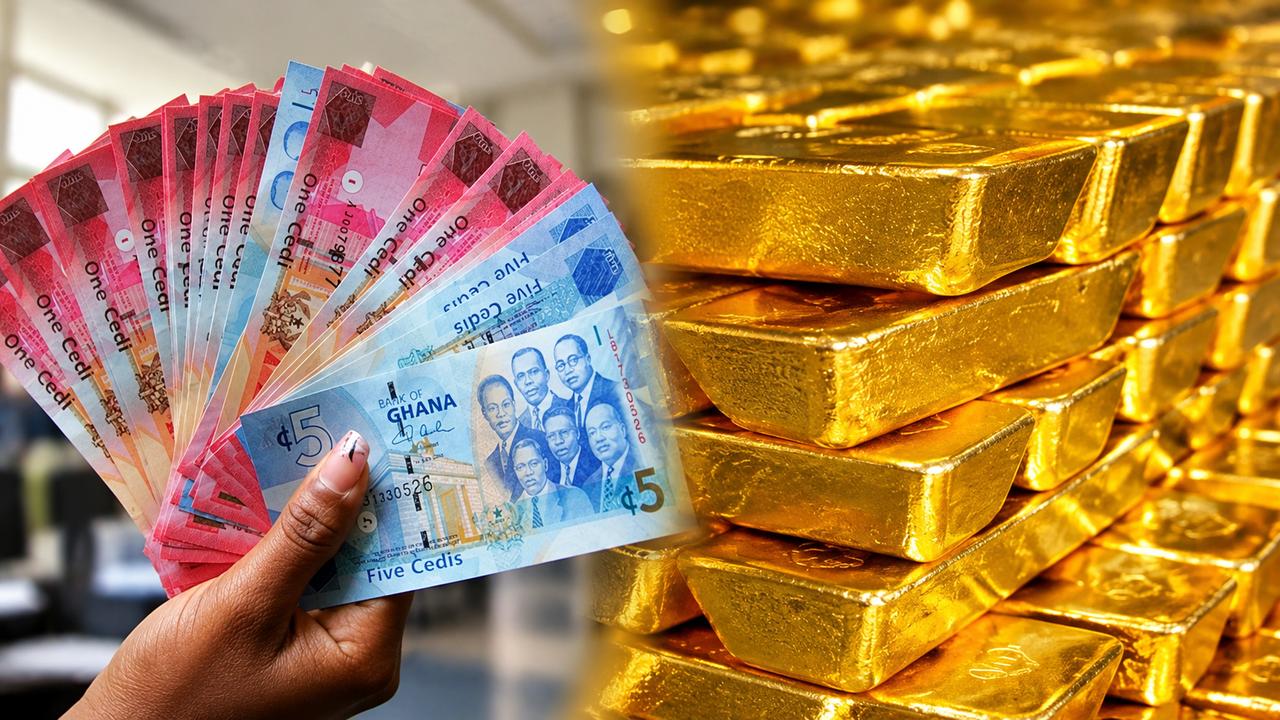
Foreign exchange volatility and reserve dynamics are taking center stage for institutional investors in Ghana as seasonal commercial demand pushes the cedi to GH¢12.10 against the US dollar at retail counters, bringing year-to-date depreciation past 10%.
To cushion private sector demand ahead of peak Q4 import activity, the Ghana Gold Board (GoldBod) has stepped into the market, injecting $255 million into commercial banks under a broader $1.5 billion gold-monetization framework.
For foreign portfolio managers, corporate treasurers, and direct investors, the development highlights both a creative short-term intervention mechanism and underlying structural vulnerabilities in Ghana’s medium-term external reserves.
Buffer Constraints and Sovereign Risk Pricing
While emergency dollar injections provide immediate relief for commercial import cover, market analysts warn that declining net foreign buffers could affect external liquidity management and sovereign risk pricing.
In a market update, research firm IC Insights highlighted that reserve drawdowns and upcoming fiscal expenditures present a challenging foreign exchange outlook for market participants.
“A decline in external buffers and expected fiscal spending complicate the foreign exchange outlook. The local currency has remained under pressure over recent weeks, extending its year-to-date depreciation against the US dollar to 10.04%,” IC Insights noted in its macroeconomic note.
For institutional investors, shrinking central bank FX reserves introduce potential headwinds for foreign profit repatriation, dividend transfers, and real returns on local-currency fixed income instruments.
Gold-Backed Interventions: A New Model for Market Liquidity
To bypass direct central bank reserve drawdowns, the state is leveraging GoldBod’s GoFX auction system to source FX through local gold purchases. Out of $1.5 billion expected from domestic gold sales, GoldBod is channeling $1 billion directly into commercial bank auctions, with the remaining $500 million earmarked to bolster Bank of Ghana reserves.
In its first October allocation windows, GoldBod distributed $255 million through twice-weekly auctions to meet bank client orders, stepping in after the Bank of Ghana elected not to run a separate FX intervention program for the month.
Detailing the auction process, GoldBod emphasized structured allocation rules to prevent market distortion:
“Under the structured framework, foreign exchange is sold through twice-weekly sales windows. Where commercial requests exceed total available supply, allocations are executed on a pro-rata basis to guarantee fair distribution and prevent speculative hoarding,” the agency stated.
Managing FX Exposure in Emerging Markets
The strategic pairing of gold-derived FX sales with central bank reserve preservation offers a temporary buffer for commercial enterprises. However, investment houses stress that long-term stability will depend on sustained structural reforms and non-traditional export revenue growth.
The central bank maintains that it retains the capacity to curb disorderly exchange rate swings while allowing market fundamentals to determine long-term currency values.
“The central bank remains fully prepared to step into the foreign exchange market whenever necessary to maintain orderly trading conditions and prevent excessive volatility, while preserving market-determined exchange rate flexibility,” the Bank of Ghana reassured in an official statement.
As Q4 commercial demand peaks through November, fund managers and foreign investors are watching closely to see if gold-backed liquidity pipelines can stabilize the exchange rate and preserve real returns heading into 2027.
