
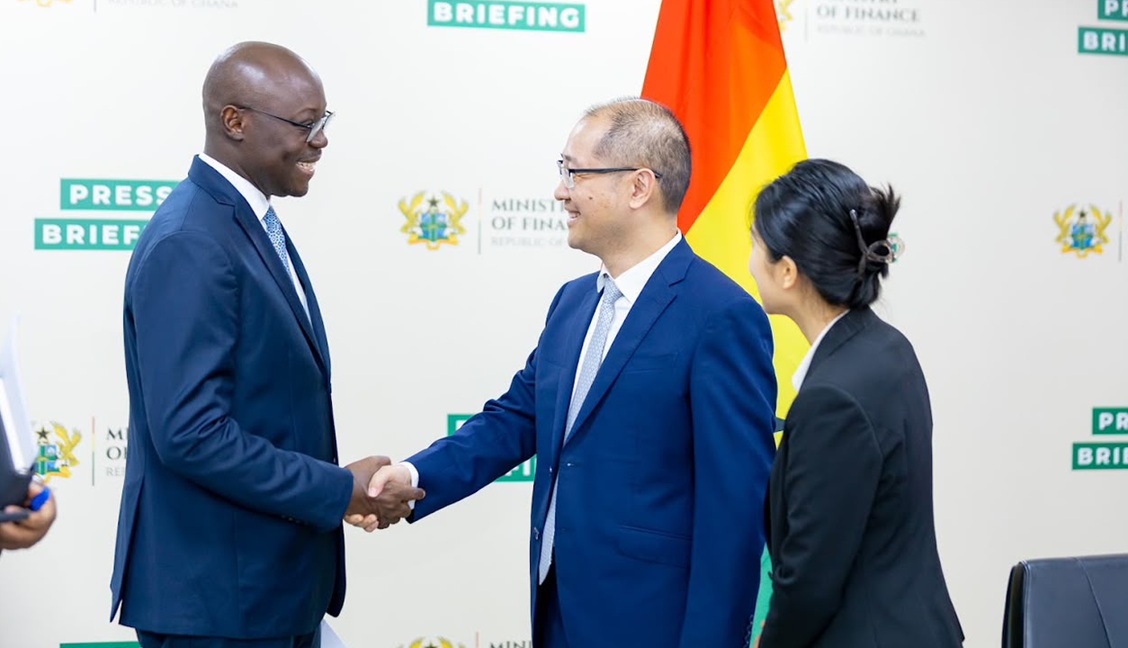
In a bold declaration marking a decisive shift in the nation’s economic governance, Minister for Finance Dr. Cassiel Ato Forson announced that Ghana will no longer secure foreign loans simply because credit facilities are readily accessible.
Speaking during the Fifth Session of the Ghana–China Joint Commission on Economic, Trade and Technical Cooperation, Dr. Forson underscored the government’s resolve to instill fiscal discipline and safeguard long-term debt sustainability as the country rebuilds its economic foundation.
“Ghana will now proceed with discipline. We will not borrow simply because financing is available,” Dr. Forson emphasized during his address to delegates, bilateral partners, and government officials.
A New Framework for National Borrowing
The Finance Minister’s remarks signal a rigorous, productivity-centered approach to public financing designed to prevent a recurrence of past fiscal distress. Under the new guidelines, every potential capital project will undergo strict scrutiny to verify its economic viability and fiscal ROI before any financial agreements are finalized.
Outlineing the administration’s criteria for future public sector developments, Dr. Forson stressed that every project must be economically justified, transparently procured, and directly aligned with national expansion goals.
“Any road, railway, power plant, industrial enclave or other infrastructure financed through this cooperation must improve productivity, create jobs, increase exports and strengthen Ghana’s ability to repay its obligations,” Dr. Forson stated.
He explained that major infrastructure initiatives will no longer be treated as standalone expenditure items, but rather as strategic investments designed to generate revenue, lower operational costs, and build lasting national asset value.
Avoiding the Trap of Fiscal Overreach
The decision to tighten borrowing guidelines stems from a determination to protect Ghana’s recovering macroeconomic stability and prevent a return to severe debt distress.
“We will diversify our financing sources, protect debt sustainability and avoid a return to the conditions that led to the 2022 debt crisis,” Dr. Forson declared.
By diversifying funding channels and placing strict boundaries on commercial credit, the Ministry of Finance aims to keep public debt servicing costs at manageable levels while keeping the door open for high-impact, transformative infrastructure partnerships.
As bilateral talks continue under the Ghana–China Joint Commission framework, officials from both nations are expected to focus future cooperation on projects that meet these rigorous standards setting a new benchmark for development finance across the region.
