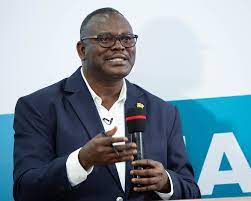
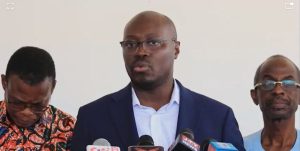
A Tax Consultant has argue that government’s move to introduce new taxes, as part of measures to get an International Monetary Fund (IMF) board approval for a $3 billion bailout, is deepening the tax burden of the already tax-complaints instead of widening it.
Dr. Abdallah Ali Nakyea believes that, the government’s new tax measures are merely entrenching Ghana’s 80:20 tax paradox where 80% of tax payers contribute 20% of tax revenue while 20% of tax payers contribute 80% of tax revenue.
The ministry of finance has laid three revenue papers – the Income Tax Amendment Bill, Growth and Sustainable Bill and the Excise Amendment Bill to parliament for consideration to be passed into law after it got the necessary approval from the Finance Committee of Parliament for it to be considered by the house. But, the tax expert has indicated that, if the new tax bills passed by parliament will merely further burden the 20% tax complaint tax payers rather than rope in the 80% non-compliant population. Warning that, the government could essentially be contributing to business collapses and a spike in unemployment in the country.
“The existing tax payers we know who are complying, if you increase taxes or you introduce taxes, the same segment of people continue to carry that burden because we have a paradox in the revenue mobilisation sector in Ghana where we say 80:20 paradox. 80% of tax payers bring in only 20% of revenue and 20% of tax payers bring in 80% of tax revenue.
“Who are these 20%? The multinationals, the banks, financial sector, these are the same people we’ve saddled with national reconstruction levy, we’ve saddled them with financial sector recovery levy and now we’re talking about growth and sustainability levy. The 80% we all keep saying, the informal sector is between 70 and 80%, what is their contribution to revenue? 20%. So if we’re even able to nurture the 80% non-compliant to come up to 60% you can imagine the revenue we can make.”
He also called on the government to reverse some tax incentives and block illicit flows of cash from the public purse.
“You are granting incentives to certain sectors that they shouldn’t pay tax, is it time to ask them to come and help you contribute? If it is the 25 they cannot pay, can you introduce – you were exempt, can you bring in 5%, let’s all rebuild the country? Can you bring in 10%? That is one area.
“The second one is trying to look at what we refer to as illicit financial flows that is complete non-disclosure. If you take the Ghana Integrity Initiative and CHRAJ reports, it will tell you that Ghana is losing $3 billion dollars annually from corruption. Corruption, $3 billion, is that not exactly the amount we’re looking from IMF.
“If you take ACEP report, it tells you we’re losing $2 billion from illegal mining. If you add the two, we’re at $5 billion. We’ve not come to under invoicing and other things at the port. So do you need IMF/ we’re talking about $5 billion a year now, and you’re going to get $1 billion a year from IMF,” he said.
To close the tax gap and rope in much of the informal sector, Dr. Ali Nakyea has suggested that the second schedule to the Income Tax Act 2015 (Act 896) be implemented.
“Because it brings up the idea that why can’t we allow the informal sector to give say the 2% 3% of their turnover like the growth and stablization levy is saying and that is your total tax for VAT and income tax at least you are also contributing something then we could have opened the net, we would have widened the net,” he said.
The Economist Intelligence Unit (EIU) has revised its global growth forecast for 2023 to 2%, from 1.9%.
This upward revision, it said, reflects an improvement to the US growth outlook, which it now forecast at 0.7% for 2023 (up from 0.3% previously).
“EIU expects global economic growth to slow sharply in 2023, reflecting persistent headwinds stemming from the ripple effects of the war in Ukraine, as well as high inflation and rising interest rates”, it stated in its latest Global Economic Outlook 2023.
It also projected that the Chinese economy will grow by 5.7% in 2023.
The recovery, it said, will be consumer-led as the exit from the country’s zero-covid policy unleashes pent-up demand for goods and services (including outbound tourism).
“Finally, China’s exit from the zero-covid policy has also supported global economic activity. As a result of these factors, we expect global growth to stand at a modest, but not anaemic, 2% in 2023 (up from 1.9% in our previous forecasting round)”, it pointed out.
On the other hand, the euro zone has avoided recession in the winter of 2022/23, owing to lower than expected energy demand due to mild temperatures.
“Europe appears to have avoided a recession in the winter of 2022/23, in large part owing to warmer than usual temperatures and rapid switching to alternative energy sources following Russia’s decision to turn off gas flows. US consumer spending has also held up better than EIU initially expected, with the labour market and consumer spending strengthening further in January [2023]”.
EIU said inflation will continue to weigh on spending as it forecast GDP growth of just 0.7% in the bloc.
Furthermore, it said “we expect a moderate global recovery in 2024, with real GDP growth of 2.5%. However, growth in OECD economies will remain subdued, at a forecast 1.5%. By contrast, we forecast growth of 4.1% in non-OECD economies”.
EIU also said the war in Ukraine will keep a floor under commodity prices, adding “we expect global commodity prices to continue easing from their 2022 peaks this year, but to remain well above pre-war levels”.
However, it pointed out that China’s reversal of its zero-covid policy will put upward pressure on oil prices in the medium term, keeping them above US$80/barrel until 2025.
“An EU ban on seaborne Russian oil imports (which took full effect in February), coupled with China’s reopening, will exacerbate market tightness”.
“We expect European gas prices to ease gradually in 2023-24 but to remain above 2019 levels, weighing on households and businesses. The possible tightening of Western sanctions (for instance on refined Russian oil) will continue to fuel price volatility”, it added.
EIU again said global inflation will remain high in 2023.
However, it expects global inflation to ease slightly, from an estimated 9.3% in 2022 to 6.7% in 2023.
“High global commodity prices, continued supply-chain disruptions from the war in Ukraine and, in some parts of the world, the still-strong US dollar will keep annual inflation well above 2019 levels. However, we expect inflation to lose some momentum as global demand softens and commodity prices start to ease back from their 2022 peaks”.
As the debate on the proposed new tax bills rages on, continuing from part one of this article, the opposition to the new tax bills is by day getting stiffer.
The Ghana Upstream Petroleum Chamber has also warned that, the proposed Growth and Sustainability Levy by government could trigger litigation through the international court as it breaches provisions in the petroleum agreements.
According to the Chamber, it is worried that the government is bent on going ahead to breach these provisions to raise money from what it describes as “creeping taxation”.
In a statement issued by the Ghana Upstream Petroleum Chamber, last week, asked government to reconsider the introduction of the growth and sustainability levy, especially at a time the country is struggling to attract new investments in oil and gas exploration.
The Chamber added that “the industry considers this levy as the latest in a series of crippling taxation that is affecting the economic balance of petroleum agreements.”
Some of these taxes include, “ the COVID-19 Recovery Levy, Ghana Education Trust Fund Levy, National Insurance Levy, the 1% Local Content Fund Levy and several others,” the Chamber disclosed.
It added that “this new tax disregards the importance of the preservation of contract sanctity to the promotion of new investment.”
The Chamber was also worried that “unpredictability of the fiscal terms of our petroleum agreements will discourage new oil and gas investment at a time when financial institutions are curtailing investment in fossil fuels.”
The better way out
In considering some alternative decisions and policies that government should be focusing on instead of the cheap way of introducing and reviewing tax policies frequently, hurting the already overburdened tax-compliant individuals and companies, the experts provided a better way out.
Doubling effort on digitisation of the economy
Professor Ebo Turkson urged government to ramp up its digitalization drive to put all the tax and invoice requirement on a single government platform to ease business at the ports.
He emphasised that, “For instance, the number of government agencies for instance at the ports that are collecting revenue for government, can we reduce the number of them and still getting more of these revenue. Because you see, the more you put in place some of these institutions and these taxes, the easier it is for people to evade those taxes for convenience. So let the process be so straightforward so that tax payers will comply easily so that it doesn’t waste their time,” he said.
Reversing tax incentives and tackling IFFs
In his suggestion, Dr Ali Nakyea wants government to reverse some tax incentives and block illicit flows of cash from the public purse.
“You are granting incentives to certain sectors that they shouldn’t pay tax, is it time to ask them to come and help you contribute? If it is the 25 they cannot pay, can you bring in 5%, 10%? That is one area.
“The second one is trying to look at what we refer to as illicit financial flows that is complete non-disclosure. If you take the Ghana Integrity Initiative and CHRAJ reports, it will tell you that Ghana is losing US$3 billion dollars annually from corruption. Is that not exactly the amount we’re looking from IMF.
“If you take ACEP report, it tells you we’re losing US$2 billion from illegal mining. If you add the two, we’re at US$5 billion. We’ve not come to under invoicing and other things at the port. So do you need IMF/ we’re talking about $5 billion a year now, and you’re going to get US$1 billion a year from IMF,” he said.
Dr. Ali Nakyea called on the government to close the tax gap and rope in much of the informal sector and suggested that, the second schedule to the Income Tax Act 2015 (Act 896) be implemented.
“Because it brings up the idea that why can’t we allow the informal sector to give say the 2% 3% of their turnover like the growth and stablization levy is saying and that is your total tax for VAT and income tax at least you are also contributing something then we could have opened the net, we would have widened the net,” he said.
Cutting government expenditure
Additionally, Dr. Ali Nakyea suggested that, instead of increasing taxes, the government should have instead explored avenues for drastically reducing their expenditure.
He said the government could have started with postponing some non-urgent projects to provide the much needed fiscal space for government maneuvering.
“If your income is to meet expenditure, are there no expenditures that may be postponed or suspended to give you enough room to maneuver when things are [hard] – you can’t continue. Indeed, most of the calls that are being made are not on cancellation entirely of some of the projects, people are even asking, can you suspend some of them that are not so immediate and pressing and when things normalise we come back to it. I don’t think that is asking too much,” he said.
He added that the government could have also explored ways to close the country’s widening tax gap instead of increasing taxes.
“For me it’s that are we efficient and effective in the collection of the existing taxes? Because we studies by Opoku and Tanaka in 2020 showing us what we call the tax gap, the difference between the actual taxes we collect and the potential we can collect. How have we closed that gap?
“Because the more taxes we introduce, the wider the gap will be if compliance is that low or non-existent. So I believe if we’re able to mop up excessively what exists and we’re not able to achieve then we can start thinking about is it that we don’t have enough? We have more than enough taxes. The …tax we have are competitive in the sub-region, and so why are you increasing it?” he said.
Tax education
Prof Turkson Ebo proposed enough public tax education to promote a tax compliant attitude in Ghanaians.
According to him, promoting a tax compliant attitude would support the government’s tax revenue mobilisation agenda rather than the introduction of new tax measures. He explained that increasing taxes without increasing tax compliance amongst Ghanaians would be counterproductive and potentially injurious to the growth of the private sector.
“One way the government could encourage Ghanaians to be tax-compliant was to show the citizenry that the government was making good use of their taxes.
“We need to ensure that there is enough public tax education and also we should show the public sector, the government machinery must show the average Ghanaian that we’re making good use of your money to support the public sector to create jobs for your kids or the young men and women of this country to get into jobs.
“When you do that and people see that the revenue that you get from the taxes are plowed back into the economy to help them, people will be willing to pay taxes. Businesses will be willing to pay more taxes, if for instance you discuss with them and increase their after profit tax by a little bit,” he said.
The Ghana Revenue Authority (GRA) says, in a special exercise to seal revenue losses, recovered in excess of GHS85 million revenue within a five month period between October 2022 and February 2023.
This comes at the time the managers of the economy are in ‘mad-rush’ to increase domestic revenue mobilisation as one of the conditions for the pending International Monetary Fund’s Board Approval for a US$3.0 billion Balance of Payment Support.
An economist has estimated that, Ghana loses more than GH¢5.6 billion annually in tax revenue. Blockage or reducing excessive bleeding of domestic revenue collection have been a discussion by many; including financial and economic experts, international development partners, civil society groups and the government actors. However, the discussion becomes as usual, a ‘talk-show’ without any significant achievement in revenue leakages blockage. This forces the government to resort to the cheap way of increasing domestic revenue by introducing new taxes or reviewing upwards existing taxes and levies almost every year. Just last week, the government proposed new taxes which have received strong opposition. But, the economist has passed judgment that, until government blocks revenue leakages that have bedeviled the country’s revenue mobilisation system for ages and creates an environment that encourages tax payers to be tax-compliant, the country will continue to lose large volumes of revenue yearly.
Credit: OMG
“We need to build systems in place to ensure that we keep to the barest minimum the leakages that leave the revenue stream. And it’s very very important that we do this”, Professor Ebo Turkson indicated in an interview following the attempt by government’s move to introduce new tax measures.
Citing the situation at Ghana’s ports and habours, he stated that the use of various government agencies to collect taxes and invoices has created space for people to evade taxes rather than comply due to how complicated the system is.
In anticipation to bring in more revenue, the Ministry of Finance, last week, laid three revenue papers; the Income Tax Amendment Bill, Growth and Sustainable Bill and the Excise Amendment Bill to parliament for consideration to be passed into law after approval from the Finance Committee of Parliament for it to be considered by the house. The ministry is optimistic that these revenue bills will bring in almost GH¢5 billion to support the economy. But, unfortunately the general House approval of the bills may suffer setbacks as key actors in the economy are against the proposals.
The 80:20 paradox
Apparently, a tax Consultant believes that government’s move to introduce new taxes will deepen the tax net instead of widening it. According to him, the government’s new tax measures are merely entrenching Ghana’s 80:20 tax paradox where 80% of tax payers contribute 20% of tax revenue while 20% of tax payers contribute 80% of tax revenue.
“The existing tax payers we know who are complying, if you increase taxes or you introduce taxes, the same segment of people continue to carry that burden because we have a paradox in the revenue mobilisation sector in Ghana where we say 80:20 paradox. 80% of tax payers bring in only 20% of revenue and 20% of tax payers bring in 80% of tax revenue”, Dr. Abdallah Ali Nakyea said in an interview.
The lecturer at the University of Ghana Law School explained; “Who are these 20%? The multinationals, the banks, financial sector, these are the same people we’ve saddled with national reconstruction levy, we’ve saddled them with financial sector recovery levy and now we’re talking about growth and sustainability levy. The 80% we all keep saying, the informal sector is between 70 and 80%, what is their contribution to revenue?. So if we’re even able to nurture the 80% non-compliant to come up to 60% you can imagine the revenue we can make.”
The tax expert further refuted that, the IMF had not made the introduction of new taxes a requirement for board approval; rather, it had urged the government to develop its fiscal space.
“I don’t think that anybody will tell you bring in taxes before I give you a loan. If he tells you I want to see how you’re developing your fiscal space, has he told you to increase taxes?” he said.
Anti-Business taxes
In his contraction, the Chief Executive Officer of the Ghana National Chamber of Commerce and Industry, Mark Aboagye, has noted that adding more taxes to an already tax-burdened economy will be counter-productive to revenue generation. Indicating that, the introduction of new tax measures to ramp up revenue generation is anti-business and should it be passed would collapse many businesses.
Reacting to the impasse between the Majority and Minority side of parliament concerning the course of proceedings on the new tax bills, the industries leader expressed extreme happiness that the tax measures were not passed and has called for them to be withdrawn from the house for wider consultation.
“Extremely happy, extremely excited because those taxes are anti-business, and I have no doubt in my mind that if it’s passed it’s going to cause the collapse of a lot of businesses, and businesses are going to produce under capacity. If you look at the environment and already the taxes that we have, adding up was going to be harsh for businesses so we’re happy that it’s not been passed.
He explained that in the government’s quest to generate revenue, it was crushing the very industries that would provide the revenue.
He said, should the tax measures be passed, “it’s going to cause unemployment.”
“We’re killing the micro, the basics for us to get to all these macro policies to work, we’re weakening it. So for me, we’re happy it’s not being passed, they should withdraw it, consult the business community, the Chamber is ready to work with them, get them convinced that these taxes what extent are they going to impact on your businesses, [also] get their input into the taxes,” he said.
Consequently, Prof Turkson in the interview described the government’s yet-to-be-passed tax measures as nuisance taxes, warning that, should they be maintained businesses would suffer in an already harsh climate.
“When you begin to introduce some of the taxes that become input taxes before you go and tax their profit you’re hurting them. You’re trying to tell them that you’re increasing their cost of production when you should rather be reducing their cost of production for them to produce more, make more profit and then you go and tax after they declare their profit. And that is what the businesses are complaining about, that is what we’ve called nuisance taxes in the past. And why they’re coming back I do not understand,” he said.
Tax Incentives to attract investments
Prof Ebo Turkson further explained that, most investors are least enthused by the government’s tax incentives as they are more concerned about the economic environment the government creates for them to run their business smoothly, thereby urging government to move beyond using tax incentives to attract foreign investment.
“Ghana should move beyond using tax incentives to attract investment. When you ask those who bring in investments they’ll tell you that the least of the incentives is the tax incentives that we give them. They need a business environment that is conducive, so don’t give them any tax exemptions. Give them a business environment that is conducive for them to come and produce here and tax them, they’ll pay,” he said.
The debt-stressed economy
Meanwhile, the Government of Ghana is currently facing serious liquidity challenges and is unable to service its debts.
The debt-stressed Ghanaian economy is in dire need of revenue to be able to survive pushing the government to resort to debt restructuring. The government concluded a domestic debt exchange programme in February this year and looking forward to an external debt relief. In early part of this year, Ghana asked official creditors for a debt restructuring under the G20 Common Framework Treatment. The IMF has said a comprehensive debt restructuring is a condition of its support.
The country has been struggling to refinance its debt since the start of 2022 after downgrades by multiple credit rating agencies on concerns it would not be able to issue new Eurobonds.
The Bank of Ghana’s January 2023 economic and financial data summary revealed that total public debt stock has shot up to GH¢575.7 billion at the end of November 2022, according to new data released by the Bank of Ghana.
The new debt figure brings Ghana’s debt to Gross Domestic Product (GDP) ratio to 93.5% from 75.9% in September 2022.
The external component of the country’s public debt shot up to GH¢382.7 billion in November 2022, equivalent to 62.1% of GDP. This was from GH¢271.7 billion in September 2022.
However, according to the Bank of Ghana, the total public debt is defined as Central Government debt excluding State Owned Enterprises/Special Purpose Vehicles Debt.
Also, according to Trading Economics’s global macro models and analysts expectations, government Debt to GDP in Ghana is expected to reach 86 percent of GDP by the end of 2023. In the long-term, the Debt to GDP is projected to trend around 88% of GDP in 2024 and 90% of GDP in 2025.
Generally, Government debt as a percent of GDP is used by investors to measure a country ability to make future payments on its debt, thus affecting the country borrowing costs and government bond yields.
Part two of this article details the better way out of the annual ritual of introducing new or reviewing existing tax policies to overburden the already tax compliant individuals and institutions.
By Fouziyah Abdul-Latiff (Clinical Nurse and Health writer) and Adnan Adams Mohammed
Many people still believe that HIV/AIDS is not real. They think that it is a story to scare people to use condoms and stop being promiscuous.
However, many people have HIV in their bodies and many have already died of an AIDS-related sickness.
HIV (Human Immuno Deficiency Virus) is a virus that enters blood. This virus which is mostly sexually transmitted can be found in the blood, sperm, vaginal fluids and breast milk in HIV positive individuals. Once infected by HIV, it attacks and eventually destroys the Body’s immune system which acts as your body’s army. The immune system normally fights germs, infections, bacteria and viruses that would make you sick. The body cannot defend itself against germs, infections and diseases like pneumonia and Tuberculosis.
According to the National STIs and HIV/AIDS Control Programme, estimated that, a total of 23,495 people in Ghana tested positive for HIV in the first half of 2022(January to June). The figure is two percent of the 948,094 people who undertook HIV testing within the period.
“The figure for this new infection is too high, so we need to intensify education to let people know that HIV is still real; …We have to let people know that they need to stick to the prevention strategies…”, the Programme Manager, Dr. Stephen Ayisi Addo, in an interview with graphic online worried.
Global HIV & AIDS statistics from the UNAIDS indicates that, averagely 38.4 million people globally were living with HIV in 2021. Out of this figure, 1.5 million people became newly infected with HIV in 2021 and about 650 000 infected persons died from AIDS-related illnesses in 2021.
However, only 28.7 million people were accessing antiretroviral therapy in 2021.
Since the break of the epidemic, 84.2 million people have become infected with HIV and 40.1 million people have died from AIDS-related illnesses.
Although, New HIV infections have been reduced by 54% since the peak in 1996, women and girls accounted for 49% of all new infections in 2021.
Key populations of the infected persons are; sex workers and their clients, gay men and other men who have sex with men, people who inject drugs, transgender people) and their sexual partners accounting for 70% of HIV infections globally.
The risk of acquiring HIV is 35 times higher among people who inject drugs than adults who do not inject drugs.30 times higher for female sex workers than adult women.28 times higher among gay men and other men who have sex with men than adult men, 14 times higher for transgender women than adult women.
Every week, around 4900 young women aged 15–24 years become infected with HIV.
Subsequently, in sub-Saharan Africa, six in seven new HIV infections among adolescents aged 15–19 years are among girls. Girls and young women aged 15–24 years are twice as likely to be living with HIV than young men. Women and girls accounted for 63% of all new HIV infections in 2021.
Meanwhile, as at the end of 2021, US$ 21.4 billion (in constant 2019 United States dollars) was available for the AIDS response in low- and middle-income countries—around 60% was from domestic sources.
UNAIDS estimates that US$ 29 billion (in constant 2019 United States dollars) will be required for the AIDS response in low- and middle-income countries, including countries formerly considered to be upper-income countries, in 2025 to get on track to end AIDS as a global public health threat.
Although, Ghana has a low-level HIV epidemic with disproportionately high prevalence of HIV in key populations (KPs) such as female sex workers (FSW) and men who have sex with men (MSM). Like many countries, Ghana is striving towards achieving the United Nations Programme on HIV/AIDS’ (UNAIDS) 90-90-90 targets (90% of HIV positive people know their status, 90% of those diagnosed are on treatment, and 90% of those on treatment are virally suppressed). In September 2016, the government of Ghana adopted the World Health Organization (WHO) policy of “treat all” – which is the provision of antiretroviral treatment (ART) to all people living with HIV (PLHIV) irrespective of their CD4 count, which was previously used as a cut off to start treatment. With adoption of “treat all”, there needs to be a scale up of not just preventive services and HIV testing, but also of availability of antiretroviral (ARV) treatment (ART) and viral load testing.
The United States President’s Emergency Plan for AIDS Relief (PEPFAR) is supporting Ghana to maximize the quality, coverage and impact of the national HIV/AIDS response.
The above statistics clearly indicates that, a lot of people are unknowingly infected with HIV, yet would not have an HIV test to find out their status so they can get help and support. As an individual, it’s very necessary to find out whether you are living with HIV or not. If you are living with HIV, you can get information about how to stay healthy as well as how to protect yourself and your loved ones. If you are not living with HIV, you can as well get information about how to remain safe. An untreated HIV can progress to a serious, disabling disease. However, today there are many treatments available to ensure a long and healthy life. HIV/AIDS can be treated and there is a lot that can be done to improve your health if diagnosed early. Medications can reduce the virus while vitamins, good nutrition and exercise can play a critical role in keeping your body strong and healthy.
A person gets sick when HIV has destroyed most of his/her immune system which can take many years to happen. You are then said to have AIDS. A person living with AIDS becomes very weak and can get sick from many different germs. These germs can cause problems such as losing weight, bad diarrhoea, sores in the mouth, cough, pneumonia, TB, brain and nerve disease, swellings, fevers and sores. These do not get better on their own because of a deficiency in the immune system.
Taking medications can help you to become better.
One can look and feel healthy for years when when first exposed to HIV in your body. The only way to find out whether you are living with HIV is by having an HIV test. Finding out as early as possible after being infected with HIV is important. This way you can get help and avoid spreading HIV without knowing it.
Within a month or two of getting infected with HIV, many people can develop flu-like symptoms, swollen glands or a rash. These symptoms usually go away within a couple of weeks, and a person can look and feel well for many years before the symptoms come back.This period when you look and feel well can last five to seven years or longer in adults and two to five years or longer in children born with HIV. As HIV continues to attack the immune system, the illnesses start to show again.
It can take many years for HIV to make you sick. When you start to feel sick because of serious infections, it means that you may have AIDS. Some early signs include: painful skin rashes (shingles), sores on the lips which do not heal, thrush (a white rash inside the mouth or on the private parts), swelling in the neck, behind the ear, under the arm and in the groin. Signs and symptoms of TB which include coughs,sweating and weight loss, fevers and sweating at night, as well as enlarged glands.
HIV is mostly transmitted through having unprotected sexual intercourse with an infected partner, during pregnancy from an infected mother to child, during childbirth, breastfeeding, injecting drugs and sharing needles by drug users and health workers, handling blood and blood products especially in an accident scene and etc.
There is no cure for HIV. Once a person has HIV, they will remain infected for the rest of their life. Therefore preventing the spread is the most important way of controlling HIV.
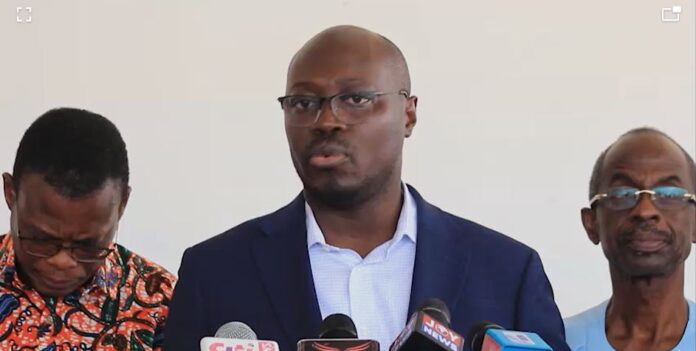
NDC REAFFIRMS ITS POSITION ON THE NEED FOR THE PRESIDENT TO DOWNSIZE HIS GOVERNMENT IN THE WAKE OF PARLIAMENT’S APPROVAL OF NEW MINISTERIAL NOMINEES.
The National Democratic Congress (NDC) has taken notice of the outcome of a vote on new Ministerial nominees on the floor of Parliament, yesterday, 24th March, 2023.
Ghanaians would recall that the party issued a directive to the Minority Caucus in Parliament to reject the new Ministerial nominees a few weeks ago. This was in alignment with the pervasive view of Ghanaians that this moment of economic crisis and financial haircuts, calls for the Akufo-Addo/Bawumia government to show by example that it is willing to reduce its expenditure by downsizing its government among other things.
We note however, that some Members of Parliament on the side of the NDC Minority for reasons known to themselves, elected to place their parochial interest ahead of the interest of Ghanaians.
The party, on behalf of all Ghanaians, condemns this conduct in no uncertain terms, as it not only betrays the expressed will of the party, but the desire of the Ghanaian people and constitutes a massive stab in the back of the good people of Ghana.
The party wishes to reaffirm its principled position for President Akufo-Addo to downsize his bloated government and reset his priorities to reflect the difficult times Ghanaians find themselves in.
The party commends highly, the leadership of the Minority caucus in Parliament and Members of Parliament who stayed true to the expectations of the party and the Ghanaian people. We will stop at nothing to identify them and publicly laud them in due course. Their loyalty and patriotism will not be forgotten.
It must be noted that, the National Democratic Congress as a body corporate, has multiple structures, represented by elected and appointed officers who are expected to act in the supreme interest of suffering Ghanaians, particularly the over six (6) million supporters of the party. The party as a corporate entity therefore bears no liability for the deviant action of the few self-seeking Members of Parliament who betrayed the collective cause of the party and the nation.
Undoubtedly, our country currently faces the biggest economic meltdown in living memory. It is therefore unpardonable for any person, not to talk of a Member of Parliament who believes in the ideals of the NDC, to lend support to the ongoing recklessness by the Akufo-Addo/Bawumia/NPP government.
The NDC shall continue to hold the government accountable for the socio-economic quandary that our country finds itself and present our superior alternatives to Ghanaians in our bid to rescue the soul of our nation.
We are not oblivious of the fact that, the road to rescue will at a point become rough, howbeit such obstacles only strengthen our resolve to achieve the rescue mission. We shall leave no stone unturned in our quest to bring our dear nation out of our present economic doldrums.
Former President, John D. Mahama, has taken to his facebook wall to express his disappointment at the outcome of voting in parliament yesterday on the ministerial nominees.
He noted that, Ghanaians and himself were sorely disappointed yesterday when several members of the Minority for some parochial and personal interest voted against the principled position adopted by the NDC party not add up to already bloated NPP-led government.
The NDC party and its members in Parliament, weeks a go declared their intention on a principled position not to approve any new ministers until the President has taken steps to significantly reduce the size of his government. But, the voting in the House yesterday was disappointing many Ghanaians who had put their trust in the hands of the minority.
“Those responsible for this betrayal must do some serious soul searching and learn to place national interest over personal interest”, John Mahama shared his disappointment.
“Equally disappointing is the President’s refusal to seize the opportunity to realign and downsize his bloated government when the NPP flagbearer hopefuls and the Chieftaincy minister resigned.
“I still believe, as I said in Ho recently, that in this time of crisis, government can still run efficiently with not more than 60 ministers.”
Read full statement below:
A couple of weeks ago, our NDC group in Parliament announced a principled position not to approve any new ministers until the President has taken steps to significantly reduce the size of his government.
This position was supported by a broad section of Ghanaians and public advocacy groups.
Unfortunately, Ghanaians were sorely disappointed yesterday when several members of the Minority for some parochial and personal interest voted against the principled position adopted by the party.
I am also disappointed.
Those responsible for this betrayal must do some serious soul searching and learn to place national interest over personal interest.
Equally disappointing is the President’s refusal to seize the opportunity to realign and downsize his bloated government when the NPP flagbearer hopefuls and the Chieftaincy minister resigned.
Clearly in this time of crisis and excruciating hardships, President Akufo-Addo, his NPP administration and some of our MPs are out of tune with the mood of the Ghanaian people.
I still believe, as I said in Ho recently, that in this time of crisis, government can still run efficiently with not more than 60 ministers.
For our grassroots members and all Ghanaians who are disappointed by this insensitivity, I urge you not to despair.
2024 offers us an opportunity to work hard to defeat this reckless government that seeks to destroy our democracy and the very livelihoods of Ghanaians- an opportunity for us to work and build the Ghana we all want from January 07, 2025.
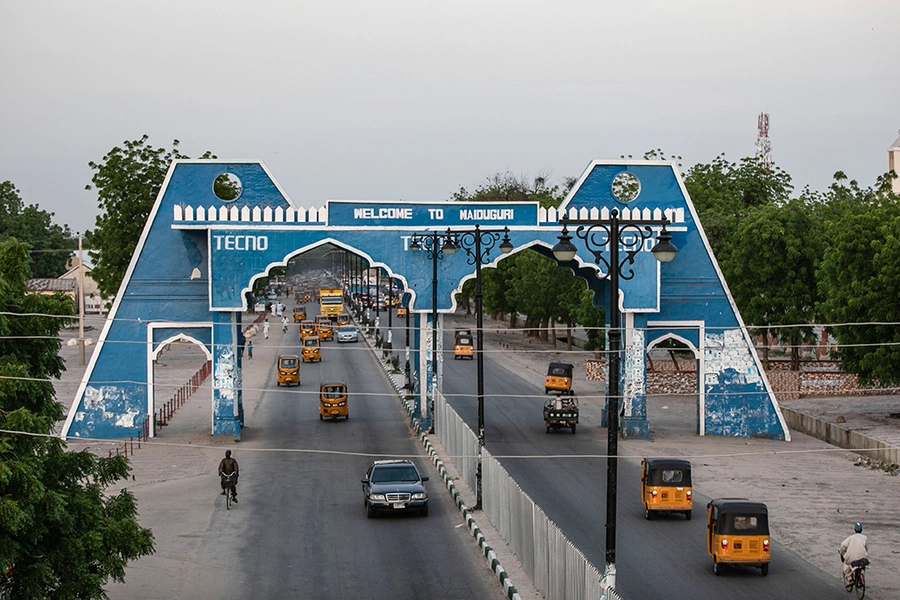
Spending the last one week in Maiduguri, from 11 to 17th March, 2023, once a danger zone with full of anxiety, once could feel the presence of restored peacefulness and serenity in the metropolis and the peri-urban areas.
Trading in Maiduguri
Normal activities going on with less anxiousness as trading booming, schools fully in session, civil and public services have fully restored after thirteen (13) years of being under siege by insurgency of Boko Haram.
School girls in Maiduguri peacefully chatting
Maiduguri, the capital city of the largest State by land size in Federal State of Nigeria (Borno State), is the principal trading hub for north-eastern Nigeria. Its economy is largely based on services and trade with a small share of manufacturing. Maiduguri is home to three markets which include a modern ‘Monday market’ that has a spectacular image view, the ‘Customs market’ and ‘Baga Road Market’.
Baga Road Market
During a fact finding mission to ascertain realism and aftermath of Nigeria’s worst experienced insurgency attack by ‘Boko Haram’, many of the people in Maiduguri feel hopeful and full of praises to all those that contributed to the peace restoration. But, as close as a 30 kilometer away from the metropolis is not yet assured of calmness as they do experience sporadic attacks by the insurgency.
“Normal trade and farming activities are ongoing now, Alhamdulilah”, said a civil servant at the Federal Secretariat who spoke to the team on basis of anonymity. “Although normalcy have been restored in some parts of the State and it is a little peaceful to move around now, it is not yet over. In some Local Government Areas (LGAs) attacks are happening there.”
“The last attack was about two weeks ago on lake in Dikwa LGA, about 60 kilometers away from Maiduguri metro, where about 30 fishermen were killed while on their fishing routine”, a top official at the Borno State Ministry For Reconstruction, Rehabilitation And Resettlement disclosed to the team unofficially.
However, he indicated that the situation is better now in the Borno State if compared to years back, where even within the capital city people lived under intense fear.
“About 90 percent of the displaced victims have returned to their various LGA after the government through the ministry rebuild individual houses, social, religious and security infrastructures that were destroyed during the attacks.
“With the 10% still in the metropolis, some are just not willing to return to their various LGAs as they have started meaningful life in the city of Maiduguri whiles others are out of fear of attack”, he added.
This is a sign the the tireless effort of the, political will of the government, security agencies and all collaborating agencies and the social work of Non-Governmental Organisations, para-militia volunteer groups formed by the individual residents within the LGAs.
Some of the NGOs helping restoring life to normalcy include: UNDP, UNHCR, World Food Program, INSO, Solidaire, IRC, IOM, Plan International, Save The Children, Federal Government Victims Support Fund, Empowerment and Education (Self Help Initiative) among others.
Borno State is a state in the North-East geopolitical zone of Nigeria, bordered by Yobe to the west, Gombe to the southwest, and Adamawa to the south while its eastern border forms part of the national border with Cameroon, its northern border forms part of the national border with Niger, and its northeastern border forms all of the national border with Chad, being the only Nigerian state to border three foreign countries.
According to history, it takes its name from the historic emirate of Borno, with the emirate’s old capital of Maiduguri serving as the capital city of Borno State. The state was formed in 1976 when the former North-Eastern State was broken up. It originally included the area that is now Yobe State, which became a distinct state in 1991.
Borno is the second largest in area of the 36 states, only behind Niger State. Despite its size, the state is the eleventh most populous with an estimated population of about 5.86 million as of 2016.
As a partially agriculturally-based state, the rural Borno State economy relied heavily on livestock and crops prior to the Boko Haram insurgency while state capital Maiduguri is a major regional trade and service center.
However, after years of the insurgency affecting development and forcing farmers from rural areas in the state, Borno has the thirteenth lowest Human Development Index in the country but as the insurgency has slightly abated since 2016, development has renewed.
As of 2022, much of Borno State has been occupied by the Islamic State’s West Africa Province (ISWAP) overpowering Boko Haram after the death of their leader, Abubakar Shekau in 2021 in a suicide bomb.
ISWAP is a militant group and administrative division of the Islamic State (IS), a Salafi jihadist militant group and unrecognised proto-state. ISWAP is primarily active in the Chad Basin, and fights an extensive insurgency against the states of Nigeria, Cameroon, Chad, and Niger. It is an offshoot of Boko Haram with which it has a violent rivalry; Boko Haram leader Abubakar Shekau killed himself in battle with ISWAP in 2021. ISWAP acts as an umbrella organization for all IS factions in West Africa including the Islamic State in the Greater Sahara (IS-GS), although the actual ties between ISWAP and IS-GS are limited.
The International Monetary Fund (IMF) has shown its satisfaction to the reporting transparency and compliance levels of member countries, including Ghana.
The Fund indicated that its policy advice and surveillance to member countries have become increasingly transparent.
Data from the Fund revealed that, 98% of the countries published a statement providing the IMF Executive Board’s assessment of the member’s macroeconomic and financial situation in 2020, and 95% of members published the IMF country report. Also, 98% used IMF financial resources to publish the reports, and 97% published additional documents, such as a country’s letter of intent and memoranda of economic and financial policies. About 93% published their technical memoranda of understanding.
“By being open and clear about its policies and the advice it provides to member countries, the IMF contributes to a better understanding of the organization and makes it easier to hold it accountable” the Bretton Wood institution in its newest report titled “Transparency at the IMF”, the Fund juxtaposed.
“Transparency by IMF member countries helps their economies function better and makes them less vulnerable to crises. By being open, member countries encourage public discussion and examination of policies, enhance accountability and credibility, and contribute to efficient and orderly functioning of global financial markets”, it added.
The IMF said its staff regularly reviews policies and procedures to improve the IMF’s effectiveness.
It explained that recent reviews include the role of trade in the IMF’s work, how to improve IMF policy advice, the effectiveness of the Financial Sector Assessment Program (FSAP), and evenhandedness of IMF advice.
Again, it said an Independent Evaluation Office (IEO) evaluates IMF policies and operations, working independently of IMF management and at arm’s length from the IMF’s Executive Board.
The IMF said it maintained various channels of communication with the public about its work. It continuously publishes reports, policy analyses, country data, financial information, and Executive Board decisions on its website.
These are explained to the public through various digital formats including blogs, podcasts and videos.
Through social media, the IMF added, it communicates key aspects of its operations and decision-making process.
Ghana is most likely to miss the deadline for the approval of the US$3 billion Extended Credit Facility from the International Monetary Fund (IMF), an economist has said.
The country has already reached a staff agreement with the IMF team in last quarter last year for a US$3 billion Balance of Payment support within a three year period.
The managers of the Ghanaian economy were expected to reduce the country’s debt burden and other condition in order to get the Fund’s approval. This ushered in the debt restructuring which started with the Domestic Debt Exchange Program which has been successful concluded.
However, the country needs to complete an external debt relief program to be able to bring the debt level of the country to about 60 percent of Gross Domestic Product (GDP) which has become a nightmare. Although, President Akufo-Addo had set a March deadline for the completion of the debt relief negotiations and executive board approval, economist beliefs it is impossible.
“In fact, according to the data information and assessment we’re privy to, I think it’s probably –we’re talking May thereabout in the best case scenario, and I’m actually on record on having said this,” Dr. Theo Acheampong, American based economist noted last week in an interview. “The earliest the country can complete the debt relief negotiations and get board approval for its debt relief programme is May.”
He explained that, Ghana‘s debt relief negotiations comprises four major players, each with their own interests, thus projecting to adequately addressing the specific interests of all four players within the remaining weeks of March is an extreme timeline which cannot be achieved.
“The reason is that it’s one thing restructuring your domestic debt which is covered under your local law, and it’s another thing with external debt restructuring. In this particular case here, there are four big players in the equation, each with different interests that we need to take into account.
“The first player is China, but we also have the Paris club- the 22 most advanced nations that gave money to Ghana in the form of bilateral loans and credit etc. then you go the World Bank and the IMF as one, so your multilaterals you can even add African Development Bank in there. But then you also have the Eurobond holders, so these are the four big players within that architecture,” he said.
He continued, “and then if you look at our external debt portflolio, 29 billion USD and if you break it down by these different or four players I’m talking about, the Chinese we owe US$1.9billion. So out of US$29 billion it’s roughly just about 7%. But the Eurobond holders we owe US$13 billion from the US$29billion so that’s about 45% or 45 pesewas of every cedi or dollar of debt that we owe to these external players.
“And the complexity really is that everyone has their interest, and trying to coordinate those interests within the timeframe that the Ghanaian government is talking about is an extremely tight one and even the evidence that we have seen in other jurisdictions recently in Zambia and in other places, even when China has agreed formally to be part of the creditor group with France in Zambia’s case, there are still issues as to how you treat certain categories of debt.
“So I think that the 31st March deadline most likely will not be met. It’s most likely going to go a couple of months down the line.”
Consequently, the Fund has indicated that, 98% of member countries, including Ghana published a statement providing the IMF Executive Board’s assessment of the member’s macroeconomic and financial situation in 2020, and 95% of members published the IMF country report.
Further indicating that, about 98% also used IMF financial resources published the reports, and 97% published additional documents, such as a country’s letter of intent and memoranda of economic and financial policies. About 93% published their technical memoranda of understanding.
In a document titled “Transparency at the IMF’, the Bretton Wood institution said its approach to transparency is to disclose information in a timely way unless there are strong, specific reasons against such disclosure.
“By being open and clear about its policies and the advice it provides to member countries, the IMF contributes to a better understanding of the organization and makes it easier to hold it accountable”.
“Transparency by IMF member countries helps their economies function better and makes them less vulnerable to crises. By being open, member countries encourage public discussion and examination of policies, enhance accountability and credibility, and contribute to efficient and orderly functioning of global financial markets”, it added.