Category: News

  • FDA crackdown on unregistered herbal medicine dealers

    FDA crackdown on unregistered herbal medicine dealers

    By Memuna Asumah


    The Food and Drugs Authority (FDA) as part of effort to ensure that Ghana’s drugs and medicines market is free from dangerous substances has confiscated some herbal and orthodox pharmaceuticals at Alabar in the Ashanti Region.


    A 35-year-old woman, known for selling herbal medicine was arrested as well by the team of FDA officials and the Police in the exercise crackdown on illicit pharmaceuticals.


    The Food and Drug Authority Ghana is a National Regulatory Authority mandated by the public Health Act, 2012 (Act 851) to regulate food, drugs, food supplements, herbal and homeopathic medicines, veterinary medicines, cosmetics, medical devices, household chemical substances, tobacco and tobacco products.


    “This one was seized from a single shop at Alabar, and we have a number of them out there as was seen in our exercise last week, and we are currently collaborating with the police to ensure that products that are not registered will be gotten rid of”, The regional head of the FDA, Mr John Laryea Oddai Tettey, told journalists during the exercise.


    However, he advised consumers to be avoid self-medication habit. “The advice to consumers is to get a proper diagnosis and visit the hospital and get a prescription and buy from licensed shops, and you are not to buy medicines like toffees. You don’t buy medicine that is being hawked because, in case of anything, it is difficult to trace and apprehend the culprits.”


  • GHS confirms new mosquito species in Ghana

    GHS confirms new mosquito species in Ghana

    Fouziya Abdul Latiff


    A new mosquito vector called Anopheles stephensi known in India has been confirmed in Ghana by the Ghana Health Service (GHS).


    Anopheles stephensi is a primary mosquito vector of malaria in urban India and is included in the same subgenus as Anopheles gambiae, the primary malaria vector in Africa.


    Anopheles stephensi is a mosquito species that is capable of transmitting both Plasmodium falciparum and P. vivax malaria parasites. Unlike the other main mosquito vectors of malaria, it thrives in urban settings. Originally native to parts of South Asia and the Arabian Peninsula, An. stephensi has been detected over the last decade in 5 countries in the African continent.


    The new vector was confirmed in March 2023 from samples taken in Tuba and Dansoman in the Greater Accra region as part of the


    During a routine malaria surveillance system and vector control monitoring done across the country through designated sentinel sites, with samples taken in some urban areas in the Greater Accra region,  such as; Tuba and Dansoman, discovered traces of the new vector was confirmed in March this year.


    According to the World Health Organisation (WHO), the Anopheles stephensi is a mosquito species that is capable of transmitting both Plasmodium falciparum and P. vivax malaria parasites. Unlike the other main mosquito vectors of malaria, it thrives in urban settings. Originally native to parts of South Asia and the Arabian Peninsula, An. stephensi has been detected over the last decade in 5 countries in the African continent.


    In a press statement to announce the confirmation of the presence of the vector in Ghana, GHS educated that, the Anopheles stephensi is a unique vector known to breed in a myriad of sources such as ponds, swamps, marshes, artificial containers and other man-made container spots. It can practically breed in almost all water sources, some of which are not the traditional breeding sites of the common Anopheles species, particularly in urban areas.


    “The vector can also survive in extremely high temperatures during the dry season when malaria transmission usually declines. It is known to spread fast and adapt to different climatic conditions posing challenges to its control”, the statement noted one of the strength of the new vector.


    GHS thereby called on the public to ensure “the removal of water collection point in and around their homes and communities to minimize the breeding sites for this new mosquito species and also cover all water containers to avoid mosquito breeding.”


    It further advised households to use insecticide-treated nets to protect themselves against indoor mosquito bites, the use of repellents and protective clothing that protects against mosquito bites and to screen doors and windows of rooms.


    The WHO has expressed worry about where the vector is predominant, in the urban areas where population is saturated.


    “The invasion of An. stephensi in sub-Saharan Africa – where the burden of malaria is highest and over 40% of the population lives in urban environments – is particularly worrying.”


    In a 2019 vector alert, the World Health Organization (WHO) identified the spread of An. stephensi as a significant threat to malaria control and elimination – particularly in Africa.


    This new WHO initiative, launched in September 2022, aims to stop the further spread of An. stephensi in the region and to determine whether it can be eliminated from areas that have already been invaded.


  • DEKs Vaccines to start manufacturing malaria, TB and COVID vaccines in Ghana

    DEKs Vaccines to start manufacturing malaria, TB and COVID vaccines in Ghana

    By Memuna Asumah


    Ghana has taking a giant step to start producing essential vaccines (such as; COVID-19, Tuberculosis and Malaria) locally within the next two years.


    This follows President Nana Akufo-Addo’s sod-cutting event on Tuesday, 18th April 2023, for the commencement of work on the construction of DEKs Vaccines Limited, a private sector-led consortium of Ghanaian pharmaceutical companies.


    The President in his remarks indicated that, the vaccine nationalism that was played out by the developed world, with the rollout of COVID-19 vaccines, meant that we had to take urgent, critical steps towards making sure that never again would we be victims or pawns of the international vaccine order.


    “We had to take urgent, critical steps towards making sure that never again would we be victims or pawns of the international vaccine order,” adding “it was imperative that we took our destiny into our own hands.”


    In the short term of two years, DEKs Vaccines Limited, according to the President will fill, finish, and package COVID-19 and other vaccines such as those against tuberculosis and malaria.


    In the medium-term, that is in five years, the target is to continue the establishment of more domestic vaccine manufacturing plants in the country to manufacture vaccines to meet WHO GMP standards, with the long-term target being to produce a candidate vaccine in 10 years, using innovative technologies.


    The beginning of the journey was in 2022, when President Akufo-Addo announced a consortium of Ghanaian pharmaceutical companies ready to package and distribute COVID-19 vaccines that will be produced by BioNTech in Africa.


    The German manufacturing giant, BioNTech on Thursday, June 23, 2022, at a similar event cut sod for the construction of a vaccine production plant in Kigali, Rwanda, which will have Ghana and Senegal playing the packaging and finishing roles.


    Speaking at the sod-cutting ceremony, President Akufo-Addo said Ghana has already set up a consortium for the project.


    “A consortium of Ghanaian pharmaceutical companies led by DEKs Vaccine Limited is working closely with BioNTech Rwanda, BioNTech Germany and BioNTech Denmark to package and finish the product in Ghana from the plant here in Rwanda”, he said.


    Expressing his gratitude to President Paul Kagame for the invitation to participate in the event, President Akufo-Addo indicated that the commencement of construction “signals to the rest of the world the commencement of this end-to-end vaccine manufacturing facility, involving Rwanda, Senegal and my own country of Ghana.”


    In his remarks, the President indicated that the import of the Pan-African Project means that Ghana, Senegal and Rwanda must work together, the reason why the relationship between the Food and Drugs Authorities (FDA) of Ghana and Rwanda is being deepened with the signing of a new Memorandum of Understanding on Friday, 24th June.


    “Through this, FDA Ghana, which achieved WHO Global Benchmarking Maturity Level Three (3) in 2020, and is working hard to achieve Maturity Level Four (4) by the end of this year, will assist FDA Rwanda to attain WHO Maturity Level Three (3) as soon as possible. Both agencies will collaborate further in vaccine drug product manufacturing, fill, finish and release in their respective countries,” he said.


    “As I said in Marburg, the Pan-African Vaccine Manufacturing Project fits perfectly with Ghana’s roadmap for domestic vaccine development and manufacturing. Ghana is ready to play her role, and I reaffirm, once again, her determination to make the Project work successfully.”


  • Businesses and transport operators expected to reduce prices

    Businesses and transport operators expected to reduce prices

    By: Memuna Asuma

    Players in the trade, commerce, industries and transport businesses are expected to reduce their market prices as inflation and forex exchange rates keep improving.


    Reacting to the current rate of inflation which dropped to 45% for the month of March 2023, the Government Statistician has indicated that the continuous drop in the prices of petroleum products and other goods and services are yet to reflect in transport fares. This is due to its slow impact on other factors of transportation, he noted.


    Although the drop in diesel and petrol prices for some time has been significant, it will translate into transport fares if spare parts and other component of the transportation sub-class record same reduction. However, Ghana Union of Traders Association (GUTA) has called on its members to respond positively to the improved economic position of the country and adjust prices accordingly.


    “Yes, we have seen some drops in diesel and petrol prices for the past few months. But one must bear in mind that other factors that makes up the component like the taxi cost and spare parts or materials are yet to get the impact of these reductions”,  Professor Samuel Kobina Annim said last week, at a press briefing.


    The rate of inflation for the month of March 2023 slowdown as a result of some historic deflation recorded in the Food and Non-alcoholic Beverage group during the period February 2023 and March 2023.


    Professor Annim believes that the Consumer Price Index has been consistent with the decline in inflation since the beginning of the year, a situation he attributes to many factors.


    Meanwhile, in a statement issued last week by GUTA, efforts by the government and the Bank of Ghana to bring down inflation and exchange rate are commendable, hence the call on its members to cut prices of goods.


    “GUTA, entreats all members of the business community to respond positively to the changing trend and adjust prices to reflect the exchange rate. We express our pleasure to the government and the Bank of Ghana for their efforts at bringing down inflation and exchange rate”.


    It urged government to continue with the efforts and take advantage of the reduction of the exchange rate to further reduce inflation and other costs of doing business in the country.


    It added that this could be achieved by adjusting customs valuation rate to reflect the current trend of the exchange rate.


    “We wish to urge government to continue with the efforts and take the advantage of the reduction of the exchange rate to further reduce inflation and other costs of doing business. Adjusting customs valuation rate to reflect the current trend of the exchange rate”.


    Last week, the cedi gained across the major trading currencies in the foreign exchange market following progress on Ghana’s negotiations with its bilateral creditors.


    It gained 10.27% week-on-week against the US dollar in the retail market to close at a mid-rate of ¢10.95 to one US dollar on Thursday, April 6, 2023.


    Also, inflation for March 2023 fall sharply to 45%, influenced by some deflation of items in both the Food and Non-Alcoholic Beverages group and Non-food inflation.

  • Economy to experience prolong recession as new tax policies take effect

    Economy to experience prolong recession as new tax policies take effect

    Adnan Adams Mohammed


    Ghana’s economy is heading into recession if the new tax policies passed by Parliament have been assented by the President are implemented wholesomely, an economist has warned.


    The economic professor, Charles Ackah, believes some of the taxes introduced will end up frustrating businesses and end up frustrating government’s efforts at economic recovery and prolong recession. He is thereby calling on the government to devise strategies to prevent crowding out of the private sector.


    President Akuffo-Addo yesterday assented to the new tax laws passed by Parliament recently, thus, the Excise Duty Amendment Bill 2022, the Growth and Sustainability Levy Bill, 2022, the Ghana Revenue Authority Bill 2022, and the Income Tax Amendment Bill 2022. Although government has justified that these new taxes are needed to turn the economy around as they are part of efforts to meet the IMF’s criteria to qualify for a bailout, many stakeholders have argued that expanding the tax net without taking cognisance of working to improve its base will affect negatively most businesses in the country.


    “Government must exercise great care in times like this to shape its fiscal policy to be consistent. This will strengthen the economy. I think some of the taxes introduced will end up frustrating businesses and end up frustrating government’s efforts at economic recovery and prolong recession,” Prof. Ackah advised.


    “We are not against tax revenue. People are calling for a cut in expenditure and again, I totally disagree because our expenditures are not that high. Rather, there’s wastage and what we must be calling for is efficiency in government expenditure”, he added.


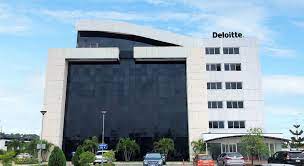
    Consequently, the Country Managing Partner of Deloitte Ghana has advised government to be careful about what he describes as creating tax fatigue in the country.


    “I think we need to expand the tax base and not just increase the rate. When that is done it will create tax fatigue”, Daniel KwadwoOwusu argued. “We need to expand our tax base by increasing formalisation of our economy through digitalisation.”


    Speaking at the launch of the 7th edition of the Ghana CEO Network Summit, MrOwusu entreated government to include various economic activities to rake in more revenue.


    Indicating that the current economic and global challenges should push government to find more innovative solutions to addressing economic issues.


    “This will help boost internal revenue generation and reduce reliance on external borrowing and funding support”, he added.


    He further indicated that the over-reliance on external funding support will be forestalled if successive governments invest borrowed funds from external creditors into various productive sectors of the economy.


    He contends that government should desist from channelling borrowed funds to just expenditure, a move he believes is key to boosting internal revenue generation.


    “Ensure that borrowed funds are invested in projects that will expand the productive capacity of our economy. This will also boost revenue generation and reduce reliance on external support”.


    Presently, Ghana’s tax to Gross Domestic Product hovers around 14%, lower than the sub-Saharan African average of 19%.


    Though the economy has expanded over the years, analysts believe there are numerous loopholes within the tax system, whilst government has given too many tax holidays to some foreign firms.


    Also, the Association of Ghana Industries (AGI) has said the three revenie bills recently passed by parliament will strangle industrial growth, thus, slow down productivity, which would, in turn, cut down the revenue the government can rake in through taxes.


    In a statement signed by its Chief Executive Officer, Mr Seth TwumAkwaboah, the AGI said the three bills will “pose very dire consequences for Industry.”


    “We denounce the lack of stakeholder consultation on such fiscal policies, which have negative impact on businesses”, the AGI noted.


    Although the association made input to the bills, but it shared that, it is obvious their submissions did not receive the consideration as expected.


    Contrary to government’s ambitious revenue projection which largely hinges on the performance of Industry, captains of businesses foresee a contraction in manufacturing and other related business activities.


    They believe businesses may have no option but to cut down on expenditure and production levels to stay within budget”, the association warned.


    “With the foregoing, government risks missing its revenue target if industry has to contend with these new taxes.


    “While we reckon that the government needs revenue, fiscal prudence is crucial”, the association added in the statement.


    “We appreciate the urgent need of the IMF measures, but this should not be at the expense of growth in our industrial sector.”


    “We call on the government to engage AGI on measures to incentivise our local industries to forestall the negative consequences of these policies”.


    The group of business owners related that, they are ready to dialogue with Government for a better way out to save jobs while ensuring business growth which have direct impact on GDP growth, in other words, economic expansion of the country.


    “To this end, we welcome the opportunity to dialogue with Government on how to save jobs and the strategic options to explore in cushioning our local industries.”


    Also, to register its dismay against the unanimous approval of the tax bills into law by Parliamentarians is the Transport Forum Ghana. It bemoaned the posture of the current crop of young parliamentarians.


    Vice-President of the Forum, Mr Eric AmoahAmponsah, in an interview last week, said “we had a lot of hope. We, as youth; we, had a lot of anticipation that they would push our cause.


    “But take it from me, the majority of them have gone and [are] pushing agendas based on party lines, not the community that voted for them. The ideas they push, the thoughts they have, it has become based on party lines.”


    He indicated that there were no consultations done by these young parliamentarians with the constituents concerning the bills to find out how it would affect their lives but rather, they put their party lines first and gave their approval.


    “These new taxes that have been passed, how many parliamentarians went back to their constituencies to check [with them that] ‘This is what government is proposing. What do you think?’ to consult traders.


    Parliament, fortnight ago, after fierce resistance by Minority MPs who narrowly lost the vote to approve the bills by 136 to 137, passed the Excise Duty Amendment Bill 2022, the Growth and Sustainability Levy Bill, 2022, the Ghana Revenue Authority Bill 2022, and the Income Tax Amendment Bill 2022 by Parliament.


    According to the Finance Ministry, the three bills are expected to individually rake in the following;


    Income Tax Amendment Bill 2022 will bring in GH¢1.2 billion annually, Excise Duty Amendment Bill 2022 GH¢400 million annually and Growth and Sustainability Amendment Bill 2022 GH¢2.2 billion annually.

  • Eni, PetroCi sail FPSO to develop Ivory Coast largest offshore field

    Eni, PetroCi sail FPSO to develop Ivory Coast largest offshore field

    Italian oil firm Eni, with its partner PetroCi, has celebrated the sail away of the FPSO Firenze to the giant Baleine oil and gas field offshore Ivory Coast.


    The FPSO Firenze, which sailed away from Dubai, will allow the production start-up of the Baleine field, Ivory Coast’s largest hydrocarbon discovery.


    According to Eni, the Baleine field, “Whale” in French, has an estimated oil in place of 2.5 billion barrels and 3.3 trillion cubic feet of associated gas.


    “The development of Baleine will also be Africa’s first net-zero emission project (Scope 1 and 2),” Eni said.


    The FPSO Firenze, to be renamed Baleine after arrival in Ivory Coast, has been refurbished and upgraded in order to allow it to treat up to 15,000 bbl/d of oil and around 25 Mcfd/d of associated gas.


    The entire gas production will be delivered onshore via a newly built export pipeline.


    Eni said Thursday, April 6, 2023 that the installation of the subsea production system and well completion campaign were underway and to ensure production start-up by June 2023.


    “Eni’s phased development model and fast track have proven to be effective, as the project is set to start production less than 2 years from the Baleine 1X discovery well and one and a half years after the FID. Eni is already progressing swiftly on the second phase of the project forecasting a start-up of production by December 2024 after having taken the FID in December 2022,” Eni said.


    The Baleine field extends over blocks CI-101 and CI-802. Eni also owns interests in four other blocks in the Ivorian deep water: CI-205, CI-501, CI-401, and CI-801, all with the same partner, PetroCi Holding.


  • Gov’t told to be wary of tax fatigue

    Adnan Adams Mohammed


    Last week Parliament of Ghana unanimously approved three amended tax laws which have reviewed upwards some tax items in the Income tax law, Excuse duties law and the Growth and Sustainability levy which replaces the former National Fiscal Stabilization levy.


    The approval has already received strong opposition and criticism from businesses, tax experts and economists. Newest to add its voice is the Country Managing Partner of Deloitte Ghana advising government to be careful about what he describes as creating tax fatigue in the country.


    He expatiated that, expanding the tax net without taking cognisance of working to improve its base will affect negatively most businesses in the country.


    “I think we need to expand the tax base and not just increase the rate. When that is done it will create tax fatigue”, Daniel Kwadwo Owusu argued. “We need to expand our tax base by increasing formalisation of our economy through digitalisation.”


    Speaking at the launch of the 7th edition of the Ghana CEO Network Summit, Mr Owusu entreated government to include various economic activities to rake in more revenue.


    Indicating that the current economic and global challenges should push government to find more innovative solutions to addressing economic issues.


    “This will help boost internal revenue generation and reduce reliance on external borrowing and funding support”, he added.


    He further indicated that the over-reliance on external funding support will be forestalled if successive governments invest borrowed funds from external creditors into various productive sectors of the economy.


    He contends that government should desist from channelling borrowed funds to just expenditure, a move he believes is key to boosting internal revenue generation.


    “Ensure that borrowed funds are invested in projects that will expand the productive capacity of our economy. This will also boost revenue generation and reduce reliance on external support”.


    Presently, Ghana’s tax to Gross Domestic Product hovers around 14%, lower than the sub-Saharan African average of 19%.


    Though the economy has expanded over the years, analysts believe there are numerous loopholes within the tax system, whilst government has given too many tax holidays to some foreign firms.


    Consequently, the Association of Ghana Industries (AGI) has said the three revenue bills recently passed by parliament will strangle industrial growth, thus, slow down productivity, which would, in turn, cut down the revenue the government can rake in through taxes.


    In a statement signed by its Chief Executive Officer, Mr Seth Twum Akwaboah, the AGI said the three bills will “pose very dire consequences for Industry.”


    “We denounce the lack of stakeholder consultation on such fiscal policies, which have negative impact on businesses”, the AGI noted.


    Although the association made input to the bills, but it shared that, it is obvious their submissions did not receive the consideration as expected.


    Contrary to government’s ambitious revenue projection which largely hinges on the performance of Industry, captains of businesses foresee a contraction in manufacturing and other related business activities.


    They believe businesses may have no option but to cut down on expenditure and production levels to stay within budget”, the association warned.


    “With the foregoing, government risks missing its revenue target if industry has to contend with these new taxes.


    “While we reckon that the government needs revenue, fiscal prudence is crucial”, the association added in the statement.


    “We appreciate the urgent need of the IMF measures, but this should not be at the expense of growth in our industrial sector.”


    “We call on the government to engage AGI on measures to incentivise our local industries to forestall the negative consequences of these policies”.


    The group of business owners related that, they are ready to dialogue with Government for a better way out to save jobs while ensuring business growth which have direct impact on GDP growth, in other words, economic expansion of the country.


    “To this end, we welcome the opportunity to dialogue with Government on how to save jobs and the strategic options to explore in cushioning our local industries.”


    Also, to register its dismay against the unanimous approval of the tax bills into law by Parliamentarians is the Transport Forum Ghana. It bemoaned the posture of the current crop of young parliamentarians.


    Vice-President of the Forum, Mr Eric Amoah Amponsah, in an interview last week, said “we had a lot of hope. We, as youth; we, had a lot of anticipation that they would push our cause.


    “But take it from me, the majority of them have gone and [are] pushing agendas based on party lines, not the community that voted for them. The ideas they push, the thoughts they have, it has become based on party lines.”


    He indicated that there were no consultations done by these young parliamentarians with the constituents concerning the bills to find out how it would affect their lives but rather, they put their party lines first and gave their approval.


    “These new taxes that have been passed, how many parliamentarians went back to their constituencies to check [with them that] ‘This is what government is proposing. What do you think?’ to consult traders.


    Parliament, fortnight ago, after fierce resistance by Minority MPs who narrowly lost the vote to approve the bills by 136 to 137, passed the Excise Duty Amendment Bill 2022, the Growth and Sustainability Levy Bill, 2022, the Ghana Revenue Authority Bill 2022, and the Income Tax Amendment Bill 2022 by Parliament.


    According to the Finance Ministry, the three bills are expected to individually rake in the following;


    Income Tax Amendment Bill 2022 will bring in GH¢1.2 billion annually, Excise Duty Amendment Bill 2022 GH¢400 million annually and Growth and Sustainability Amendment Bill 2022 GH¢2.2 billion annually.


  • Deloitte’s free consultancy to gov’t on achieving economic sovereignty

    Deloitte’s free consultancy to gov’t on achieving economic sovereignty

    Adnan Adams Mohammed


    Deloitte Ghana has recommended to government five key ways to achieve economic sovereignty.


    Among others, the accounting and auditing firm listed; increasing the tax net through digitalization, investing borrowed funds wisely to expand the productive capacity of the economy, tackling corruption, domesticating the economy and leveraging on the African Continental Free Trade Agreement.


    Deloitte Ghana has said it is committed to sharing insights and best practices that can help Ghana and the broader region navigate these complex issues and achieve the growth objectives.


    “By collaborating with industry leaders, policymakers, and other stakeholders, we can build a more resilient, inclusive, and sustainable future for all, the Managing Country Partner, Daniel Kwadwo Owusu noted at the launch of the 2023 Ghana CEO Network. “As a Knowledge Partner, Deloitte is proud to bring our expertise in these areas to the table”.


    He said the theme for this year’s event “Sustainable corporate governance, digital industrial transformation, and economic sovereignty”are key to unlocking new opportunities for growth and prosperity.


    “Through our partnership with the CEO Network, we look forward to engaging in meaningful dialogue with leaders from the private, public sectors, and civil society”, he added.


    He affirmed Deloitte’s commitment to being a responsible and impactful corporate citizen. We are led by our purpose of making an impact that matters.


    Also, Group Chief Executive Officer of Margins, Moses Kwesi Baiden Junior, for his part said the topic for this year’s event ‘economic sovereignty’ is important, especially considering the growing interdependence of the world’s economies, cultures and populations fostered by cross-border trade in goods, people, and technology.


    “We are currently experiencing some of the adverse effects of that economic interdependence exacerbated by the COVID-19 pandemic and the conflict in Ukraine. Business owners are grappling with the impact of supply shocks and high inflation rates whilst consumers are discouraged by the reduced purchasing power of the Ghana cedi. These are indeed difficult times; but as the quote says, what doesn’t kill us, makes us stronger. In every crisis, there is an opportunity; but to resolve a national crisis, there must be collaboration across sectors – that is what this year’s CEO summit is aiming to do – facilitate collaborative solutions”, he added.


    He explained that “as we aspire to attain economic freedom, we must first audit our resources – land, sea, air, and space and reindustrialize our supply chains to reduce our current dependence on foreign supply chains. The truth is the African continent has the manpower and the raw materials required to not only compete globally but to dominate. The problem is, we surrender our sovereignty by exporting our raw materials at low prices for the value to be added outside of Africa”.


    He furthered that Ghana has the prerequisites for guaranteeing sovereignty, but need to close its technology gaps to claim it.


    “To enable this business environment, the partnership between the public and the private sectors must be strong; with the public sector creating the appropriate macro-economic environment through policy design and implementation and working with the private sector to develop new capabilities and capacities, influence change technology, improve operational efficiency to increase the value of our assets”, he added.

  • Rising debt levels could worsen – World Bank

    Rising debt levels could worsen – World Bank


    The World Bank has said debt levels and vulnerabilities which remain high could worsen, especially for countries that have lost access to the credit market and are in or at risk of debt distress.


    If not addressed, it stressed that debt dynamics could escalate into a full-blown crisis, setting countries even further back.


    “The international community needs to find more adequate ways to speed up debt treatments. The current resolution mechanisms need to be strengthened so that they can effectively address a potential debt crisis, and additional instruments may need to be set in motion”,  the World Bank’s April 2023 Africa Pulse Report has noted.


    However, the Bank has urged African economies including Ghana to increasingly rely on their own policy reforms and domestic space for action in three areas.


    “First, restoring macroeconomic stability is essential for growth. Raising interest rates and avoiding policy conflicts that reduce the effectiveness of monetary transmission (say, fiscal dominance, and foreign exchange distortions) are crucial to reduce inflation to target levels.”


    “Second, structural reforms that foster private investment should be at the top of the pro-growth policy agenda of countries in the region. A premium should be put on policy measures that boost long-term competitiveness—including actions to improve market contestability and promote a sound regulatory framework”, it explained.


    “Third, African policy makers need to seize the opportunities that are available to them during the low carbon transition”, it concluded.


  • Gov’t cautioned against ‘fiscal offset’ in 2023 Budget

    Adnan Adams Mohammed


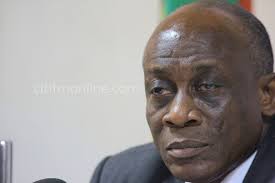
    A former finance minister has called on the government to be honest to Ghanaians on the true picture of total debt, as he believes the government has offset almost about GH¢22 billion from the 2023 budget.


    This reduces the fiscal deficit from about GH¢60 billion to approximately GH¢38 billion. This was discovered after critical analysis of the budget, Seth Terkper said.


    The former Minister is worried that such practice by government creates a false impression of fiscal prudence, which is unsustainable in the long term. His concerns reflect a broader need for transparency and accountability in government finances in Ghana.


    “The government must address these concerns to build trust with its citizens, investors, and international partners. Failure to do so could lead to further economic instability and harm the country’s long-term economic prospects”, Mr Terkper, former finance minister under John Mahama’s administration, said in an interview last week.


    This will be the second time the former minister is advising the government not to engage in ‘fiscal offset’ as it happened in the 2017 budget and therefore calling on the government to disclose its plan for dealing with a large GH¢77 billion pipeline of arrears and contracts in the 2021 Budget Performance Report.


    He noted that a similar plan was used to deal with the “single spine” wage arrears in 2020.


    He argued that given the budget overruns are at the core of most debt challenges, transparency and accountability in government finances are crucial for securing an IMF programme. Moreover, they are also needed for sustainable economic growth and development.


    Mr. Terkper also contended that the treatment of the banking and energy sector bailout costs as memoranda items, rather than adding them to the country’s deficit and public debt stock, creates a false impression of fiscal consolidation.


    The former Finance Minister again pointed out that this practice by government resulted in the rapid rating downgrades of the country’s sovereign bonds and eventual debt default, with the deficit revised upwards to 7% and 7.2% for 2018 and 2019 respectively, when the IMF and ratings agencies adjusted Ghana’s fiscal deficit and public debt figures.


    He recalled that in 2017, the incoming Akufo-Addo administration accused the John Mahama administration of overlooking arrears of about GH¢7 billion. However, only about GH¢2bn was carried forward to the 2017 fiscal year after an apparent offset of GH¢5billon against total expenditures. At the time, Mr. Terkper opposed the move in various articles and interviews.


    “The 2023 budget showed another apparent offset of GH¢22 billion that also appears to reduce the deficit from about GH¢60 billion to approximately ¢38 billion”, adding that, “as with the 2.3% reduction in the budget or fiscal deficit in 2017, the repetition of the fiscal move results in a “paper” reduction by 3.7% of Gross Domestic Product”.


    He cautioned that, “this practice by government creates a false impression of fiscal prudence, which is unsustainable in the long term.