Category: News

  • Ghana to get IMF Board approval by May-ending – Terkper

    Adnan Adams Mohammed


    As government intensify its effort to get the Board approval from the International Monetary Fund (IMF) soonest after missing the March-ending target, a former finance says, the government may get approval by May-ending.


    Seth Terkper reacting to dire economic situation of the country indicated that, the month of May 2023 is practically feasible for Ghana to get a Fund-support programme.


    Fitch Solutions last week also projected that Ghana’s staff-level agreement with the Fund will receive an executive board approval in the second quarter of 2023. Assuring that a Fund support programme will unlock critical financial assistance, shore up the country’s foreign exchange reserves and improve investor confidence. Despite, the difficulties in reaching an agreement with external debtors for a relief, Terkper still hopes may May-ending should be a realistic target.


    “So if April [2023] is out then we are in May [2023], and there may be a rush of countries that will be pushing [for a Fund-support programme] – that may have concluded already – and may have had drafts being finalised for the board [IMF]. We haven’t had drafts yet as far as I know because we are still in the external debt restructuring”.


    “There are fiscal economists [at IMF} dedicated in their mission whose focus is to look at fiscal developments and trends, published and unpublished about the countries. I didn’t see this in the budget [2023], but there were many prior actions. So that may come up maybe as additional prior actions or in terms of performance review there may be a discussion on it”, Mr. Terkper said.


    He pointed out that even if the prior actions are completed and Ghana has agreement especially the external debt restructuring, “the entire document would have to be agreed by government as it goes through the Africa Department which is our regional department”.


    “Then it may come back with questions which will be reviewed at which point the Memorandum of Economic Policy and the Letter of Intent will be signed by the Minister of Finance [Ken Ofor-Atta] and the Governor [Dr. Ernest Addison].


    He therefore concluded the document would be ready to go to the board at that stage “and I think this are some of the considerations which may push us into optimistic May [2023]. Fitch Solutions may also have some intelligence suggesting so”.


    Consequently, the World Bank’s April 2023 Africa Pulse Report has disclosed that, Ghana is yet to make progress with the G20 Common Framework Debt Treatment with its bilateral creditors.


    This is contrary to government sources that it has reached an agreement with its bilateral creditors, particularly the Paris Club to pave way for an International Monetary Fund-support programme.


    “Ghana requested a Common Framework debt treatment in early 2023; hence, progress has yet to be made. In conjunction with the Common Framework engagement, Ghana conducted a voluntary domestic debt exchange programme. Other countries engaged with private creditors and bilateral donors engaged in external restructuring efforts through bilateral engagements (Malawi)”.


    ”Yet, these efforts cannot replace a comprehensive and well-coordinated solution for countries in debt distress. High liquidity and solvency pressures may push more countries into an unsustainable situation that requires a comprehensive restructuring of their obligations”, it added.


    Meanwhile, the International Monetary Fund (IMF) Chief, Kristalina Georgieva, last week noted that, she told China’s new top economic official, Li Qiang, they must accelerate work to reach debt restructuring agreements for countries like Zambia, Ghana and Ethiopia.


    Georgieva, who met with Li and other top Chinese officials during a visit to China last month, said on Thursday she found Li very approachable and pragmatic.


    She said he assured her that he wants China to play a constructive role in resolving debt relief cases.


    “The truth is, and I was … very straightforward on that, it takes far too long for that (debt) resolution,” she told an event hosted by Meridian House and Politico.


    “Yes, China has multiple institutions that deal with that, that makes it complicated domestically, but they have to speed up their participation.”


    The United States and other Western countries have faulted China for causing delays in setting up restructuring agreements for heavily indebted countries that have asked for help under the Common Framework set up by the Group of 20 major economies.


    Georgieva noted China had been helpful in reaching a debt relief deal for Chad, and also Sri Lanka, a middle-income country that was not eligible for help under the G20 framework, and she encouraged China to show progress on other cases.


    About 60% of low-income countries are already in or at risk of debt distress, and about 25% of emerging economies are at high risk and facing “default-like” borrowing spreads, Georgieva said.
     

  • 2023 Energy Investment Village launched, announcing a exciting deal-pitching

    2023 Energy Investment Village launched, announcing a exciting deal-pitching

    PRESS RELEASE

    JOHANNESBURG, April 2023 – The Green Energy Africa Summit (GEAS) has announced the launch of the 2023 Energy Investment Village (EIV), an exciting deal-pitching event for African clean-tech starts-ups and energy projects.


    The EIV is now open for entries from emerging African energy businesses, and will culminate in a lion’s den-type pitching event during the GEAS in Cape Town on 11 October 2023.


    The EIV is a partnership between Saldanha Bay Innovation Campus and the Research Institution for Innovation and Sustainability (RIIS), supported by Anza Capital and Afida.


    This is the second year of the EIV. Last year’s event saw finalists representing local clean-tech projects pitching to energy leaders holding potential investments worth more than $100 billion.


    The event was won by Brayfoil Technologies, a South African wind-energy company whose adaptive turbine designs enable more efficient applications in the wind energy, aerospace, sailing and automotive sectors. Following the win, the Brayfoil team hosted several meetings with potential investors on the sidelines of the GEAS.


    “We are proud to have been able to put some of Africa’s best emerging clean-tech firms in touch with serious funders looking to invest in the sector,” says GEAS Vice President for Energy Paul Sinclair, “We look forward to amplifying that commitment with this year’s event, and helping to develop black-owned business in the booming green-energy industry.”


    Sinclair called upon all African clean-tech start-ups and energy projects to enter this year’s EIV. The initiative is open to start-ups in the early stages of rolling out clean-tech projects, as well as large-scale energy projects of between 20 and 100MW, requiring finance to get off the ground.


    “If you’re solving for a cleaner, sustainable future for South Africa and Africa, we want to hear from you,” says Sinclair.


    EIV is also calling for organisations looking to become strategic partners to support its commitment to giving Africa’s clean-tech start-ups and energy projects access to global investors.


    Freeport Saldanha CEO, Kaashifah Beukes explains that the conceptualisation of the EIV was driven by the need to connect and capacitate clean-tech start-ups and energy projects. “The work that is being done in clean energy innovation and development in South Africa and Africa is hugely exciting. But the challenge is that investors who have an appetite for investing into these kinds of projects, often do not have sight of them. The EIV seeks to become a conduit between investment and solution.”


    Davis Cook, CEO of advisory firm RIIS, says the Energy Investment Village is a unique opportunity to accelerate innovation through the development and deepening of supportive ecosystems.


    “Long-term sustainability can only be achieved if we ensure a responsive and connected environment in which business and society can innovate,” says Cook. “The EIV is an excellent platform to strengthen the building blocks of collaboration that are critical for problem solving in a fast-changing world.”


    The EIV has become an exciting innovation pipeline at a time of global energy crisis due to bottlenecks in international power supply, geopolitical uncertainty and a rapidly evolving energy mix.


    As part of the GEAS, it supports stimulating deals and transactions across the African Energy Industry. GEAS brings together governments, national regulators and utility companies, independent power players, investors, financial institutions and service providers to drive deals and investment into energy projects, provide energy access and solutions for the future of Africa.


    At EIV 2022, besides securing invaluable investor engagement, Brayfoil Technologies won a R20 000 cash prize from FNB, a year’s business membership with the Africa Scotland Business Network (ASBN) and an ASBN branding and marketing workshop.


    At the EIV finals, judges adjudicate start-up pitches according to criteria such as innovativeness, sustainability and business merit.


    To register your interest in the Energy Investment Village, visit here or email Belinda.Williams@Hyve.group


    ENDS

  • North-Eastern Nigeria: 690K children at risk, 6million facing catastrophic food needs …as UN worries with growing rate of hunger, malnutrition after insurgency ease

    North-Eastern Nigeria: 690K children at risk, 6million facing catastrophic food needs …as UN worries with growing rate of hunger, malnutrition after insurgency ease

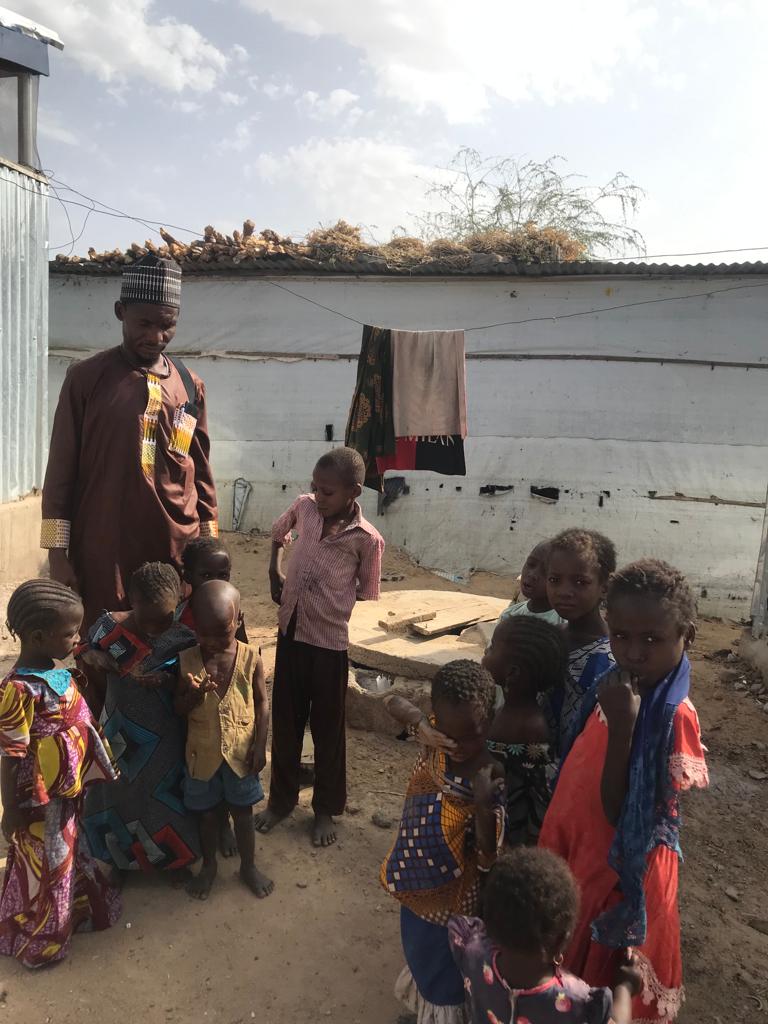
    Soberly contending with the hungry children at the Ajere II IDP Camp

    Adnan Adams Mohammed, reporting from Maiduguri, Borno State


    After 13 years of insurgency attack on the people of North-Eastern Nigeria (Borno, Yobe and Adamawa States) by Boko Haram and ISWAP, the United Nation is worried with growing rate of hunger and malnutrition, especially among children and women.


    The insurgent attacks, which have displaced and relinquished millions of households of their livelihoods (farms, livestock and businesses), worsened the already daring poverty and hunger levels in those part of the country.


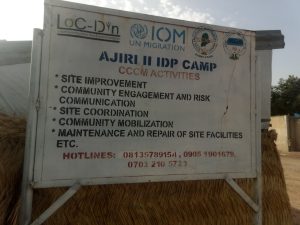
    During my fact finding mission visit to one of the affected States, Borno State, fortnight ago, it was very sad to notice millions of people are facing the painful consequences of a deteriorating food security and nutrition crisis. I was forced to make food donations (which was not part of my plan for the visit) to one of the Internally Displaced Persons (IDPs) camp, Ajere II IDP Camp, after contending with their living conditions, especially seeing the starving faces of the children at the camp and within the communities within the metropolis.

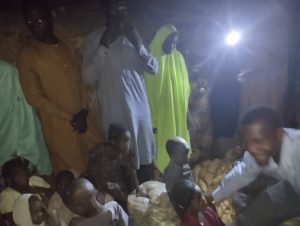
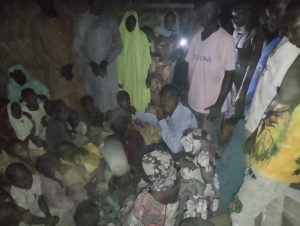
    Night scene: Donating food items to Ajere II IDP in Maiduguri.
    Night scene: Donating food items to Ajere II IDP in Maiduguri.

    According data from the World Food Programme (WFP); 8.4 million people are food insecure in northeast Nigeria, and over 3 million people internally displaced in Borno, Yobe and Adawama states. It estimates also that, about US$1.3 billion is required to reach 6 million people in north-east Nigeria with humanitarian assistance in 2023, an increase of 18 percent from the 2022 funding requirements.


    “The lives of some 690,000 children are at risk!”, United Nations Resident and Humanitarian Coordinator for Nigeria, Matthias Schmale, shared his worry at the launch of the ‘Nigeria Humanitarian Response Plan 2023’ document on February 16 in Yola, Adamawa State. “I am, for example, deeply concerned about severe acute malnutrition among children which is expected to more than double compared to last year.”

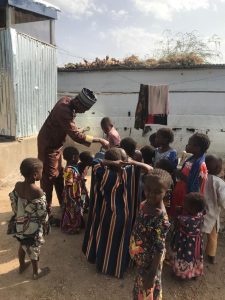
    At Ajere II IDP Camp: helping give water to the taste children

    According to the UN, food insecurity means not knowing when or where your next meal will come from. It means, in essence, not being able to meet the basic needs for yourself or your family. As a result, countless families are forced to make alarming sacrifices to survive. Many, particularly children, are at risk of not making it through the lean season.


    It devastating experience to know that, people facing extreme or catastrophic needs have increased from 5.5 million people last year to over 6 million according to the


    “….some 6 million people. These are people with severe, extreme or catastrophic needs. This is an increase from 5.5 million people last year.


    “For the first time we are also seeing some 250,000 people who are experiencing a catastrophic situation, meaning that their coping mechanisms are exhausted, and they are on the verge of collapse. Needless to state, my colleagues and I are very worried about their immediate and long-term future.”

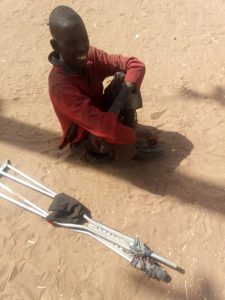
    A displaced person now a starving-beggar at Maiduguri

    Meanwhile, it is very unfortunate to know that, funding for humanitarian work in the north-east of Nigeria has remained stagnant in the last two years, as indicated by the UN Resident Coordinator.


    In spite of these catastrophic condition of the people which should be taken the full attention of the State and Federal government officials on how to tackle the situation to save lives of the people they are to serve, the Adamawa State Governor Ahmadu Umaru Fintiri, in a statement issued on February 28,  announced the suspension of the activities of local and international NGOs throughout the State until March 15, 2023 on allegations of “dabbling into politics in the name of providing humanitarian assistance to the people”. With the postponement of the second round of elections to March 18, the Adamawa State Government announced an extension of the suspension of NGOs’ activities until after the election. High-level advocacy efforts are ongoing for the essential work of humanitarians to continue for the well-being and safety of all people in need in Adamawa.


    A clear sign that, winning the election was more important to the Governor, a supposed servant of the people more than the lives of the kingmakers. Again, instead of complimenting and encouraging the effort of the NGO workers and volunteers most of whom do not even have direct family relations from the affected States and the country at large, yet risking their lives and leaving their family back home to sleep in the middle of terrorism attacks, rather the politicians are seeing them as enemies to electoral fortunes.


    During my fact finding mission to Borno State from March 11 to 18, 2023, I visited one of the IDPs, that is, Ajere II IDP Camp at Kushari, the camp chairman spoke to us

    All-focus

    Narrating how unbearable the situation at the camp is for them for the nine years.


    Since we came, eating has been a problem for us. Even the firewoods we go to the bush to fetch to come and sell, the soldiers sometimes deny us from entering into the bush for fear that we might be attacked by the insurgents.


    Life is unbearable, there is still no peace in our villages (Ajere, under Kundiga LGA), it is dangerous area, Boko Haram still controls there just 30km (about 1hour journey by transport) from the Maiduguri metro.


    We don’t get food provisions, it is only once WFP brought us food. For (Kushari A camp ) they used to be getting intermittent provisions from Save the Children.  


    Now, that the Ramadan fasting is coming we have no provisions. We are wondering how to survive. Since apart from fetching firewood to sell, we have to be weeding in farms for others to be able get some. And in fasting we can’t weed due to the weakness of the body.


    Also, we spoke to one of the camp members, a mother of five, who lost one child to Boko Haram forced abduction. Fatima (not her real name) narrated her experience at the camp how they were attacked by the Boko Haram insurgents.


    “We were sitting when they came to start attacking by putting in our buildings, we started running with children and family that night. Some couldn’t make as they killed by the Boko Haram. Some burnt in their rooms. On our way going we stayed somewhere in a different for the next day before we continued our journey to Maiduguri.


    “We don’t have what to eat. Sometimes our husbands have to go look for firewood outskirt of the town in the bushes to bring to sell in town. Sometimes the military taskforce stops them from entering into the bush due to fear that, they might be attacked by Boko Haram. Also, sometimes when their husbands are able to get some of the firewoods, they do not get their money on time after selling due to transfer network challenges. The highest they sell is around 700 naira per each trip to the bush.


    “As at the time of our visit to the camp, 4pm, the her husband had just returned from the bush, but they are yet to look for transfer to cash the money from the sell of the firewood to be able to buy foodstuffs for cooking for the day as they have not eaten since morning.


    “We have no means of trade since we do not have capital. What to eat is even a problem then for us to save some for trade capital.


    “I have five children and am here with my husband. Among the five children, one was taken away by her cousin back to Kundiga village were they were displaced but have since not returned. They suspect Boko Haram have abducted them.”


    Their striking narration forced us to make donation of food items to the camp which carter for them for a week.

    Consequently, also speaking to some Information Officers at the Borno Sate Federal Secretariat, they confirmed the daring food insecurity situation the people are facing. Juxtaposing that, the situation is constantly contributing to skyrocketing food inflation due to the insufficient food supply from the previous sources where their foods come from as most of the farmers are afraid to go their farms within the local government areas where the insurgents are hiding out.


    “Malnutrition and poverty have increased now within affected States and LGAs”, one of the Information Officers who spoke to us off-record said.


    “It is amazing to know how NGOs and Govt agencies are destroying and burning foods and provisions meant for distribution to displaced people in affected areas with excuses that they have expired. But, one will wonder why all these foods were kept without sharing them until they are expired.


    “All these food are destroyed at the peak of the crisis contributing to the high food inflation till now, because farmers were not going to farm so no food were coming to the market resulting in food scarcity.”


    Credit to; Fatima Majewa, Maira Allamin and Humu for their immense support during my fact finding mission to the Borno State.

  • New antibiotic (vaccine) discovered to cure gonorrhoea

    New antibiotic (vaccine) discovered to cure gonorrhoea

    Adnan Adams Mohammed

    Gonorrhea, a popular infection among the Sexually Transmitted Infections (STIs), is causing havoc among the young population of the world which causes infection in the genitals, rectum, and throat.


    According data from Centers for Disease Control and Prevention, the sexually transmitted infection records about 78 million new cases worldwide each year and classified as highly damaging if untreated or improperly treated.


    In their efforts to improve on the efficiency of curing and reducing the rate of cross-infection of Gonorrhoea, scientific researchers discovered an innovative vaccine.

    Through their relentless effort, the researchers identified a protein that powers the virulence of the bacteria that causes gonorrhoea, opening the possibility of a new target for antibiotics and, even better, a vaccine.


    The findings of the research, published recently in PLOS Pathogens, are important since the microbe, Neisseria gonorrhoeae, is considered a “superbug” because of its resistance to all classes of antibiotics available for treating infections.


    Gonorrhoea, can lead to endometritis, pelvic inflammatory disease, ectopic pregnancy, epididymitis and infertility. Babies born to infected mothers are at increased risk of blindness.


    “The infections very often are silent,” said Oregon State University researcher Aleksandra Sikora.


    “Up to 50 percent of infected women don’t have symptoms, but those asymptomatic cases can still lead to some severe consequences for the patient’s reproductive health, miscarriage or premature delivery.”


    The need for better antibiotic therapy, and a vaccine, is pressing. N. gonorrhoeae strains resistant to the last effective treatment options have emerged, and failures in treatment are occurring.

    Dr Sikora and her research team at the OSU/OHSU College of Pharmacy and Ann Jerse’s lab at the Uniformed Services University of the Health Sciences in Bethesda, Maryland, collaborated to discover a novel lipoprotein that N. gonorrhoeae uses can defeat the body’s first line of innate immune defence.


    It said the body relied on enzymes known as lysozymes that, as their name suggests, thwart bacteria by causing their cell wall to lyse, or break apart.


    Lysozymes are abundant both in epithelial cells, which make up the tissue on the outside of organs and the inside of body cavities, and in the phagocytic cells that protect the body by ingesting foreign particles and bacteria.


    In turn, many gram-negative bacteria — characterised by their cell envelope that include a protective outer membrane — have developed ways of defeating lysozymes. Prior to the work by Dr Sikora’s team, however, only one lysozyme-fighting protein had been discovered in the Neisseria genus.


    Now that new targets had been identified, they could be explored as bullseye candidates for new antibiotics or a vaccine — if the lysozyme inhibitor could itself be inhibited, then the bacteria’s infection-causing ability is greatly reduced.


    Dr Sikora and her collaborators named the new protein SliC, short for surface-exposed lysozyme inhibitor of c-type lysozyme.


    Studying SliC’s function in culture as well as in a gonorrhoea mouse model — mice were infected with N. gonorrhoeae, then checked for SliC expression at one, three and five days — researchers determined the protein was essential to bacterial colonisation because of its anti-lysozyme role.


    “This is the first time an animal model has been used to demonstrate a lysozyme inhibitor’s role in gonorrhoea infection,” Dr Sikora said.


    “Together, all of our experiments show how important the lysozyme inhibitor is. This is very exciting.”


    Gonorrhoea, if untreated, may cause infertility. Regular screening, therefore can help detect instances when an infection is present despite having no symptoms.

    Symptoms include painful urination and abnormal discharge from the penis or vagina. Men may experience testicular pain and women may experience pain in the lower stomach. In some cases, gonorrhoea has no symptoms.

  • Gross Int’l Reserves fall to US$5.9bn

    The Bank of Ghana has said Ghana’s gross international reserves fell to US$5.9 billion as of the end of February 2023.


    It is enough to provide import cover for 2.8 months, the Governor, Dr Ernest Addison, told journalists at the central bank’s Monetary Policy Committee meeting.


    He said: “For the year 2022, the overall balance of payments recorded a deficit of US$3.6 billion”, noting: “The capital and financial account recorded a net outflow of US$2.1 billion (2.9 percent of GDP), mainly on account of lower FDI flows and significant portfolio reversals”.


    These, Dr Addison noted, together with the current account deficit of US$1.5 billion (2.1 per cent of GDP), resulted in the deficit of the overall balance”.


    “As a result, Gross International Reserves for 2022 declined by US$3.5 billion to US$6.2 billion. Net International Reserves, which adjusts Gross reserves for the Heritage and Stabilization funds as well as other encumbered funds also declined by US$3.7 billion to settle at US$2.4 billion by December 2022”, he reported.


    Dr Addison indicated: “Gross International Reserves further declined to US$5.9 billion at the end of February 2023, providing cover for 2.8 months of imports of goods and services. However, Net International Reserves improved to US$2.6 billion, reflecting a slight decline in encumbered funds”.


  • Ghana’s inflationary trend to improve as global price eases

    Ghana’s inflationary trend to improve as global price eases

    Adnan Adams Mohammed


    As global prices of food and energy ease, Ghanaians are likely to witness a positive improvement in its inflationary trends.


    Ease in prices could have a trickle-down effect on Ghana’s economy, the Bank of Ghana Governor has said.


    In spite of the emerging risks to global financial stability, central banks in major advanced economies have demonstrated a strong commitment to containing underlying inflationary pressures with sustained policy rate hikes, albeit, at lower rates than earlier anticipated”.


    “Global inflation is easing as food and energy prices moderate due to weakened global demand, improved supply of goods, and continued monetary policy tightening”, Governor Dr Ernest Addison said at its recent Monetary Policy Committee meeting held in Accra last week.


    “Global financing conditions have eased slightly, reflecting changing market expectations regarding the pace of policy tightening”.


    The US dollar index initially firmed up amid rising demand for safe-haven currencies following the collapse of Silicon Valley Bank and Signature Bank, but so far, swift regulatory action and assurances to contain contagion risks, combined with decisions to boost dollar liquidity somewhat eased market concerns about a wider banking and financial crisis.


    “The committee was of the view that the ease in price pressures abroad would likely impact positively on Ghana’s domestic inflation profile”, he reported.


    On the other hand, he said “the committee noted that the domestic economy still faces relatively tight global financing conditions, emerging risks in the global financial system, and heightened uncertainty about the global economic outlook”.


    “The effects of these on the domestic economy could be amplified by inherent vulnerabilities, including structural excess liquidity following the DDEP, and the widening negative output gap”, he added.


  • Local banks resort to target lending.. mining firms luckiest– Fitch

    Local banks resort to target lending.. mining firms luckiest– Fitch


    Adnan Adams Mohammed


    The banks suffering from fall in capital levels due to the domestic debt exchange program (DDEP) may resort to target lending, Fitch Solutions has said,


    The investor firm predicts that, industries with low non-performing loans (NPLs) ratios and positive outlook, especially the mining sector may receive lending from the banks.


    While the mining sector has a low NPL ratio of 4.0%, with a positive outlook forecast for gold mining in Ghana which accounts for 95% of the country’s mineral revenue; the construction sector, which has about 35% NPL ratio ( thus, one-third of all loans are non-performing) as estimated by Fitch, is expected to receive less lending from local banks.


    “Local banks will be more inclined to lend to industries with low non-performing loans (NPLs) ratios and positive outlook, especially since we expect to see a rise in NPLs in the coming quarters, given the challenging macroeconomic backdrop and slowdown in loan growth”, Fitch Solutions said in its latest report.


    “We think that the Mining & Quarrying sector stands out as it has a low NPL ratio of 4.0%, and as we forecast a positive outlook for gold mining in Ghana (which accounts for 95% of the country’s mineral revenue)”, it explained.


    On the other hand, it said nearly one-third of all construction loans are non-performing, which suggests that banks are unlikely to increase their exposure to this sector amid challenging economic conditions.


    According to Fitch Solutions, the domestic debt restructuring programme has led to a significant fall in the capital levels of banks in Ghana and could threaten the solvency and stability of the sector.


    It said: “Banks are entering this phase with a mixed capital picture, with some banks very close to the minimum regulatory capital level of 13.0%”.


    Fitch Solutions also pointed out that capital buffers have fallen considerably in 2022, despite a sudden rise in December.


    The fall, it noted, was largely driven by mark-to-market losses on investments and increases in risk-weighted assets of banks, due to the depreciation of the cedi and growth in loans and advances.


    However, capital levels narrowly avoided falling below the minimum requirement in December 2023, likely as a result of banks retaining more of their earnings, in preparation for expected losses in profits and capital in 2023.


    “The debt restructuring and fall in capital could lead to higher funding costs for banks if they become less creditworthy, and could significantly impact the banking sector’s solvency and stability”, Fitch Solutions warned.


    The warning by Fitch Solutions dovetails into similar sentiments expressed by the Bank of Ghana recently.


    Admittedly, Bank of Ghana at its Monetary Policy Committee meeting press briefing, last week, indicated that macroeconomic challenges and the recent domestic debt exchange programme (DDEP) have weakened banks’ capital buffers.


    The situation, according to the Governor of the central bank, Dr Ernest Addison, requires urgent measures to forestall financial stability risks.


    “The macro-prudential risk assessments conducted during the last MPC meeting indicated increased pressure on profitability and solvency of banks prior to the implementation of the DDEP”.


    “The preliminary data available at this MPC, show that the pre-pandemic capital buffers in the banking sector have been weakened somewhat by the recent macroeconomic challenges and the DDEP, although banks remain liquid”, he explained.


    Consequently, the governor noted that, “These require contingency measures by banks, supported by the regulatory reliefs to contain potential risks to financial stability.


    “The Bank of Ghana will continue to monitor these developments going forward, and stands ready to act very swiftly to safeguard the stability of the financial sector”.

  • Ghana to achieve ‘Universal Health Coverage’ target with better public health workforce

    Ghana to achieve ‘Universal Health Coverage’ target with better public health workforce

    By Adnan Adams Mohammed


    Ghana’s Ministry of Health recently launched a strategic plan document to guide the health sector overall performance with regards to public health.


    The document named “Public Health Workforce Strategic Plan” was launched at an event in Accra last month on the theme ‘Building a Resilient One Health Public Health Workforce in Ghana’ with the aim of ensuring better response to emerging public health threats.


    The ‘Public Health Workforce Strategic Plan’ will provide prompt access and the highest quality health services through equitable deployment and retention of qualified workforce in Ghana’s human, animal and environmental health. The Health Ministry developed the guide in collaboration with the Ministry of Food and Agriculture and the Ministry of Local Government and Rural Development to develop this document to guide the country on its health workforce needs.


    “The document would support in addressing some weaknesses in the health workforce, particularly recruitment, workforce distribution, staff development, and employee motivation and employee migration”, Deputy Minister for Health, Hon Tina Gifty Mensah said at the launch. “The Public Health Workforce Strategic Plan is a five-year document which presents a road map that would guide the restructuring of the Human resource of the public health workforce and ensure that the Universal Health Coverage target is fully achieved, using the One Health Concept by 2030.”


    The Director General of Ghana Health Service (GHS), Dr Patrick Kuma Aboagye, in his remarks commended the timeliness of the Strategic plan since there was no document guiding the inter-sectoral collaboration.


    “Practically, Covid-19 made us implement the Public Health Strategic Plan even before the launch, and I believe that this document will guide the inter-sectorial collaboration and once we have been doing it unknowingly because of Covid, we should not wait for any public health emergency before we think of bringing other health sectors who have a stake in addressing public health issues” he added


    The Public Health Division of the Ministry of Health is of the key Divisions in Ghana Health Service structure. The Division leads and ensures development and implementation of policies and strategic plans and programmes that protect, promote and improve public health and contribute to the overall health and socio-economic status of families and communities. It is responsible for: Safeguarding and improving the health of the general population or communities; Developing public health interventions targeted at people in communities; and Promoting general socio-economic development, preventing diseases, promoting healthy practices, treating diseases (especially mass treatment), and rehabilitating patients afflicted with diseases Developing partnerships with relevant stakeholders.


    The priorities of the Division include: Strengthening epidemiological surveillance on priority diseases; Ensuring early detection and effectively controlling epidemic prone and priority endemic diseases; Strengthening routine immunization through the Reaching Every Child (REC) approach.


    The Division is headed by a Director and has the following two main Departments under it: Disease Surveillance Department and Disease Control and Prevention Department.


    The Public Health Department coordinates the planning and implementation of public health activities in the regions mainly in communicable disease control and surveillance, reproductive, adolescent and child health, nutrition and health promotion.

  • GREDA advises members to Build quality homes

    GREDA advises members to Build quality homes

    The Ghana Real Estate Developers Association (GREDA) has charged members to endeavour to deliver quality homes to prospective clients.


    This is to ensure clients are able get value for money as they make such decisions.


    Vice President of GREDA, Cynthia Opuni was speaking as special guest at the launch of The Seven; a project by Elrano Projects and Consult at Community 25, Tema.


    She urged the company to tap into its expertise for this project.


    “Elrano must use its expertise in both marketing and building technology to deliver quality housing that will serve as icon along the coast of the country and become a beacon to others and provide a template that others will emulate in housing unit”


    “We pray that this vision that you’ve birthed will achieve realisation in the shortest possible time,” she added.


    The association commended the company for the project.


    “For GREDA, we are here to lend our support to our fellow members especially if somebody is willing to invest their time to construct now in these turbulent times”


    Cynthia Opuni said the location of ‘The Seven’ project was worth mentioning.


    “A very good location at Community 25 as government expands the main road. The best time to invest in ‘The Seven’ is now as expansion of the road and other infrastructures could soon make properties here quite expensive,” she advised.


    Alluding to the bible, she asked the company not to despise its small beginning.


    ‘The Seven’ project seeks to maximize space by building seven modern vertical homes in a gated court with landscaping to support green building practices having the clients in mind.


    The project offers two options to buyers in the form of Mirth and Verve.


    Mirth is a three-bedroom home expandable to four and comes with a terraced roof, pergola, fully fitted kitchen cabinet and wardrobes in all bedrooms.


    This option features a mini football set which is provided as a complimentary gift.


    The other type; Verve has similar features to Mirth in addition to a penthouse provision, an elevator, a sky bar and a rooftop pool.


    This also has mini football and gym equipment provided as complimentary gifts.


    For brains behind the name, seven represents perfection.


    Council member of GREDA, Salah Kalmoni urged Elrano to engage the services of professional engineers to deliver buildings that can stand the test of time.


    Speaking to Joy Business, he was quite impressed with the buildings.


    “We’re very surprised that even though the buildings are big and comfortable for families, you can have three to five bedrooms and other parts of the interior but the most important thing is efficiency”.


    According to him, putting seven houses on two plots of land is quite amazing and encouraged more of these ideas as land becomes more expensive.


    Mr. Kalmoni liked the approach of the company for beginning with ‘The Seven’.


    “The company starting small by deciding to build seven homes and tackle the next project which will be 14 and growing from there instead of going big at a go is commendable. It’s better to go this way even if you have 50 acres of land”


    Meanwhile, Managing Director of Elrano Projects and Consult, Rev. Elvin Larkai believes partnership is an important piece that is missing in the real estate space.


    He tells Joy Business this approach could revolutionise real estate in Ghana.


    “One developer may have a major strength in concrete product production while another could be a leader in window fabrication. One may have banks of land and another the needed capacities in terms of human resources or capital. If such companies collaborate, it could lead to more houses being built at faster and cheaper rates”


    “We don’t think real estate ends with construction though. We believe it is essential to partner with media stakeholders to promote developers’ projects. This would lead to more business opportunities for the media sector and reduce the sales wait time for developers”, Rev. Larkai continued.


    Elrano Projects and Consult believes a lot could be achieved in the value chain through collaboration and partnership that lead to the good of both of property seekers and businesses.


    According to Rev. Larkai, with thousands of properties built in the country annually, a chunk of them are managed by individuals due to lack of perceived quality and options.


    “Fostering relationships in the industry would shift this balance of construction in favour of real estate companies and developers,” he added.


  • Newmont achieves 2022 guidance, provides stable 2023 and improving longer-term outlook, declares $0.40 Q4 dividend

    Newmont achieves 2022 guidance, provides stable 2023 and improving longer-term outlook, declares $0.40 Q4 dividend

    Newmont Corporation has announced fourth-quarter and full-year 2022 results, as well as its 2023 and longer-term outlook.


    It produced 6.0 million gold ounces and 1.3 million gold equivalent ounces from copper, silver, lead and zinc; and achieved original production guidance range set in December 2021.


    Also, gold all-in sustaining costs were $1,211 per ounce, in-line with updated guidance range despite global cost pressures throughout the year.


    The miner generated $1.1 billion in free cash flow after $2.7 billion of meaningful reinvestment into the business to advance our most profitable near-term projects.


    Newmont said it “safely” delivered on its commitments and remained focused on fatality risk management, for which it was recognised as the Top Miner in the 2022 Dow Jones Sustainability Index for our unwavering commitment to leading ESG practices.


    It further announced 2023 and longer-term outlook underpinned by strong gold production and improving costs.


    It said as previously signaled, 2023 production guidance is expected to be between 5.7 and 6.3 million gold ounces. It steadily improves in the longer-term, driven by strong production from world-class assets and an unmatched project pipeline.


    It said gold all-in sustaining costs are expected to be between $1,150 and $1,250 per ounce in 2023.


    Newmont incorporated an additional 3% of cost inflation compared to 2022, which is expected to be largely offset by full potential cost efficiencies.


    It intends to sustain capital spend of $1.0 to $1.2 billion in 2023, which is expected to remain steady across the five-year period.


    It projects development capital spend of $1.2 to $1.4 billion in 2023, a meaningful reinvestment to strengthen its global portfolio.


    2023 Dividend Payout Range Established Within Industry-Leading Framework


    Newmont announced a sustainable base dividend of $1.00 per share at base reserves price of $1,400 per ounce.


    It also announced an incremental dividend payout of $0.40 to $0.80 per share, calibrated at $1,700 per ounce and incorporating free cash flow impacts from industry-wide inflationary pressures and a period of meaningful reinvestment.


    Annualised dividend payout ranges from $1.40 to $1.80 per share, subject to quarterly approval by the Board of Directors.


    It declared fourth-quarter 2022 dividend of $0.40 per share, set at the midpoint of the 2023 dividend payout range.


    Mr Tom Palmer, President and Chief Executive Officer of Newmont, said: “Newmont safely delivered on our commitments in 2022 and finished the year from a position of strength, meeting our full-year production guidance and generating $4.6 billion in adjusted EBITDA and $1.1 billion in free cash flow”.


    “As we look ahead to 2023 and beyond, we expect to steadily increase production and improve costs from our balanced, global portfolio of world-class assets and robust project pipeline”.


    “We remain committed to our disciplined and balanced approach to capital allocation, allowing us to maintain an investment-grade balance sheet while steadily reinvesting in the business and providing superior returns to shareholders through our industry-leading dividend framework. With more than 100 years of history and experience, Newmont is well-positioned to continue safely delivering industry-leading results, while remaining grounded in our values and driven by our purpose to create value and improve lives through sustainable and responsible mining.”