Category: News

  • World Bank new boss eulogized

    World Bank new boss eulogized

    Adnan Adams Mohammed

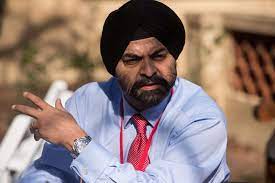
    Many have congratulated Ajay Banga for his nomination by President Joe Biden as the next President of the World Bank.

    Ghana’s Vice President, Dr Mahamudu Bawumia, have this to say about Mr Banga. He has vast and rich experience in the private sector and his passion for all things digital make him an appropriate and exciting choice for developing countries in general and African countries in particular. Born and raised in India, Dr Bawumia said Mr. Banga is very familiar with the issues facing developing nations.

    A statement from U.S President Joe Biden when he nominated MrBanga said: “Ajay is uniquely equipped to lead the World Bank at this critical moment in history. He has spent more than three decades building and managing successful, global companies that create jobs and bring investment to developing economies, and guiding organizations through periods of fundamental change. He has a proven track record managing people and systems, and partnering with global leaders around the world to deliver results.

    “He also has critical experience mobilizing public-private resources to tackle the most urgent challenges of our time, including climate change. Raised in India, Ajay has a unique perspective on the opportunities and challenges facing developing countries and how the World Bank can deliver on its ambitious agenda to reduce poverty and expand prosperity.”

    Ajay Banga, Nominee for President, The World Bank

    Ajay Banga currently serves as Vice Chairman at General Atlantic. Previously, he was President and CEO of Mastercard, leading the company through a strategic, technological and cultural transformation.

    Over the course of his career, Ajay has become a global leader in technology, data, financial services and innovating for inclusion. He is Honorary Chairman of the International Chamber of Commerce, serving as Chairman from 2020-2022. He is also Chairman of Exor and Independent Director at Temasek. He became an advisor to General Atlantic’s climate-focused fund, BeyondNetZero, at its inception in 2021. He previously served on the Boards of the American Red Cross, Kraft Foods and Dow Inc. Ajay has worked closely with Vice President Harris as the Co-Chair of the Partnership for Central America. He is a member of the Trilateral Commission, a founding trustee of the U.S.-India Strategic Partnership Forum, a former member of the National Committee on United States-China Relations, and Chairman Emeritus of the American India Foundation.

    He is a co-founder of The Cyber Readiness Institute, Vice Chair of the Economic Club of New York and served as a member of President Obama’s Commission on Enhancing National Cybersecurity. He is a past member of the U.S. President’s Advisory Committee for Trade Policy and Negotiations.

    Ajay was awarded the Foreign Policy Association Medal in 2012, the Padma Shri Award by the President of India in 2016, the Ellis Island Medal of Honor and the Business Council for International Understanding’s Global Leadership Award in 2019, and the Distinguished Friends of Singapore Public Service Star in 2021.

  • ‘Operation Save Our Democracy’: NDC suspends campaign in 135 constituencies

    ‘Operation Save Our Democracy’: NDC suspends campaign in 135 constituencies

    The opposition National Democratic Congress (NDC) has announced it is embarking on an ‘Operation Save Our Democracy’ campaign.

    According to the NDC, ‘Operation Save Our Democracy,’ began from Tuesday, 7 March 2023, and will end on Friday, 31 March 2023.

    In a letter addressed to all Constituency Chairmen of the party dated Tuesday, 7 March 2023, signed by its General Secretary, Fifi Fiavi Kwetey, the NDC said: “At its meeting held on Tuesday, March 7 2023, the Functional Executive Committee of the National Democratic Congress in solidarity with the Minority Caucus on Parliament resolved that the period from the evening of 7th March, 2023 up to until the 31st March, 2023, has been declared as ‘Operation Save Our Democracy’.”

    Enumerating the directives issued by the FEC for the ‘Operation Save Our Democracy,’ the statement said: “All campaign activities in all constituencies with sitting NDC MPs are hereby suspended, all sitting NDC MPs, shall be required to attend all Parliamentary sittings, no NDC MP shall undertake any travel that will affect his or her attendance in Parliament. Any MP who has travelled is hereby recalled immediately.”

    Also, “all regional and constituency executives and aspirants are directed to ensure strict compliance with the directives herein. All parliamentary aspirants, are hereby directed in their own interest, to strictly adhere to these directives as breach of same shall attract severe sanctions.”

    The NDC added that: “the dates for the filing of nominations, vetting of parliamentary aspirants and parliamentary primaries shall remain unchanged.”

  • Ghana to stay off bonds market in short term amidst IMF programme – Fitch

    Ghana to stay off bonds market in short term amidst IMF programme – Fitch

    The government is unlikely to issue Eurobonds at attractive yields in the short term even if it secures an International Monetary Fund support programme this month or in the next couple of months.

    In its February 2023 Africa Monitor Report, Fitch Solutions, said the rising interest rates which has been hiked to 28% at the beginning of last year make domestic borrowing more expensive.

    “First, Ghana faces external financing constraints. Indeed, the country has been cut off from the international capital market since late-2021 due to subdued investor confidence. While an expected IMF deal in Quarter 1, 2023 will gradually improve market sentiment, it is unlikely that the government will be able to issue Eurobonds at attractive yields in the short term”.

    “In addition, the IMF programme (expected to be worth $3 billion over a three-year period) would only finance a portion of the targeted deficit”, it explained further.

    Secondly, Fitch Solutions, said the rising interest rates make domestic borrowing more expensive, adding, “given that Ghana already faces elevated interest payments, a substantial increase in domestic debt issuance would weaken fiscal dynamics further.

    Furthermore, it said the domestic debt exchange programe would make domestic banks more cautious in lending to the government in 2023.

    Nonetheless, it pointed that the government’s expansionary spending plans will result in a rising public debt-to-Gross Domestic Product (GDP) ratio.

    Indeed, it expects the public debt-to-GDP ratio to continue on an upward trajectory until 2028 (reaching 94.4%), after which it will start to moderate.

    Risks to outlook

    It said there is a risk that the IMF could express concerns about Ghana’s 2023 budget given the elevated spending target.

    This could lead to the government having to revise their fiscal plans, which would draw out the negotiation process.

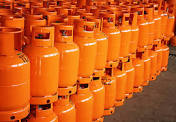
  • Gold for Oil: LPG marketers plead to join in taming prices

    Gold for Oil: LPG marketers plead to join in taming prices

    Adnan Adams Mohammed

    As Gold for Oil initiative begins to chalk successes, the Liquefied Petroleum Gas (LPG) Marketers Association of Ghana is making a passionate appeal to government to be considered.

    Members of the association, in the wake of persistent price increases, believe this will go a long way to help stabilise and reduce the soaring price of LGP, similar to that of petrol and diesel.

    Last week, LPG outlets increased prices of LPG by about 5% per kilogramme. However, Vice President of the LPG Marketers Association alarmed that, if urgent steps are not taken to control the continuous surge in the price of the commodity, government’s efforts of increasing the consumption of LPG will be dashed.

    “LPG prices have gone up beginning today [March 1, 2023] and initial indications we are picking from the BDCs [Bulk Oil Distributors] shows that the cost to the Oil Marketing Companies has gone up by about 10% per kilogramme”, Gabriel Kumi revealed. “If we are lucky, competition will bring that one down to about 6% or 7%. But certainly LPG price will go up by not less than 5% beginning today and that will push the pump prices to about ¢16 per kilogramme from the ¢15 per kilogramme it was selling the previous window”.

    “Diesel and petrol prices are going down but unfortunately LPG prices keep escalating and that is why our association has called on government to immediately look at including LPG in the ‘Gold for Oil’ deal so that it can also bring the prices down. We believe LPG is a product government must target in this deal because the rate at which LPG prices are going up is unbelievable and this will certainly thwart government’s effort at increasing penetration and usage of LPG in Ghana”, he explained.

    Last year 2022, LPG consumption went down by over 12% against that of 2021.

    Mr. Kumi said that should be a very big worry to every single Ghanaian and to government.

    “Efforts should be made to ensure that this ‘Gold for Oil’ deal, LPG is included immediately because the experts are telling us that LPG prices on the international market will keep escalating even though diesel and petrol prices are coming down. So we appeal to government to immediately include LPG in this deal so it can help stabilise prices”.

    He also called for reduction in taxes, saying “we believe this is the best time for government to take off taxes from LPG”.

    “So, if we’re able to get LPG included in the Gold for Oil deal, and the taxes are removed, we believe that the prices could come down to a reasonable level so that every Ghanaian can afford”, he added.

    Also, the LPG Marketers renewed calls for the government to remove taxes and levies on LPG, which currently stand at about 13%.

    The Association also called on government to redirect the dollar auction policy toward the importation and pricing of LPG in the country.

    These actions, according to the LPG Marketers Association of Ghana, when implemented, will achieve the desired price reduction impacts.

    The Association made this demand in a release issued on March 1 and signed by its Chairman, Mallam Bukari.

    According to the group, the price per kilogramme of LPG in Ghana has risen to GH₵16.00, a burden to the many households and businesses that depend on LPG for cooking and other uses.

    The LPG Marketers Association of Ghana believes “that the government can do more to alleviate this burden by removing taxes on LPG and redirecting its dollar auction policy towards LPG imports and pricing.”

  • Industrializing the Ghanaian economy is more sustainable

    Industrializing the Ghanaian economy is more sustainable

    Adnan Adams Mohammed

    As government of Ghana looks for sustainable way to manage its debt, it has been urged to strengthen its industrialization policies.

    An economist believes that, as Ghana moves to negotiate with China for debt forgiveness, the debt stressed country needs proactively to industrialize the economy in order to withstand external economic shocks.

    Ghana’s economy suffered the shocks of COVID-19 and the Russian-Ukranian war as well as the skyrocketed petroleum price on the world market coupled with over-borrowing and mismanagement of public funds. These had a toll on the local currency, which depreciated more than 50 percent last year to the major international trading currencies with inflation breaking all time records in more than two decades to peak around 54 percent. These have led the country to restructure its debt which has crossed 100 percent of Gross Domestic Product (GDP). However, the economist diffused perceptions that China may seize the opportunity to take over the local industries if the negotiations are successful.

    “Do we as a local economy immediately have capacity to produce the things that we ordinarily import from China?”, An economist and currency analyst at GCB Capital Limited Courage Boti said. “Our industrialization policies are not up and running. So I don’t see what China will demand from us differently from what we have in place”, he added.

    The Finance Minister, Ken Ofori-Atta, last week disclosed that, as part of government’s effort for external debt relief, its planned high-level meeting with Chinese creditors over Ghana’s debt restructuring which has been postponed to late March 2023.

    Meanwhile, Economist Courage Boti argued that the perception of importation of inferior goods from China is subjected to the purchasing power of the importers.

    “In a bargain, concessions must be made .I think at this point in time the most pressing issue is that our debt is not sustainable and we must find a way to return it to sustainable path. Negotiating with them will mean that we’re trying to get them on our side so that they could cooperate with debt restructuring,” he said.

    “The question is, it will come at what cost? Will it mean dampening of Chinese goods?,” He quizzed.

    Again the Chinese goods on our markets: the quality argument and associated perceptions, our traders decide what they bring in and so the quality we talk about are determined by what we are willing to buy,” he stated.

  • Government transferring burden to Ghanaians – Economist

    Government transferring burden to Ghanaians – Economist

    Senior Lecturer at the University of Ghana Business School (UGBS), Dr. Agyapomaa Gyeke-Darko has described the call by the Minister of Finance, Ken Ofori-Atta, for burden sharing as burden transfer.


    According to the Economist, government is not showing any commitment in supporting the debt sustainability programme, which is part of the conditions for an International Monetary Fund (IMF) bailout programme.


    Mr. Ofori-Atta after announcing drastic debt restructuring measures appealed to pensioners’ bondholders to join government to share the economic burden currently faced by the country, by cutting on their returns from government bonds.


    Speaking on the first edition of the 2023 Joy Business Thought Leadership programme, Dr. Gyeke-Darko emphasised the need for government to always spend within it means.


    She argued that it is unfair for the Finance Minister to shift majority of the debt restructuring programme on ordinary Ghanaians when government is not ready to make any sacrifices.


    “Are we going to be going on with the way we’re spending, or we are going to be sitting down and rationalising our expenditure? I hear the Minister of Finance speaking about burden sharing all the time, but I see it as a burden transfer, what is government actually doing to support this whole sustainability thing?” She quizzed.


    The Thought Leadership programme, which was held under the theme “Debt Exchange and IMF deal; a do or die affair?” is aimed at discussing some of the critical concerns that came up after the Domestic Debt Exchange Programme.


    She further stated that there is the need for government to demonstrate more commitment by cutting on expenditure to send a positive signal to Ghanaians.


    On his part, a Financial and Investment Consultant, David Tetteh, who was also on the panel said the restructuring was shredded in mystery.


    According to him, announcing a haircut and debt exchange at the time when people were expecting their coupon payments was a shock to many investors that could affect the economy.


    The speakers included the Director of ISSER, Prof. Peter Quartey; Chief Executive Officer of the Ghana National Chamber of Commerce, Mark Badu-Aboagye; former Finance Minister, Seth Terkper and Convener of the Ghana Individual Bondholders Forum, Senyo Hosi.


    The Ministry of Finance on February 14, 2023 announced that approximately 85% of bondholders participated in the Domestic Debt Exchange Programme (DDEP).


    This amounted to ¢82,994,510,128 (¢82.99 billion).


    “The Government is pleased with the results, as a substantial majority of the Eligible Holders have tendered,” a statement from the ministry said.


    It added that the result is a significant achievement for the government to implement fully the economic strategies in the post-COVID-19 Programme for Economic Growth (PC-PEG) during the current economic crisis.


    To provide sufficient time to settle the New Bonds in an efficient manner, the statement explained that government is extending the Settlement Date of the Exchange from the previously announced February 14, 2023 to February 21, 2023.

  • Ghana to lose prestigious status in cocoa production if things remain same – Cocoa Platform warns

    Ghana to lose prestigious status in cocoa production if things remain same – Cocoa Platform warns

    Adnan Adams Mohammed


    Stakeholders in the cocoa sector have warned that the country may lose out cocoa farms if issues of high cost of cocoa production are not addressed.


    They emphasized that the second largest cocoa producer in the world could lose more productive cocoa farms to illegal mining or palm production if the farm gate price for cocoa beans is not increased to make up for the high cost of production.


    The Ghana Civil Society Cocoa Platform (GCSCP) laments that continued rise in the cost of farm inputs such as fertilisers, pesticides, transporting of beans and farm machinery as well as the cost of labour is affecting cocoa production, causing them to lose huge sums of money.


    “We call on the government to intervene to make farm inputs readily accessible and available to enable us to increase our yields as well as make enough profits to cater for our families,” they said.


    The cocoa farmers made the clarion appeal during the GCCP Annual General Meeting organized in Accra by SEND Ghana, with support from its German partner, INKOTA Netzwerk.


    The event was used to among others discuss issues bothering on income, child labour and human rights of the farmers as catalysts for ensuring the improved welfare of cocoa farmers.


    It also created a platform for participants to deliberate on ways to increase government and private sector responsiveness to sustain the cocoa sector.


    Ismail Pomasi, Council Chairman of the Cocoa Abrabopa Association (CAA) advocated for investment in small-scale irrigation systems as the sure way to boost cocoa production in Ghana.


    He is worried climate change is negatively impacting cocoa production at a time when the land area for farming activities is reducing drastically through illegal mining or palm production and believes that irrigation is the best way for Ghanaian cocoa farmers.


    “Cocobod and the chocolate companies must support farmers to build irrigation systems across cocoa-growing communities in Ghana; substantive investment is needed in irrigation systems to help sustain our cocoa and the cocoa industry in Ghana,” Pomasi said.


    The National Board Secretary and Administrator of the World Cocoa Farmers Organisation, Moses Gyan Asiedu, said the farmers as main producers of an important commodity were faced with the issue of low income.


    “The rising cost of production is coming from all angles such as fertilisers, cutlasses and machinery used in spraying and pruning.


    “The prices of equipment are going up and the farm gate price keeps fluctuating and this does not reflect in the high rising cost of production, causing farmers to lose huge sums of money.


    There was no way the government would be able to sustain the cocoa sector if they did not address the issue of pricing” he said.


    Dr Emmanuel Ayifah, deputy country director for SEND Ghana, said it was worrying to note that cocoa communities and farmers who produced such an important crop continued to remain poor.


    “We will keep on engaging government and private sector in this fight for good pricing; there is the need for the government to develop policies and provide the infrastructure that would change fortunes of cocoa growing communities” he added.

  • NPA and AOMCs agree on criteria to share G4O consignment

    NPA and AOMCs agree on criteria to share G4O consignment

    Adnan Adams Mohammed


    The National Petroleum Authority (NPA) in consultation with the Association of Oil Marketing Companies (AOMCs) has devised an effective method to share arriving consignments of refined petroleum products trading under the Gold for Oil (G4O) programme.


    The two parties agreed that, for the gains (reduced fuel prices) of the programme to be felt across the country, OMCs with less than 45 sales outlets will not receive share of the consignments.


    The new method agreed is to also address concerns of the AOMCs regarding a lack of clarity regarding the allocation of products supplied under the programme to its members. The sharing criteria take into consideration the top 25 OMCs that distributed petrol and diesel in 2022 with not less than 45 retail outlets across the country.


    “Better results are expected as more G4O cargoes arrive”, Dr Mustapha Abdul-Hamid, CEO of NPA  said when speaking at the meet-the-press series in Accra last week.


    The NPA Boss noted that, the country had received three cargoes so far, comprising 41,000 metric tonnes (MT) of diesel in January, and another 40,000MT of diesel and 35,000MT of petrol which has just arrived and being discharged.


    The implementation of the  G4O has slightly lowered the prices of petroleum products and reduced forex risk.


    The meet-the-press under the auspices of the Ministry of Information that featured the NPA, focused on developments in the downstream petroleum industry on the theme: “Petroleum Downstream: Retrospect and Prospect.”


    Tracing the situation before the implementation of the G4O programme, Dr Abdul-Hamid said average monthly petroleum product import bill ranged from $350 million to $400 million.


    He said the petroleum downstream dollar demand accounted for 20 percent of national demand.


    The NPA Boss noted that Bank of Ghana (BoG) commenced a special exchange rate auction programme for the petroleum downstream in April 2022, and indicated that the special auction programme could not meet 100 percent of forex demand in the country.


    “Inadequacy of BoG supply pushes BIDECs to speculate forex rates arbitrarily based on proposed rates from commercial banks”, he said, and explained that the gold payment was mooted as a solution to the pressure that petroleum downstream put on the cedi.


    Dr. Abdul-Hamid said the NPA regulates G40 products prices on the interim (Ex-ref price and Ex-pump prices).


    He stated that the Authority had intensified price monitoring activities with penalties for defaulting service providers.


    Touching on activities undertaken to ensure product quality and integrity, the NPA Boss mentioned the supply of low sulphur fuels (cleaner fuels), a maximum of 50ppm for imports and a maximum of 1500ppm for domestic production.


    The NPA also undertakes periodic petroleum product monitoring exercises, conducts fuel marker monitoring and quality monitoring of fuel standards (Quality Control) including checking of water in fuel and collaborates with security agencies to prevent illegal imports, exports and product dumping.


    Dr Abdul-Hamid said the Authority used technology (Electronic Cargo Tracking System (ECTS), National Fuel Monitoring System (NFMS) and the Automatic Tank Gauge system) to ensure intended delivery of petroleum products along the petroleum downstream value chain.


    He mentioned the revocation of licenses and publication of the names of defaulting Petroleum Service Providers (PSPs) and Laycans allocation and monitoring to ensure adequate supply as some of the activities undertaken to ensure order in the downstream petroleum industry.

  • Fitch describes Ghana’s 2023 budget ‘the most expansionary’ budgets in history

    Adnan Adams Mohammed


    The Government of Ghana’s 2023 budget, which expects to expend GH¢205.4 billion, has been described as ‘the most expansionary’ budgets in Ghana’s history, by Fitch Solutions.


    In its latest February 2023 Africa Monitor Report, Fitch indicated that, the government would be spending a lot amidst looking at executing austerity measures.


    The government, in this year’s budget aims to implement some expenditure reforms, including employment freeze for public servants and placing a cap on salary adjustments at state-owned enterprises, yet, the budgeted expenditure of government is too huge.


    “The Finance Minister did not announce large-scale spending cuts”, Fitch Solutions has observed in its newest report.


    “Indeed, the government aims to keep capital expenditure and grants to government units elevated – areas that we had expected the authorities would cut back on”, the report said.


    “As such”, it noted, “the government aims to spend a total of ¢205.4 billion, a 51.5% increase on the 2022 target, making the 2023 budget one of the most expansionary budgets in Ghana to date”.


    Also, Fitch Solutions projects a budget deficit of 7.5% of Gross Domestic Product (GDP) in 2023 — higher than its earlier forecast of 6.7%.


    Fitch noted that stronger tax collection will improve outlook in 2023 but spending will remain high.


    Fitch Solutions emphasised that the 2023 budget details spending targets that were “more expansionary than we had anticipated, suggesting the budget deficit will remain wider for longer”.

  • External Debt Relief: Ghana asked to address energy & revenue losses

    External Debt Relief: Ghana asked to address energy & revenue losses

    Adnan Adams Mohammed


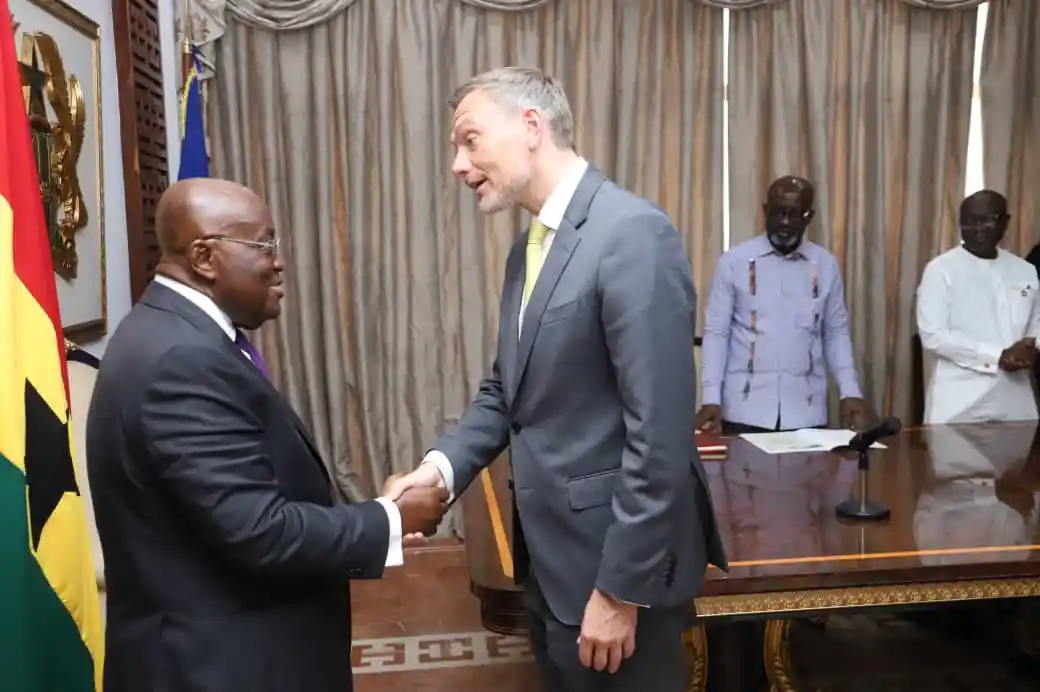
    The German Government has asked the Ghana Government to as a matter of urgency to outline and implement measures to address the hefty annual energy sector losses and domestic revenue mobilisation efforts.


    The Germans, have shown willingness to join Ghana’s external debt restructuring arrangement and also talk to China if only managers of the economy can address the above challenges as soon as possible before they get involved.


    According to the German Ambassador to Ghana, Ghana has one of the lowest tax to GDP ratios, not even 13%.  Also, they are astonished with the annually energy sector new debt of US$1.5 piled up. The European country gave the conditions as a reaction to follow-up of President Akufo-Addo’s call on German Finance Minister, Christian Lindner, to “encourage” China to accept Ghana’s proposal for debt relief.


    “Let me point to three elements. The biggest loss maker in Ghana is the energy sector. This in this sector alone, each year, $1.5 billion new debt is piled up. So if that is not solved and you can ask the IMF for $10 Billion, you still will not solve the problem in the medium term”, German Ambassador to Ghana, Daniel Krull, in an interview said that his country is willing to help only if certain conditions are met.


    “So there has to be an answer in Ghana to the 50% technical and non-technical losses in the energy sector. If that is not resolved, I don’t see how we can make find a sustainable solution for the financial problems of the country”.


    He added “the second part is on the other side of the budget and that is the revenues. Ghana has one of the lowest tax to GDP ratios, not even 13%. So we have been cooperating with the local authorities and setting up a very smart system of property tax collection. So I think that is an important way forward and this has to be done and processes and decision making have to be faster to meet the goals, to be able to meet the targets that have been agreed with the IMF”.


    China has about US$1.7 billion of the entire external debt portfolio of US$5.7 billion which Ghana is seeking to restructure.


    The Finance Minister, Ken Ofori-Atta, last week postponed a planned high-level government delegation to China to late March 2023.


    This is owing to the upcoming National People’s Congress of China meeting scheduled for early March.


    However, the Finance Minister said bilateral talks will continue ahead of this important mission.


    The government is seeking under the G20 Common Framework for Debt Treatment to get debt forgiveness from some bilateral and multilateral partners.


    Managing Director of the IMF, Kristalina Georgieva, confirmed in January 2023 that Ghana just became the fourth country to seek treatment under the Common Framework.


    The German government has assured that it is willing to get involved in the process but want others on the G20 Framework to also show willingness


    “First of all, we insist that those measures that can be taken here in this country have to be taken. The second condition is that, yes, we are willing to take our share of responsibility as one of the major bilateral donors to Ghana”, Ambassador Krull noted.


    “But only if all the others also join in this effort. And there is a multilateral framework that was set up exactly for this kind of crisis and we urge and try to convince all stakeholders in this process to stick to this agreed framework. It’s the G 20 framework,” he said.


    The Ambassador also noted that he’s “still amazed on the procedures for how the budget is set up and how difficult it is to get an understanding of how this all works. And I think that is something that has to be approved. He is however confident that with the necessary political will new opportunities will be created to enhance economic growth.”


    In an earlier publication, Fitch Solutions, an international rating agency, downplayed Government of Ghana’s expressed optimism to secure a successful implementation of an external debt restructuring following successfully completion of a Domestic Debt Exchange Programme (DDEP).


    The completed DDEP, aimed at alleviating the country’s debt burden in a transparent and efficient manner, would help pave the way for a much-needed external debt restructuring programme.


    As government jubilated and kept hopes high, the international rating agency, showed skepticism about the deal’s efficiency, as it has described Ghana’s debt exchange programme as a distressed one. This is  under its criteria, given this material reduction in terms vis-à-vis the original contractual terms, and given that the exchange is needed to avoid a traditional payment default. But, the Minister of Finance was confident that the DDEP will build momentum for the country’s external debt restructuring programme.


    “The DDEP, part of the government’s broader fiscal policy to address the country’s current macroeconomic challenges, restore macroeconomic stability and put Ghana on a sustainable path to growth and development, has ended with 85% participation”, Ken Ofori-Atta said when addressing Parliament, last week.


    “This success, will also build momentum for the external restructuring programme, which has also commenced.”


    He said as part of this process, Ghana has officially asked its bilateral creditors for a Debt Treatment initiative under the G-20 Common framework.


    Mr. Ofori-Atta also stated that negotiations had already begun with commercial creditors, with the establishment of a Creditor Committee to assess Ghana’s request for debt treatment under the Common Framework expected by the end of February.


    He acknowledged the importance of the DDEP in helping the government meet its debt sustainability target of 55% of debt-to-GDP in present value terms by 2028.


    “The Government recognises the continued importance of the DDEP in closing the financing gap and enabling the government to meet the debt sustainability target,” said Ofori-Atta.