Category: News

  • Household spending falls by 11% in 2022 – survey

    Household spending falls by 11% in 2022 – survey

    Adnan Adams Mohammed

    A new survey findings have indicated that, total household spending in Ghana reduced by a high margin of 11.09% in 2022.


    The 4th edition of UK-Ghana Chamber of Commerce Annual Ghana Business Environment and Competitive Survey has noted that the  implication could be as a result of inflationary hikes experienced in the country.


    “The imposition of a 1.5% E-Levy and the weakening of the currency in 2022 affected the total spending. A decline in disposable income in 2022 also affected total spending”.


    However, the number of households increased in 2022, amidst the high cost of living.


    According to the survey, the number of households is expected to continue increasing beyond 2025.


    Disposal income per household is also projected to rise to $3,901 in 2024, an increase from 2023 projected levels.


    “Despite a reduction in disposable income in 2022, the number of households is expected to rise to 8.5 million. 2025 is projected to rise to 9.4 million”, the report added.


    Ghana’s population to surpass 50m by 2025


    The research also pointed out that Ghana’s population is expected to keep rising surpassing 50 million by 2050.


    The urban and rural trends is expected to continue with 73% of the population anticipated to be living in urban areas – up from 60% expected in 2025.


    The population currently stands at 32.7 million and is expected to rise to 34.4 million by 2025.


    Currently, 57% and 43% of the population live in rural and urban areas, respectively.


    The rural and urban populations continue to increase. Over the last five years, the population growth rate in the rural area declined by 1%.

  • Ghana Cocoa export to double… as gov’t targets $4.1bn in revenue

    Ghana Cocoa export to double… as gov’t targets $4.1bn in revenue

    Adnan Adams Mohammed


    The government of Ghana has projected cocoa exports to double in a period of three years against the 2022 figures.


    Government’s spokesperson expects that, export of cocoa beans will rake in US$4.1 billion in 2025.


    Official figures projects an upward trend in revenue from cocoa production since 2019, hence the optimism that the industry would grow some more. Total exports from cocoa stood at US$2.21 billion in 2022, a decline from the $2.83 billion recorded in 2021.


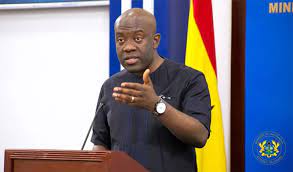
    “It is estimated that the contribution of cocoa to Ghana’s Gross Domestic Product (GDP) will rise to about $4.1 billion by 2025”,  Minister of Information, Kojo Oppong Nkrumah has disclosed when he spoke at the launch of the 2023 National Chocolate Week. “On the average we’re producing about 700,000 metric tonnes of cocoa per year since 2012.”


    Mr. Oppong Nkrumah further indicated that revenue garnered from the cocoa sector plays a critical role in the economy by stabilising the cedi.


    “Cocoa is the third largest foreign earner for the country after gold and crude oil; and revenues from the industry have been on the upward trajectory since 2019. Specifically in 2019, we earned about $2.2 billion, $2.3 billion in 2020, $2.8 billion in 2021 and we’re hoping to grow some more. The cocoa industry is playing a significant role in stabilising the local currency among many other things.”


    The National Chocolate Day Celebration was instituted in 2005 to coincide with Valentine’s Day which falls on February 14 every year to boost the domestic consumption of Ghana’s chocolate and other cocoa-based products, promote domestic tourism and give a healthy orientation to the celebration of Valentine’s Day. Chocolate Day celebration was extended into a full week celebration dubbed Chocolate Week in 2022.


    Present at the launch, Deputy Chief Executive of the Ghana Cocoa Board, Emmanuel Ray Ankrah, called for a holistic approach to scrap the 35 % tax on cocoa processing companies.


    According to him, this is a disincentive to startups.


    “We have realised that some current tax regimes are affecting efforts to get more entrepreneurs into cocoa processing and value addition, especially those who are into small-scale cocoa processing. In order to overcome this challenge, we have initiated discussions at Ghana Cocoa Board with relevant state agencies to review and take a holistic approach to the tax regime that affects artisanal chocolate processors.”


    “This is the view of reducing the impact of tax on businesses as a way of cushioning them and make them more competitive,” he intimated.


    Meanwhile, the Ministry of Tourism, Arts and Culture, has pledged its continuous support to the National Chocolate Week celebration.


    Deputy Minister for Tourism, Arts and Culture, Mark Okraku Mantey said, “We have managed to establish a high degree association between tourism and cocoa based products, one of which is chocolate and positioned it as a veritable component of the Ghana tourism experience. The socio-economic benefits of the increased local consumption of chocolates are many and the Ministry of Tourism will continue to actively support the National Chocolate Week celebration”.


    This year’s National Chocolate Week celebration is themed, ‘Eat cocoa, Stay healthy and Grow Ghana’.

  • NPA ordered to be effective in monitoring of OMCs pricing under G4O

    NPA ordered to be effective in monitoring of OMCs pricing under G4O

    Adnan Adams Mohammed


    The ministry of energy has bemoaned loose regulatory monitoring of Oil Marketing Companies (OMCs) which has benefited under the Gold for Oil (G4O)first consignment.


    A deputy minister at the ministry has revealed that, about 11 OMCs which received the cheaper oil under the new arrangement  did not reduce their pump price.


    The ministry is taken aback with the situation, indicating that had been a setback on the policy’s intent to improve the supply of the commodity, positively influence price change, and shore up the exchange reserve of the country. The deputy minister therefore called on the National Petroleum Authority (NPA) to be up and doing in its monitoring role to ensure that the policy intent is achieved.


    “National Petroleum Authority (NPA) has to be very rigorous in ensuring that the framework that will be published to govern the pricing of the product is a strong framework”, Dr Amin Adam Mohammed, the Deputy Minister for Energy said in an interview.


    “And they have to ensure that they are able to monitor all those OMCs that will take the product to ensure they reflect in their pump prices.”


    Ghana piloted the Gold for Oil policy with the delivery of 41,000 metric tonnes from the United Arab Emirates (UAE), which arrived at the Tema port on Sunday, January 15, 2023.


    However, Mr Duncan Amoah, the Executive Secretary of the Chamber of Petroleum Consumers Ghana (COPEC), said it was encouraging to have more than 50 percent of OMC reducing their prices under the policy.


    He, called for “purposeful planning” with a clear objective of either ensuring fuel security or reduction in pump prices. That, he said, would require a constant supply of the commodity on the market to meet the demands.


    “You must be focused and know that 41 000 metric tonnes might not do the trick. So, If I am bringing 41, another cargo must come at 60, and must come at 70, to be able to contain the market demand.


    “If you are going to throw a little in the ocean and expect a ripple effect, you might not get it,” he said.


    The prices of fuel in Ghana are mainly determined by the world market price of the commodity, cedi depreciation, taxes and levies. As of November 2021, the government had imposed 12 different taxes and levies on petroleum products while the Cedi had declined by more than 55 per cent between January and October 2022.


    Mr Amoah urged the Bank to Ghana (BOG) to focus on addressing the volatility of the Cedi by, “using the gold to back the Cedi so that it can have a certain semblance of stability for trading.


    Consequently, Mr Alex Mould, a former Chief Executive Officer (CEO) of the Ghana National Petroleum Corporation (GNPC), said the Gold-for-Oil policy was a smokescreen by some players to enter and control the oil import and gold export market using government apparatus.


    “People with the license to these things are not happy because they can be eliminated,” he stated.

  • Parliament inundated with tax exemptions agreements  – Ato Forson

    Parliament inundated with tax exemptions agreements – Ato Forson

    Adnan Adams Mohammed


    The Finance Committee in Parliament is alarmed with the numerous tax exemptions agreements in the country.


    According to the immediate past ranking member of the Finance Committee, the country amidst its current economic challenges  need every single Cedi in order to salvage the economy.


    The legislator shared that the committee has been resolute in approving tax exemptions as they are becoming too much.


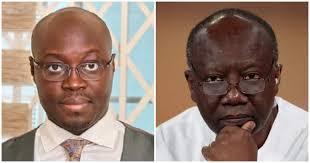
    “Yes we have done a lot of work on the tax waivers. We believe that tax exemptions are becoming too much and particularly at a time like this that the country needs every cedi to save our economy you cannot continue granting tax exemptions”, Cassiel Ato Forson, the Minority leader in Parliament told journalist, last week.


    “So, you will notice that the finance committee has been very adamant in approving tax exemptions.”


    He emphasised that Ghana has made progress in terms of tax exemption.


    The Minority leader said: “We worked with the ministry and eventually we led it to get the tax exemption bill passed. So, we have a tax exemption regime in place as a country for the first time as we speak.


    “In terms of the savings that the finance committee has led parliament to save in terms of tax exemption if you quantify it with our report, you will notice that we have made huge progress as a country in terms of tax exemption.”


    The Majority leader Osei-Kyei-Mensah Bonsu has however acceded to the Minority leader’s comments stressing that the tax waivers were not helping the country’s situation.


    “A lot of people were also taking advantage of that regime to seek tax waivers that were not really helping the country.


    “Having said that, this is the reason why we have introduced this tax exemption Act. So, from now on it is going to be the guiding principle,” the Majority leader stated.


    He further indicated “the difficulty now is we are somehow standing, imports that were occasioned especially those of the 1D1F they are here the imports have arrived and it was predicated on the old regime.


    “Now, if you want to benchmark on the new law it becomes a difficulty”.

  • BoG hopeful of economic rebound

    By Elorm Desewu

    The Bank of Ghana, (BoG), is very optimistic that the economy would soon recover as the government has spelt out measures that will put the fiscal on the path of consolidation.

    According to the Governor of Bank of Ghana, Dr Ernest Addison, the government’s revenue enhanced measures such as the VAT increase of 2.5 percent, the complete removal of benchmark values on imports, and the review of the E-Levy should help improve the revenue outlook.

    The lower capping on transfers to earmarked funds from 25 to 17.5 percent, and the reduction of budgetary allocation to goods and services, as well as rationalisation of executive compensation would help contain expenditures in 2023.

    Dr Addison explained that the concerns being expressed in the public domain relating to high government expenditures have been addressed in the SLA and reflected in the 2023 Budget adding that “we must have faith and trust in the economy”.

    The Staff Level Agreement (SLA) is also contingent on the Domestic Debt Exchange Programme and external debt restructuring, which when concluded and the necessary financial commitment obtained, will allow the presentation of the SLA to the IMF Board.

    This, the governor believes will help restore fiscal and debt sustainability and bring down inflation as well as help stabilise the currency.

    He said the central bank would remain vigilant and moderate liquidity in the system to underpin macroeconomic adjustments taking place to drive inflation on a downward path.

    The domestic growth conditions softened in 2022 and is projected to moderate further and remain below potential over the near-term, based on the elevated inflation levels. The updated CIEA showed continued dip in economic activity, despite the slight improvement in consumer and business sentiments from the latest surveys.

    Economic activity for the first three quarters of 2022 was within projections, albeit at a moderated pace than a year earlier. The latest data from the Ghana Statistical Service showed that real GDP expanded at an annual rate of 3.6 percent during the first three quarters of 2022 relative to 4.8 percent during the corresponding period in 2021. Non-oil GDP growth also moderated to 4.3 percent from 4.7 percent over the same comparative period. The observed growth outturn was driven by the services and agriculture sectors.

  • COMOG consoles people of Turkey and Syria

    COMOG consoles people of Turkey and Syria


    COMOG LOGO

    By Sirina Yussif


    The Coliation of Muslim Organization Ghana (COMOG), on behalf of the entire Muslim Community in Ghana, wish to extend its deepest condolences to the people of Turkey and Syria having suffered the devastating earthquake days ago.


    In this difficult times, COMOG stand hand in hand with them on behalf of the Ghana Muslim Community, to pray for speedy recovery for those who were injured.


    “…we further seek Allah’s forgiveness, on those Muslims who have died through this calamity and, ultimately His grant of Jannatul Firdaus”, COMOG prayed in a press statement issued yesterday.


    Additionally, COMOG called on the general public to donate to the relieve center openned at the  Kanda national mosque, Accra.


    Read below full statement:


    9th February, 2023


    HER EXCELLENCY THE AMBASSADOR,

    THE EMBASSY OF THE REPUBLIC OF TURKEY,

    ACCRA.


    Your Excellency,


    HEARTFELT CONDOLENCES TO THE PEOPLE OF TURKEY AS THEY STRUGGLE TO RECOVER FROM THE EARTHQUAKE IN THE COUNTRY


    The Coalition of Muslim Organizations, Ghana(COMOG) has taken cognisance of the degree of devastation in which the recent Earthquake has left the people of Turkey and Syria.


    We, on behalf of the entire Muslim Community in Ghana wish to extend our deepest condolences to the people of Turkey in this state of sorrow and utter melancholy. We further wish to assure our brothers and sisters of our resolve to stand hand in hand with them in this trying times.


    Even as we believe in destiny(Qadr) as Muslims, it is our prayer that Allah will lead in the restoration of the lives and the economy of the people of Turkey and Syria.


    Our fervent prayers for a speedy recovery go to the injured, as we further seek Allah’s forgiveness, on those Muslims who have died through this calamity and, ultimately His grant of Jannatul Firdaus.


    We finally call on the general public to donate to the Relief Centre opened by the Turkish Embassy at the Kanda Mosque for the rehabilitation project of the People of Turkey.


    COMOG stands in solidarity with the people of Turkey in this difficult times! Thank you


    Signed.

    HAJJ ABDEL-MANAN ABDEL RAHMAN

    (National President-COMOG)


  • Haruna is a ‘game changer in the north’ for NDC – Edudzi Tameklo extols

    Haruna is a ‘game changer in the north’ for NDC – Edudzi Tameklo extols

    Lawyer Edudzi Tamaklo writes…


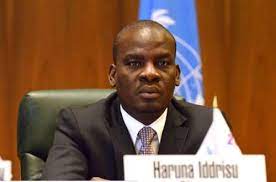
    Hon HARUNA Iddrisu and the politics of the North


    Many years ago, on the University of Ghana campus, there was this very popular political program named, Legon Speaks.


    It was hosted at Legon Hall of the University of Ghana.


    My first encounter with the dynamite, Lawyer Haruna Iddrisu, MP for Tamale South. It was in the turbulent days of President Kuffour’s administration.


    This young MP was all over the place opposing Mr Kuffour.

    As a University student, it was a great delight watching him at the Legon Speaks against leading NPP politicians.


    Then came my involvement in NDC national politics and my direct association with him.


    Like every human leader, he had his own failings but overall, he was a good politician.


    When NDC was in power from 2009 to 2013, I was basically in law school and doing my politics predominantly within the Dome Kwabenya constituency.


    I didn’t get to interact with him more until in 2017, when the NDC went into opposition.


    Hon Haruna Iddrisu eventually became the leader of the opposition NDC caucus in Parliament. My engagements with him started from that period till now.*


    With admirable courage, he stabilized the front of the Minority Caucus and started subjecting the Akufo Addo administration to the fire of accountability and probity.

    He fought Speaker Mike Ocquaye even with Minority MPs of 106.


    In 2020, I had a call to represent some NDC interest in Northern region, precisely at the Zabzugu constituency during the voter registration exercise.

    I had to do Accra-Tamale-Accra on a few occasions.


    I was going to the High Court in Tamale to challenge some voter registration infractions.

    In the course of doing this case, I was working closely with the Regional Secretary, Salam.


    During this period, I encountered the real influence of the political colossus, Lawyer Aduna.

    He had enormous influence in shaping the politics of the NDC up north.


    I can without any equivocation detail how he single-handedly ensured that the NDC recovered the Savelugu seat.


    His efforts in ensuring we came out of the 2020 election with 9 seats.

    The NPP adopted the strategy of sending very resourceful CEOs and deputy ministers to some constituencies.

    Even with their resources, Lawyer Aduna matched them boot for boot.*

    Quite painful, we lost Gushegu and Karaga.


    I recall after the 2020 election, the NPP filed election petitions in Krachi West, Savelugu, Jomoro, Assin North among others.


    I was assigned the Jomoro and Krachi West petitions to defend.

    At every point, he will call to find out the progress of work on those petitions.


    Well, I successfully defended the two seats.

    Meeting him at the program organized by JM at UPSA, he wanted to know my honest opinion on the Jomoro seat.


    I assured him with the legal strategies deployed, we will retain the seat.

    He was visibly excited at the prospect.


    I am praying to Allah to calm him and for him to put everything behind him.

    That he will continue to hold the North for H.E John Mahama.


    So JM can get the time to focus on the other parts of the country. We need to prosecute multi pronged campaign.


    Lawyer Aduna with the support of the regional and constituency executives, obtain maximum votes for President Mahama and more parliamentary seats for the NDC.


    I am excited with the interventions from President John Mahama in this reshuffle impasse.

    Lawyer Aduna is a game changer in the North.


    With this said, we must rally around the leadership of Hon Cassiel Ato Forson to move the Minority Caucus to another level in our forward match to win the presidency in 2024.

    We make peace with our enemies, not our friends.

    We have one task ahead of us.


    Rescue this beautiful country from the misleader, Mr Akufo Addo and his political experiment, Dr BAWUMIA.


    Long live NDC.

    Aluta continua, victoria ascerta

  • NDC to develop a framework to guide appointment of parliamentary leadership

    Adnan Adams Mohammed


    As part of the resolution by the Council of Elders of the National Democratic Congress (NDC), the national executive committee has been directed to as a matter of urgency, accelerate work on the draft framework of rules for to guide decisions relating to matters such as the appointment of parliamentary leadership of the party.


    This comes after series of meetings the Council had on a petition submitted by a group of NDC Members of Parliament on the recent changes to the party’s Parliamentary leadership announced earlier by the Party Leadership.


    The Council assured that, it will ensure that this framework is in place within the shortest possible time.


    “Indeed, the NDC party must not and will never forget the contributions of our three respected comrades in improving the electoral fortunes of the party”, a press statement signed by the chairman, Alhaji Mahama Iddrissu said.


    FULL PRESS STATEMENT


    For Immediate Release:

    6th February, 2023.


    NDC COUNCIL OF ELDERS AMICABLY RESOLVES IMPASSE OVER APPOINTMENT OF NEW LEADERSHIP OF MINORITY CAUCUS.


    Over the past several days, the Council of Elders of the National Democratic Congress (NDC) has been holding a series of meetings on a petition submitted by a group of NDC Members of Parliament on the changes to the party’s Parliamentary leadership announced earlier by the Party Leadership.


    The Council approached the engagements conscious of the need for an early resolution which will be in the best interest of the party and mindful of the imperatives of unity and cohesion at a time Ghanaians are looking up to the NDC to rescue the country from the dismal state of affairs which has been the hallmark of the Akufo-Addo/Bawumia/NPP government.


    While recognizing that the party leadership was within its rights to make appointments or rotate the leadership of the NDC caucus in Parliament as has been the case since the inception of the Parliament of the 4th Republic, the Council is of the view that the processes need to be improved. Accordingly, the Council noted that in the instant case, the approach, level of consultation, timing as well as the mode and manner of notifying the affected persons could have been better.


    That notwithstanding, the Council implored our Honorable MPs to accept the decision of the party leadership and work with the newly appointed leadership of the caucus. This position was discussed with representatives of the petitioners who fully appreciated the stance of Council and offered to communicate same to the petitioners.


    The Council has advised the leadership of the party to as a matter of urgency, accelerate work on the draft framework of rules for to guide decisions relating to matters such as the appointment of parliamentary leadership of the party. The Council will ensure that this framework is in place within the shortest possible time.


    The Council regrets the media altercations that took place in the aftermath of the leadership changes and the failure of the protagonists to resort to the internal grievance resolution mechanisms of the party to address their concerns. The Council is of the hope that such political point-scoring which is not part of our political ethos will be avoided in future. All concerned parties have accepted the Council’s advice and pledged to abide by it.


    The Council of Elders acknowledges the leadership and sterling achievements of the outgoing leaders of the NDC caucus namely, Hon. Haruna Iddrisu, Hon. James Klutse Avedzi and Hon. Mohammed Muntaka Mubarak who have raised the profile of the NDC minority caucus and demonstrated that indeed it is the NDC who has the men and women capable of turning the fortunes of Ghanaians around. Their efforts have contributed to reassuring Ghanaians that the NDC party is ready to assume power and rescue the nation from the depths of despair and desperation. Indeed, the NDC party must not and will never forget the contributions of our three respected comrades in improving the electoral fortunes of the party.


    The Council of Elders hereby calls for togetherness and unity of purpose within the minority caucus and urges all members of the party to let peace prevail. Let us not do anything to hamper the clear opportunity the NDC has to emerge victorious in the 2024 elections.


    It is our hope that the new Minority Caucus leadership will provide the leadership that will guarantee a resounding victory for the NDC in the 2024 general elections so that we can together rescue our beloved country from the hands of the failed Akufo-Addo/Bawumia/NPP government.


    Signed.

    Alhaji Mahama Iddrissu

    (Chairman, Council of Elders)


  • IMF bailout to be ready before end of 1st quarter

    IMF bailout to be ready before end of 1st quarter

    Adnan Adams Mohammed


    The government is likely to receive International Monetary Fund’s (IMF) approval before end of first quarter this year.


    The Fund’s recent comment gives high hope to Ghana as it makes headway with the Domestic Debt Exchange programme.


    In its Sub-Saharan Africa Macroeconomic Update released last month, the country has made significant progress on the Domestic Debt Exchange Programme, a key condition for the $3 billion Balance of Payment support from the Fund. Financial experts have therefore predicted that Ghana would soon receive a Board approval.


    “The first thing I should say is that, the IMF Executive Board approval will happen in the coming weeks”, Senior Country Risk Analyst at Fitch Solutions based in London, Mike Kruninger said in an interview.


    Subsequently, the Governor of the Bank of Ghana (BoG) Dr. Ernest Addison has shown high optimism that, the debt stressed nation, Ghana, will secure a deal by first quarter of 2023 dependant on the finalization of the Domestic Debt Exchange Programme(DDEP)  with all bond holders as well as creditors to support the country’s International Reserves.


    “We are confident that by the end of the first quarter, we should be able to get a disbursement from the IMF to help augment the foreign-exchange resources of the central bank”, Dr. Addison said at press briefing after Monetary Policy Committee meeting.


    Mr. Kruninger, however warned that should the approval fail to happen in quarter one of 2023, investor sentiments will remain weaker in the coming months, putting additional pressure on the cedi.


    “So in the first quarter of 2023, should this not happen, we will be expecting investor confidence to remain rather weak in the coming months which will put additional pressure on the exchange rate. So in that case, the currency will depreciate further more significantly than we currently anticipate”.


    Mr. Kruninger added that “so what will happen in that instance is inflation will remain much higher for much longer. And this will then weigh on incomes, it will weigh on overall private sector activities”.


    He concluded that Ghana’s growth rate will then be weaker than the 2.9% it projected.


    “So in this instance the economic wealth will become much weaker than the 2.9 percent that we are currently forecasting”.


    IMF deal would improve Ghana’s external position, restore investor sentiment


    Fitch Solutions had earlier said an IMF deal would help improve Ghana’s external and fiscal positions, restoring investor sentiment and easing pressure on the exchange rate.


    It indicated that the government would make greater progress on fiscal reforms under an IMF deal.


    “We believe that an IMF deal would improve Ghana’s external and fiscal positions, restoring investor sentiment and easing pressure on the exchange rate”.


    Ghana’s fiscal metrics had deteriorated significantly since 2020, due to weak revenue inflows and high-interest expenditures, with its budget deficit narrowing only slightly to 8.6% of Gross Domestic Product (GDP) in 2022 (from 9.3% in 2021), much wider compared to the 10-year pre-pandemic average of a 4.9% deficit.


    “Under an IMF programme, we expect that the government would make greater progress on fiscal reforms as the authorities seek to meet the targets to regain market access”, it pointed out


    Ghana is expected to reach an agreement with its creditors, both domestic and eternal bond holders over plans to restructure the country’s debt to sustainable levels.


    The government is also expected to publish the Auditor General’s report on the Audit of COVID-19 spending undertaken from March 2020 to June 2022.


    This is expected to ensure transparency and accountability of the COVID-19 emergency spending.


    The country is also expected to implement an upfront weighted electricity tariff of 30 percent, excluding lifeline.


    The GETFund, Road Fund, and District Assemblies Common Fund will start reporting on Provisional Budget in Hyperion at disaggregation level  to use all the functionalities of GIF and MIS for spending  execution , including  allotment,  issuance of payment  warrant and actual payments.


    Another Pre-Condition needed, is enacting legislations or Executive order to achieve the 2023 fiscal target of an adjustment of the Non-Oil Primary Balance of at least 2 percent of GDP.


    Government must also achieve revenue measures which will permanently improve Non-Oil Revenue to GDP ratio by at least 1.2 of GDP.


    It is believed that these measures will ensure a front loaded and credible fiscal adjustment in order to restore fiscal and debt sustainability.


    Dr. Addison announced that the Bank of Ghana has already rolled out measures that are expected to assist the commercial banks to deal with the potential risk that the Domestic Debt Exchange Programme poses to the banking sector.


    This includes: Reduce the Cash Reserve Ratio on Domestic Currency Deposits from 14 to 12 percent. It has also reduced the Cash Reserves Ratio on Foreign Currency Deposits from 13 to 12 percent.


    He indicated that, the High Regulatory Reliefs will help deal with the Capital and Liquidity issues that have come about as a result of the debt exchange programme.


    He also announced that the Bank of Ghana has put in place a separate liquidity arrangement for the Commercial Banks, to support their operations.


    Dr. Addison disclosed that the Financial Stabilization Fund will be capitalized at 1 billion dollars. The World Bank has already promised some 250 million dollars to support the fund.


    The Governor indicated that the programme if it is well implemented may go a long way to impact positively on the country’s international reserves, the cedi’s stability and interest payments by government.


    Responding to a question on when inflation could get back to the single digit range, Dr.  Addison noted that, the central bank is projecting that inflation would return to the target band within the next four years.
     

  • Kidal Peace Brokers renew effort

    Kidal Peace Brokers renew effort

    By: Adnan Adams Mohammed and Omar Al-Ansari


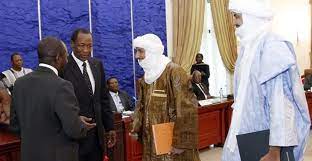
    A delegation of ambassadors of the African and European Union, and representatives of international mediation, in charge of following up the Peace and Reconciliation Agreement emanating from the Algeria track, arrived in the city of Kidal yesterday, Wednesday February 2,2023 to forge a renewed effort.


    The efforts is geared towards rebuilding the Azawad insurgent controlled region of Mali formerly Gao and Timbuktu.


    The discussion began with the intervention of the head of civil society in Kidal, Mr Al-Tayyub Ag Intala, who recounted the city’s problems, such as the lack of infrastructure, such as paved roads, drinking water, electricity, and high prices, as a result of the city being closed on borders, with no sea and air outlets.


    His intervention was devoid of courtesies, ignoring all regarding the financial side.


    The Coordination Secretaries spoke in the same manner as al-Tayeb, as their speech was devoid of a diplomatic tone this time, and they blamed the international mediation for not putting pressure on the financial party, which began to publicly declare a breach of the agreement, as the Secretary-General of the National Movement for the Liberation of Azawad, Bilal Ag al-Sharif, said.


    “If the international community cannot force the other party, i.e. a Mali, to implement the agreement, then it must find another way, and stressed that they cannot remain in this situation for a longer time than before.”


    The current head of the Coordination of Azawad Movements, Sima Al-Abbas Ag Intala, said that this agreement is the only link with which the international community still connects the people of Azawad with the people of Mali, and without this agreement we are Azwadis and the Malians are Malians, and nothing binds us to the Malian party other than this agreement.


    The Secretary-General of the Arab Movement of Azawad, Ibrahim Handa, refusing to speak in a language other than Arabic, urged that they would not forget the case of the assassination of the former Secretary-General of the MAA movement, demanding that such issues not be underestimated, adding that enemies may target the leaders of the community to exterminate it.


    The interventions of the ambassadors and guest diplomats were not without expressing their growing concern about the coordination dealing with the agreement in the same manner as the financial party, which means that the collapse of the peace process is imminent, and they said that they will present clear proposals to all parties, and they will call for an expanded mediation meeting, in which the  Points on letters to come up with satisfactory results for both parties.


    They did not specify where or when this would take place.


    Al-Qasim Wan, head of the United Nations Mission in Mali, said, “The UN mission and its presence here is at stake due to the non-implementation of the agreement. Perhaps it will end with that reason.”


    Brief History of Kidal


    On 30 March 2012, Kidal and its military base were captured by the National Movement for the Liberation of Azawad as part of the Tuareg rebellion for the independence of Azawad. A spokesman for the Malian military junta said “To preserve the life of the people of Kidal, the military command decided not to prolong the battle”.


    Gao and Timbuktu were captured within the next 48 hours, and on 6 April, the National Movement for the Liberation of Azawad declared the independence of Azawad from Mali.


    In the course of the conflict the MNLA lost their control to Islamist militias.

    On 30 January 2013 French and Malian forces moved into the town to bring it back under government control.


    On 14 December 2013, a car bombing in Kidal killed two United Nations peacekeepers.


    On 21 May 2014, MNLA forced government troops in Kidal to retreat after heavy fighting, capturing the military base.


    On 13 February 2020 Mali government forces returned to Kidal after six years.