Category: News

  • Inflation returns to target band in 2025

    The Bank of Ghana is very optimistic that headline inflation would return to its medium term target band of 8±2 percent during the second half of 2025.

    According to the BoG, the latest forecast suggests that, inflation is likely to peak in the first quarter of 2023 and gradually ease thereafter. However, headline inflation is projected to remain above the upper until the second half of 2025.

    Headline inflation jumped in the fourth quarter of 2022, driven by both demand and supply shocks.

    Headline inflation has moved further up to 54.1 percent in December 2022, from 50.3 percent recorded in November 2022 but declined slightly to 53.6 percent t the end of January 2023.

    The acceleration was largely explained by the lagged effects of the sharp currency depreciation amid food price pressures. Food and nonfood inflation went up significantly.

    The continuous monetary policy tightening and the relative stability in the exchange rate in December 2022 led to some moderation in the pace of monthly price acceleration.

    However, underlying inflationary pressures remain broadened and could be reinforced by additional shocks in the near-term with the announcement of new revenue measures in the 2023 Budget, additional exchange rate pressures, and upward adjustments in utilities and ex-pump prices.

  • NDC Preparation Towards Elections 2024: Mahama picks up NDC nomination forms for flagbearership


    A stateman and former Greater Accra Regional Minister, Professor Joshua Alabi, has picked up Presidential nomination forms on behalf of his former boss.

    Prof. Alabi, picked up the nomination forms for former President John Mahama today, Wednesday, 22 February 2023 at the offices of the main opposition National Democratic Congress’ (NDC) office.

    Mr Mahama by this, will be seeking a re-election to become flagbearer for the party in the lead up to the 2024 Presidential elections.

    NDC has opened nominations for the election of its Presidential candidate and Parliamentary Candidates for the 2024 general elections.

    The nomination forms for Parliamentary Candidates according to the Party will be accessible to all persons for purchase on the official website of the party; www.ghanandc.com.

    Nomination forms for Presidential aspirants can be obtained from the Office of the General Secretary at the Party’s Headquarters at Adabraka, Accra effective 8 a.m. today.

  • UNESCO and African Union call on leaders to prioritize equal opportunity in education

    UNESCO and African Union call on leaders to prioritize equal opportunity in education

    UNESCO and the African Union urge governments in Africa to place equity at the heart of education policy, to ensure that all children and youth on the continent have access to quality education.


    A new report entitled ‘Education in Africa – Placing equity at the heart of policy’, published jointly by UNESCO and the African Union, reveals that although many countries in sub-Saharan Africa are taking significant steps to provide quality education for all, the region has the world’s largest out-of-school population.


    One in five children of primary school age and well over half of upper secondary school-age adolescents do not attend school. In about half of African countries, the out-of-school rate among primary school-age children stands at just under 10%, and at over 50% for upper secondary school age students. This rate is increasing in several countries.


    “The massive disparities in African education systems require urgent action. We need to provide all African children and youth with a safe, stimulating, and healthy environment in which they can attain their full potential. Transforming education must at the heart of countries’ efforts to build meaningful and sustainable development and economic growth,” said UNESCO Director-General Audrey Azoulay.


    African children lose out because of multiple factors


    The report, which examines education in Africa from early childhood to upper secondary level, sets out the interconnected factors which prevent children from accessing a quality education, among them geographical location, poverty, gender, disability, crises, conflict, and displacement. It shows that in most countries there are wide gulfs in opportunities between children from the wealthiest and poorest households, between children in urban and rural areas, and between boys and girls. About 80% of children in sub-Saharan Africa are still not taught in a language they speak at home, an approach which significantly impedes learning outcomes.


    “The concept of equity must become the guideline for African education policies. We need to ensure that every child in rural and disadvantaged urban centres, and in other fragile countries and contexts, is able to receive the education and training they require,” said H.E Professor Mohamed Belhocine, Commissioner for Education, Science, Technology and Innovation of the African Union Commission.


    Fragile education systems aggravated by COVID-19


    African education systems were significantly affected by the COVID-19 pandemic, and the effects on educational attainment, learning outcomes, and disparities in education are still unfolding. Even before the pandemic, only a handful of countries in Africa were on track to meet the UN sustainable development goals on education.


    The report calls on governments to strengthen education systems’ resilience to future crises, by developing flexible forms of teaching, by scaling up the use of digital technology, and by improving data collection to better inform policy planning.


    It proposes a series of recommendations to addressing the barriers to inclusion, such as making secondary education compulsory, building more schools, developing adapted curricula, improving the quality of teachers, and providing financial and academic assistance to children.


    ***

    This first joint publication builds on a study conducted by UNESCO’s International Institute for Educational Planning to review the advances made by African countries to reach the goals set out in the Continental Education Strategy for Africa 2016-2025 and SDG4. The launch of the report was held at the African Union’s Heads of States Summit, during a high-level discussion co-hosted by the African Union and UNESCO on Saturday 18 February 2023. The event was honoured by the participation of the of Presidents of the Federal Democratic Republic of Ethiopia and Republic of Sierra Leone, as well as the Ministers of Education of Republic of Kenya and Sierra Leone (the latter as moderator).

    **

    Full  ‘Education in Africa – Placing equity at the heart of policy’

    Executive summaries

    Q&A: How are African countries improving the quality of their education?

  • Ghana’s ‘junk’ economy…Ftich, Terkper express worry

    Ghana’s ‘junk’ economy…Ftich, Terkper express worry

    Adnan Adams Mohammed


    A former Finance Minister has diffused government’s incessant blame of Ghana’s economic woe on effects of the Covid-19 pandemic and the Russia–Ukraine war.


    The former minister, instead, blamed government’s inability to pay for its debt on the decision by the Finance Ministry to stop allocating monies into the Sinking Fund set aside to pay for Ghana’s Eurobonds.


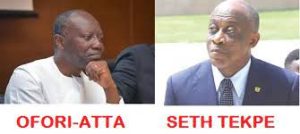
    Reacting to the current finance minister’s, Ken Ofori-Atta, comment that, the current state of Ghana’s debt is due to the lingering effects of the Covid-19 pandemic and the Russia–Ukraine war. Alluding that, those effects contributd to the high macroeconomic instability experienced in 2022, and worsened by downgrades by rating agencies as well as the consequential pressures on government finances due to the actions of non-resident investors and the delayed passage of our revenue bills. However, the former finance minister took a swap against government’s excuses.


    “We have to behave like a middle income country and put this buffers in place. We saw what the Sinking Fund did for us. We were able to take $250 million to tackle Covid first, right before we even went to the bank for Covid loan and the World Bank for support”, Seth Terkper noted in his reaction, last week.


    He argued that it was an unwise decision for government to abandon a laudable policy such as the establishment of a Sinking Fund which provided space for government to pay the country’s Eurobonds.


    He stated that Ghana should not have been in the current situation it finds itself with the discovery of three new oil blocks inherited by the government.


    “We started operations from the three oil blocks. We got about $3 billion from the IMF, and the World Bank. We also got Covid funds from the World Bank”.


    Recounting how government misused all the funds at its disposal, Mr. Terkper pointed out that the government stubbornly refused to put a cap on the Stabilisation Fund, drawing monies from the funds with no accountability.


    “After all the monies that came in we kept depleting the Stabilisation Fund. The government refused to put a cap on how much can be withdrawn. It makes you ask the question, how were all those resources used”, he added.


    Since discussion for the International Monetary Fund support started, Mr. Ofori-Atta, has agreed that Ghana would have to address its economic challenges on three fronts – embark on fiscal consolidation, undertake debt operations and secure financing assurances from development partners.


    While addressing Parliament on the Domestic Debt Exchange Program, last week, expatiated that “as I have indicated earlier, the domestic debt exchange programme was to alleviate the debt burden while minimising its impact on investors and the financial sector. Participation in the programme has always been “Voluntary”. The details of the domestic debt exchange are outlined in the Exchange Memorandum, and the subsequent amendments have been publicly available”.


    The coverage of the Exchange includes all locally issued bonds and notes of government as well as ESLA Plc and Daakye Plc bonds. Based on the results of the audit of the public debt, government excluded Treasury-bills and Pension Funds from the exchange.


    Out of the total ¢97,749,624,691 eligible bonds were tendered, ¢82,994,510,128 was successfully tendered.


    This accounted for about 85% of outstanding eligible amounts and met the target of 80% as expressed in the Memorandum of Exchange.


    “Government is however mindful that the Gh¢82,994,510,128 bonds that were successfully tendered represents 64% of the outstanding debt stock of Gh¢130billion at the end of December, 2022”, Mr. Ofori-Atta.


    As government jubilate, Fitch, an international rating agency, is skeptical about the deal’s efficiency, as it has described Ghana’s debt exchange programme as a distressed one. This is  under its criteria, given this material reduction in terms vis-à-vis the original contractual terms, and given that the exchange is needed to avoid a traditional payment default. But, the Minister of Finance is confident that the DDEP will build momentum for the country’s external debt restructuring programme.


    “The DDEP, part of the government’s broader fiscal policy to address the country’s current macroeconomic challenges, restore macroeconomic stability and put Ghana on a sustainable path to growth and development, has ended with 85% participation”, Ken Ofori-Atta said when addressing Parliament, last week.


    “This success, will also build momentum for the external restructuring programme, which has also commenced.”


    He said as part of this process, Ghana has officially asked its bilateral creditors for a Debt Treatment initiative under the G-20 Common framework.


    Mr. Ofori-Atta also stated that negotiations had already begun with commercial creditors, with the establishment of a Creditor Committee to assess Ghana’s request for debt treatment under the Common Framework expected by the end of February.


    He acknowledged the importance of the DDEP in helping the government meet its debt sustainability target of 55% of debt-to-GDP in present value terms by 2028.


    “The Government recognises the continued importance of the DDEP in closing the financing gap and enabling the government to meet the debt sustainability target,” said Ofori-Atta.


    With the successful completion of the DDEP, Ghana is hoping to make headway in restructuring its external debt and reducing its debt burden in the long term.


    Apparently, according Fitch’s sovereign rating criteria, a ‘Rating Default’ rating is consequently assigned to the Long-Term Local Currency Issuer Default Rating.


    Among the 67 eligible bonds that could be tendered, six are rated by Fitch. A ‘D’ rating has been assigned to these six bonds.


    A GH¢4.2 billion principal payment was due on February 6, 2023.


    But in the second amended and restated exchange memorandum released on Feb. 7, authorities announced that eligible holders holding this bond would not receive a final interest payment and a final principal payment, regardless of whether an eligible holder has tendered or not.


    But in a press release issued by the Finance Ministry on February 14, 2023, the authorities announced that coupon payments and maturing principals would be honoured “in line with government fiscal commitments.”


    This announcement, Fitch, said does not clarify yet when the payment will be made to holders who opted out of the domestic debt exchange. In particular, it does not clarify whether a principal payment will be made before the expiration of the grace period for this specific issue. This security is one of the six issues that have been downgraded to ‘D’.

  • Fitch downplays government’s hope on DDEP expected to anchor external debt restructuring

    Adnan Adams Mohammed


    Government of Ghana has expressed optimism to secure a successful implementation of an external debt restructuring after successfully completing a Domestic Debt Exchange Programme (DDEP).


    The completed DDEP, aimed at alleviating the country’s debt burden in a transparent and efficient manner, would help pave the way for a much-needed external debt restructuring programme.


    As government jubilate, Fitch, an international rating agency, is skeptical about the deal’s efficiency, as it has described Ghana’s debt exchange programme as a distressed one. This is  under its criteria, given this material reduction in terms vis-à-vis the original contractual terms, and given that the exchange is needed to avoid a traditional payment default. But, the Minister of Finance is confident that the DDEP will build momentum for the country’s external debt restructuring programme.


    “The DDEP, part of the government’s broader fiscal policy to address the country’s current macroeconomic challenges, restore macroeconomic stability and put Ghana on a sustainable path to growth and development, has ended with 85% participation”, Ken Ofori-Atta said when addressing Parliament, last week.


    “This success, will also build momentum for the external restructuring programme, which has also commenced.”


    He said as part of this process, Ghana has officially asked its bilateral creditors for a Debt Treatment initiative under the G-20 Common framework.


    Mr. Ofori-Atta also stated that negotiations had already begun with commercial creditors, with the establishment of a Creditor Committee to assess Ghana’s request for debt treatment under the Common Framework expected by the end of February.


    He acknowledged the importance of the DDEP in helping the government meet its debt sustainability target of 55% of debt-to-GDP in present value terms by 2028.


    “The Government recognises the continued importance of the DDEP in closing the financing gap and enabling the government to meet the debt sustainability target,” said Ofori-Atta.


    With the successful completion of the DDEP, Ghana is hoping to make headway in restructuring its external debt and reducing its debt burden in the long term.


    Apparently, according Fitch’s sovereign rating criteria, a ‘Rating Default’ rating is consequently assigned to the Long-Term Local Currency Issuer Default Rating.


    Among the 67 eligible bonds that could be tendered, six are rated by Fitch. A ‘D’ rating has been assigned to these six bonds.


    A GH¢4.2 billion principal payment was due on February 6, 2023.


    But in the second amended and restated exchange memorandum released on Feb. 7, authorities announced that eligible holders holding this bond would not receive a final interest payment and a final principal payment, regardless of whether an eligible holder has tendered or not.


    But in a press release issued by the Finance Ministry on February 14, 2023, the authorities announced that coupon payments and maturing principals would be honoured “in line with government fiscal commitments.”


    This announcement, Fitch, said does not clarify yet when the payment will be made to holders who opted out of the domestic debt exchange. In particular, it does not clarify whether a principal payment will be made before the expiration of the grace period for this specific issue. This security is one of the six issues that have been downgraded to ‘D’.
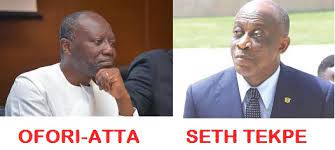
  • Ofori-Atta courts Parliament support to facilitate economic recovery

    Adnan Adams Mohammed


    The Finance Minister, last week, appealed for the timely and necessary support from the legislative powers of the government to help speed up the economic recovery process.


    The investment banker urged Parliament to support the government’s financing requests to ensure a smooth recovery from the present economic challenges.


    Presenting the state of the Domestic Debt Exchange Programme in Parliament, Ken Ofori-Atta, said the country will recover from the current economic crisis sooner rather than later as indicated by President Akufo-Addo.


    “With the successful completion of the DDEP, we believe that with the sustained support of Ghanaians and this august House, we will recover from this economic crisis sooner rather than later as indicated by H.E President Akufo-Addo. I am confident of this, that the Lord who has begun this good work will carry it on to completion as Phil. 1.6”, the minister said.


    In his assurance for prudent fiscal management, he noted that the government will implement the necessary fiscal adjustments after the debt operation is completed and present it to Parliament for consideration and approval.


    He expressed confidence that with the conclusion of the Domestic Debt Exchange programme the economy will experience stability in the exchange rates, inflation and interest rates, bringing businesses and families some respite.


    “We will, therefore, encourage Hon. Members [Parliamentarians] to support the government secure Board approval for the IMF programme to restore macro-economic stability, ensure debt sustainability as well as provide critical social protection for the benefit of Ghanaians.”


    The Finance Minister also urged Parliament to pass all the outstanding revenue bills which are necessary for effective Budget Implementation as well as boosting our efforts at increasing our Tax-to-GDP from less than 13% to the sub-Saharan average of 18%.

  • World Bank’s boss untimely exit linked climate change comment

    World Bank’s boss untimely exit linked climate change comment

    Adnan Adams Mohammed


    All things being equal, World Bank president will vacate his highest profile job middle of this year.


    David Robert Malpass, an American economic analyst and former top government official, indicated his willingness to resign this year for reasons unknown yet.


    Although, some commentators have juxtaposed his decision to pressure from within the United States government for his unpopular comment on climate change. Despite his apology to the global community after the White House had rebuked him for publicly doubting if fossil fuels were driving climate change.


    In a sharp contrast, in his recent statement on social media announcing his resignation, he said; Financing “including climate financing” had reached record levels under his leadership.


    “By the end of the fiscal year, we will be well-positioned to feature sustainability more clearly in the mission of the World Bank Group, align the mission with resources, and set in motion an effective evolution to increase the institution’s impact on people in the developing world,” he wrote in a statement shared on LinkedIn.


    Appointed by former US President Donald Trump, started his five-year term in April 2019, after serving in the US Department of Treasury during the Trump administration.


    Mr Malpass, who was sceptical of multilateral institutions, had long been seen as a controversial pick to lead the World Bank.


    BBC report had indicated that, at an event in September, former US Vice President Al Gore called for his replacement, saying the bank was not doing enough to raise funding for climate issues and it was “ridiculous to have a climate denier as the head of the World Bank.”


    Asked later to respond, Mr Malpass defended himself, but declined to say that fossil fuels caused climate change.


    In a subsequent interview with CNN, he said he had not done a good job answering or hearing the question and that man-made emissions were “clearly” contributing.


    US Treasury Secretary Janet Yellen, who has been pressing for reform at the World Bank and other development banks, thanked Mr Malpass for his service in a statement that alluded to the controversy.


    “While we all must continue to raise our collective ambitions in the fight against climate change, during President Malpass’ tenure the World Bank has made important recent advances in this area,” she said.


    She said the US would put forward a new candidate to lead the bank soon.


    The US is the World Bank’s largest shareholder and a major source of its funding.


    An American has led the institution since its start in the 1940s, when it was created to help rebuild Europe in the aftermath of the Second World War.

  • The AfCFTA and what you need to know

    The AfCFTA and what you need to know

    Adnan Adams Mohammed

    About 55 African nations have signed unto the African Continental Free Trade Area (AfCFTA).


    When successful, the Trade Agreement will be the largest free trade area in the world which unites eight Regional Economic Communities (RECs).


    It has an overarching goal of establishing a single continental market with a combined GDP of around US$3.4 trillion and a population of over 1.3 billion.


    One of the centerpiece initiatives of Agenda 2063: The Africa We Want, the African Union’s long-term development plan for making the continent a worldwide superpower, is the AfCFTA.


    The AfCFTA is to Africa while the European Union Free Trade is to Europe. Both groups, in a nutshell, were designed to foster economic cooperation within their respective continents to reduce their reliance on other markets too far from their respective regions.


    According to the official agreement document between member states, the primary objective of AfCFTA is to create a single market for goods, and services, facilitated by the movement of persons to deepen the economic integration of the African continent and by the Pan-African Vision of “An integrated, prosperous and peaceful Africa” enshrined in Agenda 2063.


    With that in mind, here are 5 important things to note about this pro-African business initiative.


    Promotion of free trade: One of the ways AfCFTA is planning on bolstering intercontinental trade with Africa is by making trade tariff-free. One of the group’s main objectives is to progressively eliminate tariffs and even non-tariff barriers to trade in goods within Africa to encourage more trade between African nations.


    Institutional Framework: AfCFTA administration would consist of a hierarchical system that goes from the Assembly to the Council of Ministers, to the Committee of Senior Trade Officials, and then finally, to the Secretariat.


    Hierarchy: The Assembly, is the highest decision-making organ of the African Union. The Council of Ministers is Ministers responsible for Trade or such other ministers, authorities, or officials duly designated by the State Parties. The Committee of Senior Trade Officials consists of Permanent or Principal Secretaries or other officials designated by each State Party. And, the Secretariat would be in charge of approving the structure and budget.


    General exceptions: The AfCFTA agreement has been designed such that nothing in it would jeopardize public morals, human, animal, or plant life or health, importations and exportations of gold or silver, and the criminalization of prison labor, among other elaborate restrictions listed on the official agreement.


    Security protocol: Nothing in the AfCFTA agreement permits the trafficking of fissionable materials, the traffic of arms, ammunition, and implements of war, and the traffic of other goods and materials used to supply a military establishment, whether directly or indirectly.


    The agreement, if given all needed attention and support from both the public and private players, will be a game changer for the continent.


    We at Economy Times is of the firm believe that this is the chance for Africa to  realise the unity and development buried for decades.


  • DDEP to weigh on balance sheet of banks – Fitch Solutions

    DDEP to weigh on balance sheet of banks – Fitch Solutions

    The Domestic Debt Exchange Programme is likely to weigh on the balance sheets of banks in Ghana and consequently reduce credit to the private sector, Fitch Solutions has revealed in January 2023 Sub-Saharan Africa Market Update.


    According to research and market information firm, the reduction in loans particularly to corporate institutions will impact on the real sector of the economy.


    Senior Country Risk Analyst in charge of Sub-Saharan Africa, Mike Kruninger, said this should be a woke up call to the government.


    “When talking about access to credit, another factor that I think is really important to mention here is Ghana’s Domestic Debt Restructuring Programme. So long as negotiations are still ongoing, the likely restructuring of domestic debt will weigh on commercial bank’s balance sheet”.


    “This will weaken their ability to issue loans to corporates to further restricting access to credit for businesses”, he added.


    According to the Monetary Policy Committee January 2023 Report,  private sector credit growth picked up, partly reflecting continued portfolio rebalancing by banks and revaluation effects on foreign currency denominated credit.


    In nominal terms, private sector credit increased by 31.8% in December 2022, compared with 11.2% percent in December 2021. In real terms, however, private sector credit contracted sharply by 14.5%, compared with 1.3% contraction over the review period, reflecting sustained price pressures.


    Furthermore, Mr. Kruninger also warned of a social unrest in 2023 if inflation continues to remain high.


    “Given the high levels of consumer price inflation that we still seeing rising taxes under the IMF programme and then higher interest rates, we believe that political instability is likely to rise in Ghana in 2023”.


    “So you can see that Ghana’s short-term political risk index has been on a downward trend for the past 12 months”, he added.

  • Ghana, Zambia fiscal challenge to persist due to elevated funding costs – RMB

    Ghana, Zambia fiscal challenge to persist due to elevated funding costs – RMB


    Rand Merchant Bank is warning of constrained fiscal policy in African countries such as Ghana and Zambia due to elevated costs of funding.


    The two countries are presently undertaking debt restructuring to bring their debt levels to sustainable levels.


    In its forecast for the year 2023, the South African based research arm of First National Bank, said it expects further reliance by African countries on multilateral and domestic funding to support the various country deficits.


    “Fiscal policy will remain constrained across most markets, partly due to elevated costs of funding. Nevertheless, we expect further reliance on multilateral and domestic funding to support the various country deficits”.


    “Similarly, the impact of debt sustainability will remain a theme as was seen during the pandemic. Focus in 2023 will be on debt restructuring in markets like Ghana and Zambia, as well as observing vulnerabilities in other markets”, it said.


    Growth to remain divergent


    Furthermore, Rand Merchant Bank said growth is expected to be divergent and heavily dependent on commodity price movements throughout the year.


    “Investment in key sectors such as mining, agriculture, logistics and energy will continue, but within reason given the higher cost of funding and the lacklustre global backdrop”, it added.


    Inflation to remain above long-term average


    On inflation, it said while it is expected to ease across the continent, it will remain structurally above its long-term average.


    “Combined with high interest rates and further shocks that could emanate from the oil market, we are concerned about personal consumption expenditure as real incomes decline given the strain on consumers. We expect most countries to reach the peak of their hiking cycle by the first half of next year (barring further shocks to inflation).”


    Meanwhile, Rand Merchant Bank said the Russia-Ukraine war remains the key geopolitical risk.


    “We continue to observe the effects of the sanctions against Russia and their disruptive nature on oil prices and on broader supply chains. The current EU ban on Russia’s seaborne crude and the expected ban on imports of refined oil products from Russia in first quarter 2023 are some of the challenges that will add volatility in the energy market’.


    “China — Africa’s key trading partner — is expected to gradually recover next year given its commitment to relax the strict covid-19 policies. This move, if sustained, should lead to stronger growth in China’s economy relative to 2022, which could offer some upside risk to commodity prices”, it added.