Category: News

  • Ghana’s Debt Exchange to affect domestic, regional banks.. as Fitch warns of downgrades of more banks

    International rating agency, Fitch, is warning of more rating downgrades of African banks in 2023 as Ghana’s debt restructuring is expected to affect both domestic and regional banks.


    According to its 2023 Outlook report, sovereign debt distress is the major risk to African banks’ financial profile.


    “We are most concerned about potential sovereign defaults with many African governments facing very high and increasing debt servicing burdens exacerbated by rising interest rates, US dollar strength and unfavourable external funding conditions. The Ghana debt restructuring will affect domestic as well as regional banks”.


    It explained that African banks’ credit drivers will be undermined by both global and domestic shocks in 2023.


    “Operating environments will be affected by a combination of high inflation, rising rates, currency depreciation and hard currency shortages, but moderate Gross Domestic Product growth, with no major African economy entering a recession, combined with banks’ relatively good fundamentals and buffers, will prevent a significantly more negative scenario”, it noted.


    Fitch further said banks’ sovereign debt risks have increased, with some African governments struggling with debt-servicing burdens and unfavourable external funding conditions.


    It stressed that the banks could be downgraded due to further sovereign downgrades but the biggest risk comes from potential sovereign defaults that could affect banks in these countries as well as regional banking groups.


    “Asset quality risks will return to be more prominent in 2023. Nevertheless, we assume only a moderate increase in impaired loan ratios in most countries. A sharp fall in commodity prices as a result of the global slowdown or economic developments in China could cause a faster increase in loan quality weakening”


    Fitch continued that banks will however remain profitable, benefitting from rising interest rates and still-satisfactory loan growth (above GDP growth) which will mitigate a moderate rise in credit costs.


    It concluded that capitalisation, funding and liquidity remain sufficient, with the latter in particular, underpinning banks’ standalone creditworthiness, stating, “external funding will be scarce and expensive”.

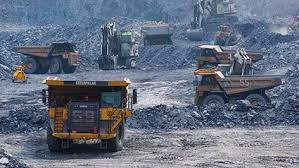
  • Mining reforms: Gov’t committed as local banks to handle 60% of sector’s financial services

    Mining reforms: Gov’t committed as local banks to handle 60% of sector’s financial services

    Adnan Adams Mohammed


    As government shows commitment towards reforms in the mining sector and deepening local content, all mining companies are expected to ensure that at least 60% of financial services including revenue from the sale of minerals go to the local Banks.


    This is captured in the fifth edition of the new procurement list which now has 50 items for the provision of goods and services of which the Minerals Commission has commenced the implementation.


    A statement, signed and issued last week by the MinCom said the increase in the items on the list comes at a time when receipts from mineral revenues and investments hover around US$ 10 billion. The local banks such as CBG, National Investment Bank, Ghana Commercial Bank and Agricultural Development Bank are likely to benefit greatly. The same applies to insurance services which also require a minimum of 60% of all insurance and reinsurance placements be made with insurance companies exclusively owned by Ghanaians.


    “For instance, there are four huge new projects with an investment of about US$ 1.7 billion”, Chief Executive Officer of the Minerals Commission, Martin Kwaku Ayisi revealed. “The new projects are the US$ 850 million Ahafo North gold mine project by Newmont Ghana Gold Limited, US$ 500 million gold project currently under construction by Cardinal Namdini Mining limited in the Talensi District of the Upper East Region, the US$ 200 million gold mine to be constructed in the Upper West Region and the US$ 125 million lithium project at Ewoyaa in the Central Region”.


    Additionally, Mr. Ayisi stated that some mines are undertaking expansion and redevelopment. The undergoing expansion includes the Ahafo South mine of Newmont which now covers the Subika underground. Golden Star Resources is spending about a billion dollars to expand the Wassa underground mine.


    The mines being redeveloped are the Anglogold Ashanti Obuasi mine where a billion dollars has been expended and the Bibiani mine of Mensin Gold Ghana Limited which started production in the last quarter of 2022. The redevelopment of the Bibiani mine is over US$200 million dollars


    “It is the expectation of the Minerals Commission that these investments will support the growth of the economy and boost local participation under the new procurement list.” MrAyisi added.


    The new procurement list replaces the fourth edition of the procurement list which was published by the Commission in early 2022.


    The Minerals and Mining (Local Content and Local Participation) Regulations, 2020 (L.I. 2431) came into force on 22 December 2020.


    The purpose of the regulations among others is to promote job creation using local expertise, goods and services in the mining industry and their retention in the country. The law is also to achieve the minimum in-country spending for goods and services and create mining and mineral-related industries that will sustain economic development.


    Pursuant to Regulation 7 of L.I. 2431, the Commission is required to publish a local procurement list that stipulates the goods and services with Ghanaian content which are to be procured in the country. Regulation 7(3) of L.I. 2431 further states that the Commission shall review the procurement list annually.


    Meanwhile, the Deputy Minister for Lands and Natural Resources, George MirekuDuker, says the government is determined to build a mining sector which is resilient and fortified enough to withstand the next global crisis.


    Delivering the keynote address at the opening day of the West African Institute of Mining Metallurgy and Petroleum (WAIMM) Annual Industry Conference, last week, Hon Duker said the mining industry was not spared from the dire impact of the twin crisis of COVID-19 and Russia-Ukraine war.


    He disclosed that the industry was badly hit but the government as part of its economic reform is introducing new policies that will lead to the creation of an economy that will be able to repel the shocks of the next global crisis.


    According to the Deputy Minister, the mining industry has taken the lead in the reformation drive by promoting responsible and sustainable mining practices.

  • GHEITI cast shadows over G4O… makes recommendations in new report


    Adnan Adams Mohammed


    The Ghana’s version of Extractive Industry Transparency Initiative (GHEITI) has cast shadow for the government’s newest ‘game changer’ policy, Gold for Oil (G4O).


    In the 2020 report of GHEITI, it raised a number of concerns and observations about the G4O policy which make the ideation and implementation looks poorly thought through. It says the policy implementation lacked wider stakeholder consultation while worsening issues of smuggling among others.


    The government has been looking for a sustainable way to tame the excess demand of foreign exchange by importers, especially for the Bulk Oil Distribution Companies (BDCs). Although, government has acquired the first consignment of 40,000 metric tonnes of oil under the deal and it is optimistic that this would cushion fuel consumers. Yet, many experts in the extractive industry are yet to understand the impact of the whole deal.


    “There had not been any disclosure on the buyer and the supplier selection criteria for the sale of gold and the purchase of refined petroleum products, respectively”, the 2020 GHEITI report released last week observed with worry. “Similarly, there has not been any disclosure on the pricing method (such as spot, futures, discount, margins etc.) for the gold sales and oil purchases.”


    Other concerns raised included: “There is no clarity whether or not the purchases from ASM will be refined before they are sold. This has implication for the realisable value of gold sold.


    “It is also not clear how the overall transaction cost under the programme would be covered; The Government did not indicate how it will raise money for the gold purchases, whether through loan syndication, Central Bank financing or government budgetary allocation; If the directive is strictly enforced, ASM gold supplies will not be available to domestic jewellery manufacturers anymore, threatening their livelihoods; The directive will centralise gold purchases from the ASM subsector, similar to what pertains in the cocoa sector, and give the country greater control over its gold exports.”


    Under the Gold for Oil programme, government plans to purchase the country’s total ASM gold production, and a portion of large-scale production in Cedis. The arrangement is intended to secure reliable and regular sources of affordable petroleum products for the country.


    This is expected to ease the demand pressure for US Dollars, which has led to a heavy depreciation of the local currency.


    Consequently, GHEITI’s MSG has reviewed the proposal and made the following recommendations to help make the policy work better: “Broader consultations are encouraged to identify the potential impact of the programme on diverse stakeholders, and to address same ahead of implementation. For instance, some ASM actors engage in pseudo forward sales with off-takers, including foreigners, who expect to receive dore in exchange for forex. This situation could increase the incidence of smuggling;


    “Government is also encouraged to subject the policy to periodic review and further stakeholder consultations to adjust and improve implementation.


    “Government should prioritise building up its gold reserves as a mechanism for dealing with the impact of the volatility associated with gold prices by predominantly stock piling gold when prices are low and selling when prices are high” and


    “Additionally, government could enhance its gold stockpile by exercising the option of taking

    royalty in-kind, in line with the provisions of the Development Agreements with Newmont,

    AngloGold and Gold Fields.”

  • NDC explains why Gov’t is forcing a Domestic Debt Exchange Program on Ghanaians

    Adnan Adams Mohammed

    In a sixteen pointer release issued by the Communication Office of National Democratic Congress (NDC), it has outlined major factors that has destressed the Ghanaian economy in past years.


    The factors, the NDC believe are the reasons why the government has to force down the throat of Ghanaians a Domestic Debt Exchange Program, which many affected parties feel it is too harsh.


    Below are the pointers as outlined by the largest opposition party:


    1. The Bawumia-led Economic Management Team has terribly mismanaged the economy leading to its collapse and bringing severe hardships to Ghanaian. Ghana is now officially bankrupt and can no longer service its debt.


    1. An unsustainable public debt on which we have defaulted in repayment for the first time in 50 years, hyperinflation of 54.1%, a rapidly depreciating currency, economic hardships and an excruciating cost of living crisis are symptoms of this economic collapse.


    1. We are here because of the reckless over-expenditure of the Bawumia-led Economic Management Team which was climaxed in 2020 when Ghana recorded a budget deficit of 15.7% due to the reckless election-related expenses of the government. The consequence of this is the unsustainable public debt, which is 104% of GDP as of December,2022.


    1. After arrogantly denying that they needed to go to the IMF, they finally made a U-turn in July,2022 and requested for an IMF program.


    1. Due to our unsustainable debt, the IMF has demanded a reduction from the current debt to GDP ratio of 104% to 55% by 2028 as a prerequisite to access a program. It is in a bid to achieve this, that the Akufo-Addo/Bawumia government has unilaterally launched this draconian Domestic Debt Exchange (DDE) program.


    1. Under the DDE program, the principal of domestic bonds that will be maturing this year, 2023 will be paid over a 10-year period, that’s until 2033 while the principal of domestic bonds maturing after 2023 will be paid over a 15-year period, that is until 2038. And the coupon rates thereon reduced to 0% for 2023, 5% for 2024 and 10% for 2025 and beyond.


    1. The draconian DDE program is poorly through through and will impoverish banks, insurance companies, firms, pension funds and individual bond holders by denying them interest and principal payments due them if allowed to stand.


    1. This draconian DDE program being unilaterally imposed on bond holders, particularly individual bond holders by the Akufo-Addo/Bawumia government amounts to expropriation of the wealth of persons who have lent to government in violation of Article 20 of the 1992 Constitution. And must be rejected and resisted by bond holders and all fair-minded Ghanaians.


    1. In the case of banks who hold about GHS60 billion in government bonds, denying them interest payments in 2023 will impose severe hardships on them. In the case of some state-owned banks, up to 70% of their annual revenues come from interests on government bonds and the implication of the Domestic Debt Exchange (DDE) is that they will not have access to 70% of their revenue in 2023. This will severely cripple these banks and effectively lead to their collapse amidst major employee layoffs.


    1. For pension funds affected by the DDE, their ability to pay pensions to the aged and pensioners who depend on such payments for survival will be drastically hampered and this will lead to unspeakable hardships for pensioners.


    1. Including individual bond holders in the DDE contrary the President’s assertion that they will be exempted, will wipe out the middle class with up to 1.3 million bond holders affected and millions of their dependents thrown into a state of penury and hopelessness.


    1. Additionally, Bond holders who depend on their investments to buy medication, pay school fees or rent or fend for their families, pay their workers, invest in their business etc. will be denied access to their hard-earned monies which they have lent to government. This will worsen the financial position of bond holders and lead to inevitable lay offs by affected institutions. Access to credit will reduce significantly, economic growth slow down considerably and the excruciating hardships Ghanaians are already reeling under will soar.


    1. Even as the Bawumia-led Economic Management Team imposes such hardships on Ghanaians, government has insulated itself from sharing the burden. They have refused to cut down on non-essential expenditure, the needlessly huge size of government and such wasteful investments such as the building of a $450 million cathedral at a time when they cannot pay their debts and are giving crude haircuts to bond holders.


    1. It must be emphasized that we are in this mess because of the reckless borrowing and spending engaged in by the Bawumia-led EMT in the last six years which has ballooned the public debt from GHS120 billion in 2016 to over GHS500 billion. Against the wise counsel of many well-meaning Ghanaians, the wasteful and greedy Akufo-Addo/Bawumia government borrowed recklessly and celebrated same with Kenkey parties with the cousin of the President and finance minister profiting from same through transaction advisor fees.


    1. Government’s arrogant posturing and the lack of proper stakeholder consultations that has characterized the so-called debt exchange program must be strongly condemned. Government must stop treating Bond holders with contempt and engage them in proper negotiations for a workable settlement.


    1. In view of the disastrous consequences on all affected entities and individuals, the Minority caucus in Parliament demands an immediate suspension of the Domestic Debt Exchange pending much broader and deeper consultations with all stakeholders to achieve the most appropriate and least punitive approach to protect the interests of Ghanaians.


    NCB-HQ

  • Postmortem of Ghana’s economy and the DDE

    Adnan Adams Mohammed


    Ghanaians are facing a period of economic harshness never experienced after the periods of the military junta in 1980’s.


    While inflation is beating about three decades records to record over 54 percent for November 2022 year on year, the Ghana cedi losing value to by over 50 percent to be adjudged as the worst performing currency as at November last year and current ranking second worst performing currency according to Bloomberg data.


    Also the country defaulted in debt servicing to both domestic and foreign debtors as the country’s accumulated debt surpassed its Gross Domestic Product recording over over 105 percent debt to GDP ratio. All these compounded with already global slowdown in economic growth and business activities and as well as drop in remittance to the subharran regions.


    To anihililate  the current challenges, a finance expert has done a deep postmortem analysis of Ghana’s current economic woes and attributed the ‘big factor’ to reckless borrowing and expenditure.


    In a question and answer session with a former executive director with Standard Chartered Bank, Alex K. Mensah Mould, he outlined the causes and solutions to our current economic challenge leading us into a ‘killer’ debt restructuring arrangements under the Domestic Debt Exchange (DDE).


    1. Why are we asking for the DDE?


    Ans. The financial crisis was largely a result of structural problems that ignored the loss of tax revenue and the slow down in growth in key sectors in a sustainable way


    Government was simply not bringing in enough money to cover its growing expenditure including its debt service


    This has been exacerbated by high inflation, high physical deficits, low growth in key sectors ,and problems with the exchange rate


    1. How did we get here?


    Ans. Financial indiscipline and taking wrong bets via ill-thought through policies emanating from populist manifeato promises


    Govt also  were not constrained in its financial management and violated many covenants it signed up for; namely:


    – Deficit not more than 5% of GDP

    – Public debt to below 60% of GDP


    Govt also misrepresented its ability to keep the exchange rate under control by supporting the Cedi via sustainable strong exports and a strong trade surplus


    As long as borrowing cost remained relatively cheap and the economy was still growing then issues like current account deficit continued to be ignored


    What government did not do was to stress test the economy to see the vulnerabilities and address them by putting some risk management measures in place to address these vulnerabilities


    1. Why are we going to the IMF?


    Ans. Basically we are going to IMF to assist us getting all our creditors to agree to a debt restructuring once we sign up to a economic performance improvement plan (PIP)


    If Ghana brings a credible performance improvement plan IMF will get approval to assist Ghana with a loan to help with the budget


    We are not going to the IMF solely for a financial bail out ie IMF funds will not solve our problem


    The IMF will insist on financial discipline and should also insist for Govt to address the structural imbalances such as :

    – Low taxation

    – High imports of goods and commoditiesthat can be produced here

    – High unemployment

    – Low growth in key sectors

    – High Govt sector employment

    – Relatively high compensation to

    – low productivity of Govt workers


    Govt need to be forced not to hide its challenges.


    These structural imbalances can be achieved if the following are addressed:

    – Dampening inflation

    – Lower nominal interest rates

    – Encourage private investment in the real sector

    – Spur economic growth

    – Lower transactions costs


    All the above are needed to reduce the deficits and also for debt reduction


    1. What will happen if we do not get a workable PIP and the resulting bailout for IMF?


    Ans. Things could only get worse.

    Capital will begin to dry up – we are currently shut out of Eurobond markets


    Ghana could face a liquidity crises and will need even larger bailout financing


    Ghana could emerge into a recession amidst hyperinflation


    Government tax revenues would weaken


    This will find many companies failing especially the SMEs which will result in job losses will exasperate the already precarious unemployment situation in the country


  • Public workers to enjoy 30% base pay increment

    Adnan Adams Mohammed


    Public sector workers are to see a whopping 30 percent increment in their basic salary starting this month.


    At the last negotiation meeting, the government agreed to increase the base pay on the Single Spine Salary Structure by 30%. This comes after several negotiations it had with Organized Labour.


    Organised Labour had earlier demanded a 60% increment using the hyper inflationary trends being experienced in the country. However, at the of the last negotiation sitting, the Minister for Employment and Labour Relations, Ignatius Baffour Awuah said the new payment takes effect from January 1, 2023.


    “Today, January 12, 2023, organized labour honoured the invitation by Fair Wages and Salaries commission to continue with the deliberation on the base pay”, a statement signed by all parties of the negotiation committee and issued last week indicated.


    Finance Minister, Ken Ofori-Atta, at the meeting expressed that, even though the increment will have a toll on the budget, government is committed to ensuring a peaceful environment on the labour front.


    However, the Civil and Local Government Staff Association of Ghana (CLOGSAG) has assured of also working collectively with government to increase its revenue base to aid in the development of the country.


    Read below the full statement:


    UPDATE ON ORGANIZED LABOUR MEETING WITH GOVERNMENT ON BASE PAY


    Today, January 12, 2023, organized labour honoured the invitation by Fair Wages and Salaries commission to continue with the deliberation on the base pay.


    Present at the meeting were the Minister for Employment and Labour Relations with his deputy, the Deputy Minister of Finance, and her team and Chief Executive Officer for the Fair Wages and Salary Commission.


    The Minister for Employment opened the meeting and informed the house that government was ready to offer 25% and labour also revised it position from 50% to 35%.


    After several caucuses government side moved to 27% which was rejected by labour and labour also moved to 30% which happens to be the fall back that will never be revised.


    The meeting was joined by the Minister of Finance and pleaded with labour to accept 27% and later moved to 28.5%. After several discussions it was agreed by both Government and labour to increase the base pay by 30%.


    Therefore It is for our information that the base pay for 2022 is increased by 30% for 2023.


    Official signed MoA will be released soon.


    Thank you!!!

  • Ghana-IMF bailout: Final approval expected latest Feb. – Akufo-Addo assures

    Adnan Adams Mohammed


    President Nana Akufo-Addo has assured Ghanaians to expect a full International Monetary Fund (IMF) approved economic policies and reforms to help revive the  economy latest in February.


    The government is currently waiting for the Fund’s Board approval for the staff-level agreement reached in December 2022.  The economic policies to be implemented will be supported by a new three-year arrangement under the Extended Credit Facility (ECF) of about US$3 billion.


    IMF believes the Ghanaian authorities’ strong reform programme is aimed at restoring macroeconomic stability and debt sustainability while protecting the vulnerable, preserving financial stability, and laying the foundation for strong and inclusive recovery.


    “We are going through the processes with the International Monetary Fund right now and hopefully, by the middle of this month or February, a full-blown IMF programme will be put in place which will help us repair our public finances which took a big hit from external forces”, Mr Akufo-Addo said when he gave an update on the IMF talks during a meeting with some African-American students from the Harvard Business School at the Jubilee House.


    The president acknowledged the challenges facing the economy: “We’ve had difficulties in the past few years trying to reposition our economy to grow again”.


    He said: “Some basic statistics that all of you are familiar with have pushed us back: the energy sector crisis, the global food crisis, and many others and Ghana is yet to escape from all of these crises”.


    However, to support the objective of restoring public debt sustainability, the government of Ghana has launched a comprehensive debt operation.


    In addition to a frontloaded fiscal consolidation and measures to reduce inflation and rebuild external buffers, the programme envisages wide-ranging reforms to address structural weaknesses and enhance resilience to shocks.


    IMF team led by Mr Stéphane Roudet, Mission Chief for Ghana, visited Accra from December 1 – 13, 2022, to discuss with the Ghanaian authorities IMF support for their policy and reform plans.


    At the end of the mission, Mr Roudet issued the following statement:


    “I am pleased to announce that the IMF team reached a staff-level agreement with the Ghanaian authorities on a three-year program supported by an arrangement under the Extended Credit Facility (ECF) in the amount of SDR 2.242 billion or about US$3 billion. The economic program aims to restore macroeconomic stability and debt sustainability while laying the foundation for stronger and more inclusive growth. The staff-level agreement is subject to IMF Management and Executive Board approval and receipt of the necessary financing assurances by Ghana’s partners and creditors.


    “The Ghanaian authorities have committed to a wide-ranging economic reform program, which builds on the government’s Post-COVID-19 Programme for Economic Growth (PC-PEG) and tackles the deep challenges facing the country.


    “Key reforms aim to ensure the sustainability of public finances while protecting the vulnerable. The fiscal strategy relies on frontloaded measures to increase domestic resource mobilisation and streamline expenditure. In addition, the authorities have committed to strengthening social safety nets, including reinforcing the existing targeted cash-transfer program for vulnerable households and improving the coverage and efficiency of social spending.


    “Structural reforms will be introduced to underpin the fiscal strategy and ensure a durable consolidation. These include developing a medium-term plan to generate additional revenue and advancing reforms to bolster tax compliance. This will help create space for growth-enhancing measures and social spending. Efforts will also be made to strengthen public expenditure commitment controls, improve fiscal transparency (including the reporting and monitoring of arrears), improve the management of public enterprises, and tackle structural challenges in the energy and cocoa sectors. The authorities are also committed to further bolstering governance and accountability.


    “To support the objective of restoring public debt sustainability, the authorities have announced a comprehensive debt restructuring. Sufficient assurances and progress on this front will be needed before the proposed Fund-supported program can be presented to the IMF Executive Board for approval.


    “Reducing inflation, enhancing resilience to external shocks, and improving market confidence are also important program priorities. Accordingly, the Bank of Ghana will continue to strengthen its monetary policy framework and promote exchange rate flexibility to rebuild external buffers. As part of the authorities’ debt strategy, a domestic debt exchange has been launched. The authorities are committed to taking the necessary mitigation measures to ensure financial sector stability is preserved.


    “IMF staff held meetings with Vice President Bawumia, Finance Minister Ofori-Atta, and Bank of Ghana Governor Addison, and their teams, as well as representatives from various government agencies. The IMF team has also continued to engage with other stakeholders. Staff would like to express their gratitude to the Ghanaian authorities, Parliament’s Finance Committee and all the private sector, trade union, and civil society representatives for their open and constructive engagement over the past few months.”

  • Analysts predict tougher times ahead for the economy and businesses


    Adnan Adams Mohammed


    Some analysts are predicting tougher times ahead for the economy arguing that businesses looking to expand this year will face very severe challenges.


    According to a business analyst, David Ofosu-Dorte, while many businesses had not envisaged such a harsh economic terrain coming into the New Year, the prevailing crisis means companies would have to adapt and probably shelve some of their plans in order to weather the storm.


    They emphasized that, the ongoing domestic debt exchange will deprive businesses of key financing support as a result of the liquidity problems it will create for banks in the coming months. To corroborate this, a financial analyst has also shared that, government seems not to have thought through this debt exchange programme thoroughly; the economic contraction implications are dire!


    “There will be a general slowdown of the economy and we will either not grow as anticipated, or, perhaps, even not exceed 2% GDP growth this year”, former Executive Director of Standard Chartered Bank, Alexander Kofi-Mensah Mould, in an interview last week said.


    “This will be due to less demand, which means that there will be less production, fewer imports, and fewer services being given to the populace.”


    Mr Dorte speaking during a TV discussion explained that, “Most businesses don’t expand using returns on bonds except the financial sector. Businesses expand using loans and debt instruments or other corporate financing instruments that they take.


    “The challenge is that the banks are going to have liquidity problems, so you will still not be able to do that expansion because the banks will not be giving you the money or the cost of that borrowing will be so outrageous that you’ll not be able to make returns on it so definitely expansion programmes are going to be very very difficult.”


    He added that even for businesses that have other sources of income, borrowing for expansion will still be very difficult.


    “And if you reduce it to GDP terms, the government’s own expectation of GDP is not that bullish because if businesses are not growing and expanding then we are going to have a situation where we are going to contract. There will be some growth but I don’t expect very bullish growth,” he said.


    Consequently, “Now, what does this mean for government revenue?”, Mr Mould asked rhetorically.


    “Since the demand of goods and services will go down, it means people will be paying less taxes. Additionally, due to reduced demand – a result of less discretionary expenses – there be fewer imports and as such there will be less duty and other excise taxes collected at the ports.


    “So, government revenue will plummet and they may fall short of making the projected revenue in the approved budget.”


    The finance and energy analyst further expunged that, the Debt Exchange, if carried out in its current form, will result in many banks not getting any income from Government Treasury Bonds they hold for almost 15 years.


    “In some cases, this forms up to 60% of their revenue and is a huge contributor to their profits! To be blunt most banks will be making losses when you combine this loss of income to the high default rate on loans to SMEs and corporates.”


    This implies that, with lower than expected revenue, Government will have no other option than to cut down its expenditure.


    The first to go will be discretionary expenditure and other non-productive policy programmes.


    He said, “We also expect a reduction in the construction of new roads as well as a slowdown in road maintenance, and a lot of non-essential government workers’ salaries being delayed or not paid at all, i.e more expenditure accruals.


    “Furthermore, with the statutory payments, like pension contributions, the situation will be worse than it currently is, that is,  government backlog of unpaid pension contributions of government workers.


    “Government needs to re-visit this debt exchange program and create policies that will bring back confidence in the economy, as well as attract investment to spur on the economy; resulting in more spending and increased savings.”

  • Banks to lose up to 60% of their revenue due to Debt Exchange – former Stanchart Director

    A former Executive Director of Standard Chartered Bank has warned the economic contraction implications of the debt exchange programme will be dire.


    According to the finance analyst, if the Debt Exchange is carried out in its current form, would result in many banks losing as much as 60% of their revenue, since they depend on government treasury bonds.


    “To be blunt, most banks will be making losses when you combine this loss of income with the high default rate on loans to SMEs and corporates”, Mr Alexander Kofi-Mensah Mould emphasized


    In a Facebook post, he said the main implication of the proposed DebtExchange would be a general slowdown of the economy and “we will either not grow as anticipated, and, perhaps, even not exceed 2% GDP growth this year.”


    He said government will have no other option than to cut down its discretionary expenditure and other non-productive policy programmes.


    “We also expect a reduction in the construction of new roads as well as a slowdown in road maintenance, and a lot of non-essential government workers’ salaries being delayed or not paid at all etc ie more expenditure accruals,” he stated.


    Read full statement


    Gov’t seems not to have thought through this _debt exchange programme_ thoroughly; the economic contraction implications are dire!


    There will be a general slowdown of the economy and we will either not grow as anticipated, or, perhaps, even not exceed 2% GDP growth this year.


    This will be due to less demand, which means that there will be less production, fewer imports, and fewer services being given to the populace.


    Now, what does this mean for government revenue?!?


    Since the demand of goods and services will go down, it means people will be paying less taxes. Additionally, due to reduced demand – a result of less discretionary expenses – there be fewer imports and as such there will be less duty and other excise taxes collected at the ports.


    So, government revenue will plummet and they may fall short of making the projected revenue in the approved budget.


    The DebtExchange, if carried out in its current form, will result in many banks not getting any income from Government Treasury Bonds they hold for almost 1.5 years! In some cases, this forms up to 60% of their revenue and is a huge contributor to their profits! To be blunt most banks will be making losses when you combine this loss of income to the high default rate on loans to SMEs and corporates.


    With lower than expected revenue, Government will have no other option than to cut down its expenditure.


    The first to go will be *discretionary expenditure* and other non-productive policy programmes.

    .

    We also expect a reduction in the construction of new roads as well as a slowdown in road maintenance, and a lot of non-essential govt workers’ salaries being delayed or not paid at all, i.e more expenditure accruals.


    Furthermore, with the statutory payments, like pension contributions, the situation will be worse than it currently is, i.e. gov’t backlog of unpaid pension contributions of gov’t workers.


    Gov’t needs to re-visit this _debt exchange program_, and create policies that will bring back confidence in the economy, as well as attract investment to spur on the economy; resulting in more spending and increased savings.

  • Another banking sector cleanup in the offing – Experts alarm

    Another banking sector cleanup in the offing – Experts alarm

    Adnan Adams Mohammed

    Financial industry experts have alarmed of imminent cleanup exercise as the country is witnessed a debt restructuring program.

    This comes as the local economy is yet to recover from the first ever financial sector cleanup exercise initiated in 2019.

    The experts explained that, Debt Exchange Program the debt-ridden country is to undertake will usher Ghanaians into unprecedented hardship likened to the era of 1979-83 hardship in Ghana. A former Executive Director at Standard Chartered has indicated that, the debt restructuring will result in sequence of events that will end with many borrowers defaulting their loans or funds borrowed. This will affect many financial institutions.

    “Many will be borrowing funds which they won’t be paying back (so let us say they will be given grants, but lenders don’t know this yet)”, Alex Mould intuited in an interview last week.

    “He itemised the expected economic situations due to the debt restructuring program as that: in this year, there will be less spending power, little or no savings; companies will borrow less and less production due to less demand (only essentials like food staples); Many businesses will fold and eventually lay off workers; Most contracts will not be honored; and Many rentals will be unoccupied. This will lead to low Gross Domestic Product (GDP) growth.”  

    To this, the Dean of University of Cape Coast School of Business, Prof. John Gatsi warned that the country will experience another round of banking sector cleanup if care is not taken.

    According to the economist, the “Debt exchange program is default announcement and a call for support to resolve debt servicing burden by government.” but was quick to add that “This does not in anyway take away the solemn and legal commitment to pay principal at maturity and also pay periodic coupon to the bond holders.”

    Implicitly, this legal obligation or covenant is such that the debtor (government of Ghana) is still a debtor whether there is cash flow / revenue challenges or not.

    In the financial terms, the fact that government has declared default does not mean government has triggered a different status for itself. Government is still a debtor.

    Prof Gatsi emphasizing on this aspect expunged that, “The Ministry of Finance is not a court to determine that individual bond holders will not get favorable judgment in any legal action especially when the process was described as voluntary.”

    “In a democracy, individuals bond holders are at liberty to go to court. The court has the choice to determine whether or not people should be scared about government and her debt instruments going forward. Government indeed needs the support of bond holders in the debt exchange program but the critical question is whether government should determine what it wants and not a negotiated deal.”

    Consequently, the Economics Professor cum Lawyer juxtaposed that, the debt restructuring will lead to liquidity challenge in the financial sector of the economy.

    “The challenge now is that government debt restructuring in a high interest rate regime, may trigger a certain percentage of default by private sector debtors such as households, micro, small and medium size enterprises . So we await a boom in the non- performing loan portfolio of banks soon with reclassification of assets with huge assets expected for impairment. This will create liquidity and capital challenges. We are in for another round of bank sector cleanup if care is not taken”, he added.

    “The debt exchange must be negotiated fairly for bond holders to accept the difficulties government is facing to share part of the burden with government. If this is not done then the entire process becomes hostile . The exercise should be fair to the financial system in general to foster a negotiated debt exchange program and this will keep bond holders still trusting government. Everything must be done to maintain investor confidence to achieve trustworthy and credit worthiness of government instruments along the long term path.”

    Meanwhile, the Finance Minister, Ken Ofori-Atta has noted in the ‘Invitation to Exchange’ to individual bondholders that, the principals of eligible individual bondholders will not be touched in the debt exchange programme but the interests will get a haircut.

    This invitation is to exchange certain domestic notes and bonds of the Republic of Ghana, E.S.L.A. Plc, and Daakye Trust Plc (collectively, the “Eligible Bonds”) for new bonds of the Republic of Ghana.

    The exchange, the minister noted, will rather involve an exchange for new government of Ghana bonds with a coupon that steps up to rates ranging from 9.15% to 10.65% (depending on the specific series of new bonds) as soon as 2025 and longer average maturity.

    The minister said the domestic debt exchange is part of a more comprehensive programme to restore debt and financial sustainability.

    In the Amended and Restated Exchange Memorandum to individual bondholders, he noted: “The successful completion of this domestic debt exchange is a critical component of both the debt reduction programme and the International Monetary Fund programme discussions; it will contribute to unlocking the support of the international community and will allow Ghana to reach debt targets agreed with the IMF”.

    “We need the full participation of all bondholders in this transaction. Anything less will not make us eligible for assistance. There can be no exception”, he added.

    Apart from that, he said contingency plans have been prepared with applicable regulators to assist certain sectors of the economy (including the financial sector) after its participation in the exchange, to minimise negative spill-overs and safeguard the domestic economy including the establishment of a financial stability fund to provide a backstop for liquidity.

    The minister indicated that, the alternative to the debt exchange would be a far worse economic crisis, with protracted closure from international markets including imported goods and services and further domestic economic instability both for the real economy and the financial sector.

    “It would also mean depleted fiscal resources to support the neediest.”

    “We are acutely aware of the upfront cost of this transaction, and other aspects of our adjustment programme, to participating holders. To that end we are carving out from this exchange treasury bills (up to one-year maturity) typically held by retail investors”, he explained.

    “Further, there is also a positive trade-off for debtholders as a group: this transaction, though resulting in reduced coupon payments from 2023, will make a positive contribution to a safer and brighter future for all Ghanaians”, he argued.