Category: News

  • BoG suspends budget financing beginning 2023

    BoG suspends budget financing beginning 2023

    By Elorm Desewu

    The Bank of Ghana, (BoG) has disclosed that it would no longer finance government’s large budget overrun from next year 2023.

    According to the governor of the BoG, Dr Ernest Addison, “the country has fundamental issues that we have to address such as fiscal problems, very large deficits which is not getting the adequate financing and therefore central bank was providing the financing on a temporary basis. Hopefully by the end of this year, that would not be there to complicate the inflation management issue”.

    He said the financing of government’s deficit was just a temporary accommodation till the end of this year adding till the IMF’s program is successfully completed and implemented there will be no need for Bank of Ghana’s accommodation going into 2023. “In fact we do not expect the central bank to finance the budget into 2023 that should be a thing of the past” he stressed.

    Provisional data on fiscal operations for January to September 2022 resulted in an overall budget deficit of GH¢41.7 billion (7.0 percent of GDP), against a programmed deficit target of GH¢36.7 billion (6.2 percent of GDP). The corresponding primary balance was a deficit of 1.6 percent of GDP, against a deficit target of 1.0 percent of GDP.

    The higher-than-projected deficit was on account of revenue shortfalls alongside expenditure overruns. Total Revenue and Grants amounted to GH¢65.4 billion (11.0 percent of GDP), compared with a target of GH¢67.3 billion (11.4 percent of GDP), representing a shortfall of 2.8 percent compared to target and year-on-year growth of 33.2 percent.

    Total Expenditure (including arrears clearance and discrepancy) for the period amounted to GH¢109.4 billion (18.5 percent of GDP), above the target of GH¢103.99 billion (17.6 percent of GDP) by 5.2 percent. The resulting overall fiscal deficit of GH¢41.7 billion was financed mainly from domestic sources.

    But for 2023 fiscal year, the government is projecting a fiscal deficit of GH¢61,475 million, equivalent to 7.7 percent of Gross Domestic Product (GDP) and a corresponding Primary balance deficit of GH¢8,925 million, equivalent to 1.1 percent of GDP.

    Total Revenue and Grants is projected at GH¢143,956 million or 18.0% of GDP and is underpinned by permanent revenue measures – largely Tax revenue measures – amounting to 1.35 percent of GDP.

    Total Expenditure including clearance of arrears is projected at GH¢205,431 million or 25.6% of GDP.

    This estimate shows a contraction of 0.3 percentage points of GDP in primary expenditures (commitment basis) compared to the projected outturn in 2022 and a demonstration of Government’s resolve to consolidate its public finances.

  • GNPC to offload interest in JOHL to Explorco

    GNPC to offload interest in JOHL to Explorco

    National oil company, GNPC has started the process of assigning its interest in the Jubilee Oil Holding Limited (JOHL) to Explorco -a subsidiary of the company, the Deputy Chief Executive (CEO) of GNPC in charge of Commerce, Strategy and Business Development, Joseph Dadzie, has told parliament’s Ad hoc Committee.

    According to him, the move is subject to the board’s approval, with the expectation that the assignment of interest will be completed by the end of the year.

    The assignment of interest to Explorco is part of the condition of approval by the Minister of Energy for the transaction -the acquisition of the seven percent (7%) Anadarko stake.

    Appearing before the Ad hoc Committee of Parliament hearing the censure motion on the Minister of Finance on Tuesday, Mr.Dadzie stated “When we mentioned to our stakeholders, the other oversight bodies, we thought we were going to buy the stake not the company but obviously the structure changed and we had to buy the company, so we going through the process.

    In fact the approval we got from the Ministry of Energy was very specific that it needed to be assigned to Explorco and the board of GNPC is going through the process of assigning that. JOHL will be dissolved when the process is completed.”

    The Public Interest and Accountability Committee (PIAC) in its semi-annual report on the management and use of petroleum revenues from January to June this year disclosed that the proceeds of lifting by JOHL, should be paid into the Petroleum Holding Fund, as the committee is convinced the proceeds form part of Ghana’s petroleum revenue.

    Further, the Vice-Chairman of PIAC, Nasir Alfa Mohammed, who appeared before the committee to testify, said the money was rather paid into an offshore account.

    However, Mr. Dadzie in his testimony before parliament’s committee when the issue of unlawful transfer of proceeds of JOHL revenue came up, he said the money was paid into Jubilee Oil Holding Limited, which was legally clothed with the authority to receive the money.

    He, therefore, disagreed with PIAC that the money should have been paid directly into the Petroleum Holding Fund.

    Both witnesses were testifying in response to the proponents of the censure motion against Ken Ofori-Atta on the ground of illegal payment of revenues into an offshore account, in flagrant violation of Article 176 of the Constitution.

    Jubilee Oil Holding Limited, made its first oil lifting of 944,164 barrels of oil in the Jubilee Field in the first half of 2022.

    The amount was realised from the lifting of 944,164 barrels of oil from the Jubilee fields and Anadarko CWTP Company in the first half of 2022.

    The GNPC Deputy CEO said it was not the GNPC that set up Jubilee Oil Holding Limited but rather Anadarko Company.

    He said Jubilee Oil Holding Limited was set up because Anadarko decided to sell its stakes in the Ghana assets and reached an agreement with Kosmos to purchase it.

    The Ghana government, he said, then made a submission that it wanted part of that stake, and after negotiations, “we agreed on seven per cent”.

    With strict timelines for the consummation of that transaction and the need for the GNPC to go through the approval process, Mr Dadzie said, Anadarko decided to sell Jubilee Oil Holding Limited, carving out the seven percent for the GNPC to acquire later on.

    “We got the necessary approvals and we were ready to buy Jubilee Oil Holding Limited, so the structure of the transaction was not a GNPC-defined structure but that of the seller (Anadarko Company).

    “We did not buy a participating stake; we rather bought the company which held seven percent in Jubilee and TEN,” he said.


    On where GNPC got the funds to buy Jubilee Oil Holding Limited, Mr Dadzie said the corporation wrote to the Ministry of Finance to advance it a loan towards the purchase and obtained approval from the ministers of Energy and Finance.

    On the quantity of oil lifted by Jubilee Oil Holding Limited so far, he said: “We have lifted in total $153 million.”

    “Jubilee Oil Holding Limited is a 100 percent subsidiary of the GNPC and we believe it is a company registered under the Companies Act and obviously the terms and conditions, as well as the constitution of Jubilee Oil Holding Limited, are governed by that act, not the Petroleum Revenue Management Act.

    “For that reason, 100 percent of that revenue cannot be paid into the Petroleum Holding Fund. Jubilee Oil Holding Limited must operate, and if at the end of the day it declares profit and the directors decide dividends must be paid, that money is paid to the GNPC, which will pay it into the Petroleum Holding Fund,” Mr Dadzie said.

    Responding to a question on which of the allegations related to the finance minister, he said: “As far as Jubilee Oil Holding Limited is concerned, the Finance Minister is not responsible for the revenues.”

    “Obviously, we have to, at the end of the day, submit our financials and pay whatever asset tax there is to the GRA. In 2021, Jubilee Oil Holding Limited paid GH¢17 million to the GRA as tax on its operations.

    “So, as far as revenue is concerned, I do not think the Finance Minister has any direct control over revenue,” he declared.

    Asked if the $100 million was paid into an offshore account, Mr Dadzie said: “Yes, it was paid into an account at the Ghana International Bank in London by the buyers of the crude.”

  • MP calls for parliamentary ‘arrangement’ to ensure fares, market prices are reduced

    MP calls for parliamentary ‘arrangement’ to ensure fares, market prices are reduced

    Adnan Adams Mohammed

    The New Patriotic Party (NPP) Member of Parliament (MP) for Nsawam-Adoagyiri,  has called on the government and parliamentary leadership to put in place “an arrangement” which will ensure the control of transport prices in fair correspondence with the reduction of petroleum products at the pumps.

    The call comes as many Ghanaians have raised concerns for transport operators, oil marketing companies and traders to drastically reduce their prices which were astronomically inflated due to the jump in foreign exchange rate some weeks ago and fuel prices.   

    Frank Annoh-Dompreh, who is also the Majority Chief Whip in Parliament, speaking on the Floor of Parliament as he rallied support for the transport report presented by the Minister of Transport Kwaku Ofori Asiamah, noted with concern the failure of transport operators to reduce fares despite the “consistent reduction” in fuel prices at the pumps and the appreciation of the local currency against the dollar.

     A statement issued by GUTA has appealed to members of the business community to make the “consuming public feel the impact of this positive trend,” as the Cedi appreciates. It urged government to continue with “more efforts to sustain the programme and bring relief to the business community.”

    “We’ve often lamented about the skyrocketing price of petrol [and] diesel in this country and Speaker, I must commend the government that in recent times, we read and we see consistent reduction in the ex-pump price of these products. And it’s gratifying that the dollar is also struggling to contain the strength of the cedi. These are all good times,” Hon Annoh-Dompreh stressed.

    “However, I am not too happy when the ex-pump price of these products is going down and yet transport operators don’t pay a heed to this consistent reduction in the price of such products,” he bemoaned.

    “I think going forward, we must have an arrangement to deal with this concern,” he proposed.

    “The Ghanaian people are speaking to this, it’s a big concern for all of us, and Minister, in your response, and in your commentary, members are eager to hear, what you’d say and what the solution would be like,” he took his seat.

    Prices of petroleum products are expected to fall significantly beginning this Friday, December 16, 2022, the Institute for Energy Security (IES) has projected.

    The Chief Executive Officer of the Chamber of Commercial Transport Union of Ghana Benjamin Nsiah, has also hinted that prices of transport fares are likely to go down by some 20 per cent effective Tuesday, 20 December, 2022. In a radio interview, he indicated that various unions are engaging to decide on the right percentage of reduction.

    Meanwhile, the Ghana Union of Traders Association (GUTA) has indicated that it will continue to appeal to its members to reduce the prices of their goods, following the improvement in the value of the cedi.

    According to the association, it is important for traders to transfer the recent gains in the local currency through a reduction in the prices of their goods during the yuletide.

    GUTA’s call is coming at a time the local currency has strengthened in value against the major trading currencies.

    GUTA members demonstrated in October this year, closing their shops after the cedi lost its value to the dollar by about 50%.

    The cedi has however witnessed over 25% gain in value to the US dollar since the past one and half weeks.

    Reacting to calls for traders to reduce their prices, President of GUTA, Dr. Joseph Obeng said although market forces determine the prices, it will be prudent to take a look at prices of goods charged exorbitantly now that the cedi has gained some stability.

    “The market forces itself will determine the prices as people have rightly said. But what we are seeking to do is to show good faith to the consuming public that our intentions are clear that when the exchange rate comes down, we will respond positively to alleviate the plight of the consuming public especially when are going for Christmas.”

    “It’s just an appeal”, he added.

    Dr. Obeng stated that GUTA can only appeal to traders to reduce the prices, since Ghana runs a free market system.

  • BoG blames cedi depreciation on fiscal operations

    BoG blames cedi depreciation on fiscal operations

    By Elorm Desewu

    The Bank of Ghana, (BoG) has blamed the recent sharp depreciation of the cedi on fiscal operations of the government.

    According to the BoG, the Ghana cedi came under pressure in September and October on fiscal concerns. Pressure to the currency came from energy and corporate demand. Also, the strength of the US dollar weighed on the Ghana cedi.

    However, this pressure has been partly moderated by the central banks special forex auction for Bulk Distribution Companies. Furthermore, the currency is being supported with inflows from the cocoa syndicated loan, mining, remittances and forex purchases from the mining companies.

    However, as the dollar continues to strengthen due to policy rate hikes and U.S safe-haven status, the cedi may continue to experience some volatility in the near term. Also, Energy related and corporate demand may persist, but successful negotiations of the US$3 billion IMF package may offset some of the pressures.

    In the interbank market, the cedi depreciated by 53.83 percent, 45.50 percent and 46.84 percent against the dollar, pound and the euro respectively on a year-to-date basis. This was against an appreciation of 3.54 percent against the euro and a depreciation of 2.38 percent and 2.57 percent against the dollar and pound respectively during the same period in 2021.

    Historically, the cedi was weaker in 2022 on a year-to-date and monthly basis compared to the same period from 2017-2021. Also, the cedi was more volatile during the first 226 transaction days in 2022 compared to the same period from 2017-2021.

    In reference to the major trade partners’ currency movements, the Ghana cedi depreciated by 36.6 percent in nominal trade weighted terms and 35.6 percent on forex transaction weighted terms in October 2022.

    This compares with 0.28 percent and 0.27 percent depreciation in nominal trade weighted terms and nominal foreign exchange transaction weighted terms over the same period in 2021.

    In real bilateral terms, the Ghana cedi depreciated by 32.4 percent, 34.9 percent and 38.1 percent against the US dollar, euro and the pound sterling during October 2022. Comparatively, for the same month in 2021, the Ghana cedi’s real exchange rate depreciated by 0.6 percent, 0.4 percent and 2.3 percent against the dollar, the euro and the pound sterling respectively, over the same period in 2021.

    The Ghana cedi depreciated by 34.8 percent and 32.7 percent in real trade weighted terms and real forex transaction weighted terms in October 2022. These compare with a depreciation of 0.6 percent and 0.6 percent in real trade weighted terms and real FX transaction weighted terms respectively for the same period in 2021.

  • Job scarcity increases for 1st 10 months of 2022

    Job scarcity increases for 1st 10 months of 2022

    By Elorm Desewu

    The non-availability of jobs in the country has continued to rise, according to figures from the Bank of Ghana, (BoG).

    For the first ten months of 2022, the total number of advertised jobs declined by 9.5 percent to 26,595 from 29,380 recorded during the same period in 2021.

    The number of jobs advertised in the media, which partially gauges labour demand in the economy, increased in October 2022 relative to what was observed in the corresponding period a year ago.

    In total, 3,055 job adverts were recorded as compared with 2,734 for the same period in 2021, indicating an increase of 11.7 percent year-on-year. On a month-on-month basis, the number of job vacancies in October 2022 went up by 17.0 percent from the 2,611 jobs advertised in September 2022.

    Consumer spending, proxied by domestic VAT collections and retail sales, posted a positive performance in September 2022, compared with the corresponding period in 2021.

    Domestic VAT collections increased by 19.9 percent on a year-on-year basis to GH¢755.53 million, from GH¢630.34 million. Cumulatively, total domestic VAT for the first three quarters of 2022 went up by 20.3 percent to GH¢6,073.00 million compared with GH¢5,049.61 million for the corresponding period of last year.

    Retail sales increased by 8.9 percent year-on-year to GH¢118.78 million in September 2022, up from the GH¢109.10 million recorded in the same period in 2021. On a month-on-month basis, retail sales declined marginally by 1.1 percent in September 2022 from GH¢120.10 million in the preceding month.

    In cumulative terms, retail sales for the first three quarters of 2022 went up by 4.9 percent.

    Activities in the manufacturing sub-sector, gauged by trends in the collection of direct taxes and private sector workers’ contributions to the Social Security and National Insurance Trust (SSNIT) Pension Scheme (Tier-1), improved in September 2022.

    Total Direct Taxes collected increased by 30.0 percent (year-on-year) to GH¢4,004.27 million in September 2022, relative to GH¢3,080.55 million recorded in a similar period in 2021.

    Cumulatively, total Direct Taxes collected for the first three quarters of 2022 went up by 25.2 percent to GH¢23,058.72 million, from GH¢18,418.30 million for the same period in 2021.

    In terms of contributions of the various sub-tax categories, Corporate tax accounted for 57.1 percent, Income tax (PAYE and self-employed) accounted for 28.6 percent, while “Other Tax Sources” contributed 14.3 percent. Total private sector workers’ contribution to the SSNIT Pension Scheme (Tier-1) increased by 14.0 percent (year-on-year) to GH¢245.89 million in September 2022, from GH¢215.67 million collected during the corresponding period in 2021.

    Cumulatively, for the first three quarters of 2022, the contribution grew by 20.8 percent to GH¢2,293.11 million, relative to GH¢1,898.96 million recorded in the same period in 2021.

  • US-Africa summit: US to win African leaders with US$55bn funding to jump over Russia and China

    US-Africa summit: US to win African leaders with US$55bn funding to jump over Russia and China

    Adnan Adams Mohammed

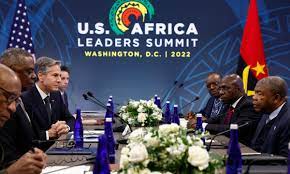
    In a new funding promise to African leaders announced by the Biden administration at the US-Africa Leaders’ Summit, in Washington D.C, on Tuesday, December 13, 2022.

    At the summit, US President Joe Biden announced of about US$55 billions of dollars in new funding for Africa.

    The summit is widely being seen as Mr Biden’s attempt to win back influence in Africa with personal diplomacy, as well as with funding and investment. Many have noted that America is trying to catch up with other countries, including Russia and especially China, that have developed stronger ties in recent years with Africa.

    “The United States is all in on Africa’s future,” President Biden told the 49 African leaders attending the Washington DC summit.

    It is the first such gathering hosted by Washington for eight years.

    Mr Biden acknowledged that, the crises facing the world today need African leadership, ideas and innovations, and promised to build on the “vital” investments in Africa made by previous US administrations.

    To that end, Mr Biden announced $55bn (£44bn) of US funding planned for Africa over the next three years. The sum includes $100m for clean energy projects and $350m for internet access and digital technology.

    The US is also set to sign a memorandum with the African Continental Free Trade Area – one of the world’s biggest free-trade areas – which Mr Biden said would “unlock new opportunities for trade and investment” between the US and Africa.

    On the sidelines of the summit on Wednesday, Mr Biden separately met the six leaders of African nations which are holding elections in 2023 to press for a free vote.

    Before the end of the summit on Thursday, the US president is also expected to back the African Union’s admission as a permanent member of the Group of 20 major economies. It is also likely that he will announce a trip to the continent in the new year.

    Consequently, President of Ghana, Nana Akufo-Addo, has urged the African diaspora to help change the African narrative, which has been characterised largely by a concentration on disease, hunger, poverty and illegal mass migration.

    Speaking at the Young African and Diasporan Leaders’ Summit, held on the sidelines of the US-Africa Leaders’ Summit, in Washington D.C, on Tuesday, December 13, 2022, President Akufo-Addo stated that “the urgent responsibility we face is to make our countries and our continent attractive for our people to see them as places of opportunities.”

    According to President Akufo-Addo, history is replete with several examples of the positive impact of diasporan communities on the growth and development of countries, through increased trade activities, rising investments, and the transfer of skills and knowledge.

    Citing the example of China, with an émigré population of sixty million, the President told the gathering, which included the US Vice President, Kamala Harris, that the Chinese Diaspora is said to be the 25th largest country in the world, who, according to the Nikkei Asian Review, own assets worth $2.5 trillion.

    “When foreign companies, in the late 1970s, reduced their investments in China, it was the Chinese Diaspora that shored up the economy.

    “According to the Washington D.C. based Migration Policy Institute (MPI), half of the foreign direct investment, i.e. $26 billion, that transformed China into a manufacturing powerhouse in the 1990s, originated from the Chinese Diaspora,” he added.

    That, the President noted, is the rationale of Ghana’s initiative of “Beyond the Return”, which, he explained, is building on the considerable success of the “Year of Return”, and the renewed enthusiasm around building Africa together.

    He, thus, urged young African and Diasporan leaders to help change the African narrative, which has been characterised largely by a concentration on disease, hunger, poverty and illegal mass migration.

    “Let us all remember that the destiny of all black people, no matter where they are in the world, is bound up with Africa. We should never forget that famous admonition of the celebrated Jamaican reggae star, Peter Tosh, when he said: ‘Don’t care where you come from. As long as you’re a black man, you’re an African’”, President Akufo-Addo said.

    He continued, “We must help make Africa the place for investment, progress and prosperity, and not from where our youth flee in the hope of accessing the mirage of a better life in Europe, Asia or the Americas. That is what “Beyond the Return” seeks to do, so we can derive maximum dividends from our relations with the diaspora in mutually beneficial co-operation, and as partners for shared growth and development.”

    With the second half of the 20th century witnessing a great blow for human freedom and progress, when the African peoples, in the wake of Ghana’s shining example, liberated themselves from the colonial and imperialist yoke and the racist ideology of apartheid, the President was confident that the first half of the 21st century will consolidate this development, and see the growth of modern, prosperous, technologically-advanced nations, within a united Africa, which would make a reality of the dream of the 21st century as the African century, and bring dignity and respect to black people all over the world.

    Let’s help make Africa the place for investment and prosperity – Akufo-Addo

    “We have done enough talking, and, dare I say, we have had enough conferences and workshops. We know what we need to do. It is time just to do it. We have run out of excuses for the state of our continent. We have the manpower, we should have the political will, it is time to make Africa work.,” he added

  • Dollar to hit below GHC9.0 soon as Ghana-IMF reaches Agreement for $3bn ECF 

    Dollar to hit below GHC9.0 soon as Ghana-IMF reaches Agreement for $3bn ECF 

    Adnan Adams Mohammed

    Adnan Adams Mohammed

    Ghana’s local currency, the cedi which for past weeks was ranked the worst performing currency globally, is expected to regain strength against international trading currencies especially with the U.S dollar.

    The forecast comes as the government and the International Monetary Fund reached a Staff-Level Agreement on economic policies and reforms to be supported by a new three-year arrangement under the Extended Credit Facility (ECF) of about US$3 billion.

    The Fund believes, the government’s strong reform programme aimed at restoring macroeconomic stability and debt sustainability while protecting the vulnerable, preserving financial stability and laying the foundation for strong and inclusive recovery, was key in this decision.

    This is expected to boost investor confidence in the economy as well as shore up the foreign reserves. Also, almost all importers who needed the US dollar for their Christmas and New year imports have already closed their transaction, so there will be no much pressure and rush for the US dollar now.

    According to the Bank of Ghana currency trading dashboard, as at Friday, December 16, 2022, the dollar was selling at “GH¢8..0055 and buying at ¢7.9975.”

    Some weeks ago, the US dollar was trading around GH¢15. From beginning of the year, the cedi fell by more than 54% against the dollar.

    However, the staff-level agreement is subject to IMF Management and Executive Board approval and receipt of the necessary financing assurances by Ghana’s partners and creditors.

    To support the objective of restoring public debt sustainability, the statement added that, the government has launched a comprehensive debt operation. But the Fund said sufficient assurances and progress on this front will be needed before the proposed Fund-supported programme can be presented to the IMF Executive Board for approval.

    “The Ghanaian authorities have committed to a wide-ranging economic reform program, which builds on the government’s Post-COVID-19 Programme for Economic Growth (PC-PEG) and tackles the deep challenges facing the country”, the statement pointed out.

    “Key reforms aim to ensure the sustainability of public finances while protecting the vulnerable. The fiscal strategy relies on frontloaded measures to increase domestic resource mobilisation and streamline expenditure. In addition, the authorities have committed to strengthening social safety nets, including reinforcing the existing targeted cash-transfer program for vulnerable households and improving the coverage and efficiency of social spending”, it explained.

    The statement further said that structural reforms will be introduced to underpin the fiscal strategy and ensure a durable consolidation. These include developing a medium-term plan to generate additional revenue and advancing reforms to bolster tax compliance.

    It noted that the structural reforms will help create space for growth-enhancing measures and social spending. Efforts will also be made to strengthen public expenditure commitment controls, improve fiscal transparency (including the reporting and monitoring of arrears), improve the management of public enterprises, and tackle structural challenges in the energy and cocoa sectors, adding, “the authorities are also committed to further bolstering governance and accountability”.

    Continuing, the Fund said “reducing inflation, enhancing resilience to external shocks, and improving market confidence are also important program priorities. Accordingly, the Bank of Ghana will continue to strengthen its monetary policy framework and promote exchange rate flexibility to rebuild external buffers. As part of the authorities’ debt strategy, a domestic debt exchange has been launched. The authorities are committed to taking the necessary mitigation measures to ensure financial sector stability is preserved”.

    The IMF staff held meetings with Vice President Dr. Bawumia; Finance Minister, Ken Ofori-Atta and Bank of Ghana Governor, Dr. Ernest Addison, and their teams, as well as representatives from various government agencies.

    The mission team concluded by expressing gratitude to the government, Parliament’s Finance Committee, the private sector, trade union, and civil society representatives for their open and constructive engagement over the past few months.

  • LPG price to go down as NPA seeks Cabinet support to remove taxes

    LPG price to go down as NPA seeks Cabinet support to remove taxes

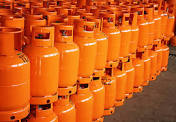
    The National Petroleum Authority (NPA) is seeking the approval from Cabinet to remove taxes on Liquefied Petroleum Gas (LPG) to make it available to Ghanaians and to ensure clean cooking in the country.

    The Chief Executive Officer of NPA, Dr Mustapha Abdul- Hamid, made this disclosure while speaking at the launch of the National Awareness and Sensitisation Campaign on the use of LPG in Accra.

    According to him, the decision to achieve 50 per cent LPG penetration with the introduction of the Cylinder Recirculation Module (CRM) will be achieved if the taxes on the products are removed.

    He said the NPA intends to make LPG affordable and accessible in the country with the CRM as the cylinder bottling company will own the cylinders and later supply them to the customers.

    He added that this will ensure the cylinders’ safety and push distribution to the country’s remote areas.

    He appealed to investors to come to the northern region to establish a cylinder bottling plant for a rebate to ensure people in these regions access affordable LPG.

    “I will call on investors ready to invest in the area of a cylinder bottling plant in the North East and Upper East Regions to get some tax holidays,” he assures.

    For her part, the Ambassador for Clean Cooking Campaign and wife to the Vice President, Samira Bawumia commended NPA and the Ministry of Energy for their drive in ensuring LPG is affordable and available to Ghanaians as part of the clean cooking campaign

  • Deloitte wants Ghana to manage debt down to 60% of GDP

    Deloitte wants Ghana to manage debt down to 60% of GDP

    Adnan Adams Mohammed

    Deloitte Ghana, an Auditing and accounting firm, wants government to focus on reducing the total debt to 60 percent of Gross Domestic Product ratio in the medium to long term.

    According  to the global accounting firm, the 60% debt to GDP is considered the threshold for sustainable debt levels. It worried that, whilst government has tended to focus more on the international capital market to raise borrowed funds, the domestic component of the public debt has also trended upwards.

    Consequently, towards manaing the debt level the government, last week, launched a Debt Exchange Programme to restructure the country’s debt as a prerequisite for an International Monetary Fund programme. This is expected to affect the returns of pension and insurance funds.

    “It is important to note that the increasing domestic debt limits the amount of credit available to private businesses as banks tend to lend more to the government, which is considered much lower in terms of risk profile as compared to the private sector. This ultimately results in higher lending rates for private sector businesses to compensate for their higher default risk”, Deloitte in it budget review comment emphasized.

    To address this challenge, it urged the government to further reduce its reliance on the domestic debt market by pursuing innovative revenue generation policies whilst adopting effective measures to boost our foreign exchange reserves and stabilise exchange rates in a bid to reduce the external debt accumulation resulting from depreciation, adding, “commercial banks should also be incentivized to increase lending to the private sector”.

    However, commenting on the Debt Exchange Programme, it said its success will result in some cash retention for government as it would have primarily deferred the commitment to settle maturing investments within the short term.

    Government may also, therefore, be able to channel the cash retained through this deferral to other planned initiatives intended to expand the productive capacity of the economy.

    The new bonds will be set at annual coupon rates that are considerably lower than the previous coupon rates contracted. In addition, the new rates are set to be graduated from 0% in 2023 to 5% in 2024 and further up to 10% from 2025 onwards.

    This Deloitte Ghana said if successfully implemented under these terms, the Domestic Debt Exchange programme will result in reduction in interest expense for Government and

    also lead to improved cash flows, particularly within the short to medium term.

    Overall, it said this will contribute to moderating government expenditure and improving the budget deficit.

  • 2023 Budget approved amidst opposition to tax policies

    2023 Budget approved amidst opposition to tax policies

    Adnan Adams Mohammed

    First stage of Parliamentary debate on the 2023 Budget and Economic Policy of the government ended last week with approval of the 2023 budget.

    The budget statement was approved with the numbers of the majority ruling government members of parliament, in spite of, strong public opposition against some proposed tax policies, especially, the 2.5 percent VAT increment and the 1.0 percent e-levy.  

    Debating on the floor of Parliament, the Minority Leader, argued that his members are hesitance to move forward with the budget approval due to the already acknowledged hardship in the country as admitted by the President, Nana Akufo-Addo.

    “In this budget, the Minister of Finance is introducing 23 tax measures and a 2.5% VAT rate (increase). We the NDC minority group will fearlessly resist and fight the imposition of these additional taxes,” Haruna Iddrisu said.

    “Mr Speaker, if I say that our country is in deep crisis and President Akufo-Addo himself has accepted that the country is in crisis but what he failed to add was to take responsibility for leading the country into this economic crisis. The president must gather the courage and take full responsibility.”

    But, the Majority Leader, Osei Kyei-Mensah-Bonsu countered the argument raised by the Minority Leader, and while he admitted that the country is not in a good shape, he said that revenue that will be raised from the VAT will go a long way to help address the situation.

    “My colleague spoke about challenging the 2.5 % VAT rate. But as we all know, the economy is not in a good shape so the 2.5 % raise is primarily for road construction. If you do not want your road to be constructed, tell us,” he said.

    After this debate, the Speaker of Parliament, Alban Bagbin put the question of the budget and economic policy statement presented by the Finance Minister on November 24.

    He explained that the 2023 budget and Economic Policy Statement had thus been approved.