Category: News

  • VAT increased by 2.5% amidst public agitation

    VAT increased by 2.5% amidst public agitation

    Adnan Adams Mohammed

    Government has effectively increased the Value Added Tax (VAT) by a 2.5 percent, bringing it to a total of 21.9%.

    This will be a big blow to Retailers and Wholesalers whose annual sales (turnover) exceeds GHC500,000. As Retailers and Wholesalers within this threshold are mandated to add an effective rate of 21.9% to all their Vatable products.

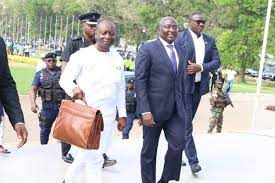
    However, all Retailers and Wholesalers whose annual sales fall between GHC200,000 and GHC500,000 are mandated to apply a VAT Flat rate of 4% to all taxable supplies. For the purpose of this analysis, Large Suppliers are Firms with annual sales above GHC500,000 whereas Small Suppliers are Firms with annual sales between GHC200,000 and GHC500,000. The Finance Minister, Ken Ofori-Atta, made this annoucement in parliament during the budget presentation despite the earlier caution by the minority and other stakeholders of the local economy.

    “The government’s insensitiveness is too high,” Mr Thomas Ampem Nyarko, a member of the finance committee of parliament, served notice while speaking about the minority’s expectation on the  budget early last week.

    He called on the government to cut down on its “frivolous” expenditure.

    Before the budget was presented, the minority caucus in parliament said it will not accept any 2.5 per cent increase in Value Added Tax (VAT) as purported to be contained in the budget statement to be presented by the Finance Minister.

    Meanwhile, the President of the Ghana Union of Traders Association (GUTA), Dr Joseph Obeng, has warned that the association would lead traders across the country to reject any new taxes contained in the budget statement.

    According to him, businesses are overburdened with taxes.

    He reminded the government of the need to expand the tax net, work on the abuse of the warehousing system, and take a second look at free zone operations.

  • Govt announces new gold buy policy

    Govt announces new gold buy policy

    Adnan Adams Mohammed

    As government keeps innovating ideas to tackle the perennial depreciation of the local currency against the international trading currencies (especially, US dollar), a negotiation to allow importers use gold to pay for imported petroleum products is ongoing.

    The Government believes that, the new policy regime will fundamentally change the country’s balance of payments and significantly reduce the persistent depreciation of the currency with its associated increases in fuel prices.

    The vice president in a facebook post had reiterated that, the demand for foreign exchange by oil importers in the face of dwindling foreign exchange reserves results in the depreciation of the cedi and increases in the cost of living with higher prices for fuel, transportation, utilities, etc. To address this challenge, Government is negotiating a new policy regime where our gold (rather than our US dollar reserves) will be used to buy oil products. The barter of sustainably mined gold for oil is one of the most important economic policy changes in Ghana since independence.

    “If we implement it as envisioned, it will fundamentally change our balance of payments and significantly reduce the persistent depreciation of our currency with its associated increases in fuel, electricity, water, transport, and food prices”, Dr Mahmud Bawumia hoped. “This is because the exchange rate (spot or forward) will no longer directly enter the formula for the determination of fuel or utility prices since all the domestic sellers of fuel will no longer need foreign exchange to import oil products.”

    The barter of gold for oil represents a major structural change. My thanks to the Ministers for Lands and Natural Resources, Energy, and Finance, Precious Minerals Marketing Company, The Ghana Chamber of Mines and the Governor of the Bank of Ghana for their supportive work on this new policy. We expect this new framework to be fully operational by the end of the first quarter of 2023.

    To successfully achieve the target result from the intended policy, the Minister for Lands and Natural Resources, Samuel A. Jinapor has just issued the following directives:

    1. Effective 1st January, 2023, all large scale mining companies (as agreed with the Bank of Ghana) shall sell twenty percent (20%) of all refined gold at their refineries to the Bank of Ghana (in Ghana Cedis) before the export of the gold. The Bank of Ghana and the Precious Minerals Marketing Company (PMMC) will coordinate with the large scale mining companies to ensure compliance with this directive.

     2. Effective 1st January, 2023, all Community Mining Schemes (CMS) shall sell their gold outputs to Government through PMMC. All mining licences for CMS shall include a clause mandating licensees to sell their gold output to Government.

    3. Effective 1st January, 2023, all Licensed Small Scale Gold Miners shall sell their gold to Government through PMMC. All small scale gold mining licences shall include a clause mandating licensees to sell their gold to Government.

    4. The gold to be purchased by the Bank of Ghana and the PMMC will be in cedis at spot price with no discounts.

    These directives would also help local gold refineries obtain gold supplies from PMMC to support their operations as they work toward obtaining the required London Bullion Market (LBMA) certification.  

  • Gov’t to increase gold reserves to be used for imports

    Gov’t to increase gold reserves to be used for imports

    Adnan Adams Mohammed

    The government has announced new policy directives on how it intends to increase gold reserves to be used as means of trade with major importers of fuel products.

    This is part of efforts to operationalize the use of gold to purchase oil products and other imports.

    The rate of demand for foreign exchange by oil and other importers in the face of dwindling foreign exchange reserves has resulted in the depreciation of the cedi and increases in the cost of living with higher prices for fuel, transportation, utilities, etc. To address this challenge, Government is negotiating a new policy regime where our gold (rather than our US dollar reserves) will be used to buy oil products. The barter of sustainably mined gold for oil is one of the most important economic policy changes in Ghana since independence.

    In line of the above the Minister for Lands and Natural Resources, Samuel A. Jinapor has issued the following directives:

    1. Effective 1st January, 2023, all large scale mining companies (as agreed with the Bank of Ghana) shall sell twenty percent (20%) of all refined gold at their refineries to the Bank of Ghana (in Ghana Cedis) before the export of the gold. The Bank of Ghana and the Precious Minerals Marketing Company (PMMC) will coordinate with the large scale mining companies to ensure compliance with this directive.

     2. Effective 1st January, 2023, all Community Mining Schemes (CMS) shall sell their gold outputs to Government through PMMC. All mining licences for CMS shall include a clause mandating licensees to sell their gold output to Government.

    3. Effective 1st January, 2023, all Licensed Small Scale Gold Miners shall sell their gold to Government through PMMC. All small scale gold mining licences shall include a clause mandating licensees to sell their gold to Government.

    4. The gold to be purchased by the Bank of Ghana and the PMMC will be in cedis at spot price with no discounts.

    These directives would also help local gold refineries obtain gold supplies from PMMC to support their operations as they work toward obtaining the required London Bullion Market (LBMA) certification.

  • Editorial: Rise in VAT rate to affect businesses

    Editorial: Rise in VAT rate to affect businesses

    The government’s decision to hike the VAT rate by 2.5 percent from the current 12.5 to 15 percent is likely to lead to most businesses folding up and also increase the unemployment rate in the country.

    Most of the stakeholders that Economy Times spoke to in reaction to the 2023 budget Statement and Economic Policy said the government could have used the 2023 fiscal year to restore some macroeconomic stability and thereafter increase the VAT rate adding that with this 2.5 percent increase in VAT, it would affect businesses.

    The government introduced the additional 2.5 percent VAT as part of its revenue measures after it has slashed the charges on the E-levy from 1.5 percent to 1 percent and also suspending the daily minimum threshold of GHC100.

    This 2.5 percent increase in VAT would kill businesses and if it happens so, the government would not rake in the expected revenue, as it happened during the introduction of the E-levy this year, they said.

    The government has set the following macroeconomic targets for the 2023 fiscal year: overall Real GDP growth of 2.8 percent; Non-Oil Real GDP growth of 3.0 percent; End-December inflation rate of 18.9 percent, Primary Balance on Commitment basis of 0.7% of GDP; and Gross International Reserves to cover not less than 3.3 months of imports.

    Total Revenue and Grants represents a shortfall of 2.8 per cent from January to September, 2022 compared to the period’s target and year-on-year growth of 33.2 per cent. The shortfall in revenue stemmed from the less robust performance recorded in all the revenue handles for the period.

    For the first nine months of 2022, total revenue and grants amounted to GH¢65,399 million (11.0 per cent of GDP), compared with a target of GH¢67,307 (11.4 per cent of GDP) and the GH¢49,108 million (10.7 per cent of GDP) recorded in the corresponding period in 2021.

  • Govt’s seven point agenda to restore stability

    Govt’s seven point agenda to restore stability

    The government has anchored the 2023 budget on a seven-point agenda aimed at restoring macroeconomic stability and accelerating economic transformation as articulated in the Post-COVID-19 Programme for Economic Growth (PC-PEG).

    According to the Finance Minister Ken Ofori Atta, these comprise an agenda to: aggressively mobilize domestic revenue; streamline and rationalise expenditures; boost local productive capacity; promote and diversify exports; protect the poor and vulnerable; expand digital and climate-responsive physical infrastructure; and implement structural and public sector reforms.

    “To achieve these, there are three critical imperatives: successfully negotiating a strong IMF programme; coordinating an equitable debt operation programme; and attracting significant green investments”, he said.

     This, according to he Minister will enable the government to generate substantial revenue, create needed fiscal space for the provision of essential public services and facilitate the implementation of the PC-PEG programme to revitalise and transform the economy.

    The government plans to undertake the following actions, initiatives, and interventions under the seven-point agenda; increase the VAT rate by 2.5 percent to directly support our roads and digitalization agenda; ast-track the implementation of the Unified Property Rate Platform programme in 2023; and review the E-Levy Act and more specifically, reduce the headline rate from 1.5% to one percent (1%) of the transaction value as well as the removal of the daily threshold.

    Other are, cut the imports of public sector institutions that rely on imports either for inputs or consumption by 50% and will work with the Ghana Audit Service and the Internal Audit Agency to ensure compliance; support the aggressive production of strategic substitutes, including the list disclosed at the President’s last address to the nation; support large-scale agriculture and agribusinesses interventions through the Development Bank Ghana and ADB Bank; introduce policies for the protection and incubation newly formed domestic industries to allow them to make the goods produced here competitive for local consumption and also for exports.

    The government will expand the productive capacity in the real sector of the economy and actively encourage the consumption of locally produced rice, poultry, vegetable oil and fruit juices, ceramic tiles among others; to pursue efficiency in Government expenditures, we will among others: implement the Government directives on expenditure measures; integrate public procurement approval processes with GIFMIS to ensure that projects approved are aligned with budget allocation; review key government programmes to reflect relevance, promote efficiency, and ensure value for money; and review the efficiency of Statutory Funds

    It will also undertake major structural reforms in the Public Sector by reviewing the operations of 36 State-owned Enterprises, 8 Special Purpose Vehicles, 90 Joint Venture Companies, 38 Regulatory institutions, 68 Statutory Bodies and 6 Subvented Agencies; enforce compliance with a legal and regulatory framework on foreign exchange; initiate measures to overhaul the tax structures in the extractive industry; expand the gold purchase programme by the Bank of Ghana to support FX Reserve accumulation, and promote an LBMA-certified gold refinery in Ghana and promote local currency stability.

  • GHC93.0bn added to public debt due cedi depreciation

    GHC93.0bn added to public debt due cedi depreciation

    By Elorm Desewu

    The free fall of the cedi from the beginning of this year has added some ¢93.8 billion to the public debt stock.

    This has affected government’s ability to effectively manage our debt, said the Finance Minster, Ken Ofori Atta.

    The provisional debt data as at end September 2022 shows a significant increase in Ghana’s public debt largely due to exogeneous factors.

    The end-September 2022 provisional figures indicate that total gross public debt stood at GH¢467,371.31 million or US$48,871.34 million, representing approximately 75.9 percent of Gross Domestic Product (GDP).

    The domestic debt component was GH¢195,657.60 million, which is 31.79 percent of GDP, whilst external debt is GH¢271,713.71 million, representing 44.15 percent of GDP. The increase in the domestic debt is largely on account of rising interest costs. Domestic debt as a share of total public debt reduced from 51.6 percent in 2021 to 41.9 percent as at end September 2022.

    The external debt as a percentage of the total debt stock is 58.1 percent as at end September 2022. The sharp growth in the external debt stock is largely driven by the depreciation of the local currency. The depreciation of the Ghana cedi added GH¢93,855.15 million to the external debt stock.

    Overall, debt accumulation increased from 20.7 percent in 2021 to 32.7 percent as at end September 2022, reflecting the impact of the depreciation of the Ghana cedi on the external debt side.

  • China Trade: Ghana is 4th biggest importer in Africa

    China Trade: Ghana is 4th biggest importer in Africa

    Adnan Adams Mohammed

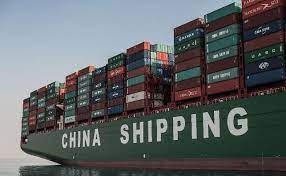
    As Chinese trade dominance grows in Africa the Economist Intelligence Unit (EIU) has ranked Ghana as the fourth biggest importer from China.

    Ghana’s imports in value was US$2.0 billion in 2021. This was 5% of total imports to Sub-Saharan Africa from China.

    The Unit indicated that there are broad range of drivers that are likely to push more Chinese trade and investment toward Africa in the decade ahead. It said further that, African states and the Chinese government have lofty ambitions to push the level of their bilateral trade much higher and diversify trade further in the years ahead.

    “African states and the Chinese government have lofty ambitions to push the level of their bilateral trade much higher and diversify trade further in the years ahead. China is actively seeking ways to consolidate its position as the largest single country trader with the continent in the medium and long term”, the latest EIU report captured.

    China’s lending to Africa over the past two decades has largely targeted transport, power and mining projects and largely involved policy banks  – including the Export-Import Bank of China and China Development Bank

    Meanwhile, the imports ranged from Fast Moving Consumer Goods, electrical equipment, and construction materials. However, the country did not make it among the top African countries that export to China.

    Nigeria was the biggest importer of China with a share of 16% of Africa’s imports from the Far East country.

    It was followed by South Africa and Egypt in 2nd and 3rd positions respectively.

    The top African exporters to China were however South Africa, Angola, and the Democratic Republic of Congo.

  • Reducing rate of E-levy to expand the economy.. stakeholders share ideas

    Reducing rate of E-levy to expand the economy.. stakeholders share ideas

    Adnan Adams Mohammed

    Many stakeholders  have called on the government to reduce drastically the rate of the Electionic Transactions Levy (E-Levy).

    The newest voice is the Chief Executive Officer of the Ghana Telecommunications Chamber who wants the rate to be reduced from 1.5% to 0.1%.

    Many economists and tech industry players see the introduction of the e-levy at 1.5% as counterproductive to both the government and the development of Ghana’s digital economy. The E-Levy, introduced in the 2022 Budget has performed poorly, raking in just about 10% of the expected revenue three months after its implementation. The levy, which was originally pegged at 1.75% was reduced to 1.5 percent after public agitations against the policy, stakeholders wants the rate reduced further.

    “Calling for a total scrap of the tax measure would be insensitive considering the government’s dire need for money amidst an economic turmoil, reducing it to 0.1% would revamp the digital economy thus generating more revenue for government”, Dr. Ken Ashigbey shared during a TV interview last week.

    “Our proposition is the fact that, you know, they should scrap it. But we need to be real, government needs money at this particular stage. The deficit position is not good for industry, it affects industry, it’s one of the things that would account for the depreciation of the cedi. The macros would be destabilized.

    “So we think that the best thing to do is to reduce the level. Some in the industry have talked about 0.5, but I have said that the best thing to do is to do 0.1.”

    Sharing his expectations, the Director of the Institute of Statistical, Social and Economic Research (ISSER) of the University of Ghana advised government to use the 2023 Budget as a big opportunity to correct the policy by reducing the rate significantly to encourage the public to pay the tax.

    He maintained that the budget gives government a unique chance to rebuild confidence in Ghanaians, by listening to the public through a reduction in the e-levy.

    “E-levy can be made better. It can be made more efficient. Let us reduce the rate to 0.5% and I am sure we can raise a lot of revenue,” Prof. Peter Quartey has said in Accra, last week, during a pre-budget discussion.

    Also, the President of the Association of Ghana Industries (AGI), Dr. Humphrey Ayim-Darke also called for a reduction of E-levy to cushion the operations of businesses.

    He stated that the levy in its current state imposes extra burden on businesses, already struggling with the current economic conditions in the country.

    “The E-levy must be reduced”, he said, explaining that businesses and consumers will always find legal means to avoid taxes if it increases their economic hardship.

    “We think one place that can be improved is the VAT system. We must block the loopholes in our VAT system and not introduce new taxes like e-levy that is not working” he said.

    Dr. Ayim-Darke also called on the Finance Minister to reduce taxes on raw materials for industry.

    He stated that such a policy will strengthen the operations of local industries to be globally competitive.

    Dr. Ken Ashigbey added that, while the government reduces the rate, they should also place a cap on it.

    He explained that, transactions that are 5,000 cedis and above should only attract a fixed e-levy rate to attract more large transactions on mobile money platforms.

    According to him, the current cap-less system makes it most undesirable to transact business with large sums of money via digital platforms.

    “You know, push the level down to 0.1 and then put a cap on it. Say 5,000 cedis. At 5,000 cedis the levy is fixed so that if anybody wants to send 10,000 cedis, you know, that will happen,” he said.

    “Take out the discrimination between the 20,000 that you give to the banks and then you give to mobile money so that the discrimination is not based on that,” he added

    On the other hand, Dr. Ashigbey is calling on the government to place a cap on the amount of cash that can be used in a transaction.

    According to him, when physical transactions are capped at 2,000 cedis for instance, people will be forced to transact business via mobile money platforms for large transactions.

    “Another innovative thing that we would say is that put a cap on any transaction that can be done by cash, so let’s say 2,000 cedis. If you want to do any transaction above 2,000 cedis use a digital means for mobile money, for the banks and all of that.

    “What will happen is that a lot of the things that happen underground… a lot of that you’ll be able to take them off and then you’ll be able to see a lot of movement in terms of cash and that also will help,” he said.

    “And then in terms of government payments, make sure that all government payments mandatorily are made simple and let people be able to pay so that tolls that people pay in the market and all that will use these digital means. And if you’re going to do that make sure that it is seamless, it’s not difficult to do,” he added.         

    Giving some more recommendations, Prof. Quartey stated that government can improve tax collection by bringing back road toll to improve revenue mobilisation.

    He pointed out that road toll is one of the most effective ways to collect and account for taxes.

    “I think that we can properly digitise road tolls through public-private partnership to make the collection of taxes effective. I think government must consider bringing the road tolls back”, he said.


  • Ghana-IMF negotiation to reach success in Q1 2023 – Fitch

    Ghana-IMF negotiation to reach success in Q1 2023 – Fitch

    Adnan Adams Mohammed

    As the government keeps assuring Ghanaians of reaching a deal with International Monetary Fund (IMF) before end of 2022, Fitch Solutions thinks otherwise.

    The global financial institution maintains that, Ghana will only reach a staff-level agreement with the IMF by the first quarter of 2023.

    This will mean that the country could secure a programme from the Fund by the end of quarter 1, 2023 or the second quarter of 2023. However, in its latest paper on “Division within Ghana’s Ruling Party to Weigh on Political Stability”, the international research firm also said should the Finance Minister, Ken Ofori-Atta, be replaced, negotiations with the IMF would likely remain largely unaffected.

    “While Ofori-Atta remained opposed to an IMF bailout – we believe that he would take a more accommodative approach towards negotiations with the Fund. As such, we believe that a change of finance minister would most likely not impact the timeline of IMF negations and we would retain our view that a staff-level agreement will be reached in Q123 [quarter 1, 2023]”, Fitch Solutions intimated in the paper.

    Consequently, as the government places all its hope on the IMF funds to ensure availability of foreign currency (U.S dollar) to help strengthen the local currency, the delay in reaching agreement will likely worsen the current worsened economic situation in the country.

    This has been confirmed by the paper as it stated that; “Worsening living standards amid rising consumer prices – inflation reached 40.4% year-on-year in October 2022, the highest reading since 2001 – and tighter monetary conditions have led to a 72.7% quarter-on-quarter increase in protests and riots across in quarter 3 2022. The country has also seen large industrial action in recent months, including a three-day retail strike in Accra in October [2022]”.

    Fitch Solutions also expects inflation to remain elevated in the months ahead.

    “Given that inflation is primarily driven by currency weakness, we expect price growth to remain elevated in the months ahead. Indeed, significant capital and financial account outflows caused by weakening investor sentiment will continue to weigh on the currency”.

    “Our view is further informed by the fact that previous periods of significant exchange rate weakness in Ghana all lasted roughly 12-14 months, suggesting that the cedi will continue to depreciate into quarter 1, 2023 (the current sell-off started in January 2022). This will keep inflation high, weighing on living standards and eroding support for the government”.

  • UBA among World’s Safest Banks – Global Finance

    UBA among World’s Safest Banks – Global Finance

    Adnan Adams Mohammed

    United Bank for Africa (UBA) Ghana has been rated one of the World’s safest banks  in the 2022 rankings.

    According to the international financial magazine, Global Finance, UBA placed 4th position in Africa and the only bank in Ghana to make it into the prestigious list provided by three rating Agencies-Moody’s, Standard & Poor’s and Fitch.

    A statement issued by the magazine says, “As banking systems in most regions of the world struggle with widespread economic stress and the lingering effects of the pandemic, our Safest Bank rankings recognize country winners that demonstrated resilience in preserving their franchises to earn this important designation.”

    Commenting on this honour by Global Finance, Chris Ofikulu, Managing Director of UBA Ghana says, “This recognition is the outcome of UBA’s vision to be the leading financial institution and diligent management of our assets which have placed the bank among the safest banks in the world. We are really delighted that our desire to offer first-rate banking solutions to our valued clients has been globally recognised.”

    “We remain committed to upholding the trust of our customers and continue to seamlessly meet their banking needs and expectations.”

    According to Global Finance, “To be eligible for inclusion among the Safest Banks by Country, entities must be among the world’s largest 1,000 banks by assets and carry at least one long-term foreign currency deposit or debt rating from one of the three major rating agencies.”