Category: News

  • Northern Ghana: the panorama of growing food insecurity amidst heightened terrorism and tribal conflict

    Northern Ghana: the panorama of growing food insecurity amidst heightened terrorism and tribal conflict

    Acute hunger set to soar in over 20 countries, warn FAO and WFP

    By: Adnan Adams Mohammed


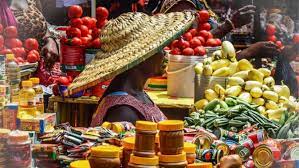
    Malnutrition and signs of poverty are easily identified among the people of northern Ghana as you travel across the regions.


    Data from a research by OpenStreetMap (OSM) has shown that more than 70% of rural households in the northern region of Ghana are food insecure and malnourished.


    This is despite global effort to achieve food security and improved nutrition, particularly among rural households in developing countries. Yet, rural household food insecurity and undernourishment have been major developmental challenges to governments of many developing countries including Ghana.


    These are further aggravated by the growing security instability due to ethnic clashes and remnants of terror attack fears from neighboring Burkina Faso.


    While, food security is a phenomenon resulting from multiple causes which are food availability, food accessibility, food utilization and food stability. Agricultural growth, in most developing countries like Ghana, has been the major driver of poverty reduction.

    To confirm the veracity of the hardship, the 2020 Comprehensive Food Security and Vulnerability Analysis (CFSVA) has indicated that, Food insecurity in Ghana is concentrated in the five northern regions of the country. The regional breakdown rate of vulnerability is given as: Upper East (48.7%); North East (33%); Northern (30.7%); Upper West (22.8%); and Savannah (22.6%).


    The CFSVA survey undertaken by the Ghana Statistical Service (GSS) in collaboration with Ministry of Food and Agriculture (MOFA), with financial and technical assistance by World Food Programme (WFP) and Food and Agricultural Organisation (FAO) of the United Nations, further indicated that, the 5 regions which have highest level of food insecurity are also the areas most prone to adverse weather conditions, such as perennial floods as a result of spillover of the Bagre dam in Burkina Faso and severe droughts as those part are typical savanna areas, which does not favor the rain-fed farming mostly practiced by the people of the north.


    Yet, a study, authored by A. Bawa of Tamale Technical University and published by the Asian Journal of Agricultural Extension Economics & Sociology, estimated that, “about 97.5% of households are engaged in crop farming in northern Ghana.”


    An indication that agricultural production is the main activity in the northern sector of Ghana, practiced mainly on seasonal and subsistence level. The people are mostly engaged in crop farming such as maize, rice, sorghum, soy beans, cowpea, cassava, yam, cotton and vegetables, with few households engaging in poultry, livestock and pig rearing.

    A typical subsistence agriculture means,  households farming for their own consumption and for the market. Based on the Ghana Living Standards Survey (GLSS), Ghanaian households show notable differences in employment and welfare across regions, with the northern regions having the lowest per capita incomes.


    As already indicated, agriculture sector is the largest source of employment for the people of northern Ghana as almost 98% of households are engaged in smallholder farming. These farmers are challenged human resource and managerial skills, natural resource management, technology development and food insecurity.


    This, is evident by the CFSVA survey which revealed that, households that depend mainly on agriculture as their source of household income, unskilled labour, household heads who are less educated and remittances dependent households are more likely to be food insecure.

    According to the Ghana Strategy Support Programme (GSSP), promoting agricultural growth will have a great effect on reducing poverty at the regional level because of the strong linkages between income and consumption.


    “However, after years of sustained concentration of development aid and NGO operations, entrenched poverty remains pervasive in northern Ghana, with significant implications for rural livelihoods”, Benjamin Kwao noted in a recent publication.


    “Enhanced governmental support to agriculture in the form of service provision is vital to the growth and productivity of smallholder farmers. Although, there have been deliberate effort by governments increase support to the agricultural sector such as; provision of irrigation, agricultural credit, input subsidy, agricultural extension and mechanization services to smallholders aimed at improving farmers’ access to these services in order to improve agricultural productivity and rural livelihoods.


    “Notwithstanding the critical role of access to services in agricultural production and productivity, many small-scale farmers in Ghana and other developing countries have limited access to these services. Majority of agricultural producers in developing countries are peasants who live in remote communities with limited access to most agricultural services. Poor road infrastructure, long distances to farms, and inaccessibility to many service providers are constraints that hinder many smallholder farmers from accessing agricultural services”, the researcher noted.


    The governments is therefore asked to improve road infrastructure, and offer logistical support to service providers to enable them to reach farmers in remote places. But, the critical challenge is how to ensure that services are made accessible to farmers to enhance farm performance and food security.
  • Analysts predict extended hard times for banks in Ghana

    Adnan Adams Mohammed


    A Financial data analysis firm, Bloomberg, has estimated that banks operating in Ghana have been hit by about US$1.4 billion impairment due the debt restructuring.


    Aside this loss, some financial analysts have predicted that banks should expect extended tough times as they foresee additional impairment losses of about ¢6.1 billion due to factors imported by the Domestic Debt Exchange Programme (DDEP).


    Despite this historical loss positions reported by banks operating West Africa’s second largest economy, the Ghana Association of Banks (GAB) has reechoed that banks in the country are in good standing with their financial position. The President of the GAB, in an interview last week said, the capital position of banks are strong, while there is enough liquidity in the banking system.


    “Even though banks appear to have been negatively impacted, the situation was anticipated, hence adequate measures were put in place to protect banks in the country”, John Awuah retorted. “As we speak, there is strong liquidity in the environment. I have not heard that anybody has gone to a bank and cannot get their money. The banking system has enough liquidity in the system.”


    Mr. Awuah noted that the strong liquidity in the financial system could be partly attributed to the decision by the Bank of Ghana’s monetary control management that hiked the policy rate fortnight ago to mop up excess funds in an effort to control inflation.


    He also pointed out that the Bank of Ghana has put in several measures to cushion commercial banks from shocks as a result of the debt exchange programme.


    “The central bank has put in measures to help banks to weather the storms where there are difficulties. The Bank of Ghana has given us time to rebuild our capital”, he said.


    He stated that the numerous measures in addition to the financial sector stability fund will help banks support the economic growth agenda by lending to businesses.


    Meanwhile, a recent assessment of financial statements of banks by Dr. Richmond Atuahene and K B Frimpong revealed that banks will lose additional ¢6 billion due to reduced coupon rate and the extension of the maturity period from five to 15 years.


    According to the liquidity gap analysis, the 23 banks would have generated positive cash flow of about ¢10.1 billion over the period, from the original coupon rate of 19.3% per annum.


    But following the implementation of Domestic Debt Exchange Programme (DDEP), the extension of maturity period and reduction of coupon rate will impact heavily on their earnings from investments in Government of Ghana Bonds.


    “This liquidity gap is a result of the drop in the average bond rate of 19.3% to weighted average rate of 9% per annum, thus leading to nominal negative liquidity gap of 10.3%. The liquidity gap is expected to get worse if the average customer deposit rate was around 10% per annum, but later declined to weighted average rate of 9% per annum”.


    “For example, Bank A with the bond value of ¢9,I06,452,000 and average coupon rate of 19.3% would have had cash flow of ¢1,821,290,000, but with the Domestic Debt Exchange Programme, the effective rate of 9% per annum will cause a drop in cash flow to ¢720,927,000, thus leading to liquidity gap of ¢1,100,363,000”, it added.


    To qualify for a $3.0 billion Balance of Payment support facility from the International Monetary Fund, Ghana had to restructure its local-currency and overseas debt to bring down the Debt-to-GDP ratio to below 70 percent. The public debt is estimated at GHC576 billion.


    The country has finished with the first of debt restructuring which was the DDEP. The DDEP contributed to some top banks recording their first loss.


    GCB Bank Plc, the country’s largest lender by assets, posted a GHC593.4 million ($50.5 million) net loss for the year to end-December, its first since 1993 when Bloomberg started maintaining data.


    Also, Standard Chartered Bank Ghana Ltd., the biggest by market value, reported a loss of 297.8 million cedis.


    The impairments prompted Guaranty Trust Holding Co., Nigeria’s largest bank by market value, to vow to slow lending and bond trading in Ghana.


    GCB Bank took a charge of 1.83 billion cedis after impairing its debt securities, while for Standard Chartered Bank Ghana the amount was GHC173 million.


    Ghana’s lenders were allowed a month’s extension to release full-year earnings.


    The nation’s debt rose after spending pressures from an energy crisis between 2013 and 2015 and a sweeping banking-sector cleanup in 2018 were compounded by shocks from the Covid-19 pandemic and Russia’s invasion of Ukraine.


    As part of the revamp, Ghana exchanged GHC87.8 billion of local notes that paid an average of 19%, with bonds returning as little as 8.35% — resulting in losses for financial institutions.


    The government has started discussions with international debt holders through the G-20 Common Platform Framework for debt respite as it seeks to finalise the IMF support programme.


    The IMF wants Ghana to bring its debt down to 55% of GDP by 2028. Before the government’s interventions, Debt-to-GDP had been projected to reach 109% by close of 2023.

  • ‘Currency Board’ will effectively address monetary management infractions – IEA

    ‘Currency Board’ will effectively address monetary management infractions – IEA

    Adnan Adams Mohammed


    As Ghana visage for a way out of its cyclical economic management mess, the government is advised to establish a ‘Currency Board (CB)’ to help in the monetary management process of the Bank of Ghana.


    The ‘Currency Board’, the Institute of Economic Affairs (IEA) believes will help stabilise the cedi and prevent instability in the economy in times of shocks. The Institute also to limit the Central Bank lending to the government


    These monetary control and management factors deficiencies have been the bane of Ghana’s economic management. According economists, the CB system has limited inflation, checks currency volatility and better position balance of payments.


    is pushing for the establishment of a Currency Board (CB) to limit the Central Bank lending to the government, a move it believes will stabilise the cedi and prevent instability in the economy in times of shocks.


    According to the institute, since


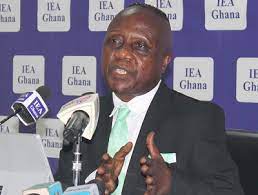
    “You see, a Currency Board (CB) is a rigid monetary management system that is hedged in strict rules, with little room for discretion. The CB does not lend to government and it covers its currency fully by foreign exchange”, Lead Researcher at the Intitute, Dr. John Kwakye, in a paper published and titled “Institutionalising Fiscal Discipline and Macroeconomic Stability for Sustained Growth in Ghana: The Constitutional Pathway” noted.


    “The CB system has limited inflation, the currency does not depreciate and balance of payments crises are rare. This is close to the system in our Francophone neighbours, who restrict their Central Bank lending to governments and provide adequate cover for their currency, the CFA.”


    IEA buttressed its points that, the Francophone countries system guarantees them low inflation and a stable currency, but “you have Ghana that has chosen an independent Central Bank to conduct discretionary monetary policy’.


    It also blamed the Central Bank of Ghana for some of the economic woes, saying, “The Central Bank provides significant lending to government and covers the cedi with limited foreign exchange (40% in the Act). No doubt we face perennial price and currency instability!”


    “It is for this reason that some of us have argued that if we continue to abuse policy discretion and pay a high price for it in terms of macroeconomic instability, then we better hedge our policies by rules; tie our economic managers hands, so that we can enjoy rules-driven macroeconomic stability!”, it added.


    Finally, the IEA said despite Ghana having rules such as the Public Financial Management Act, the Bank of Ghana Act and the Fiscal Responsibility Act, the rules have not work because of lack of political way.


    “Let me say that it is not that we have had no rules at all in fiscal and monetary management. In fact, I can mention a couple of them, such as the Public Financial Management Act, the Bank of Ghana Act, the Fiscal Responsibility Act and the relevant provisions in the 1992 Constitution, which represent attempts to introduce rules in our fiscal and monetary management system”.


    “However, there are serious questions regarding not only their enforcement but their effectiveness as well. And that is the reason we feel strongly about the need to give constitutional backing to some of these rules”, it concluded.


  • IEA takes on govt for snubbing fiscal adjustment but pursuing debt restructuring as advised by IMF

    Adnan Adams Mohammed


    The Institute of Economic Affairs (IEA) is dismayed at the snobbish attitude of government towards  the fiscal adjustment advice from the International Monetary Fund (IMF) in order to reach a debt sustainability level.


    The  government is only focusing its attention on the debt restructuring with less concentration on the fiscal adjustment, yet, both were advised by IMF, the Institute alarmed.


    Although the government has managed to force it way through to complete the Domestic Debt Exchange Programme, but IEA fears the government’s attempt to close it ears on any advise for it to cut down expenditure (especially on its appointees and unnecessary projects), could prolong the commitment and assurance of the Paris Club and G-20 Members to give an assurance for a debt restructuring.


    “I look at the language that the IMF is using in their communique. The IMF is saying that there should be a combination of fiscal adjustment and debt restructuring to get to the sustainability level. But it looks like our government is not prepared to do much of the fiscal adjustment which CSOs have made concrete proposals”, Director of Research at IEA, Dr. John Kwakye juxtaposed. “Such deliberate neglect for fiscal adjustments is the bane of the economy.”


    He added that a debt restructuring with fiscal discipline would not result in sustainable debt management and thereby advised government to implement the numerous fiscal adjustment proposals made by CSOs to help revive the economy.


    “This government since last year when it started negotiating with the Staff of IMF, keeps telling Ghanaians they are very close. But if you examine the situation carefully the date keeps changing”.


    Dr. Kwakye suggested that one of the reasons for the delay could be the signals sent by government, on the Finance Minister’s refusal to embark on fiscal adjustment.


    Meanwhile, IMF’s Africa Department Director, Abebe Selassie, has padded Ghana government at the back as he believe Ghana has taken the tough economic decisions needed to win a rescue package from the Fund.


    In a space of four months, the government has increased taxes and imposed losses on domestic investors, in attempt to meet IMF demands for the $3 billion loan. Currently on an informal talks with bilateral lenders, though it has dragged on.


    Ghana has “done all of the prior actions that were expected of them for the program,” Selassie said in an interview. “They’ve done a really, really difficult domestic debt restructuring exercise. The country now needs to get the resources required to support reserves.”


    Bilateral lenders, including China, are now expected to set up a committee to start formal negotiations with Ghana in the next few days. First on the committee’s agenda will be a written commitment to provide relief to the West African nation, paving the way for the loan from the IMF.


    “Provided we have the financing assurances, we would go to the board very quickly after that,” Selassie said. “So within the next three, four weeks. That’s the key hurdle for us.”


    The talks are taking place under the Group of 20’s so-called Common Framework, which expands the Paris Club of sovereign creditors to include China and other nations. Just under a third of Ghana’s bilateral debt, $1.9 billion, is owed to China. That is just a fraction of the nation’s 575.7 billion cedis ($50 billion) of public debt at the end of November.


    Five days after a surprise interest rate hike to a record 29.5% on March 27, parliament passed a bill to raise an additional 4 billion cedis ($353 million) in revenue this year. That was after a previous 250 basis points increase in value added tax to 15%.


    The fiscal measures and restructuring of cedi-denominated liabilities will help the West African economy lower its public debt to 71% of gross domestic product by 2028, Finance Minister Ken Ofori-Atta said in a presentation Thursday. The IMF has said it needs be on track to drop to 55% by that year to qualify for support. Before the government’s interventions, it had been projected to reach 109%.


    “There’ll be burden-sharing all around,” Ofori-Atta said. “If you join us in this, you really will help us build a robust economy and come back and be able to resume our partnership with you and the markets.”


    The adjustments and latest tax increases are taking a heavy toll on Ghanaians. Millions, like Esther Annan, a street vendor in the capital, Accra, have seen their living standards drop as inflation soars.


    The mother of six took out a micro loan to fund her cloth and bed-linen business in January but has now missed weekly payments after local demand dried up and interest rates soared.


    “I play cat-and-mouse games with the lenders because there is no money to pay them,” she said. “The interest on the loans has become so high.”


    Local lenders, which were the most exposed to the domestic debt, are now expected to skew credit to sectors that can readily pay while those needing it most miss out, said Richmond Atuahene, an analyst at Salman Partners and Financial Consult Ltd. in Accra.


    The latest tax increases are “an additional cost and if industry can no longer bear it, it will be compelled to cut costs, including labor and output,” said Humphrey Kwesi Ayim-Darke, president of the Association of Ghana Industries. “Small and medium-sized companies, manufacturing and agriculture are going to be hardest hit because of their high risk premium historically.”


    A slowdown in credit growth and an expected drop in consumer spending could decelerate economic expansion this year, according to three economists surveyed by Bloomberg.


    “The downside risks to the government’s 2.8% real GDP growth target for this year have increased on the back of the tightened monetary policy stance,” Mark Bohlund, a senior credit research analyst with REDD Intelligence, said.


  • Fitch, IEA discount gov’t use of COVID-19 and Russia/Ukraine war as excuse for economy woes

    Adnan Adams Mohammed


    Ghana’s economic collapse cannot solely be blamed on COVID-19 pandemic and the Russian/Ukraine war, Fitch Solutions has discounted government’s overused excuse.


    It explains that, even before these external shocks hit the global economy, Ghana’s debt was above the sustainable level as measured against the International Monetary Fund’s threshold of debt to Gross Domestic Product ratio of 70 percent and below.


    The international investors’ research firm argued that, Ghana went back to the international capital market in early 2021 in desperation for cash. This attracted investors to take advantage of the sweet rates Ghana was selling its Eurobonds, and led to investors oversubscribing Ghana’s bonds which later resulted in currency sell off, after which the country started witnessing symptoms of hiding chronic economic disease of escalating exchange rate and inflation since early 2022


    “I think the answer is, it’s been aggravated by the Covid-19 pandemic and the war in Ukraine. Those two are not the only cost to Ghana’s woes”, Senior Country Risk Analyst, Mike Kruiniger, responding to a question at a recent Sub Saharan Africa Macroeconomic Update event said. “Both external and internal shocks caused the macroeconomic imbalances in the country.”


    “Ghana’s debt servicing costs were already rising pretty rapidly prior to the pandemic with the government having to work on pretty large scale of spending projects including restructuring of the banking sector and providing free secondary education to everyone in Ghana”, he explained.


    Mr. Kruiniger also blamed the high borrowing on the international capital market as one of the country’s problems.


    “Ghana went back to the international capital market in early 2021, with this seamless desperation for cash. Investors started to flood the country which led the currency to sell off and after that, we’ve seen all the problems that Ghana has been facing since early 2022”.


    He concluded that though the Covid-19 and the Russian Ukraine war have contributed to Ghana’s crisis, they are not only the reasons behind Ghana’s economic challenges.


    Meanwhile, the Institute of Economic Affairs pointed that indiscipline in managing the country’s finances have caused the high fiscal deficits and consequently high inflation and currency instability, forcing innocent Ghanaians and businesses to pay for the mismanagement.


    The think-tank expressed it worry in a paper published and titled “Institutionalising Fiscal Discipline and Macroeconomic Stability for Sustained Growth in Ghana: The Constitutional Pathway.”


    Lead Researcher at the Intitute, Dr. John Kwakye, noted that Ghana has a long history of fiscal indiscipline and this is evident in its fiscal deficits being almost consistently higher than those of its peers in Africa.


    “Our deficits tend to escalate in election years when we elevate election-related spending. Then we borrow to finance the deficits and cause our public debt to escalate to unsustainable levels. We have been in that situation numerous times. Our debt reached the first crisis situation around 2004, when it ballooned to over 100% of GDP”.


    “We had to seek relief under the HIPC Initiative, which caused the debt-to-GDP ratio to drop to a sustainable level of 26% in 2006. Thereafter, we returned to our culture of fiscal indiscipline, which caused the debt to rise yet again. And today, the debt-to-GDP ratio is back to an unsustainable level of over 100%”, he explained.


    He added that the country must do everything possible to safeguard or institutionalise fiscal discipline under the constitution, else it will always record macroeconomic instability.


    Also, associated with the high fiscal deficits has been high inflation and currency instability, which the IEA called for immediate action.


    According to Dr. Kwakye, Ghana has had much higher inflation rates than its peers, adding, the cedi has experienced much higher depreciation over the years.


    Again, he said “government domestic borrowing to finance the deficits has elevated interest rates to levels that have crowded out the private sector, inhibiting investments and stifled economic growth. High fiscal deficits and the associated demand pressures have also spilled over to the external sector, leading to high current account deficits”.


    The economist opined that, prevalent fiscal indiscipline and its associated macroeconomic instability, and over-borrowing to spend on goods and services are what have taken the country to the IMF about 17 times.


    “We have been caught up in an unending cycle of high fiscal deficits, high interest rates, high inflation, high current account deficits, rapid exchange rate depreciation, and unstable growth. It is our prevalent fiscal indiscipline and associated macroeconomic instability and debt crises that have taken us to the IMF seventeen times”.

  • Oil coys pay almost US$700m in royalties and corporate tax

    Oil coys pay almost US$700m in royalties and corporate tax

    The total revenue from royalties for the three oil fields in Ghana was around US$303 million in 2022 compared to US$186 million in 2021, representing 63.2 per cent increase, the 2022 annual report of the Public Interest Accountability Committee (PIAC) had noted.


    Royalties are early and dependable sources of revenues for the state as it is a charge on gross production.


    Royalty from the Jubilee Field contributed 52 per cent of the total Royalties for the period, followed by SGN (32%) and TEN (16%).


    CIT is currently charged at a rate of 35 per cent on profits of the IOCs.


    The total CIT received from the three fields in 2022 stood at US$388,889,564.00, representing 90.8 per cent increase from that of 2021 (US$203,854,804.35).


    Ghana receives US$1.43bn in oil revenue; highest since oil production began – PIAC report

    CIT constituted the second highest among the petroleum revenue streams in 2022.


    The Ghana Revenue Authority (GRA) is required under Section 3 of the Petroleum Revenue Management Act, 2011 (Act 815) to assess, collect, and account for petroleum revenue due Ghana derived from royalties, corporate income tax and other defined sources.


    These revenues are paid directly into the Petroleum Holding Fund (PHF) by the 15th day of the ensuing month by the entities obliged to make the payment.


    For 2022, a total of US$1,428,760,076.93 accrued to the PHF from royalties, carried and participating interest (CAPI), corporate income taxes (CIT), surface rentals, and income earned on the PHF, compared to US$783,325,849.87 in 2021.


    This represents 82.4 per cent increase from the 2021 figure.


    The increased revenues can be attributed to favourable international crude oil prices which were higher than estimated prices, the PIAC report said.


    The average achieved price by GNPC on behalf of the Ghana Group for the three producing fields increased by 52.9 per cent from US$69.180/bbl in 2021 to US$105.746/bbl in 2022.


    Despite the decline in production volumes, petroleum revenues increased in 2022 by 82.4 per cent.


    Receipts from Crude Liftings for Ghana Group


    Receipts from crude oil liftings amounted to US$1,036,800,383.96 in 2022 as compared to US$578,613,886.90 in 2021, representing an increase of 79.2 per cent.


    Receipts from Jubilee Field


    Crude Liftings Six (6) liftings (64th – 69th) were made from the Jubilee Field in 2022, yielding US$567,393,883.49 in receipts, whereas five liftings recorded in 2021 yielded US$310,863,857.82.


    Receipts for the period include the 63rd parcel of crude oil lifted on the 8th December, 2021 which was realised in January 2022 and excludes the 69th lifting on 17th December, 2022 whose revenues will be realised in January 2023.


    The JOHL, a subsidiary of GNPC, made two (2) liftings during the year under review yielding a total of US$185,567,320.93 on the Jubilee Field.


    Receipts from TEN Field


    Crude Liftings for Ghana Group


    One (1) lifting (21st) was made in 2022.


    Total receipts from liftings in 2022 yielded an amount of US$182,370,774.69 whereas receipts for 2021 yielded US$128,723,696.70 from three (3) liftings.


    Receipts for the period include the 20th Lifting from the field on 15th December, 2021 whose revenue was realised in January 2022.


    The JOHL made one (1) lifting yielding an amount of US$87,084,888.02 on the TEN Field.


    Receipts from Sankofa Gye-Nyame (SGN) Field Crude Liftings


    There were three (3) liftings on the SGN field in 2022 with total revenues amounting to US$287,035,725.78 as compared to two (2) liftings in 2021 yielding US$139,026,332.28 in revenues. This represents a 106.5 percent increase over 2021 receipts.


    JOHL Crude Oil Lifting Receipts


    For the year 2022, a total amount of US$272,652,208.95 was made from JOHL’s liftings in the Jubilee and TEN fields. However, the revenue from these liftings were not part of receipts into the PHF for 2022.


    Analysis of Petroleum Receipts


    Carried and Participating Interest (CAPI) continues to contribute the highest percentage of total revenues followed by Corporate Income Taxes, Royalties, PHF Income, and Surface Rentals.


    Carried and Participating (Additional) Interest (CAPI)


    Carried and Participating Interest are two (2) forms of state participation that effectively capture its fair share of economic rents from petroleum projects regardless of whether there is initial commitment of funds by the State or not.


    The revenue derived from CAPI constituted 51.4 per cent (US$733,845,523.27) of total revenues accruing from the three (3) fields as compared to US$392,930,250.44 in 2021.


    This represents 86.8 per cent increase in CAPI over that of 2021.


    The CAPI generated from the Jubilee Field stood at US$409,422,833.99, whilst that of TEN and SGN amounted to US$135,001,742.30 and US$189,420,946.98, respectively.


    Surface Rentals


    Surface Rental payments received in 2022 totaled US$687,759.16 compared with US$826,815.52 for 2021, indicating a 16.8 per cent decrease.


    According to the GRA, this amount received is attributable to nine (9) out of the current fourteen (14) companies with respect to the oil blocks under their operation.


    As of the end of December 2022, Surface Rental Arrears had amounted to US$2,774,066.79, up from US$2,579,170.21 as at the end of 2021, representing a 7.6 per cent increase.


    Out of the Surface Rental Arrears, an amount of US$1,803,124.41, representing 65 per cent of the total arrears, relates to four (4) contractors whose Petroleum Agreements were terminated by the minister of energy in 2021.


    PHF


    Income Interest on the Petroleum Holding Fund yielded US$2,382,369.82 in 2022 as against US$30,343.09 in 2021.


    This represents a significant increase in the interest income on the PHF (7,751%).


    The significant increase was as a result of higher overnight rate on cash holdings from 0.05 per cent at start of 2022 to 4.30 per cent at end of the year.


    Gas Revenue


    Apart from 2015, there has been no payment into the PHF with respect to gas revenues from raw gas supplied by GNPC.


    A total of 31,623.54 MMSCF of raw gas worth US$211,505,426.70, was delivered to Ghana National Gas Company (GNGC) during the period under review.


    According to GNPC, total outstanding receivables from GNGC with respect to raw gas supplied amounted to US$605,691,381.479 as at the end of December 2022.


    These represent revenues from gas sales that ought to be paid into the PHF.


    Make-Up Gas


    Make-Up Gas (MUG) for the three-year period 2018 to 2020 amounted to 35,650.45 MMSCF.


    Out of the amount, 180.10 and 5,431.47 MMSCF were recovered in 2021 and 2022, respectively, leaving a balance of 30,038.88 MMSCF to be recovered in subsequent years.


    According to GNPC, in 2021, due to relatively lower offtake volumes, the Annual Contract Quantity 11(ACQ) was exhausted on 30th December 2021, therefore, only 180.10 MMSCF was recovered on 31st December 2021.


    However, in 2022, due to increased offtake volumes, the ACQ was achieved by 4th December, leaving about 27 days of MUG recovery which amounted to 5,451.37 MMSCF for the year.


    Per the Gas Sales Agreement (GSA), the MUG for each year can be recovered within five years following the year that it was incurred, on First-In First-Out (FIFO) basis.


    Thus, the total MUG taken of 5,631.47 is matched against MUG of 2018, leaving a balance of 837.57 MMSCF of 2018 to be recovered by the end of 2023.


    The total invoiced amount for gas taken from the SGN Field in 2022 amounted to US$456,673,908.92.


    An annual reconciliation adjustment for the 2021 delivery year as per the Gas Sales Agreement (GSA) resulted in a credit of US$1,585,904.27 to GNPC in January 2022.


    This brings down the total gas invoice amount to US$455,088,004.65.


    Cumulative Petroleum Revenues (2011-2022)


    From 2011 to date, total petroleum revenue has amounted to US$8.79 billion.


    The year 2022 has recorded the highest realised petroleum revenues into the PHF, with 2016 recording the lowest revenues.

  • Ghanaians told to prepare for further increases in prices of goods and services

    Ghanaians told to prepare for further increases in prices of goods and services

    The Ghana National Chamber of Commerce and Industry (GNCCI) is warning of further increases in prices of goods and services in the coming days.


    This, the, chamber says is as a result of the signing into law of the three new tax bills by President Akufo-Addo.


    These taxes are going to force businesses to pass on the cost in the form of prices to customers. So we should brace ourselves for an increase in prices of goods and services”, Mark Badu-Abaogye, Chief Executive of GNCCI disclosed.


    “Businesses are not even making profits and cannot absorb these taxes. If you take the excise duty for instance, businesses will have no option than to push the prices to consumers.”


    “If you take the Growth and Sustainability levy, the businesses are not making profits and you want to tax 5% out of it. So, what we’re saying is that we don’t want businesses to collapse”.


    Again, Mr. Badu-Abaogye said the International Monetary Fund would not be happy to see businesses collapse because the amount of money that will be spent on resuscitating the businesses will be too much.


    “I don’t think the IMF will be happy to see our businesses collapse because the amount of money that we will spend resuscitating the businesses and bringing them back to profitable level will be more than the $3 billion that we are looking for”.


    He concluded that businesses expect tax that will generate revenue for government and ensure businesses are able to operate efficiently and profitable.


    Any increase in the prices of goods and services is expected to increase inflation which was pegged at 45% in March, according to the Ghana Statistical Service.


    That will also cause lending rates to remain high.


  • Banks losses due to DDEP may continue into 2024 – Finance Lecturer

    The loss position of banks in Ghana may continue into next year, a Senior Finance Lecturer at the University of Ghana Business School, Dr. Benjamine Amoah, has stated.


    According to him, the impact of the Domestic Debt Exchange on the broader economy has impacted negatively on the banks’ balance sheets.


    Banks in Ghana are said to have lost about ¢15 billion as a result of the impact of the DDEP on their operations.


    This has triggered the increase in the minimum capital requirement of the financial intermediaries. Indeed, banks, according to the Bank of Ghana have a maximum of four years, ending 2025, to restore the minimum paid-up capital.


    Speaking to Joy Business, Dr. Amoah said even without the Domestic Debt Exchange Programme, banks will have still shore up their capital because of exchange rate losses.


    “It is simply the reflection of what has happened in the economy over the past year or so and the fact that these banks also operate within the economy”.


    “So whatever happens in the bigger economy would definitely reflect on the performance of the banks and to a large extent on the balance sheets of these banks”, he stressed.


    According to him, it is not surprising banks are reporting losses for 2022.


    “It is not surprising that the banks are reporting some of these non-performance for this particularly year and maybe hopefully next year because we are still not at the end of these challenges”.


    According to the Bank of Ghana, derecognition losses emanating from the Domestic Debt Exchange Programme will be spread equally over a period of four years, effective 2022, for the purposes of Capital Adequacy Ratio (CAR) computation.


    The International Financial Reporting Standards (IFRS) states that derecognition refers to the removal of an asset or liability (or a portion thereof) from an entity’s balance sheet.

  • Ghana receives US$1.43bn in oil revenue; highest since oil production began – PIAC report

    Ghana receives US$1.43bn in oil revenue; highest since oil production began – PIAC report

    The total petroleum revenue in 2022 is the “highest” for a single year since the inception of petroleum production in Ghana, with a figure of US$1.43 billion, the 2022 annual report of the Public Interest and Accountability Committee (PIAC) has said.


    Crude oil in Ghana is currently produced from three fields, namely Jubilee, TEN, and the Sankofa GyeNyame (SGN).


    First oil from the Jubilee Field was achieved in December 2010 while TEN and SGN came on stream in August 2016 and May 2017 respectively.


    For the year 2022, a total of 51,756,481.12 barrels (bbls) were obtained from the three producing fields, lower than the 2021 figure of 55,050,391 bbls by about six (6) per cent.


    The 2022 actual output represents 87 per cent of the 2022 Benchmark crude oil output of 59.51 million barrels.


    The relatively lower production volume in 2022 was due to reduced production on the TEN and SGN fields, the report noted.


    It said the Jubilee Field contributed about 60 per cent of the total output with production on the Jubilee field increasing by 11.7 per cent from the 2021 output of 27,335,481 bbls to 30,523,813 bbls in 2022.


    The increased production was due to the successful drilling and completion campaign of three wells, PIAC said.


    The TEN Field’s production declined by 28 per cent from 11,978,064 bbls in 2021 to 8,612,822 bbls in 2022 due to technical challenges on the Enyenra reservoir.


    The SGN Field recorded a reduced output of 12,619,846.12 bbls in 2022 compared to 15,736,846.10 bbls in 2021, a reduction of 19.8 per cent.


    The highest monthly production volume on the Jubilee Field was recorded in March and the lowest in December.


    The daily average barrels of oil produced during the period stood at 83,626.88 bbls.


    “Production rates were undulating during the year under review but reduced in May 2022 due to planned shutdown activities carried out on the facility from 30 April to 14 May 2022”, the report explained.


    The TEN Field provided gas export of 2,397.90 MMSCF under the substitution agreement during the period.


    The average barrels of oil produced on the TEN Field in 2022 stood at 23,596.77 bbls per day.


    The highest oil production was recorded in October and the lowest output in August while the lowest production recorded was mainly due to flow assurance issues, pressure decline in the Enyenra reservoir, process shutdown due to High-High (HH) crude/crude exchanger pressure from slugging, En05 and En10 wells shut in due to no flow and slugging from Enyenra wells.


    The Ntomme reservoir was optimised by shutting-in or cutting back on some wells to manage excess flaring.


    The En10-P well was shut-in intermittently for pressure build-up.


    An average output of 34,574.92 barrels of oil per day (bopd) was produced in 2022 on the SGN Field.


    The highest monthly production was recorded in January with the lowest monthly production occurring in February.


    The lowest production level was attributed to planned shutdown activities carried out simultaneously on the FPSO and the ORF.


    Also, integrity tests were carried out on OP-8, OP-9, OP-10, SKE-1x and GI-2 wells after which water injection was halted to carry out maintenance activities on the Sulphate Removal Unit (SRU).


    Production levels increased in March 2022, however, a steady decline in production from April to November 2022 was mainly attributed to facility equipment upsets. The cumulative oil production from 2010 to 2022 now stands at 560,194,571 bbls.


    The 2022 production figure represents the third consecutive year of reduction in annual production volumes since 2010, the report added.


    In 2019, Ghana witnessed its peak of crude oil production since inception, recording a volume of 71,439,585 barrels.


    This declined to 66,926,806 barrels in 2020, representing 6.32 per cent.


    Crude oil production further declined to 55,050,391 barrels in 2021, and then to 51,756,481 barrels in 2022, representing 17.75 per cent and 5.98 per cent respectively.


    Gas Production


    For the period under review, a total of 253,555.05 MMSCF of raw gas (Associated Gas [AG] and Non- Associated Gas [NAG]) was produced in 2022 from the three Fields compared to the 2021 volume of 256,262.04 MMSCF of raw gas produced, the report said.


    This represents a gas production decrease of 7.7 per cent relative to that of 2021.


    The SGN Field, relatively gas-concentrated, produced the highest volume of combined AG and NAG of 129,394.66 MMSCF while the Jubilee and TEN Fields produced 68,481.76 MMSCF and 55,678.63 MMSCF, respectively.


    Jubilee gas production decreased by 2.9 per cent from 70,527.21 MMSCF in 2021 to 68,481.76 MMSCF in 2022.


    Gas production on the TEN Field also declined by 13.2 per cent from 64,129.87 MMSCF in 2021 to 55,678.63 MMSCF in 2022.


    The production of gas from the SGN field recorded an increase of 6.4 per cent from 121,604.96 MMSCF in 2021 to 129,394.66 MMSCF in 2022.


    Gas Export


    A volume of 35,880.53 MMSCF (52.4 per cent) of raw gas produced was exported from the Jubilee Field to the Ghana National Gas Company (GNGC).


    The gas exported in 2022, was approximately 15.8 perccent more than the volume of 30,997.95 MMSCF recorded in 2021.


    The month of January recorded the highest monthly gas production of 6,290.92 MMSCF, with the highest gas export volume of 3,605.32 MMSCF in July.


    For the TEN Field, about 6.8 per cent of the gas produced (3,782.89 MMSCF) was exported to the GNGC in 2022.


    This represented a 37 per cent increase in the volumes exported, as compared to 2021 (2,761.35 MMSCF).


    The month of May recorded both the highest monthly gas production and export volumes of 4,982.08 MMSCF and 2,200.92 MMSCF, respectively.


    A volume of 67,896.49 MMSCF (52.5%) of the total raw gas produced on the SGN Field, was exported to the Onshore Receiving Facility (ORF) in 2022, which represents a 4.2-per cent increase over the 2021 volume of 65,141.28 MMSCF.


    The highest production of NAG (6,439.00 MMSCF) was recorded in January while that of AG (5,307.86 MMSCF) was recorded in March.


    A volume of 39,663.42 MMSCF of total raw gas produced was exported to the GNGC from the Jubilee and TEN Fields during the period under review.


    A volume of 67,896.49 MMSCF of raw gas was exported from the SGN Field to the Onshore Receiving Facility (ORF).


  • Turmoil at TOR as Mgt warns intending strike staffs amidst theft allegation

    Turmoil at TOR as Mgt warns intending strike staffs amidst theft allegation

    Adnan Adams Mohammed


    Workers of the Tema Oil Refinery (TOR) have been warned against their intended industrial action as management considers it as illegal.


    The Managing Director of the company in a letter to the workers indicated that any staff involved in any illegal strike will be punished according to the relevant laws.


    Members of the General Transport Petroleum Chemical Workers Union (GTPCWU), last week, announced its intention to embark on a series of actions in support of its call for the revamping of TOR. The planned industrial action by GTPCWU would precede the May Day celebrations. However, the MD in the letter noted that, there are procedures to address their challenges and grievances and until such procedures have been exhausted, any industrial action was illegal.


    “Kindly be aware of the illegality of any such actions under clauses 168 to 171 of the Labour Act and the consequences thereunder for participants/staff involved. Please be aware of section 171 in particular which emphasises the term ‘picketing’ which is only lawful in furtherance of a lawful strike/industrial action”, Jerry K. Hinson cautioned.


    “Kindly be advised finally that participation of staff in any illegal action or picketing or indeed any act that purports to disrupt the activities of the Company or possibly undermine the authority of the Shareholder will be subjected to the prescribed ramifications under the relevant laws.”


    Meanwhile, the Energy Minister, Mathew Opoku Prempeh has revealed that some US$2.5 million worth of cendensate has gone missing at TOR when he was assuring the workers of the government’s effort to revive TOR.


    “I gave TOR a new business opportunity in the premix fuel market that all the condensate from Ghana Gas should be used for blending premix fuel. The last time I heard, over $2.5 million worth of condensate had gone missing from TOR”, Dr Prempeh said in an interview last week when reacting to the tension at TOR between management and workers.


    “If we all want TOR working, and we don’t want another ECG in TOR, [such things] will break the back of government”, he decried.


    “TOR has over $500 million worth of debt sitting on its books and go and look at how the debt is accumulated– people bring their crude to refine and then they record crude losses.


    “You don’t pay taxes for it to go down the drain. You pay taxes for an efficient running of government.


    “The government, I can tell you, is doing so much work to bring TOR to work. There are proposals lying up in TOR, SIGA, Attorney General’s [department], and the finance ministry all having a look”, he added.


    Dr Prempeh further noted that, “Getting it right is a difficult proposition we are working on. And we will work diligently to get Ghanaians what is good.”