
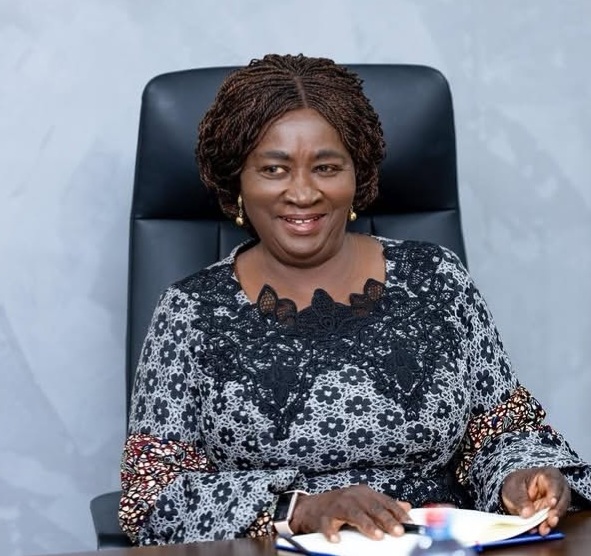
Vice President Jane Naana Opoku-Agyemang has taken a firm stand against early campaign rhetoric, shutting down ongoing internal debates regarding who will lead the National Democratic Congress (NDC) into the 2028 general elections.
The Vice President’s intervention comes amid mounting political chatter within party ranks, where analysts and insiders have begun floating potential candidates to succeed President John Dramani Mahama at the end of his term.
Addressing the media and party members, Opoku-Agyemang made it clear that her primary obligation is assisting the President in restoring economic stability and executing critical policy reforms, rather than entertaining premature political jockeying.
“Let’s focus on the job at hand,” Opoku-Agyemang declared, urging party loyalists and state officials to channel their energies toward governance. “The Ghanaian public did not elect us to run continuous campaign cycles. They entrusted us with a mandate to fix the economy, strengthen our institutions, and improve lives. That is where 100 percent of our attention must remain.”
The Vice President’s decisive statement serves as an early attempt to curb internal factionalism that often arises when succession debates surface midway through an administration’s tenure.
Political strategists have lauded the move as a crucial step to prevent policy distractions within key ministries.
“When senior officials start focusing on the next election cycle, governance inevitably suffers,” noted Kwame Ansah, a political risk consultant based in Accra. “By publicly shutting down 2028 ticket speculation, the Vice President is signaling to both the cabinet and party cadres that performance and delivery are the only metrics that matter right now.”
Party leaders have echoed these sentiments, reassuring the public that the party remains united behind its current governing mandate.
“There will be an appropriate time and an established democratic process for selecting our next flagbearer when the party constitution allows it,” an NDC national executive member stated. “Right now, the Vice President is leading by example. Every appointee and party worker must align with her call to deliver results for the country.”
With major economic and structural policy decisions ahead, Opoku-Agyemang’s directive sets a clear boundary, signaling that political ambitions must take a back seat to public service.
