
By Adnan Adams Mohammed
Ghana’s newly established Gold Board (GoldBod) has successfully processed 7.1 metric tonnes of domestically purchased gold through local refineries this year, marking a decisive shift toward domestic value addition in the nation’s precious minerals industry.
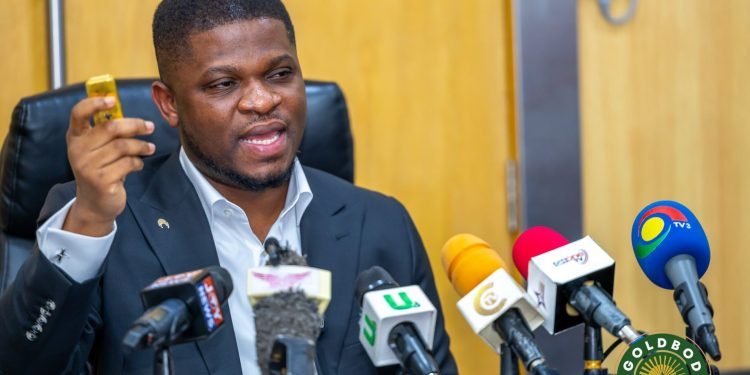
Speaking on the sector’s recent progress, Chief Executive Officer of GoldBod, Sammy Gyamfi, highlighted the scale of local refinement achieved so far, framing it as a direct result of comprehensive reforms aimed at retaining value within the country.
“7.1 metric tonnes of gold bought by GoldBod this year were refined in Ghana,” Gyamfi stated, pointing to the expanding operational capacity of domestic refining infrastructure.
The achievement comes as the institutional framework governing Ghana’s gold trade undergoes significant restructuring following the conclusion of previous central bank initiatives.
“The Domestic Gold Purchase Program was a Bank of Ghana initiative; it ended in March 2026,” Gyamfi explained, noting that GoldBod has since assumed a central role in streamlining purchase, regulatory, and export operations.
To solidify these operational gains, GoldBod is rolling out a national data-tracking framework aimed at mapping the entire supply chain to curb illegal trade, enhance transparency, and maximize revenue collection.
“Effort is underway to map, compile, and analyze comprehensive data on how gold moves through Ghana’s value chain from extraction sites to local buyers, refineries, and export markets,” Gyamfi added.
Attributing the momentum to broader policy leadership, the GoldBod chief executive underscored the administration’s strategic focus on resource governance.
“President Mahama has reset Ghana’s gold sector,” Gyamfi remarked, emphasizing that the combination of supply-chain tracking, local refining, and centralized oversight will secure greater economic returns for the country moving forward.
