
By Adnan Adams Mohammed
The National Petroleum Authority (NPA) has laid out a comprehensive blueprint designed to de-risk Ghana’s downstream petroleum industry and transform the nation into a primary logistics and distribution hub for West Africa.
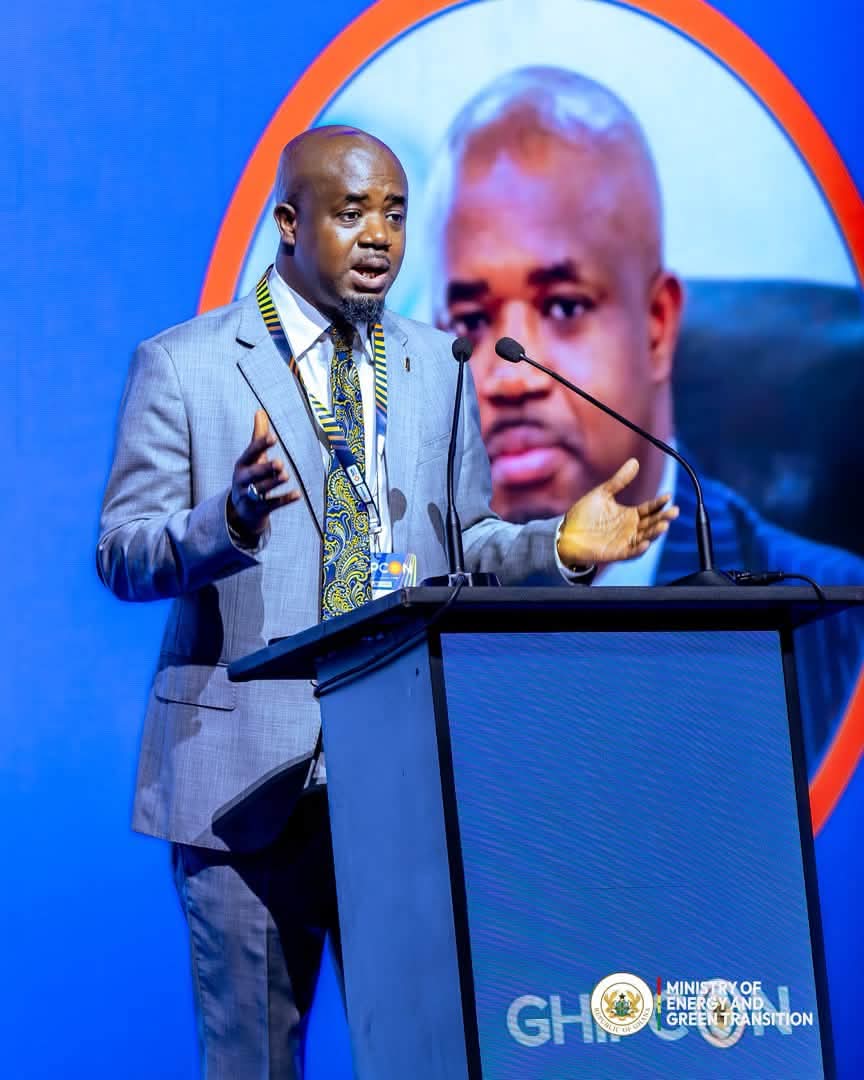
Speaking at the 2026 Ghana International Petroleum Conference (GhIPCon) in Accra, NPA Chief Executive, Mr. Godwin Kudzo Tameklo Esq., signaled to local and international financiers that the regulatory framework is pivoting toward aggressive growth, infrastructure optimization, and investor protection.
The conference, themed “Building a Resilient Downstream: Policy, Innovation and Investment for Growth,” arrives at a critical juncture. Data revealed at the event indicates that Ghana’s petroleum consumption spiked by 15.3% year-on-year to reach 7.45 billion liters in 2025. While demand is surging, domestic refining met only 13% of national needs, necessitating a 37% surge in imports. For strategic investors, this infrastructure gap represents an unprecedented market opportunity.
Eliminating Market Friction & Smuggling
Addressing institutional investors and industry stakeholders, Mr. Tameklo emphasized that building market confidence requires a disciplined and transparent regulatory environment. The NPA has aggressively stepped up its security and compliance enforcement to safeguard legal capital against illicit market forces.
“Our disciplined regulation, fair pricing, and firm oversight are intentionally shaping a market that works securely for investors, operators, and consumers alike,” Tameklo stated. “Consistent regulation strengthens domestic refining capacity, improves distribution, protects supply security, and explicitly encourages responsible capital investment across the entire value chain.”
Highlighting recent anti-smuggling victories along the maritime borders, the NPA Chief Executive reassured financiers that the authority would aggressively police the sector to maintain a level playing field.
“We will not relent in the fight to combat fuel smuggling. The destruction of illegal assets sends a strong deterrent to illicit operators. We stand in total readiness to sanitize and stem the tide of illegal transfers to protect legitimate investments,” Tameklo added.
Unlocking Upstream and Midstream Assets
With the expansion of the Sentuo Oil Refinery and operations at the Tema Oil facilities positioning Ghana to eventually meet nearly 70% of its refined fuel demand locally, the midstream sector is ripe for equity injections.
Industry leaders at the conference noted that transitioning Ghana from a net importer to a regional energy hub requires private capital participation to scale supply chains. Dr. Riverson Oppong, Chief Executive Officer of the Chamber of Oil Marketing Companies (COMAC), backed the NPA’s pro-market stance, emphasizing that infrastructure resilience is the next frontier for high-yield returns.
“Achieving regional hub status requires sustained private investment in refining capacity, advanced storage infrastructure, transportation networks, and digital systems that enhance transparency,” Dr. Oppong noted. “This imbalance in imports reinforces the urgency of strengthening our internal capacity. Capitalizing on these gaps will drive economic growth and position Ghana as the leading downstream hub in West Africa.”
A Favorable Policy Outlook
The Ministry of Energy and Green Transition has thrown its full legislative weight behind the NPA’s modernized regulatory roadmap, assuring investors of fiscal stability and predictable legal frameworks.
For international asset managers, venture capitalists, and infrastructure funds, the takeaway from GhIPCon 2026 is clear: Ghana’s downstream petroleum sector is no longer just managing consumption it is actively structuring high-value entry points for long-term project financing, supply chain digitization, and regional distribution infrastructure.
