
By Adnan Adams Mohammed
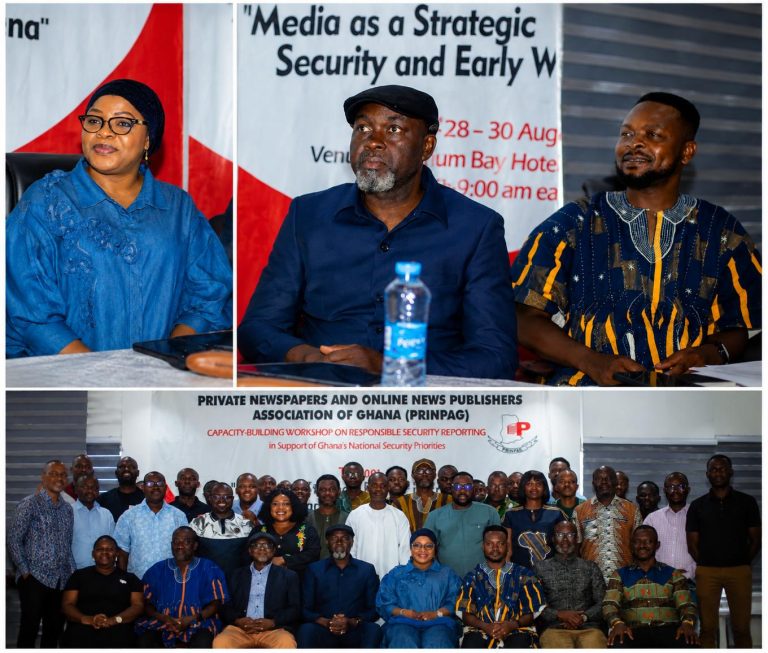
A powerful alliance between media organizations, state security apparatuses, and digital safety regulators was forged at a capacity-building workshop organized by the Private Newspapers and Online News Publishers Association of Ghana (PRINPAG).
The engagement highlighted the role of responsive journalism in safeguarding democracy, while urging stakeholders to support print publishers and combat emerging cyber threats.
National Security Urges Strategic Media Alliance
Delivering the keynote address under the theme “Media as a Strategic Partner in National Security,” National Security Coordinator, COP Osman Abdul-Razak, urged law enforcement and security services to stop viewing journalists as adversaries and instead recognize them as key partners in maintaining peace.
“Don’t see them as enemies. The press is a strategic partner in national security,” COP Abdul-Razak stated. “When the press exposes corruption, it protects the public purse more than any prosecution. When it holds power accountable, it gives a lawful outlet to frustration that would otherwise reduce to violence.”
He added that responsible reporting during moments of heightened tension serves as a stabilizing factor:
“When the press reports truthfully in moments of tension, it becomes the nation’s steady hand.”
To strengthen cooperation, COP Abdul-Razak announced plans to create a standardized communication channel between security agencies and newsrooms, alongside collaboratively developed reporting guidelines.
PRINPAG Rallies Support for Print and Online Publishers
Addressing the gathering, PRINPAG President David Tamakloe emphasized that a financially crippled press poses a vulnerability to national security. He appealed to government agencies, corporate entities, and international donors to support local publishers amid soaring production costs, digital disruption, and declining advertising revenue.
“A financially weakened media industry struggles to maintain professional standards and independence,” Tamakloe noted. “We are calling on government and stakeholders to view advertising with private news publishers not as charity, but as a critical investment in democracy and national stability.”
Supporting this call, Deputy Presidential Spokesperson Shamima Muslim highlighted the importance of prompt, accurate information sharing from official sources to combat misinformation.
“Whenever accurate information is delayed, it creates a void that speculation and misinformation quickly fill,” Muslim warned, reiterating the government’s commitment to supporting press freedom and transparency.
Addressing Cyber Threats and Protecting Digital Spaces
The conference also addressed broader national security concerns in the digital sphere, with references to recent warnings from the Cyber Security Authority (CSA) regarding online scams, investment fraud, and child safety risks.
Stakeholders agreed that building public awareness through press partnerships is essential to curbing digital financial fraud, which cost citizens millions in early 2026.
The workshop concluded with a joint pledge from PRINPAG leadership and security authorities to institutionalize periodic capacity-building programs, ensuring journalists receive specialized training in security reporting while upholding editorial independence.
