
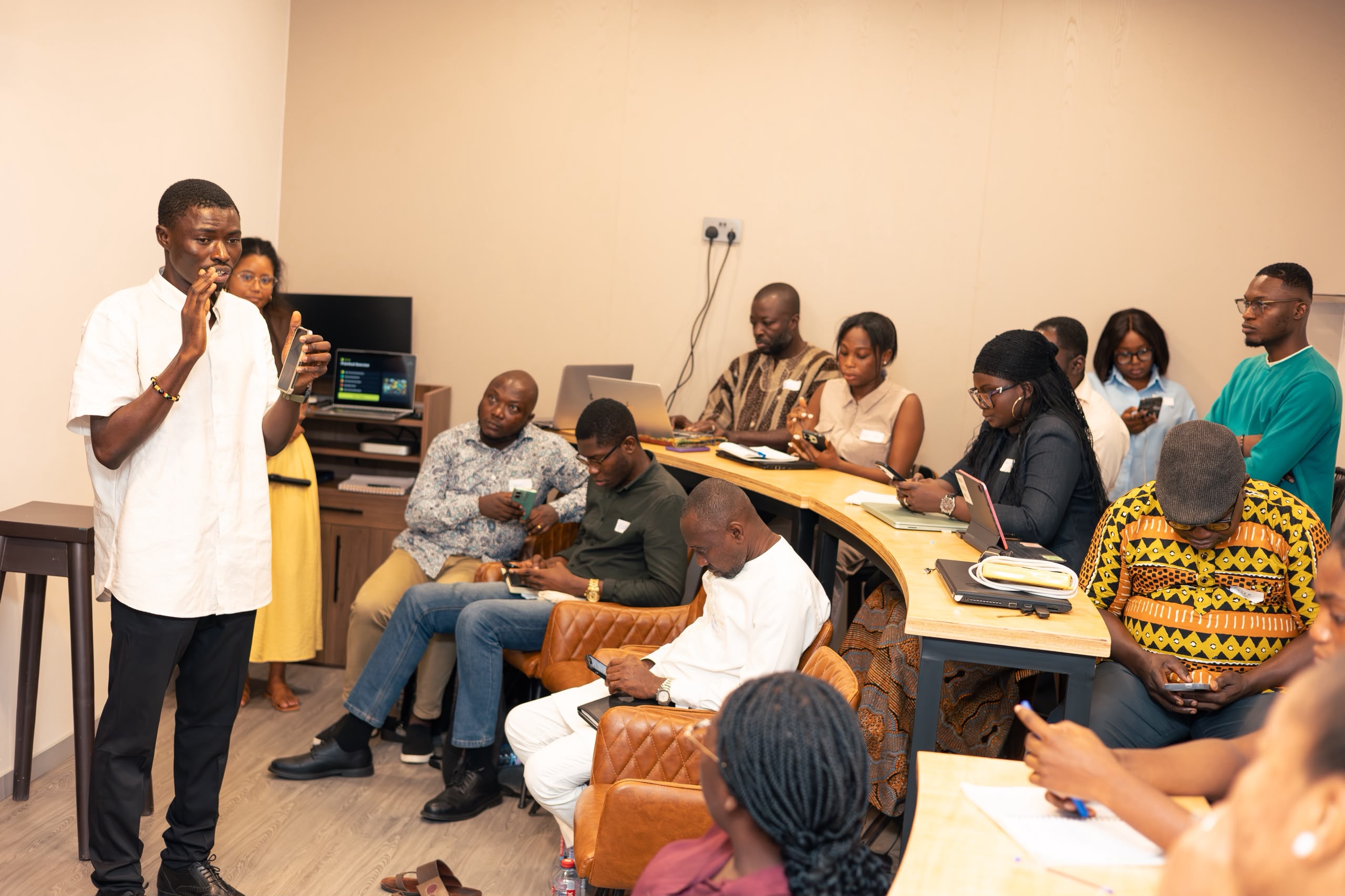
Ghanaian journalist and digital media trainer Hafiz Larry Alhassan has urged journalists across Africa to embrace short-form mobile video as a powerful tool for communicating climate and environmental stories, during a training organised by GAIA Africa for members of the Africa Zero Waste Journalists (AZWJ) network.
Hafiz Larry facilitated a practical session on mobile videography and digital storytelling as part of a day-long capacity-building workshop held in Accra ahead of the second edition of the Africa Zero Waste Academy. The training brought together journalists from Ghana to strengthen reporting on climate change, pollution and zero waste solutions.
Speaking during his presentation, Mr. Alhassan challenged participants to rethink how they present environmental stories in an increasingly digital media landscape.
“Reels are not just a trend; they are a powerful storytelling tool,” he said. “A well-crafted 30-second video can simplify complex climate issues, inspire action and reach audiences that traditional reporting often struggles to engage.”
The session introduced journalists to the fundamentals of mobile videography, demonstrating how smartphones can be transformed into effective reporting tools. Participants were taken through practical techniques including camera positioning, framing, composition, lighting, audio recording, visual storytelling and editing using mobile applications such as CapCut.
Beyond technical production, Alhassan emphasised the importance of purpose-driven storytelling. He encouraged journalists to think strategically before recording, reminding participants that compelling visuals must always support accurate, evidence-based reporting.
“Technology alone does not tell great stories,” he explained. “Good journalism begins with understanding the issue, identifying the human impact and presenting it in a way that audiences can easily understand and connect with.”
The highly interactive session concluded with a practical assignment, where participants worked in groups to produce one-minute climate-focused videos using only their smartphones. The exercise challenged attendees to apply the techniques learned during the training, from planning their shots to editing and presenting finished stories.
Participants described the session as one of the highlights of the workshop, noting that the practical approach gave them the confidence to produce professional-quality visual content without expensive equipment.
The training formed part of GAIA Africa’s broader effort to strengthen environmental journalism across the continent through the Africa Zero Waste Journalists network. The workshop combined sessions on climate science, zero waste solutions and innovative storytelling approaches to equip journalists with the knowledge and skills needed to report effectively on Africa’s environmental challenges.
According to organisers, integrating mobile journalism into climate reporting is becoming increasingly important as newsrooms prioritise digital-first content and audiences consume more information through social media platforms.
By equipping journalists with practical mobile storytelling skills, Alhassan’s session reinforced the growing role of visual journalism in translating complex environmental issues into engaging, accessible stories capable of informing communities and influencing public discourse.
The Accra workshop marks another milestone in the Africa Zero Waste Journalists network’s mission to build a community of environmentally conscious reporters who can collaborate across borders, share resources and produce impactful journalism that advances climate action and sustainable development across Africa.
