
Close Menu
News Guide Africa
    What's Hot

    BoG Overhauls Microfinance Sector: All 147 Rural Banks converted to Community Banks

    June 19, 2026

    Standard Bank Research projects resilient 6.1% growth for Ghana amid geopolitical headwinds

    June 19, 2026

    Ghana Gas and NPA tighten bonds to fuel downstream petroleum sector growth

    June 19, 2026
    Facebook X (Twitter) Instagram
    Trending
    • BoG Overhauls Microfinance Sector: All 147 Rural Banks converted to Community Banks
    • Standard Bank Research projects resilient 6.1% growth for Ghana amid geopolitical headwinds
    • Ghana Gas and NPA tighten bonds to fuel downstream petroleum sector growth
    • Jubilee House Intervenes: Chief of Staff rallies top security guns to combat evolving frug threat
    • ‘Cocoa Farmer Accord’ fortified at Abidjan conference
    • CrownPlay No Deposit Bonus – komplette Übersicht & Test für deutsche Spieler
    • Realz Online Casino – What Canadian Players Need to Know
    • …and Naana Jane danced to Ghana’s victory over Panama in WC 2026 opener
    Facebook X (Twitter) Instagram
    News Guide Africa
    • Home
    • News
    • Politics
    • Agric and Environment
    • Sports
    • Mining & Energy
    • Lifestyle
    News Guide Africa
    Home » Ghana exits IMF financing program, pivots to ‘Policy Coordination’ era
    Economy and Finance

    Ghana exits IMF financing program, pivots to ‘Policy Coordination’ era

    Adnan AdamsBy Adnan AdamsMay 18, 2026No Comments7 Views
    Facebook Twitter Pinterest LinkedIn WhatsApp Reddit Tumblr Email
    Share
    Facebook Twitter LinkedIn Pinterest Email

    By Adnan Adams Mohammed

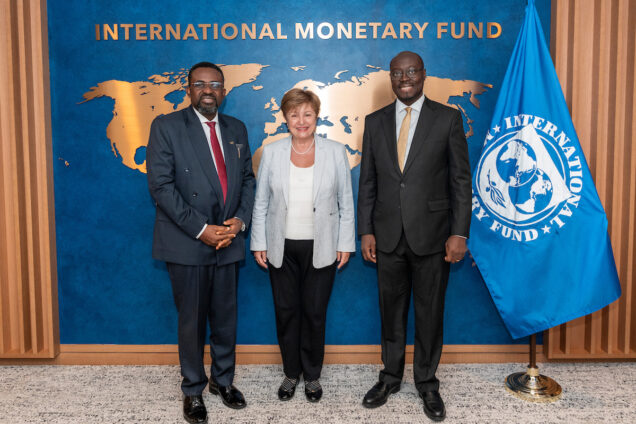
    After three years of rigorous fiscal discipline, high-stakes negotiations, and a domestic debt exchange that reshaped the financial landscape, Ghana has officially closed the chapter on its Extended Credit Facility (ECF) with the International Monetary Fund (IMF).

    The government has confirmed that the nation is shifting away from direct IMF financing, opting instead for a “non-financing” support structure.

    This transition marks a pivotal moment in Ghana’s economic history, as the country attempts to prove to international markets that it can maintain fiscal sanity without a “policeman” holding the purse strings.

    The successful 6th review

    The decision follows the conclusion of the 6th and final review of the ECF program in Accra this month. While the IMF mission team noted “significant progress” in restoring macroeconomic stability, they did not leave without a word of caution.

    “Ghana has shown remarkable resilience. We see inflation trending downward and a stabilization of the primary balance,” the IMF mission lead stated during the closing press conference. “However, lingering concerns remain regarding the energy sector debt and the need for consistent revenue mobilization. The exit from a financing program does not mean an exit from discipline.”

    For many Ghanaians, the end of the program is met with a mixture of relief and skepticism. The IMF years were characterized by a “tax-heavy” regime that saw the introduction of several new levies measures that critics say pushed mining taxes into a “danger zone” and left only 32% of salaried workers able to save.

    The PCI: The new front-runner

    As Ghana weighs its post-IMF pathways, the Policy Coordination Instrument (PCI) has emerged as the clear front-runner. Unlike the ECF, the PCI does not come with a cash injection. Instead, it serves as a “seal of approval” for a country’s economic policies, signaling to investors and credit rating agencies that the government remains committed to reform.

    “The PCI is essentially a signaling tool,” explained Dr. Richmond Atuahene, a banking and economic consultant. “By signing up for this, the government is telling the world, ‘We don’t need your money anymore, but we still want you to grade our homework.’ It is a strategic move to keep the cost of borrowing low as we return to the international capital markets.”

    The shift to a non-financing program is seen as a necessary evolution. “We cannot stay on a ventilator forever,” noted a senior official at the Ministry of Finance. “The goal was always to stabilize, recover, and then walk on our own feet. The PCI provides the framework to ensure we don’t stumble back into the habits that led us to the 2023 crisis.”

    Lingering concerns amid progress

    Despite the optimistic outlook from government quarters, independent analysts warn that the “structural weaknesses” of the Ghanaian economy have not been fully cured. The National Development Planning Commission (NDPC) has recently pushed for a “Job-First” agenda, arguing that macroeconomic indicators mean little if they do not translate into living wages and employment.

    “We are exiting the program at a time when the labor market is still very fragile,” said Adnan Adams Mohammed, an economic analyst. “The IMF may be happy with our debt-to-GDP ratio, but the man on the street is still dealing with high fuel costs and a lack of disposable income. The transition to a PCI must prioritize social safety nets, not just fiscal balance sheets.”

    A test of sovereignty

    The move to non-financing support is, at its core, a test of Ghana’s economic sovereignty. For the first time in years, the government will have more room to maneuver, particularly with an election cycle on the horizon a period historically known for budget overruns in Ghana.

    “This is the real test,” says Dr. Elias Preko. “Can the government maintain the discipline of the last three years without the threat of the IMF withholding a disbursement? If we pass this test, Ghana’s credibility will be restored. If we fail, we will be back at the IMF’s door within 24 months.”

    As the ECF program officially winds down in 2026, the eyes of the global financial community are fixed on Accra. The transition to the Policy Coordination Instrument represents a bold bet that Ghana has finally learned the lessons of its 17th bailout.

    Whether this “non-financing” era leads to genuine prosperity or a return to old habits remains the most pressing question for the “Gold Coast” in the years to come.


    Extended Credit Facility (ECF) International Monetary Fund (IMF) macroeconomic stability Ministry of Finance Policy Coordination Instrument (PCI)
    Share. Facebook Twitter Pinterest LinkedIn Tumblr Telegram Email
    Adnan Adams
    • Website

    Related Posts

    BoG Overhauls Microfinance Sector: All 147 Rural Banks converted to Community Banks

    June 19, 2026

    Standard Bank Research projects resilient 6.1% growth for Ghana amid geopolitical headwinds

    June 19, 2026

    Ghana Gas and NPA tighten bonds to fuel downstream petroleum sector growth

    June 19, 2026
    Leave A Reply Cancel Reply

    Top Posts

    BREAKING: Another helicopter crashes in Kenya, Several Feared Dead

    August 7, 20251,871

    Chief of Staff charges National Prayer Committee to innovate for national cohesion

    June 4, 2026890

    Alpha Energy to begin works on Namibia’s largest offshore diamond mines in October

    September 14, 2024886

    Exceptional client service: How two Kasoa GRA officials are redefining public relations

    May 22, 2026764
    Don't Miss
    Business, Small Business

    BoG Overhauls Microfinance Sector: All 147 Rural Banks converted to Community Banks

    By Adnan AdamsJune 19, 2026

    By Adnan Adams Mohammed In a historic and sweeping regulatory shift, the Bank of…

    Standard Bank Research projects resilient 6.1% growth for Ghana amid geopolitical headwinds

    June 19, 2026

    Ghana Gas and NPA tighten bonds to fuel downstream petroleum sector growth

    June 19, 2026

    Jubilee House Intervenes: Chief of Staff rallies top security guns to combat evolving frug threat

    June 19, 2026
    About Us
    About Us

    Newsguide Africa is a digital news platform dedicated to providing accurate, timely, and insightful coverage of the African continent. From business and technology to lifestyle and cultural heritage, we go beyond the headlines to offer context and a positive, authentic narrative for the global African diaspora and local readers alike.

    Facebook X (Twitter) Pinterest YouTube WhatsApp
    Our Picks

    BoG Overhauls Microfinance Sector: All 147 Rural Banks converted to Community Banks

    June 19, 2026

    Standard Bank Research projects resilient 6.1% growth for Ghana amid geopolitical headwinds

    June 19, 2026

    Ghana Gas and NPA tighten bonds to fuel downstream petroleum sector growth

    June 19, 2026
    Most Popular

    BREAKING: Another helicopter crashes in Kenya, Several Feared Dead

    August 7, 20251,871

    Chief of Staff charges National Prayer Committee to innovate for national cohesion

    June 4, 2026890

    Alpha Energy to begin works on Namibia’s largest offshore diamond mines in October

    September 14, 2024886

    © 2026 Newsguide Africa. All rights reserved.

    • Home
    • Science

    Type above and press Enter to search. Press Esc to cancel.