
By Adnan Adams Mohammed
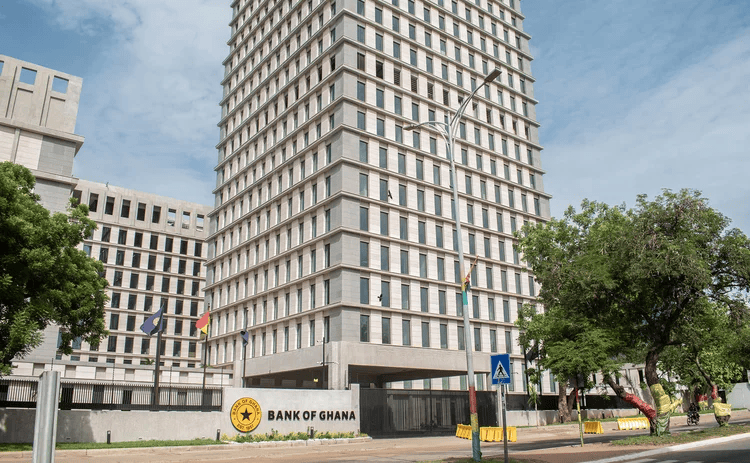
Rapid expansion in commercial construction and a sharp uptick in credit for small businesses have anchored Ghana’s financial activity almost entirely in the nation’s capital, according to the Bank of Ghana’s (BoG) half-year 2026 Collateral Registry report.
The capital city captured an overwhelming GH¢24.5 billion or 77.8% of total secured credit extended across the country as of June 30, 2026. The surge underscores a widening gap with other commercial hubs, as the Ashanti Region followed in a distant second with 10.8% (GH¢3.4 billion) of secured credit, while the Western, Eastern, and Central regions combined for less than 6% of the national pie.
Construction sector and emerging businesses drive new borrowing
An aggressive push into heavy infrastructure and commercial development propelled the construction sector to the top of credit demand, absorbing GH¢9.9 billion, representing 31.4% of total registered secured credit in the second quarter.
“The construction sector received the largest share of registered secured credit within the period,” the central bank detailed in its sectoral breakdown, adding that commerce and finance grew to GH¢8.1 billion, while lending to the services sector spiked by 154.8%.
While large enterprises absorbed the highest nominal volume at GH¢13.8 billion (43.9%), funding directed toward Small and Medium Enterprises (SMEs) registered significant momentum. Secured loans to SMEs climbed 28.9% year-on-year to reach GH¢3.8 billion, pointing to increased capital flow into mid-tier commercial operations.
Local lenders double loan volume despite foreign bank dominance
International and foreign-controlled banks continue to serve as the chief capital engine for these major developments, accounting for GH¢14.1 billion or 71.1% of the GH¢19.9 billion in total bank-issued secured credit during Q2.
“The distribution underscores the continued dominance of foreign-controlled banks in secured lending, while also reflecting steady growth among indigenous banks,” the BoG noted.
Despite foreign banks maintaining the largest market share with a 19.3% year-on-year expansion, Ghanaian indigenous banks experienced a massive operational jump. Local financial institutions issued GH¢5.7 billion in secured credit, a 112.4% surge compared to the GH¢2.7 billion recorded in Q2 2025.
Borrowers turn to liquid cash guarantees to secure funding
To unlock this capital influx, businesses and individuals increasingly relied on liquid guarantees rather than traditional real estate. Cash collateral emerged as the single most frequently registered asset type, making up 80,673 registrations or 68.7% of all pledged security.
Overall, movable assets represented 79.1% of all recorded collateral (92,878 assets), while fixed, immovable property accounted for just 2.6%.
Additional pledged security included inventory and goods (10,015 registrations), general business assets (9,247 registrations), and household goods (4,619 registrations). Total registered assets reached 117,428 for the quarter, highlighting a concentrated but highly active credit environment across the capital and key industrial sectors but a highly active credit environment across the capital and key industrial sectors.
