
By Adnan Adams Mohammed
Africa’s vast energy resources must immediately transition from potential reserves into active engines of industrialisation, job creation, and economic independence, Chief of Staff Hon. Dr. Julius Debrah has urged.
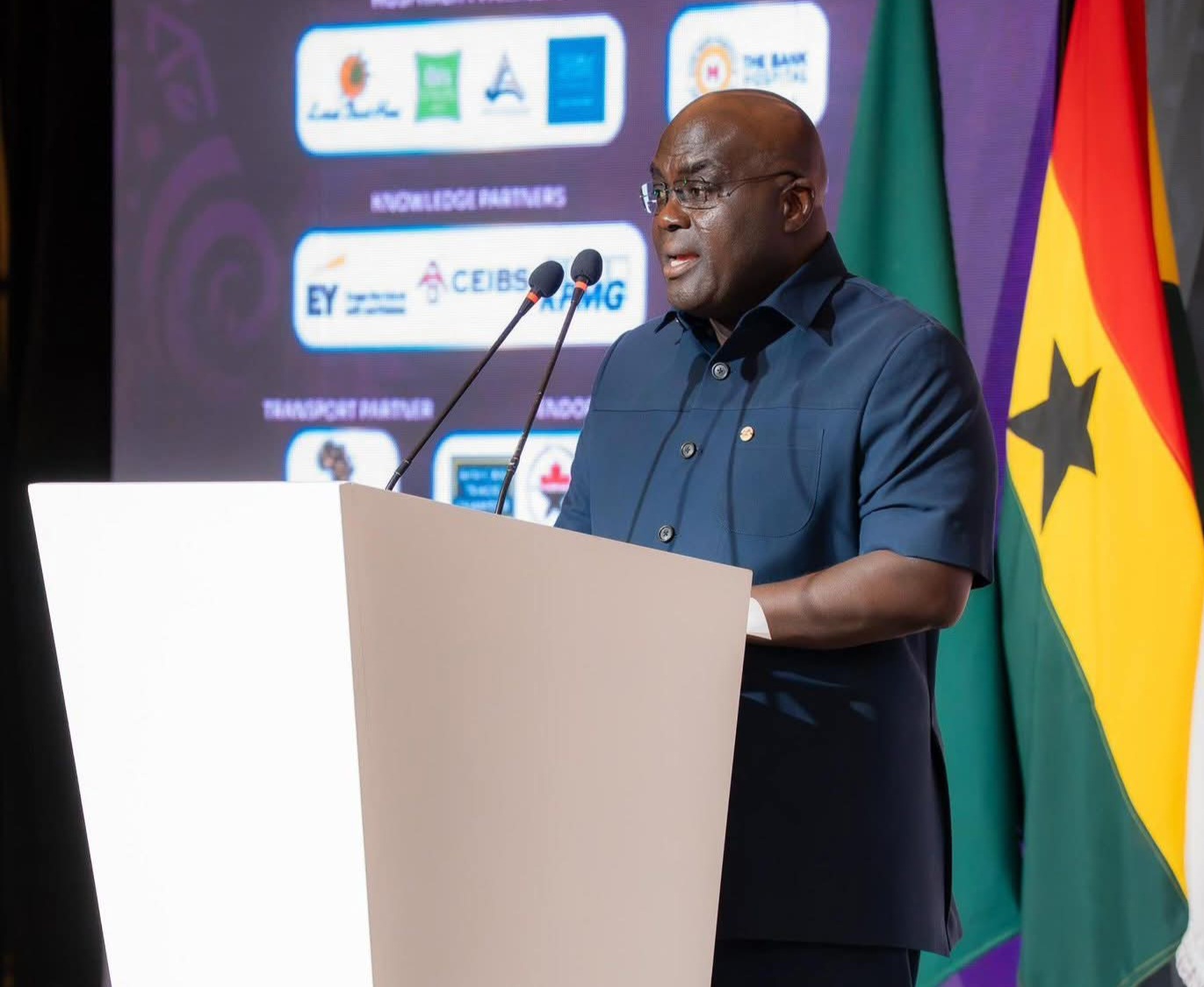
Speaking on behalf of President John Dramani Mahama at the flagship Africa Energy Technology Conference in Accra, Dr. Debrah issued a strong call to action for regional leaders and industry pioneers to break down cross-border trade barriers and accelerate cross-continental infrastructure investments.
“The pace of our energy economic development and investment is too slow. We must shift to high-speed growth immediately,” Dr. Debrah declared.
A Crusade for Cross-Border Energy Trade
Framing reliable power as the fundamental prerequisite for modern industrial enterprise and digital economy expansion, Dr. Debrah outlined a bold vision for a interconnected continental market.
“I will lead a crusade until energy becomes Africa’s most traded commodity, not constrained by borders but enabled by bridges,” he assured attendees.
Backing this policy trajectory, Ghana’s Minister of Energy and Green Transition, John Abdulai Jinapor, addressed the pressing challenge of energy poverty, which currently leaves an estimated 600 million Africans without reliable power access. To address domestic generation deficits and build long-term industrial capacity, Jinapor announced plans to add over 1,000 megawatts of emergency base-load power to the national grid while laying the groundwork for small modular nuclear reactors.
Moving from Talk to Action: Self-Financing and Policy Execution
Industry stakeholders gathered at the summit agreed that political commitments must be backed by concrete funding mechanisms and swift project execution.
“African governments must move beyond rhetoric by implementing practical energy projects capable of creating jobs and expanding industrial capacity,” asserted Farid Ghezali, Secretary-General of the African Petroleum Producers’ Organisation.
Ghezali urged African nations to build robust internal financing structures for both fossil fuels and renewable energy assets, reducing the continent’s vulnerability to external capital fluctuations.
The conference concluded with consensus on actionable priority frameworks designed to scale intra-African energy transactions, optimize regional power pools, and ensure the continent’s resource wealth fuels its own economic future.
