
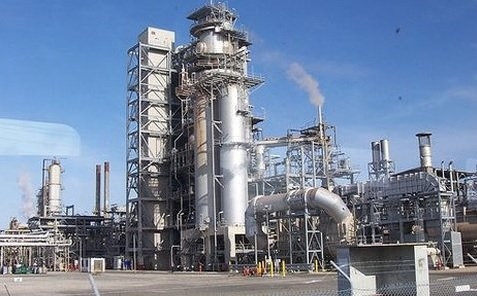
After more than a decade plagued by crippling debt, operational shutdowns, and mounting public skepticism, Ghana’s only state-owned refinery is showing initial signs of a turnaround under newly appointed leadership.
The Tema Oil Refinery (TOR), long viewed as a distressed asset burdening public finances, has entered a new phase following the appointment of Mr. Edmund Kombat (Esq.) as Managing Director by President John Dramani Mahama in 2025. Industry observers and internal staff have dubbed the ongoing turnaround effort the “Kombat Effect” a strategy focused on restarting core technical operations, restructuring legacy debt, and rebuilding confidence in the country’s strategic energy infrastructure.
A Decade of Distressed Operations
Prior to the recent leadership transition, TOR faced a severe crisis, burdened by legacy debts exceeding US$400 million, a non-functional Crude Distillation Unit (CDU), and prolonged reliance on imported finished petroleum products. Reputational hits, including high-profile controversies like the Asante Berko case, further eroded investor trust and reduced employee morale.
Addressing the scale of the challenge, Emmanuel Duah, Executive Director of the Radiant Media and Intelligence Hub, noted that the state asset was dangerously close to total failure before the recent intervention.
“For more than a decade, TOR was widely described as a white elephant due to mounting challenges, including a debt burden exceeding US$400 million, operational difficulties, and repeated government interventions,” Duah stated in a press release analyzing the refinery’s transition. “Allowing TOR to collapse would leave Ghana completely dependent on imported petroleum products, creating significant vulnerabilities.”
Key Operational and Financial Initiatives
Under the new management direction, the refinery is advancing several key initiatives aimed at restoring technical capacity and operational viability:
● CDU Restoration & Tolling Models: Engineering work is underway to rehabilitate the primary Crude Distillation Unit while exploring tolling agreements with third parties to process crude without requiring immediate capital outlay for raw materials.
● Debt Restructuring: Management is engaging creditors and state agencies to isolate legacy liabilities from current balance sheets, establishing a viable financial foundation for future operations.
● Public-Private Partnerships: Discussions are active regarding prospective lease models or joint ventures aimed at injecting fresh private capital and modern refining technology without relinquishing state ownership.
● Internal Accountability: Measures are being implemented to improve transparency, re-engage skilled technical personnel, and rebuild workplace morale.
Highlighting the strategy, Duah emphasized that the new administrative approach centers on three core pillars.
“Upon assuming office, Mr. Edmund Kombat outlined a clear vision built around three priorities: Restart, Restructure, and Restore Confidence,” Duah observed. “The ‘Kombat Effect’ demonstrates that with effective management, strategic planning, and the necessary political commitment, even distressed national assets can be restored.”
Energy Security and Economic Impact
Sector analysts emphasize that a functional refining facility is critical for national economic stability, particularly in mitigating foreign exchange pressure caused by petroleum imports and shielding the local market from global supply chain shocks.
A fully operational facility is expected to preserve direct technical jobs, support downstream petroleum businesses, and reduce reliance on imported refined products.
However, significant hurdles remain before full operational capacity can be achieved. Key risks include securing the substantial capital required for full technical upgrades, resolving long-standing creditor claims, and ensuring sustainable crude oil supply agreements.
“The resurgence of the Tema Oil Refinery does not mean all challenges have been resolved,” Duah warned. “Major issues requiring attention include legacy debt, significant investment needed for CDU rehabilitation, and maintaining strong accountability measures to prevent past missteps. TOR is not merely a refinery; it is a national strategic asset.”
The coming months will test whether the preliminary technical and administrative progress can translate into sustained commercial refining operations at Tema.
