
By Aminu Mariam
The Chief Executive of the National Petroleum Authority (NPA), Mr. Godwin Kudzo Edudzi Tameklo, has made a passionate appeal to Ghana’s traditional authorities to intervene in the growing menace of fuel siphoning from overturned tankers, describing the practice as a grave threat to national safety.
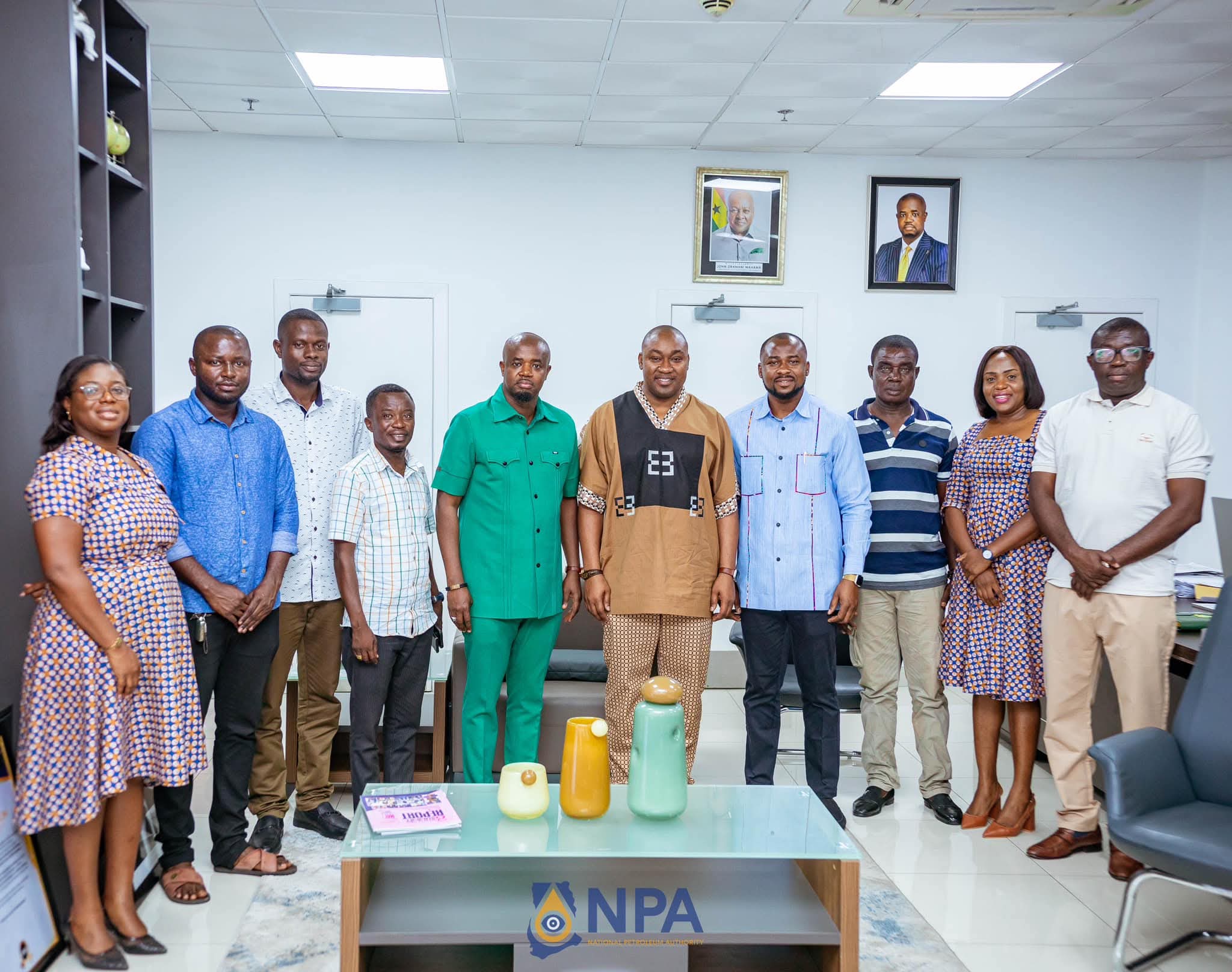
Mr. Tameklo made these remarks when the Paramount Chief of Atebubu, HRM Ohempon Dr. Yeboah Asiamah, paid a courtesy call on him at the NPA Head Office in Accra on Monday.
A Call for Traditional Intervention
Expressing deep concern over the recurring incidents where locals rush to accident sites to scoop fuel, often with fatal consequences, the NPA Boss emphasized that the state’s regulatory power must be augmented by the moral authority of traditional rulers.
“One of the things we are confronted with and which has been of great concern to the Authority is the issue of fuel siphoning from overturned fuel tankers,” Mr. Tameklo stated. “We have the power of the state, but what traditional leaders have is the authority that moves directly from the people. If the Chiefs don’t agree with a practice, it becomes much easier to enforce the rules.”
He specifically petitioned the Atebubu Paramount Chief to carry this message to traditional council meetings, urging other monarchs to educate their subjects on the explosive dangers of tampering with accident-stricken tankers.
Collaboration for Development
HRM Ohempon Dr. Yeboah Asiamah, on his part, commended Mr. Tameklo for his “strong leadership” since assuming office over a year ago. He noted that the visit was intended to explore how the Atebubu Paramount Stool could collaborate with the NPA to enhance local development and safety.
“We have been admiring the work from afar,” the Paramount Chief noted. “As custodians of the land, we feel we need to reach out and see which areas we can collaborate in to ensure that the rules governing the petroleum sector are respected at the community level.”
Bridging the Gap
The meeting highlighted a strategic shift in the NPA’s approach to enforcement, moving toward a “buy-in” model where traditional leaders act as first-line advocates for petroleum safety. Mr. Tameklo argued that once the buy-in of Chiefs is secured, the work of the Authority in preventing disasters and ensuring quality standards becomes significantly more effective.
The visit marks a strengthening of ties between the regulator and traditional authorities, with both parties agreeing that public safety in the downstream petroleum sector is a shared responsibility that begins in the hearts of the local communities.
