
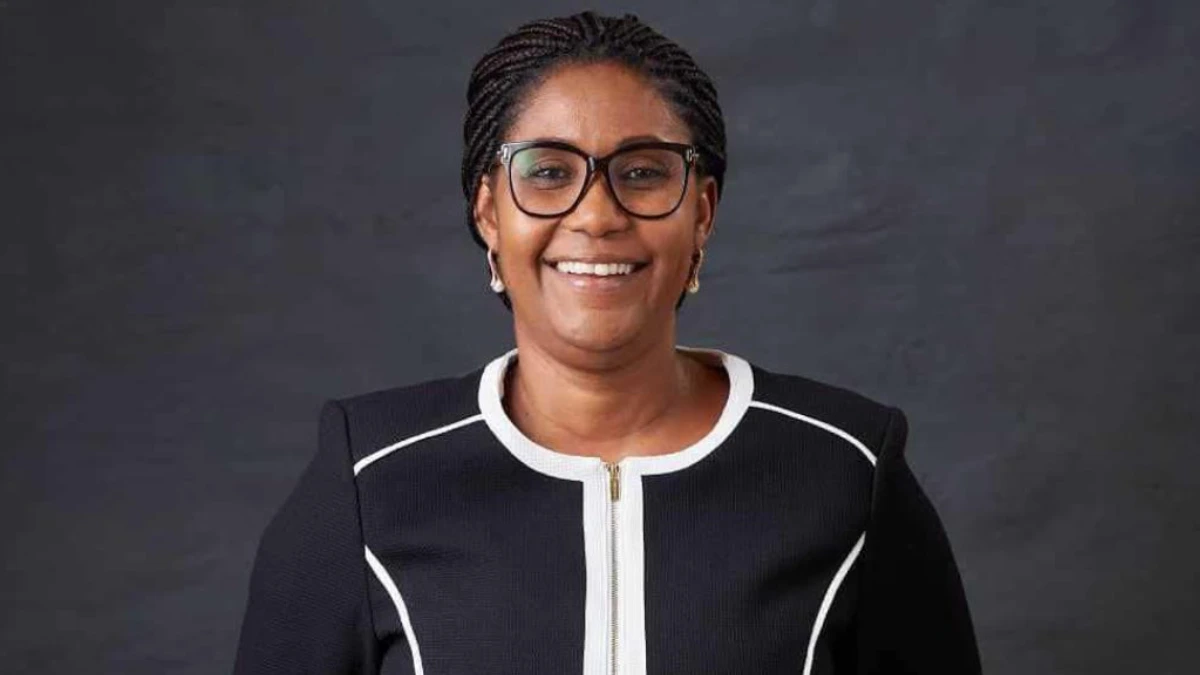
INTERVIEW 1: DATA, SEISMIC DATA & THE NEW ERA OF AFRICAN UPSTREAM ACCESS
Paul Sinclair:
Emeafa, I want to start with something quite fundamental. When you look at where Ghana’s upstream sector is today, it feels like there has been a real focus recently on exploration, and new projects, with emphasis on quality data. Ghana currently has good quality multi-client proprietary seismic datasets in the offshore and onshore basins. From your perspective, what has really changed?
Emeafa Hardcastle:
First and foremost, Paul thanks for this opportunity and yes, you’re right, a lot has changed. Ghana’s upstream oil and gas industry continues to evolve and have a potential to grow at a steady and promising rate, rife with opportunities and certainly some challenges for the country and investors. The prospects are based on the perspective that seismic data is the gateway to long term success.
E&P Investors require quality and extensive data coverage for exploration.
Availability of petroleum data tends to reduce the exploration duration and geological risk and act as catalyst for investment attraction.
The Commission’s assessment indicates that we need an investment outlay of over US$200M to bridge the data gaps in Ghana’s offshore sedimentary basin. We are pursuing various models of funding the data acquisition which include full funding by the State, Public Private Partnership and Private-led with State support e.g. Multiclient to support the acceleration of exploration activities by new E&P Contractors. The Government, through the Petroleum Commission, has approved the acquisition of Multi-client 3D Seismic data acquisition for; Tano Cape Three Points Basin: (12,000 sq.km), Accra-Keta Basin: (13,900 sq.km ) and Saltpond Basin (10,000 sq.km). These projects are expected to make seismic data readily available to E&P companies who desire to explore Ghana’s sedimentary basins for hydrocarbon. Also, GNPC has completed the phase 3 of its 2D seismic acquisition programme over the Voltaian Basin with an infill campaign of additional 1655 line kilometer (Km) of 2D seismic lines.
We now have extensive 2D and 3D seismic coverage across our basins, including datasets from providers such as TGS and TG-GeoPartners. That coverage has given us a far more detailed understanding of our offshore potential, and it enables us to talk confidently to operators about geological prospects.
However, I would like to emphasise that quality data alone is not the end point. Data is only powerful if it is accessible, interpretable, and actively used in decision-making. That is exactly why we focus our strategy on investment attraction driven by data.
Paul Sinclair:
That’s interesting because it sounds like you’re talking about a shift towards more bullish marketing via quality data, would you agree that’s where AOW:Energy comes in, and how do you view September as an opportunity to attract more market entrants?
Emeafa Hardcastle:
I would agree on that Paul, we will lean on AOW and other events to use our improved datasets to showcase Ghana’s geological prospects and promote investment into the sector. At AOW Energy in September, the Commission and its partners will host “free to all’Data Rooms access and meet with investors to discuss the subsurface in more detail highlighting new products and new insights.
So, when companies come to AOW Energy we have made a point that they are not just attending a conference, but network with relevant stakeholders to review the available data to make informed business decision. I think that’s what makes AOW different. It is not a talk shop; we have been very intentional that AOW Energy in Ghana becomes a platform where one leave with new insights and business opportunities.
Paul Sinclair:
Talking of opportunity, let me ask you about one of the areas that’s been gaining attention recently, the Accra-Keta and Voltaian Basins. We’re seeing more seismic work being undertaken, and early indications are encouraging. As the regulator how are you viewing trend?
Emeafa Hardcastle:
Paul, we view the frontier basins to provide future opportunities with enormous resource potential. The Accra-Keta Basin is still underexplored compared to Tano-Cape Three Points Basins, but the geological indicators we are seeing are encouraging. The geoscientific data suggests potential commercial opportunities that align with known productive analogues elsewhere in West Africa.
The Voltaian Basin is transitioning decisively from conceptual evaluation into active exploration. Currently, five companies hold licences, reflecting growing industry confidence and commitment. Current efforts are focused on systematically de‑risking the Voltaian Basin through the integration and evaluation of various datasets and preparation to drill exploration well.
Then again, this is where AOW:Energy becomes extremely important. Because at AOW, we will be hosting dedicated basin sessions and data rooms focused specifically on acreage, where E&P companies can engage directly with the Petroleum Commission and its technical teams.
So rather than conversations happening in isolation, everything is brought into one structured environment where progress can really be made.
Paul Sinclair:
I totally agree and that is an important key point, the idea of bringing everything together in one place, regarding both above and below ground issues.
From your perspective Emeafa, what’s you view on the Ocean Bottom Node surveys over Jubilee and TEN. That is a big step in terms of subsurface clarity. How do you see that impacting production?
Emeafa Hardcastle:
This represents a significant milestone in how we understand the subsurface across the two fields. As you know, this Ocean Bottom Node (OBN) survey is the first of its kind in Ghana. OBN technology is increasingly proving to be a reliable tool for advanced subsurface imaging. For example, Total Energies has successfully applied it to enhance reservoir characterization in the Louro and Mastarda fields in Angola, with clear and measurable results.
The Tullow and Partners OBN surveys follows a 4D streamer survey acquired in Q1 2025, and we are encouraged by the initial outcomes observed so far.
OBN surveys require significant investment, therefore, this commitment by the Jubilee and TEN partners underscores their strong confidence in Ghana’s subsurface potential and the long-term value of these assets.
But what’s also important is how we integrate this into the broader upstream conversation.
At AOW Energy, we will be creating time for operators, service companies, and investors to engage directly through technical sessions and structured meetings hosted by the Petroleum Commission and our partners to ensure we maximise AOW Energy and deliver outputs and positive outcomes for Ghana.
Paul Sinclair:
It feels like there’s a broader narrative here, which is that Ghana is not just trying to attract exploration, but also optimise what it already has, while opening new frontiers.
Would you say that’s a fair reflection?
Emeafa Hardcastle:
Yes, absolutely. That dual approach is very deliberate. We need to decisively accelerate exploration and field development operations to unlock additional resources, recognising that timely execution is essential in an increasingly competitive global energy landscape. That said, building reserves and advancing further exploration are key to achieving greater success, so we must pursue these in parallel.
We are focused on three things at the same time, improving production from active fields, unlocking new offshore exploration opportunities, and developing frontier basins like the Accra- Keta, Saltpond and onshore Voltaian basins.
And we are doing this in a coordinated way with our partners, operators, service companies, and investors alike, it is an ecosystem and we are here to continue to build partnership, trust, accelerate decision making and of course equitable growth.
There is an intense sense of alignment right now. People are working together more closely, and there is a shared understanding that we want to see results for the greater good.
That is why I keep coming back to AOW Energy. Because it is the platform where that alignment becomes visible, and where governments and industry sit in the same room and move things forward.
Paul Sinclair:
And would you say now the mood has shifted compared to a few years ago? What has changed where both Ghana and the West African sub region have exploded into life again.
Emeafa Hardcastle:
Yes, I would. There is a more positive and pragmatic mood. I say that not just about what we are looking to achieve in Ghana, I really feel that whilst we have boosted our relationships with the private sector, and we are instilling more and more confidence to attract investment, West Africa is seeing a boom in activities with huge interest in the West African Transform Margin. Countries such as Nigeria have done an incredible job in creating enabling environments, Cote d`Ivoire has seen amazing growth and new markets such as Liberia and Guinea Bissau are also attracting attention. For me this is a good thing, its reinforcing the potential of Africa in a new market dynamic and attracting operators to the sub region.
There is a real sense of momentum building, and I think that will become more visible over the next 12 to 18 months. We expect increased exploration activity, more investment, more discoveries, and new Petroleum Agreements being signed.
For more information on Ghana’s upstream oil and gas opportunities, including access to data rooms, technical sessions, licensing rounds, and investment meetings with the Petroleum Commission of Ghana and GNPC, contact the AOW Energy team now.
AOW Energy 2026, held in partnership with the Government of Ghana and leading African energy institutions, is the premier platform for upstream deal-making in Africa, bringing together operators, investors, and over 30 African governments to unlock exploration, production, and partnership opportunities across the continent.
INTERVIEW 2 : VOLTAIAN BASIN, ONSHORE FRONTIERS & BUILDING A NEW ENERGY PROVINCE
Paul Sinclair:
Following our last meeting about the Sub Region and the outlook of exploration and production, I wanted to move onshore. The Voltaian Basin is enormous, over 100,000 square kilometres. It’s one of Africa’s least explored basins but the opportunity is proving to be unprecedented. When you look at it today, what stands out to you?
Emeafa Hardcastle:
What stands out to me is not only the scale of the opportunity of the Voltaian Basin, but also our improved ability to properly evaluate it.
In the past, one key challenge of the Voltaian Basin has been the presence of a working petroleum system. Critical elements such as Reservoir, Source Rock, Migration Pathways, and an effective Cap Rock have historically posed significant risks.
Today, however, we have acquired extensive Geological and Geochemical datasets alongside over 5,000 km of 2D seismic lines, which have enabled us to substantially de-risk these elements to acceptable levels. For example, through inhouse analysis, we have noticed that soil gas data available from the geochemical surveys conducted contain significant concentrations of methane, ethane, propane, and butane. These are light hydrocarbon gases that may well be considered as confirming the existence of active oil and gas sources within the Basin.
Moreover, the planned exploration wells by GNPC Explorco also represent a significant step toward unlocking the full potential of the basin.
We are very excited about the prospectivity of the Voltaian Basin and its potential to change the lives of our people.
Paul Sinclair:
GNPC Explorco is clearly preparing for drilling activity and seeking partners. How is that process working in practice?
Emeafa Hardcastle:
It is very structured as GNPC Explorco is actively preparing for its drilling campaign. Also, Explorco is engaging with potential partners through farm-down opportunities.
We are looking for companies that brings technical strength and financial capability, but also a willingness to work within a long-term partnership framework.
Onshore exploration in Ghana is relatively nascent and requires a different approach to development, it requires drilling expertise, logistics, infrastructure planning, and strong local integration.
We are encouraging companies with the appetite for onshore exploration and production to engage with us now, and at AOW Energy, where we can host formal data rooms, technical meetings, and investor sessions specifically for the Voltaian Basin.
Paul Sinclair:
So when companies come to AOW:Energy, they can sit down with PC, Explorco and the broader stakeholder groups to review the basin in detail?
Emeafa Hardcastle:
That is our goal, we really want to maximise AOW:Energy, we don’t have to wait until then to open discussions, but we do want to make sure the sector knows that when it comes to AOW:Energy, we will be ready technically to dive into the geology and above ground to set the scene and to move conversation to action.
At AOW:Energy, we will have dedicated Voltaian Basin sessions where companies can engage directly with our teams, review datasets, and discuss commercial structures.
We will also have government-led meeting programmes, which allow investors to sit directly with decision-makers and move interest to commitments. We want to make this a platform for active deal-making.
And importantly, they are not only meeting Ghana and Ghanaian opportunity. We are proud to be hosting the regional regulators, NOCs, and government leadership in Accra. We will ensure that the event is not only good for Ghana, but we carry the opportunity to promote our region as a whole. So, by attending AOW:Energy, investors and operators are also engaging with more than 30 African governments, all of whom are bringing upstream opportunities to the event, just as we the Ghanaian government will. That is what makes it unique.
Paul Sinclair:
Agree, I totally agree and it’s a crucial point, you’re essentially saying this is not just a Ghana event, it’s an African upstream convergence.
Emeafa Hardcastle:
That’s it, and for me that is why AOW:Energy is so powerful, it’s a regional event of purpose, and we are determined to provide equitable upsides for all across the region and sector.
Paul Sinclair:
Let’s talk about infrastructure. Onshore basins are not just as good as the subsurface and geology, it’s also about the infrastructure, the roads, logistics, services, and local content development. How is Ghana approaching that?
Emeafa Hardcastle:
We are approaching it as part of a broader development strategy and one that we passionately believe will give us the advantage we need to attract investment and partners.
The Voltaian Basin is a regional development opportunity that has the potential to stimulate economic growth in across Ghana, create jobs, and build new industrial capacity. I really think the end-to-end supply chain can develop upside, and then the natural resource development also that will contribute to economic advancement.
So yes, infrastructure is critical, but we see it as an opportunity rather than a constraint.
For more information on Ghana’s upstream oil and gas opportunities, including access to data rooms, technical sessions, licensing rounds, and investment meetings with the Petroleum Commission of Ghana and GNPC, contact the AOW:Energy team now.
AOW:Energy 2026, held in partnership with the Government of Ghana and leading African energy institutions, is the premier platform for upstream deal-making in Africa, bringing together operators, investors, and over 30 African governments to unlock exploration, production, and partnership opportunities across the continent.
INTERVIEW 3 : REGULATORY REFORM, INVESTMENT CLIMATE & AFRICA’S COMPETITIVE UPSTREAM FUTURE
Paul Sinclair:
Emeafa, let us talk about something that underpins everything we have discussed previously about geology and the rocks, and that is the regulatory environment here in Ghana. There’s been a lot of discussion in the industry about competitiveness, fiscal terms, and reform that could see Ghana take the lead as an investment choice, the rocks speak for themselves, but I sense a growing anticipation around how as a country Ghana is looking to compete via regulation, policy and fiscal terms. Where is Ghana right now in that conversation?
Emeafa Hardcastle:
We are in a highly active and constructive phase of review, and we know that competitive terms above ground will transform our sector. We have been blessed with amazing geology, and let’s be clear, basins are not confined to the boarders we see on a map. For investors, Ghana is an exciting place to be. I am glad this has been proven with steady increase in FDI over the years. The country has tremendous investment opportunities given its natural and human resource abundance and relatively well developed infratsructure.
That said, we know competitive terms accelerate investment, just look at what has been achieved in Cote d`Ivoire. So, we want to make sure we give Ghana the best possible chance of success and that lies in developing enabling and competitive frameworks for the above ground, and I believe we can achieve this sooner rather than later.
We recognise that the global upstream environment is highly competitive. Capital is mobile and seeks the best returns, and investors have many options across Africa and beyond, so we need to make sure we compete at the best level possible without compromising the value we retain in Ghana for our people. Beyond improving fiscal attractiveness, the key to investment attraction is regulatory predictability, certainty and respect of sanctity of
Let me reiterate that message I began with this interview, Ghana is an exciting destination for petroleum and other investments. It is possible to invest securely and profitably for the long term.
AOW:Energy will surely provide us a real opportunity for E&P companies to show to the world that their investments in Ghana are good for themselves, good for the country, and good for the people.
So, our focus is ensuring that Ghana remains attractive, while also ensuring that we protect national value and deliver benefits to our people. That balance is especially important to us.
Paul Sinclair:
And how do you achieve that balance in practice?
Emeafa Hardcastle:
Through pragmatism and engagement, through understanding market drivers and analysis of how we achieve the best results for Ghana while attracting as much investment as possible. We are working closely with industry to ensure that our regulatory and fiscal frameworks support investment while maintaining fairness. It is about balance.
Ghana has demonstrated over the years that, it is possible to invest securely and profitably for the long term in this country. Investors just have to follow common sense principles in investment -: Align Investments with the Country’s Development Priorities; Practice Transparency; Add Value to the Country and its People; Pay What is Due to the State and Do What is Right; and Engage with Local Communities.
With AOW:Energies: There is a real opportunity for Investors to show to the world that their investments in Ghana are good for their Shareholders, and good for the country.
We want more exploration, more production, and more partnerships. And we believe that is achievable through a well-calibrated framework.
Paul Sinclair:
There is a lot of speculation in the market that Ghana is moving toward more competitive fiscal terms. Is that fair?
Emeafa Hardcastle:
What I would say is that we are always reviewing how to remain competitive, we will always be making recommendations, and our government is not shy in making the right decisions to advance prosperity for our citizens. Our focus is on rewarding investors that take risks in deeper and ultra deeper water and the frontier basins. We are also minimizing front load payments and simplify computation of key fiscal elements to bring certainty in contractor’s obligation. We hope to make our upstream as competitive as possible and we will be working to achieve this in the shortest possible period.
Our objective is not just to attract investment, obviously that is key, but to do so with sustainability and responsible terms. We want to attract sustainable investment that leads to long-term development.
We are confident in the direction we are taking our sector; we hope to be able to communicate more positive news to the markets to help shape the best operating environment possible for our partners. We believe this action and sentiment will result in increased activity across the upstream sector.
Paul Sinclair:
And how does AOW:Energy fit into this broader reform and engagement process?
Emeafa Hardcastle:
AOW:Energy is central to it to be honest, bringing AOW:Energy to Ghana now was the perfect moment. West Africa is seeing a boom in interest, and our government is deeply committed to deriving as much value from the global community being here.
At AOW:Energy 2026, we will host structured meeting programmes, data rooms, and technical engagement sessions led by the Petroleum Commission and our government partners. AOW:Energy affords us an opportunity not only to show to the world, our geological prospects, but also demonstrate how peaceful Ghana is, our unique and friendly hospitality and other remarkable investment opportunities especially in the mining sector.
That is why AOW:Energy is so important. It is the largest niche upstream convening in the world for deal-making and investment.
And we believe 2026 will bring even greater clarity, opportunity, and momentum across Ghana and Africa.
For more information on Ghana’s upstream oil and gas opportunities, including access to data rooms, technical sessions, licensing rounds, and investment meetings with the Petroleum Commission of Ghana and GNPC, contact the AOW:Energy team now.
AOW:Energy 2026, held in partnership with the Government of Ghana and leading African energy institutions, is the premier platform for upstream deal-making in Africa, bringing together operators, investors, and over 30 African governments to unlock exploration, production, and partnership opportunities across the continent.
This is where Africa’s upstream deals begin.
Contact: AOW:Energy : paul.sinclair@aowenergy.com
