
By Adnan Adams Mohammed
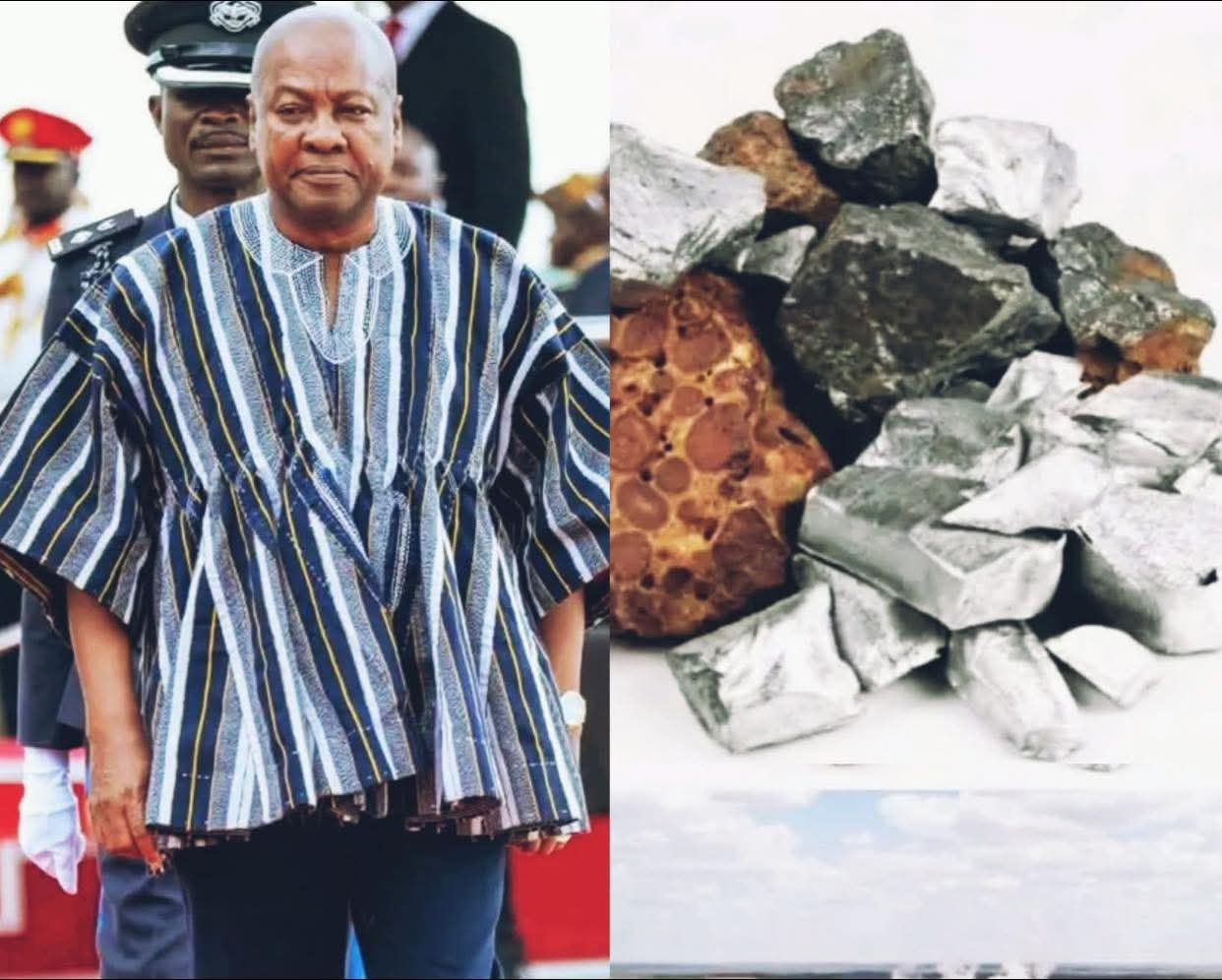
Ghana is preparing to end the decades-long practice of exporting unprocessed mineral resources, with President John Dramani Mahama outlining a firm 2030 deadline to halt raw ore shipments and establish a domestic industrial processing economy.
The announcement, made on Monday at the Mining in Motion Conference in Accra, signals a major policy pivot aimed at forcing foreign mining firms to build local processing infrastructure for critical minerals including bauxite, manganese, iron, and lithium.
“I’ve set a clear goal that by 2030, raw mineral ores should no longer leave our shores. Our bauxite, manganese, iron, lithium, and other minerals must support processing and industrial development here at home,” President Mahama announced.
Under the incoming policy framework, access to Ghana’s mineral reserves will be strictly bound to processing obligations. The government plans to roll out phased export bans backed by updated legislation and mineral-specific processing targets.
“We will pursue a phased prohibition on exports of unprocessed ores, supported by the necessary legal measures, mineral-specific requirements, and transparent implementation timetables,” President Mahama noted, adding that foreign capital must adapt to local value-creation goals. “Investors must understand the processing obligations associated with access to our resources.”
The national push for resource sovereignty received high-profile backing from the Asantehene, Otumfuo Osei Tutu II. Speaking through the Essumejahene, Nana Okyere Kusi Ntrama, the Asantehene endorsed the government’s mineral reforms and the operations of the Ghana Gold Board (GoldBod), comparing the strategy to Dr. Kwame Nkrumah’s post-independence vision.
“It reflects the political courage of the kind of which only true heroes are gifted,” the Asantehene noted. “It takes us right back to the very foundation of our republic, when Dr. Kwame Nkrumah sought to bring our minerals under the control of the state and moved to establish a gold refinery in Tarkwa.”
To enforce these targets, Minister for Lands and Natural Resources Emmanuel Armah Kofi Buah confirmed that Cabinet has already approved a revised Minerals and Mining Policy along with proposed statutory amendments for parliamentary consideration.
“Our reforms are intended to give investors clearer rules, communities more dependable protections, and a Republic stronger foundation for long-term development,” Minister Buah stated, emphasizing that the legislative overhaul will mandate higher local participation, strict traceability, and expanded refining capacity across the mining sector.
