Tag: Minister for Lands and Natural Resources

  • Ghana’s mining reforms trigger lease clash as Gold Fields demands fair treatment

    Ghana’s mining reforms trigger lease clash as Gold Fields demands fair treatment

    By Adnan Adams Mohammed


    Tensions between the Government of Ghana and international mining firms have escalated following Cabinet’s endorsement of sweeping legal reforms to the country’s mining framework.

    The legislative review of the Minerals and Mining Act, 2006 (Act 703) aims to tighten resource governance and end long-term land holding, even as major operators like Gold Fields push back against potential sovereign risks.

    Under the proposed overhauls, Ghana is significantly shortening the initial duration of large-scale mining leases.

    Speaking on behalf of the Minister for Lands and Natural Resources at the commissioning of the Minerals Commission’s new Ashanti Regional Office in Kumasi, Deputy Minister Alhaji Yusif Sulemana announced that Cabinet has approved capping initial mining lease durations at 20 years, down from the previous 30-year limit.

    “The maximum duration for mining leases is being reduced from 30 years to 20 years,” Sulemana stated, citing empirical data showing that modern mines often deplete resources faster, rendering 30-year leases susceptible to speculative land hoarding.

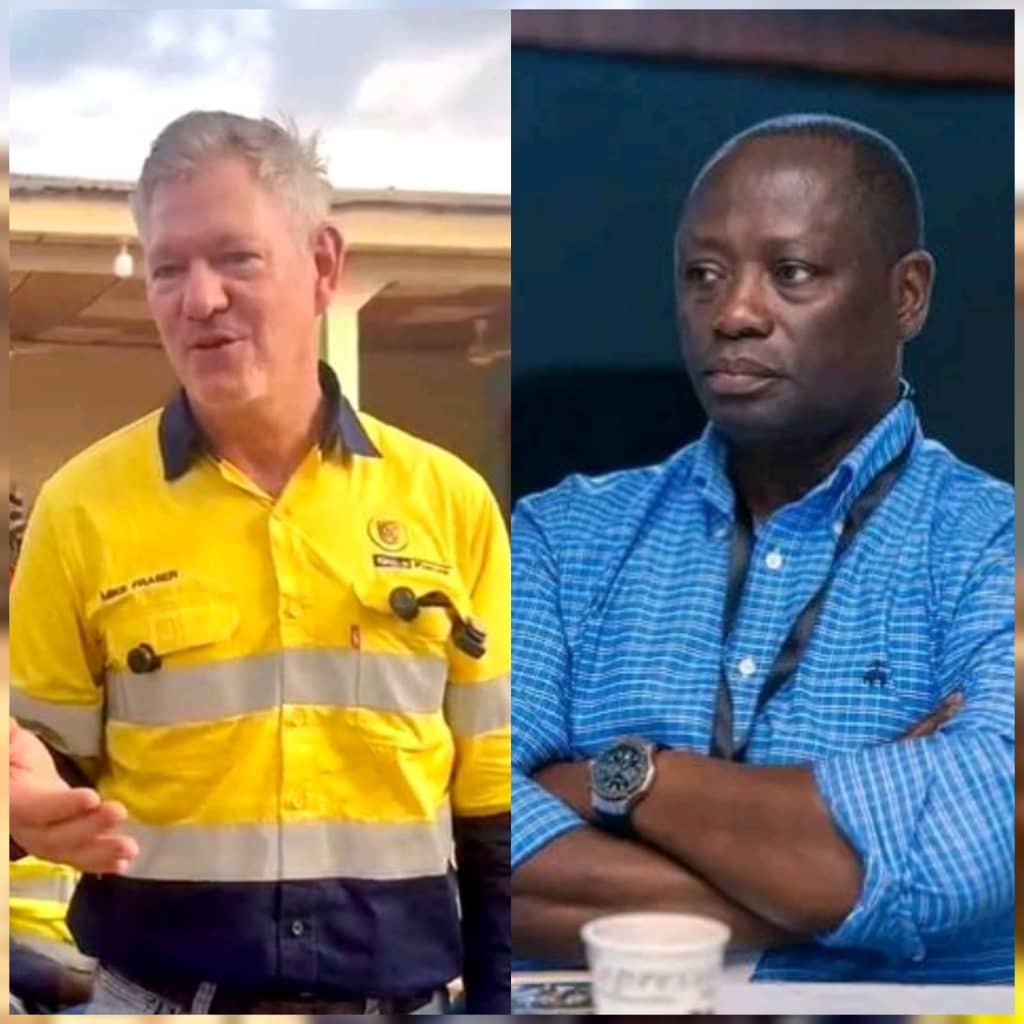
    Minister for Lands and Natural Resources Emmanuel Armah Kofi Buah reinforced the policy rationale during recent industry engagements, noting that long leases have locked up vast areas of mineral-rich land without active development.

    “Twenty years, whatever profit you want to make, you want to make it,” Buah argued. “The whole of Ghana has basically been given out and people are just sitting on concessions for 30, 40 years. They are not doing anything. They are waiting for the next big investor to come so they can cash out.”

    Beyond lease reductions, the new framework completely abolishes tax-shielding development agreements that previously granted long-term tax exemptions to foreign shell companies, and replaces reconnaissance and prospecting rights with a single Exploration License capped at five years.

    Gold Fields Issues Warning Over Tarkwa Lease

    The statutory shifts come amidst growing uncertainty for existing major operators seeking long-term operational guarantees.

    South African mining giant Gold Fields revealed it has received no formal response to its commercial proposal submitted to the Ghanaian government to secure a 25-year extension for its flagship Tarkwa mine, whose current leases expire in April 2027.

    During an international media briefing on Tuesday following the company’s first-half financial results, Gold Fields Chief Executive Officer Mike Fraser criticized recent fiscal policy changes in Ghana, arguing that the government is treating the mining industry as an “easy target”.

    “What we’ve seen in Ghana is certainly, in some respects, unhelpful because certainly we think that it starts placing Ghana in a fairly uncompetitive position for inward investment,” Fraser remarked. “Despite that, this is a country that’s under some financial stress and therefore saw the sector as an easy target.”

    Addressing shareholders and reporters, Fraser appealed for an equitable resolution while confirming the company would defend its assets if negotiations falter.

    “What we are saying here is that this is a consideration, so treat us fairly when it comes to our lease agreement,” Fraser stated. “This is the last option that we will pursue, but we needed to make it very clear to our shareholders that if required, we certainly would take those pathways in order to try and protect value.”

    Fraser added that the company remains hopeful that legal action will not be necessary and that sensible consideration will be given to their application, which promises fresh investments to unlock long-term economic contributions for local communities and state revenues.

    Sovereign Risk vs. Resource Nationalism

    Industry analysts note that while Ghana’s legislative overhaul is designed to curb land speculation, promote community development, and maximize domestic revenue, the friction with established miners underlines growing sovereign risk concerns.

    With the amended Minerals and Mining Bill headed to Parliament, the upcoming legislative debates will be pivotal in determining whether Ghana can balance national wealth protection with maintaining a competitive environment for foreign direct investment.


  • Gold buyback deal hailed by experts as “Far Superior” to dangerous nationalisation calls

    Gold buyback deal hailed by experts as “Far Superior” to dangerous nationalisation calls

    By Adnan Adams Mohammed


    Economic and mining experts have lauded the government’s landmark agreement to purchase 30% of gold output locally from all large-scale mining companies, describing it as a masterstroke for resource optimization that avoids the pitfalls of radical resource nationalism.

    Industry insiders say the policy successfully strikes a delicate balance between aggressive national wealth accumulation and maintaining a stable environment for foreign direct investment.

    ​The deal, which takes effect on July 1, 2026, was executed through the Ghana Gold Board (GoldBod) under the joint direction of the Minister of Finance and the Minister for Lands and Natural Resources.


    ​A Productive Alternative to Nationalisation

    ​Prominent mining analyst and economic journalist, Adnan Adams Mohammed, has strongly tided the arrangement as a superior, market-friendly model for maximizing national returns from extractive wealth without spooking foreign investors.

    ​”This deal stands out as one of the most viable options through which Ghana can optimize benefits from our natural resources for the nation,” Mohammed noted. “It introduces a structured, state-backed buyback that respects commercial realities while securing a tangible share of production for our national reserves.”


    ​Mohammed contrasted this arrangement with recent aggressive calls by some public policy think tanks for state ownership, warning that forced takeovers could spell disaster for Ghana’s ongoing economic recovery.

    ​”This is far more productive than the ill-advised localization or outright nationalisation of the mines, which could severely impact our promising economy,” Mohammed added, referencing his recent publications, including ‘Ghana’s Resource Nationalism Debate: Why Clarity From Government Matters Now’. “Forced state takeovers disrupt investor confidence, choke capital inflows, and threaten operational stability. This 30% local purchase framework offers asset accumulation without the catastrophic baggage of nationalisation.”


    ​Shifting to Local Currency and Retaining Value

    ​Unlike the previous 2022 framework between the Bank of Ghana and the Ghana Chamber of Mines, the new Memorandum of Understanding (MoU) introduces crucial operational updates. Large-scale miners will sell the 30% output locally in doré (raw) form at a 0.55% discount, with all transactions settled in Ghana Cedis using the Bank of Ghana Reference Rate.

    ​”This is a monumental step toward fiscal sovereignty,” a senior government official stated following the announcement. “By executing these transactions entirely in local currency and keeping the raw bullion within our borders, we are putting an end to capital flight and directly backing the strength of the Cedi with a tangible asset.”


    ​The Road to LBMA Accreditation

    ​A core strategic objective of the pact is elevating Ghana’s domestic refining standard to global heights, targeting London Bullion Market Association (LBMA) accreditation for at least one local refinery by 2030.

    ​Under the approved protocol, GoldBod will ensure all purchased doré is refined locally for maximum value retention, shipped to an LBMA refinery for melting and stamping, and returned to the central bank.

    ​The Ghana Chamber of Mines expressed shared optimism for this phased approach to industrialization:

    ​”The chamber and its members view this as a win-win partnership. While it guarantees a steady, structured local off-taker for 30% of our production, it aggressively drives the ecosystem toward achieving an LBMA-accredited refinery right here in Ghana. Local value addition is the future of African mining.”


    ​Driving GANRAP and Zero Raw Exports

    ​The initiative serves as a core engine for the Ghana Accelerated National Reserve Accumulation Program (GANRAP), which targets building foreign reserves to 15 months of import cover by 2028. It also aligns with President Mahama’s broader industrial policy of achieving zero raw mineral exports by 2030.

    ​The comprehensive details and regulatory structures of the signed MoU backed by the Ministries of Finance and Lands, GoldBod, the Bank of Ghana, and the Chamber of Mines will be officially published on Monday, July 29, 2026.