
By Adnan Adams Mohammed
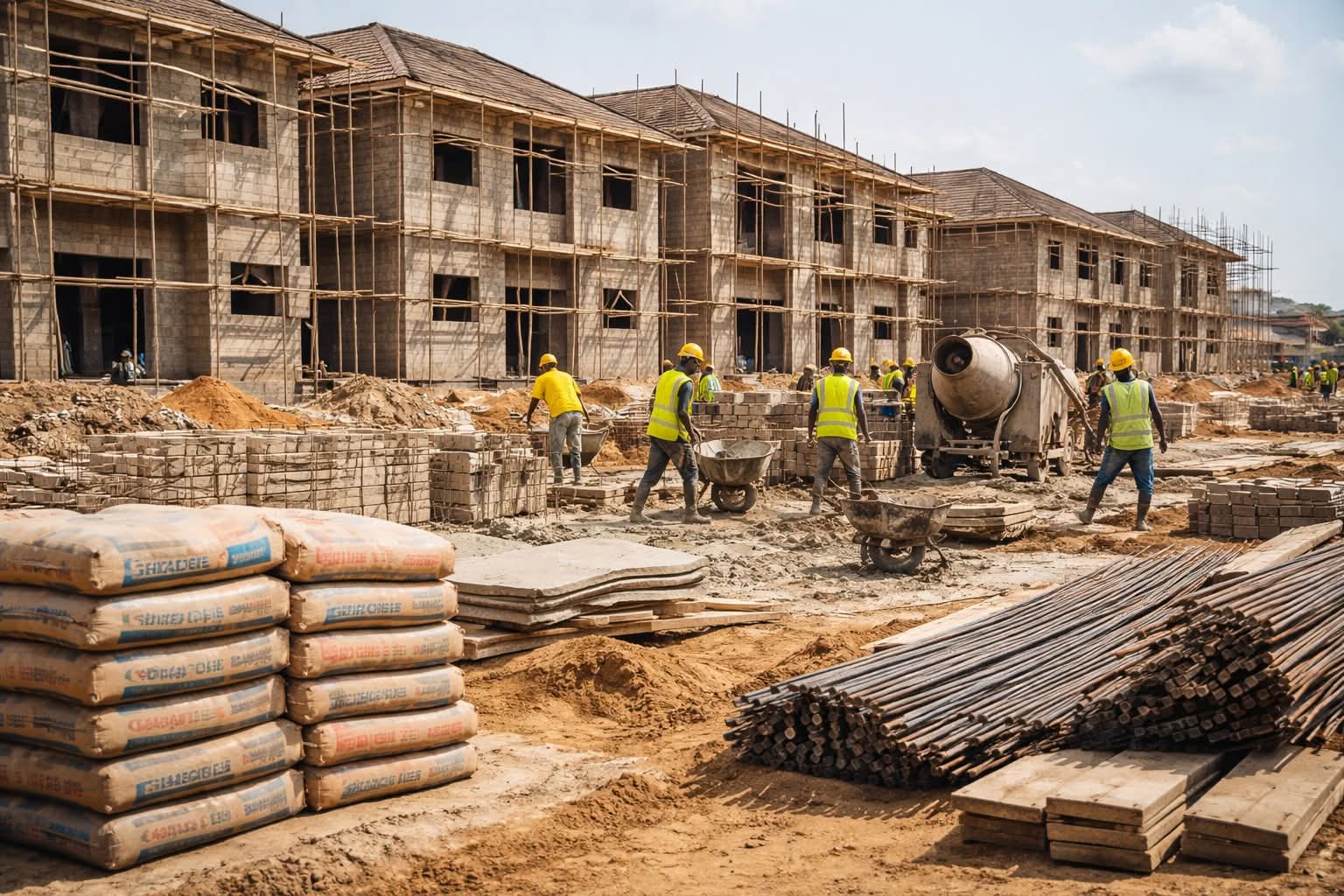
Developers and homebuilders across Ghana are experiencing a rare period of cost predictability as the country’s building materials inflation held completely steady at 2.2 percent for the month of April.
The structural stability offers a massive breather to a sector historically plagued by volatile import costs and sharp pricing surges.
However, as physical input costs stabilize, the regulatory landscape is shifting dramatically. The Bank of Ghana (BoG) has announced a major policy tightening cycle, rolling out rigorous, automated property and identity checks designed to permanently root out fraud, money laundering, and speculative distortions in the commercial real estate sector.
Macro stability lowers financial risks for developers
The latest data from the Ghana Statistical Service (GSS) indicates that the 2.2 percent baseline represents one of the most stable structural runs for the construction sector in recent memory. The stabilization is primarily driven by a steady domestic currency, which has kept the landing costs of imported finishing materials, electrical fixtures, and machinery tightly contained.
Reviewing the data, a senior real estate analyst at a prominent Accra-based investment firm noted that cost predictability will allow developers to finally resume stalled residential projects without fear of sudden budget overruns.
“A steady 2.2 percent building inflation rate is exactly the signal the market needs,” the analyst stated. “For years, contractors had to bake massive, arbitrary contingency premiums into their construction bids just to protect themselves against price spikes in cement, iron rods, and roofing sheets. With inflation flat-lining at this low baseline, developers can price their projects accurately, pass those savings on to buyers, and confidently break ground on new mid-market housing developments.”
Government Statistician, Alhassan Iddrisu, speaking at the release of the latest Prime Building Cost Index (PBCI) report last week indicated that, the PBCI rose to 136.1 in April 2026 from 133.2 in April 2025. This means the average cost of building materials increased by 2.2 percent over the one-year period.
On a month-on-month basis, prices of building inputs increased by 1.5 percent between March and April 2026.
The report identified glazing, plumbing, roofing sheets and electrical works as the major drivers of inflation in the construction sector. Glazing recorded the highest year-on-year inflation of 16.2 percent, followed by plumbing at 14.5 percent and roofing sheets at 13 percent.
Central bank takes aim at dirty money in real estate
While physical construction conditions improve, the central bank is aggressively moving to sanitize the financial side of the property market. Addressing corporate leaders and compliance officers at an extractive and financial governance forum, a high-level representative from the Bank of Ghana revealed that the real estate sector has increasingly been flagged as a primary destination for illicit funds and fraudulent transactions.
To counter this, the BoG is mandating deep integration between commercial banks, the Lands Commission, and state identity databases to automatically verify the origin of funds used in high-value property acquisitions.
“The Bank of Ghana is pushing for significantly stronger property checks to reduce fraud and eliminate illicit financial flows in the real estate sector,” Deputy Head of the Collateral Registry Department, Mrs. Rosemary Akabutu, stated during a policy brief. “We can no longer tolerate an environment where individuals can move massive, unverified volumes of cash into luxury residential properties without clear audit trails. By enforcing rigorous, data-driven identity matching and source-of-wealth checks across all financial institutions, we are protecting genuine investors and stabilizing property valuations from artificial inflation.”
The central bank emphasized that these automated checks will require banks to cross-reference every major property transaction against the national Ghana Card database and the Registrar General’s beneficial ownership profiles to expose individuals using complex corporate shells to conceal ownership.
Contractors welcome cost stability but urge credit easing
On the ground in industrial hubs like Tema and Kumasi, local contractors are praising the flat input costs but warning that high commercial lending rates still restrict broad-based sector growth. While materials are affordable, borrowing capital to buy them remains an expensive hurdle for indigenous firms.
“We are incredibly relieved that the prices of core materials like cement and steel have held steady through April,” an executive member of the Association of Ghana Industries (AGI) Construction Sector remarks. “It means we can honor our existing contract delivery timelines without cutting corners. But to truly unlock the building industry, the central bank’s regulatory tightening must be balanced with measures that encourage commercial banks to lower construction credit rates. Stability in material prices is excellent, but we also need affordable financing to build at scale.”
With building material inflation expected to maintain its stable path through the next quarter and the central bank’s anti-fraud frameworks slated for full operational enforcement by July, industry experts agree that Ghana’s building sector is entering a highly disciplined, institutional era defined by transparent capital and predictable costs.
