

By Adnan Adams Mohammed
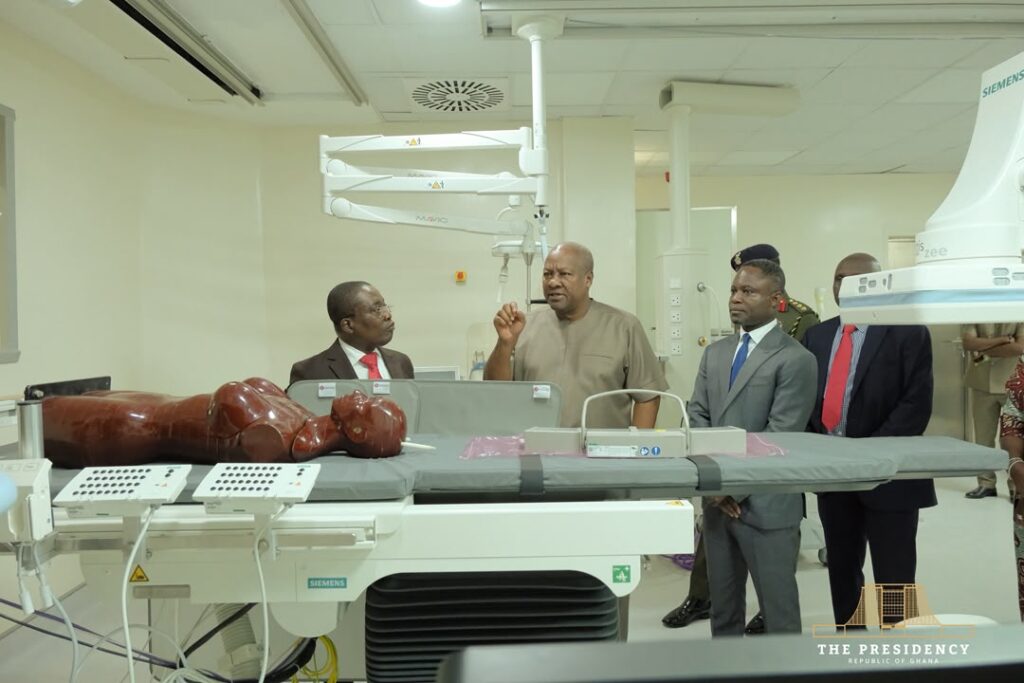
Ghana’s specialized healthcare sector is rapidly positioning itself as a premier destination for healthcare infrastructure investment in West Africa following the commissioning of a new state-of-the-art Cardiac Catheterization Laboratory at the National Cardiothoracic Centre.
The cutting-edge facility, located at the Korle Bu Teaching Hospital (KBTH), was funded via the Ghana Medical Trust Fund. It fully restores and upgrades the country’s capacity to diagnose and treat complex cardiovascular conditions including coronary artery, structural heart, and peripheral vascular diseases after a fire destroyed the previous installation.
For institutional investors, venture capitalists, and medical equipment manufacturers, the commissioning marks a critical milestone in Ghana’s broader strategy to formalize its specialist medical ecosystem and curb outbound medical tourism capital flight.
A Catalyst for Regional Medical Tourism
Unveiling the facility, President John Dramani Mahama framed the lab as a cornerstone for economic and developmental progress rather than just a public utility.
“This facility goes beyond replacing what was lost; it represents a stronger, more resilient commitment to improving specialist healthcare delivery in Ghana,” President Mahama stated during the ceremony. Reflecting on the macroeconomic impact of localizing specialized care, he recalled commissioning the initial 2017 lab, noting that it successfully “enabled thousands of patients to receive critical heart procedures locally instead of travelling abroad,” retaining vital foreign exchange within the domestic economy.
Market analysts view the development as a strong signal to private healthcare operators. By establishing localized tertiary care, Ghana is lowering the entry barriers for public-private partnerships (PPPs) in the medical supply chain, specialized pharmaceutical distribution, and clinical maintenance services.
A Nationwide Expansion Pipeline
The government’s healthcare infrastructure roadmap points to a multi-center pipeline that offers substantial procurement and partnership prospects for international contractors and medical technology investors.
President Mahama announced a systematic rollout of specialized care across the country’s economic hubs: “Government is advancing strategic plans to establish comprehensive cardiology centres at the Komfo Anokye Teaching Hospital, Tamale Teaching Hospital, Effia Nkwanta Hospital, and Ho Teaching Hospital to expand access to specialised cardiac care nationwide.”
This decentralized approach significantly broadens the addressable market for high-tech medical device suppliers, diagnostic manufacturers, and private health insurance providers looking to capture an emerging, middle-class patient demographic across Ghana.
Upstream Real Estate and Infrastructure Re-development
The modernizing of Korle Bu also triggers upstream opportunities in civil engineering and healthcare real estate. Beyond the cardiac laboratory, the executive disclosed that the government is advancing plans for a new, large-scale maternity block at KBTH, alongside the impending decommissioning and demolition of the historic, aging Guggisberg building.
Hospital administrators emphasize that the asset optimization at the National Cardiothoracic Centre underscores a lucrative, low-risk environment for capital commitment.
“The success of this new facility would ultimately be measured by the lives saved and the hope restored to families,” President Mahama concluded, but for the financial community, the structural message is clear: Ghana’s specialized medical sector is moving from a model of public dependency to a high-yield, infrastructure-backed asset class ripe for strategic investment.
