
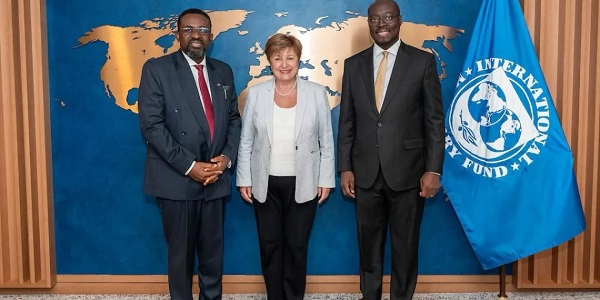
In a historic milestone for West Africa’s second-largest economy, Ghana has officially brought its US$3 billion Extended Credit Facility (ECF) program with the International Monetary Fund (IMF) to a successful conclusion.
The IMF Executive Board formally completed the sixth and final review of the 39-month arrangement, paving the way for an immediate final disbursement of SDR 265.9 million approximately US$371 million. The total financial support received under the program now stands at the full US$3 billion mark.
Following the completion of the bailout, Ghana has transitioned to a non-financing, 36-month Policy Coordination Instrument (PCI) to anchor ongoing structural reforms and signal continued policy discipline to global credit markets.
From Crisis to Stability: A Rapid Economic Turnaround
Ghana entered the IMF agreement in May 2023 amid record inflation, severe currency depreciation, and a looming debt crisis. Over the course of the 39-month program, rigorous fiscal consolidation, domestic debt restructuring, and prudent monetary policy helped steady the country’s macroeconomic fundamentals.
According to the IMF, Ghana’s key economic metrics have dramatically improved:
● Inflation: Dropped sharply from peak crisis levels down to single-digit territory.
● Economic Growth: Accelerated past 6 percent annually, driven by strong performances in mining, agriculture, and services.
● Foreign Exchange Reserves: Nearly doubled to approximately US$14.5 billion, representing nearly six months of import cover.
● Fiscal Position: Shifted from severe deficits to a primary balance surplus.
What the Leaders and Experts Say
International Monetary Fund (IMF)
Addressing the completion of the final review, the Executive Board commended Ghanaian authorities for their commitment to reform despite global and domestic headwinds.
“Ghana’s performance under its ECF-supported program has been broadly satisfactory. Sustained reform efforts combined with favorable commodity developments have delivered substantial gains in macroeconomic stabilization and debt sustainability. The risk of debt distress has returned to moderate.”
Government Administration
Government officials hailed the exit from the bailout as a triumph of fiscal discipline and recalibrated economic management. Speaking on behalf of the administration, Felix Kwakye Ofosu (MP), Minister of State for Government Communications, highlighted the significance of transitioning to the non-financial PCI framework:
“This milestone reflects improved fiscal performance, normalized relations with global creditors, and renewed market confidence. Inflation has reduced significantly, the cedi has strengthened, and sovereign credit ratings have upgraded five distinct levels out of restricted default. The PCI signals our unyielding commitment to prudent policy to private investors and development partners without requiring further borrowing.”
Financial Market Analysts
Economic analysts note that while the completion of the program boosts investor sentiment, maintaining long-term discipline will be critical as Ghana navigates its post-bailout era.
“Securing the final US$371 million tranche and successfully exiting the financing arrangement is a huge vote of confidence,” noted Patrick Abankwa, a senior financial analyst and investment advisor. “However, the transition to the Policy Coordination Instrument means Ghana must rely on its own fiscal guardrails, domestic revenue mobilization, and sustained spending controls to keep borrowing costs low and prevent a relapse into debt distress.”
Looking Ahead: The Policy Coordination Instrument (PCI)
Unlike the ECF arrangement, the Policy Coordination Instrument involves no loan disbursements. Instead, it serves as a policy policy anchor, providing IMF monitoring and technical expertise to help Ghana achieve “Investment Grade” credit standing and maintain debt sustainability.
With gross international reserves at historical highs and key credit rating agencies issuing positive outlooks, Ghana enters its post-IMF bailout era with renewed optimism and enhanced economic resilience.
