By Adnan Adams Mohammed
In a decisive regulatory intervention designed to insulate the domestic currency from building macroeconomic shocks, the Bank of Ghana (BoG) is adjusting its Cash Reserve Ratio (CRR) framework.
According to internal policy evaluations and market analysts, the sweeping technical amendment is highly likely to drain more than GH¢16.0 billion (US$1.1 billion equivalent) in excess liquidity from the interbank market, providing immediate structural relief to the Ghanaian cedi.
The proactive liquidity squeeze represents a major cornerstone of the central bank’s broader strategy to aggressively anchor inflation, manage asset-liability currency mismatches, and maintain the current macroeconomic reset.
Currency realignment eliminates structural banking risks
The regulatory adjustment fine-tunes the dynamic CRR framework for commercial banks by utilizing a strict currency-matching operational system. Under previous iterations, financial institutions were allowed to maintain cedi-equivalent reserves against foreign-currency deposits. This mechanism often introduced severe asset-liability imbalances when severe foreign exchange volatility emerged.
By mandating that cash reserves be held in the exact currency of the corresponding deposit liabilities, the central bank eliminates the structural imbalance. The move effectively locks up billions in volatile foreign exchange and domestic liquidity that would otherwise put intense pressure on commercial exchange windows.
Central bank data confirms that this enforcement arrives at a time of exceptional macroeconomic recovery. Headline inflation in Ghana has seen a sharp decline, plummeting from 23.8 percent in December 2024 down to a stable 3.4 percent. Concurrently, the central bank has built up its gross international reserves to a robust $14.4 billion—providing 5.7 months of solid import cover to cushion the state against unpredictable global disruptions.
Policy Rate maintained at 14% to preserve stability
The liquidity drain coincides with the decision of the BoG’s Monetary Policy Committee (MPC) to hold the benchmark Monetary Policy Rate steady at 14.0 percent. Speaking on the decision, the Governor of the Bank of Ghana, Dr. Johnson Pandit Asiama, explained that while the internal economy is recovering strongly, geopolitical uncertainties in the Middle East and global commodity market volatility demand a highly vigilant policy stance.
“The committee assessed risks in the outlook to inflation and growth as broadly balanced, and therefore decided to maintain the monetary policy rate at 14.0 percent,” Dr. Asiama stated during his policy briefing. “Our domestic economy continues to recover strongly, supported by robust private sector credit growth, industrial production, and expanding international trade. However, exchange rate stability, rising reserve buffers, and continued fiscal discipline remain our primary operational tools to moderate emerging risks.”
Governor urges CEOs to deploy private capital for industrialization
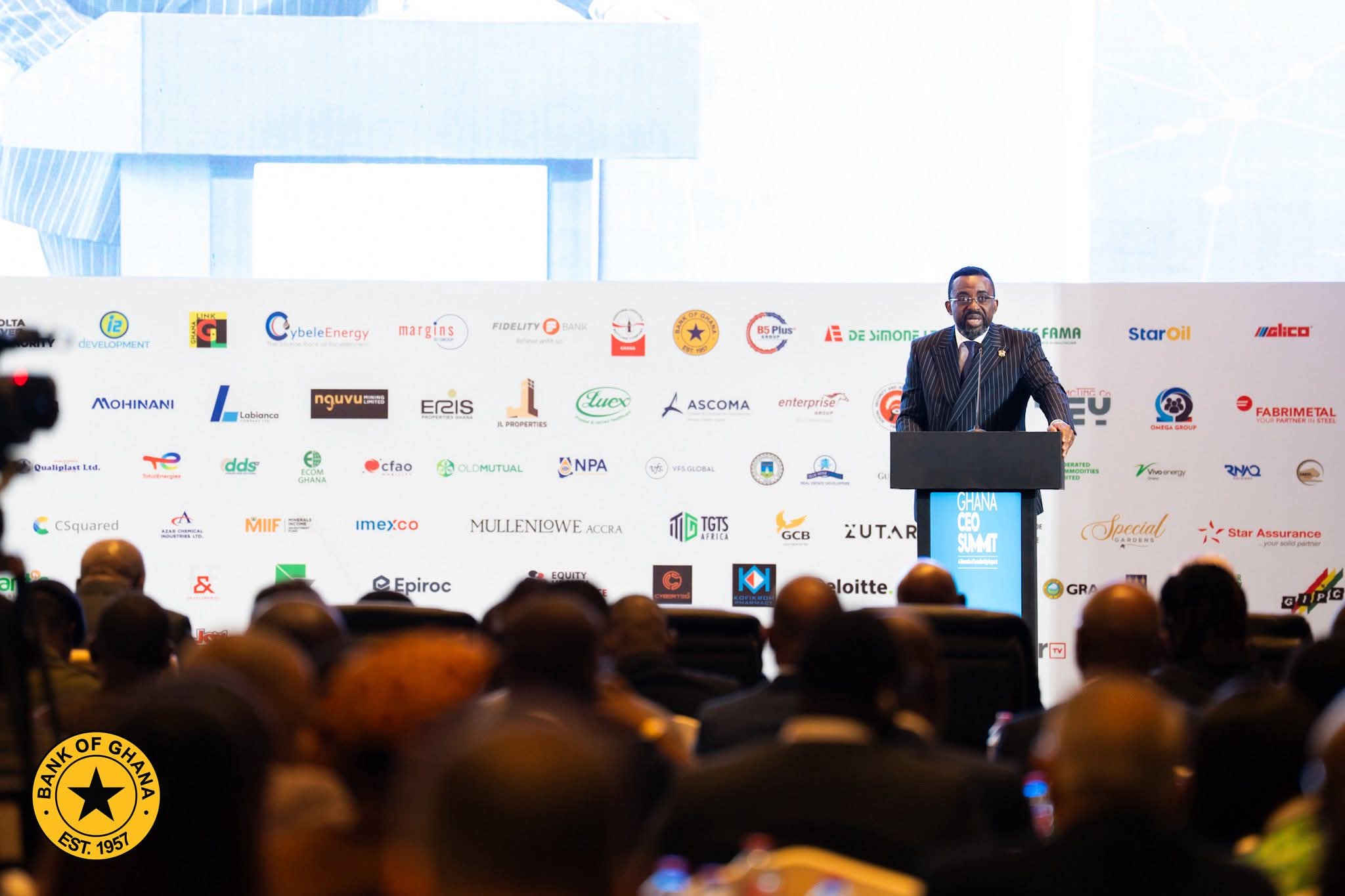
Addressing captains of industry at the 10th Ghana CEO Summit in Accra, Governor Asiama emphasized that while the central bank is absorbing billions of excess cedis to guarantee monetary and price stability, the responsibility for structural transformation now shifts to the private sector.
“Macroeconomic stability creates an enabling environment, but it is the private sector that must ultimately drive the country’s economic reset,” Governor Asiama told the assembly of corporate executives. “Ghana has now moved past economic recovery to a state of converting those gains into a foundation for industrial competitiveness. As CEOs, you are the architects of economic growth… Ghana’s economic transformation will not happen by accident; it will require disciplined choices, resilient institutions, innovative businesses, and courageous leadership.”
The Governor noted that the central bank’s aggressive open market stabilization interventions—which incurred GH¢17 billion in liquidity management expenses to secure the historic inflation drop—were completely necessary to give local businesses a stable, predictable horizon to invest their equity.
Private sector demands sustained policy predictability
The central bank’s focus on macro-stability was welcomed by corporate leaders at the summit, who agreed that keeping excess cash from chasing scarce foreign exchange is critical for long-term corporate forecasting. Business heads noted that the combination of a steady 14 percent policy rate, aggressive liquidity absorption via the CRR, and an expanding national reserve buffer provides a reliable shield against the currency depreciations that historically eroded corporate capital.
With the central government concurrently enforcing a mandatory commitment control regime to curb state spending, the synchronized alignment of monetary and fiscal policies signals that Ghana is aggressively fortifying its defensive structures to ensure the current growth surge is sustained far into the future.
Leave a Reply