
By Adnan Adams Mohammed
The Bank of Ghana (BoG) has launched a comprehensive review of how its monetary policy decisions translate into commercial lending rates and private-sector credit, while assessing how the government’s newly presented 2027 Budget will shape liquidity and economic conditions next year.
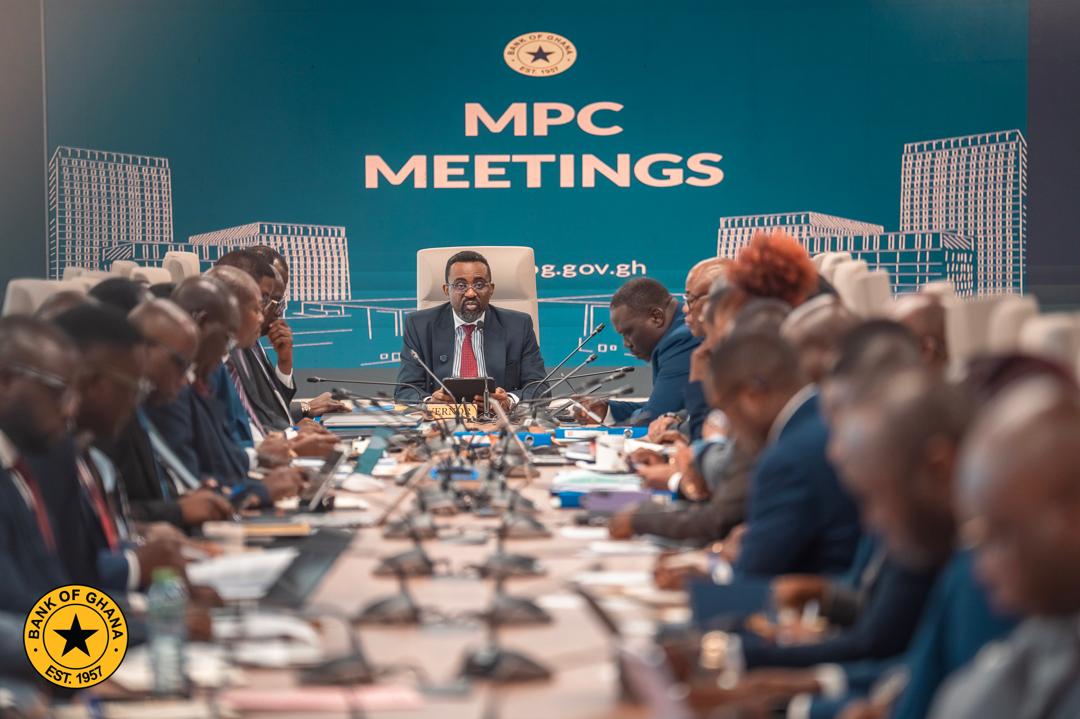
Speaking at the opening of the 133rd Monetary Policy Committee (MPC) Meeting at Bank Square on Monday, Governor Dr. Johnson Pandit Asiama said the final policy session of 2026 must go beyond defending current macroeconomic gains to examine whether the central bank’s operational tools remain effective for the growth phase ahead.
“A particularly important issue for this meeting is a comprehensive review of the operationalisation of our monetary policy framework,” Dr. Asiama told Committee members. “The Committee should assess how effectively our policy decisions are transmitted through money-market conditions, bank funding costs, lending rates and ultimately credit to the private sector and economic activity.”
Balancing Fiscal Expansion and Price Stability
The Governor’s remarks come just days after the government tabled its 2027 Budget, which places heavy emphasis on productive investment and economic expansion. Dr. Asiama tasked the MPC with examining the size, timing, and domestic financing of the government’s spending plans to ensure state expenditure does not trigger excess liquidity or undermine exchange-rate stability.
“The objective is to ensure that the fiscal and monetary policy frameworks remain coherent and mutually reinforcing in preserving macroeconomic stability,” he stated.
While noting that Ghana enters the final stretch of 2026 on solid footing with single-digit inflation, strong economic activity, and substantial external surpluses supported by last year’s foreign exchange reforms Dr. Asiama stressed that policymakers cannot take stability for granted.
“However, we cannot afford to be complacent,” he cautioned. “We remain conscious of the risks to the inflation outlook and the need to strengthen the economy’s resilience while responding appropriately as these risks evolve.”
Monitoring El Niño and Price Pressures
To guide the Committee’s rate decision, Dr. Asiama directed technical staff to investigate the drivers behind October’s slight uptick in headline inflation which rose to 5.5 per cent from 5.2 per cent in September to determine whether it reflects temporary fuel and transport adjustments or a deeper shift in price-setting.
He also pointed to external vulnerabilities, noting that although easing Middle East tensions have helped soften global crude oil prices, climate shocks pose a direct threat to West African agriculture and Ghana’s cocoa export earnings.
“An unusually strong El Niño episode could affect agricultural production across West Africa into the first quarter of 2027, with potential implications for food prices, domestic agricultural output and Ghana’s cocoa production and export earnings,” Dr. Asiama said.
He added that the Committee will also examine the sustainability of Ghana’s external buffers to ensure foreign exchange receipts continue to build durable reserves.
“We must also remain forward-looking, recognising that the policy choices we make today will shape the conditions under which the economy enters 2027,” the Governor concluded.
