

By Adnan Adams Mohammed
National Petroleum Authority (NPA) Chief Executive Godwin Kudzo Tameklo, Esq., has highlighted the elimination of evening vessel bottlenecks at the Tema Oil Jetty as a major milestone in modernizing Ghana’s downstream petroleum sector.
Speaking during a regulatory field visit to the Ghana Petroleum Mooring Systems Company Limited (GPMS) facilities on Thursday, Mr. Tameklo underscored how the transition to round-the-clock berthing and unberthing has resolved longstanding operational delays at the port.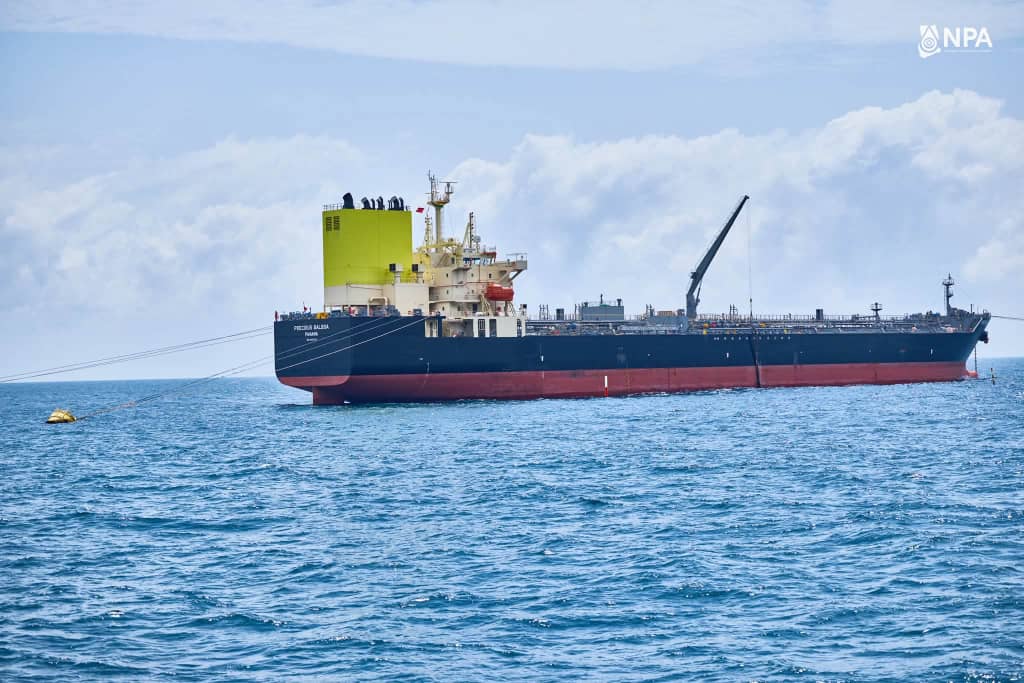
“In the past, the jetty was unable to berth vessels after 5 p.m., while vessels were in a queue to berth,” Mr. Tameklo said, noting that the NPA-led push for 24-hour operations has significantly accelerated fuel discharge and improved supply chain efficiency.
To achieve the continuous schedule which launched last year the NPA spearheaded a multi-agency collaboration with the Ghana Ports and Harbours Authority (GPHA) and the Ghana Standards Authority (GSA) to upgrade port infrastructure and regulatory compliance.
GPMS Operations and Maintenance Manager Francis Owusu credited the regulator’s leadership for driving the necessary upgrades at the terminal.
“The start of the 24-hour operations followed the resolution of technical issues and the improvement of lighting and security arrangements at the facility,” Mr. Owusu explained during the briefing.
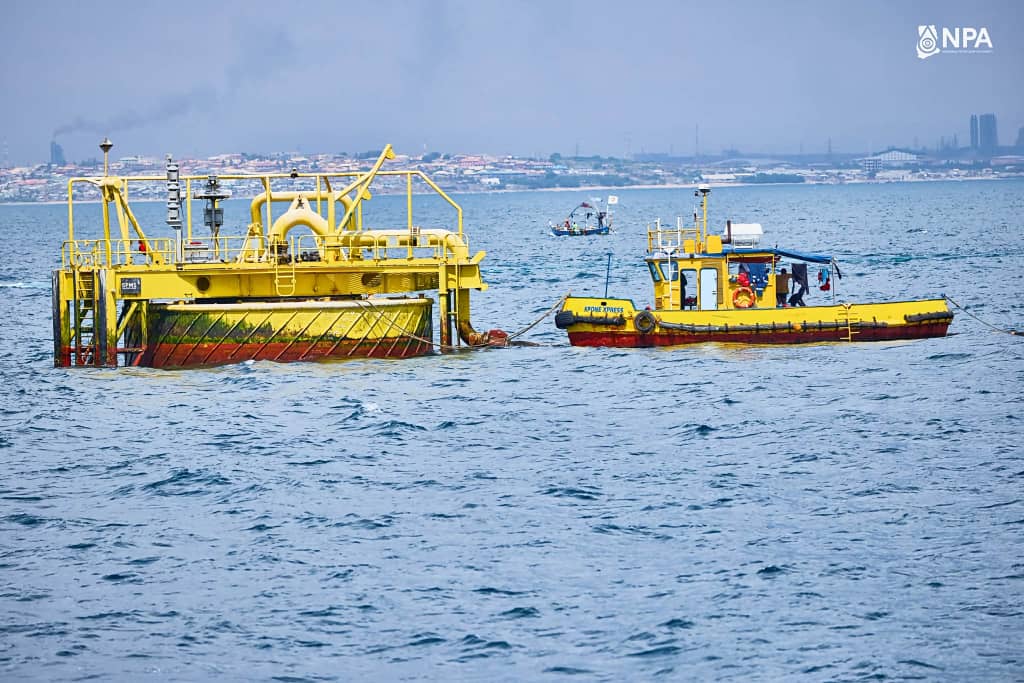
Mr. Tameklo organized the Thursday tour of GPMS’s offshore Single Point Mooring (SPM), Conventional Buoy Mooring (CBM), and onshore jetty to provide civil society organizations (CSOs) with direct transparency into industry operations.
Located roughly 2.7 nautical miles from the Tema fishing harbor, the CBM system relies on four permanent mooring chains and anchors to keep ships stationary and prevent weathervaning during offshore transfers. The multi-purpose terminal handles crude oil, fuel oil, aviation turbine kerosene (ATK), gasoil, gasoline, naphtha, and liquefied petroleum gas (LPG).

Representing the civil society delegation, Kwadwo Opoku, Executive Director of the Institute for Energy Policy and Research, praised Mr. Tameklo’s leadership and stakeholder engagement.
“We thank the NPA Chief Executive for operating an open-door policy that gives us in-depth knowledge of operations in the downstream petroleum industry,” Mr. Opoku stated.
