
By Adnan Adams Mohammed
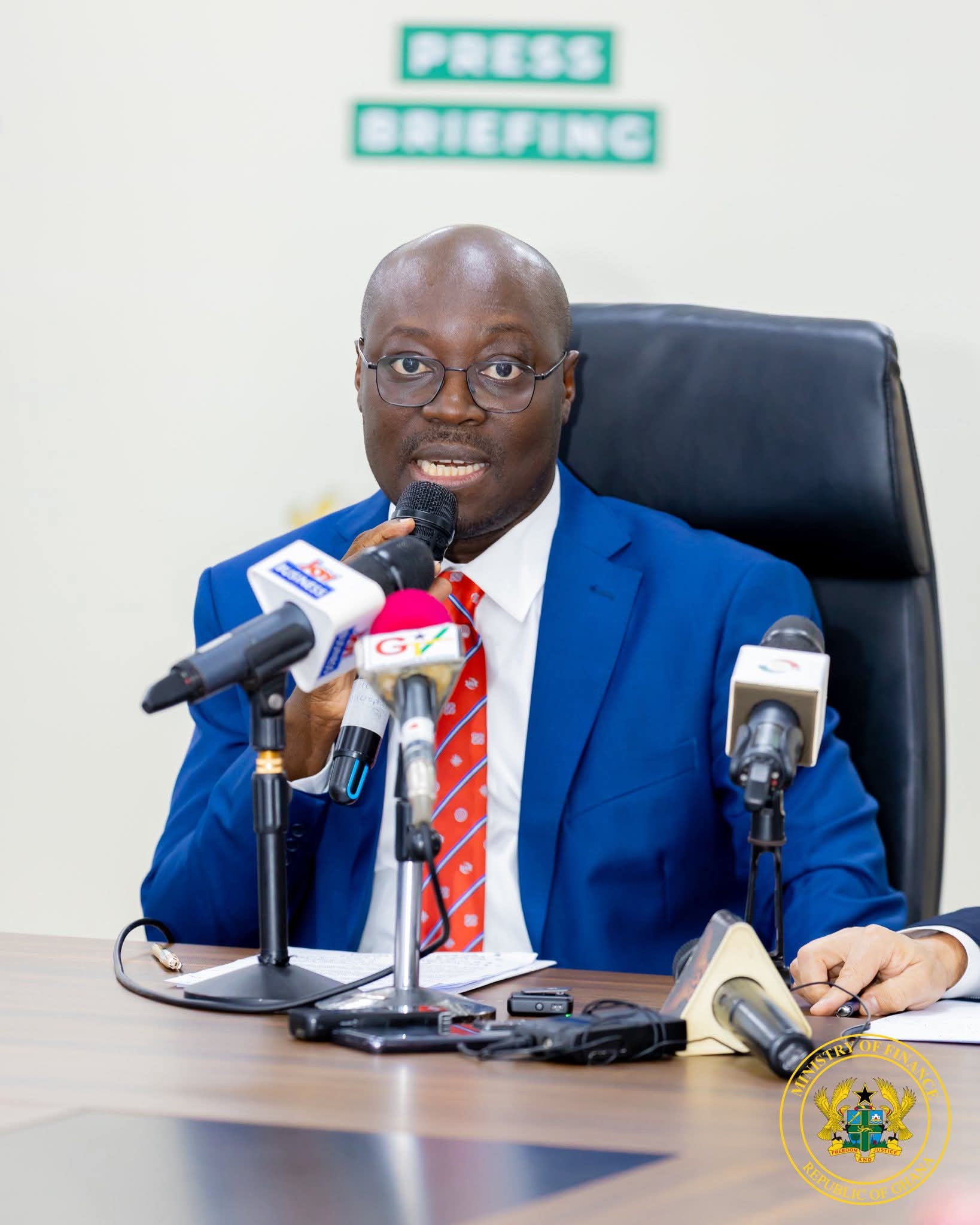
In a historic turning point for West Africa’s second-largest economy, Finance Minister Dr. Cassiel Ato Forson has declared that Ghana has officially transitioned from an International Monetary Fund (IMF) “supplicant” to an equal economic partner.
The announcement comes on the heels of new data revealing that the country’s gross domestic product (GDP) has surged past the historic US$100 billion threshold, driven by robust macro-fiscal performance and aggressive structural reforms.
Addressing a high-level assembly of international investors and state actors, Dr. Ato Forson firmly ruled out any reliance on foreign bailouts for the foreseeable future, pointing to an economy that is rapidly regaining its self-sufficiency.
“Ghana has officially moved from being an IMF supplicant to an economic partner,” Dr. Ato Forson declared. “With our economy surging past the US$100 billion mark, I can confidently state that no IMF bailout will be needed in the foreseeable future. The gains we are witnessing are not cosmetic; they are the tangible outcomes of deliberate, painful, and well-thought-through structural rules backed by disciplined implementation.”
African Development Bank backs rebound with 5% growth forecast
The Finance Minister’s optimism is strongly supported by external multilateral institutions. In its freshly released 2026 African Economic Outlook Report, the African Development Bank (AfDB) upgraded Ghana’s growth forecast, projecting a 5 percent GDP expansion for 2026, which is expected to accelerate further to 5.4 percent in 2027.
The AfDB’s robust outlook outpaces the more conservative 4.8 percent estimates previously issued by both the World Bank and the IMF. According to the report, Ghana’s recovery is underpinned by expanding agricultural value chains, a resilient external sector maintaining a current account surplus of 3 percent of GDP, and a steadily narrowing fiscal deficit projected to drop to 2.2 percent by 2027. Furthermore, the report anticipates that year-end inflation will stabilize at 9 percent, indicating a significant containment of historical price volatility.
Bank of Ghana guarantees monetary stability for industry
At the annual Ghana CEO Summit in Accra, top policymakers and corporate executives gathered to deliberate on aligning this macroeconomic upswing with local industrial expansion. Speaking to the business community, the Governor of the Bank of Ghana (BoG), Dr Johnson Pandit Asiama, offered assurances that the central bank would maintain a highly disciplined monetary policy stance to safeguard the private sector from currency and price distortions.
“Our focus remains squarely on locking in monetary stability to drive long-term industrial growth,” the BoG Governor stated at the summit. “Through disciplined monetary interventions, foreign exchange market guidelines, and structural tools like our aligned Cash Reserve Ratio, we are ensuring that businesses have a predictable environment to expand, hire, and innovate.”
The central bank chief also highlighted ongoing structural engagements, noting that the BoG has formalized bridges with industry leaders including the launch of a dedicated CEO Forum and inviting business representatives to observe Monetary Policy Committee operations to ground policy decisions in real-time market realities.
Private sector demands “bold leadership” to secure the reset
Despite the highly encouraging numbers, prominent captains of industry at the summit warned against complacency. Renowned traditional leader and corporate leader Togbe Afede XIV addressed the summit with a powerful call to action, urging state leaders to anchor these statistical victories in deep, institutional accountability and real-world relief for local businesses.
“While we celebrate these macroeconomic milestones, we must remember that numbers alone do not build a sustainable nation,” Togbe Afede XIV remarked during his address. “Sustaining Ghana’s economic recovery requires bold, unyielding leadership. We must actively transform business and governance structures, eliminate public waste, and ensure that our US$100 billion status directly translates into competitive credit rates, affordable energy, and real growth for indigenous businesses.”
The government maintains that its current fiscal path is designed to do exactly that. The Ministry of Finance recently pointed to aggressive expenditure controls—including cutting the size of the central government, enforcing mandatory commitment authorization regimes across state ministries, and cleansing the public payroll of tens of thousands of unverified entries as proof of its commitment to long-term sustainability.
As the final stages of its IMF Extended Credit Facility reviews conclude, Ghana is positioned to transition smoothly toward a independent Policy Support Instrument framework, solidifying its stance as an economic sovereign capable of managing its own destiny.
