
By Adnan Adams Mohammed
Ghana will not allow the exploitation of its vast remaining gold deposits unless international investors agree to terms that deliver substantial, direct benefits to local communities, the Minerals Commission has announced.
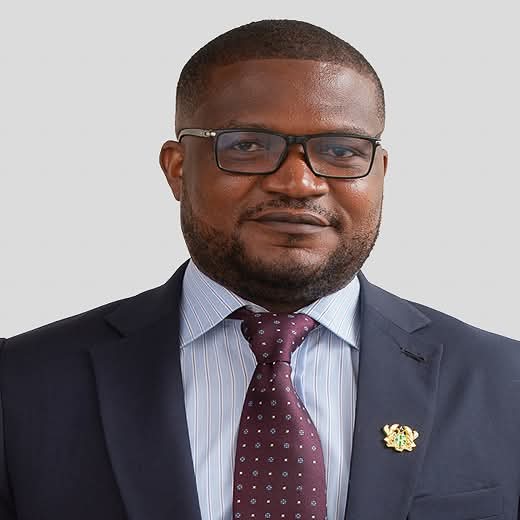
Speaking at the 2026 China Mining Conference in Tianjin, Isaac Tandoh, Chief Executive Officer of the Minerals Commission, declared that the nation is moving past traditional extraction models. He emphasized that future mining licenses will strictly depend on tangible value creation within the country.
Ghana, Africa’s leading gold producer, holds an estimated 3 trillion ounces of untapped gold underground. Tandoh made it clear that these resources will remain untouched unless prospective partners actively commit to job creation, technology transfer, and local economic development.
“Ghana still has about 3 trillion ounces of gold on the ground, and that is why we need the best of the best to partner to ensure that whatever we mine, every ounce coming from the ground actually makes an impact in the lives of the people,” Tandoh stated.
Underlining the government’s firm position on future concessions, he added, “This is the only condition under which this estimated 3 trillion ounces would be mined”.
Guarantees for Foreign Investors
Despite the tougher stance on local benefits, the commission reassured the global mining community that Ghana remains a stable, low-risk destination for capital investment.
“There is security of tenure over mining titles, with the right to pledge and alienate them freely,” Tandoh said. “There is also a transparent application process that ensures a first-come, first-served procedure”.
He noted that Ghanaian law offers robust protections against arbitrary property confiscation, ensuring that international firms can operate within a predictable legal framework.
A Focus on In-Country Value Addition
The directive reflects a broader policy shift across Ghana’s natural resource sector, aiming to transition from exporting raw minerals to building domestic supply chains and processing capacity.
Tandoh emphasized that the ultimate goal is an equitable framework where investors receive secure returns while host communities see visible improvements in infrastructure, employment, and living standards.
