
By Adnan Adams Mohammed
Ghana’s national economic development strategy is undergoing a fundamental realignment, shifting away from state-led spending models toward an enterprise-driven approach.
This is designed to replace billions of dollars in foreign imports with local manufacturing, agro-processing, and industrial output.
The transformation forms the core of the government’s “New Economy” agenda, a multi-year framework backed by a targeted $1.6 billion public-private investment drive. Rather than relying solely on public debt, the policy places local enterprises, commercial farmers, and institutional investors at the direct center of national industrial expansion.
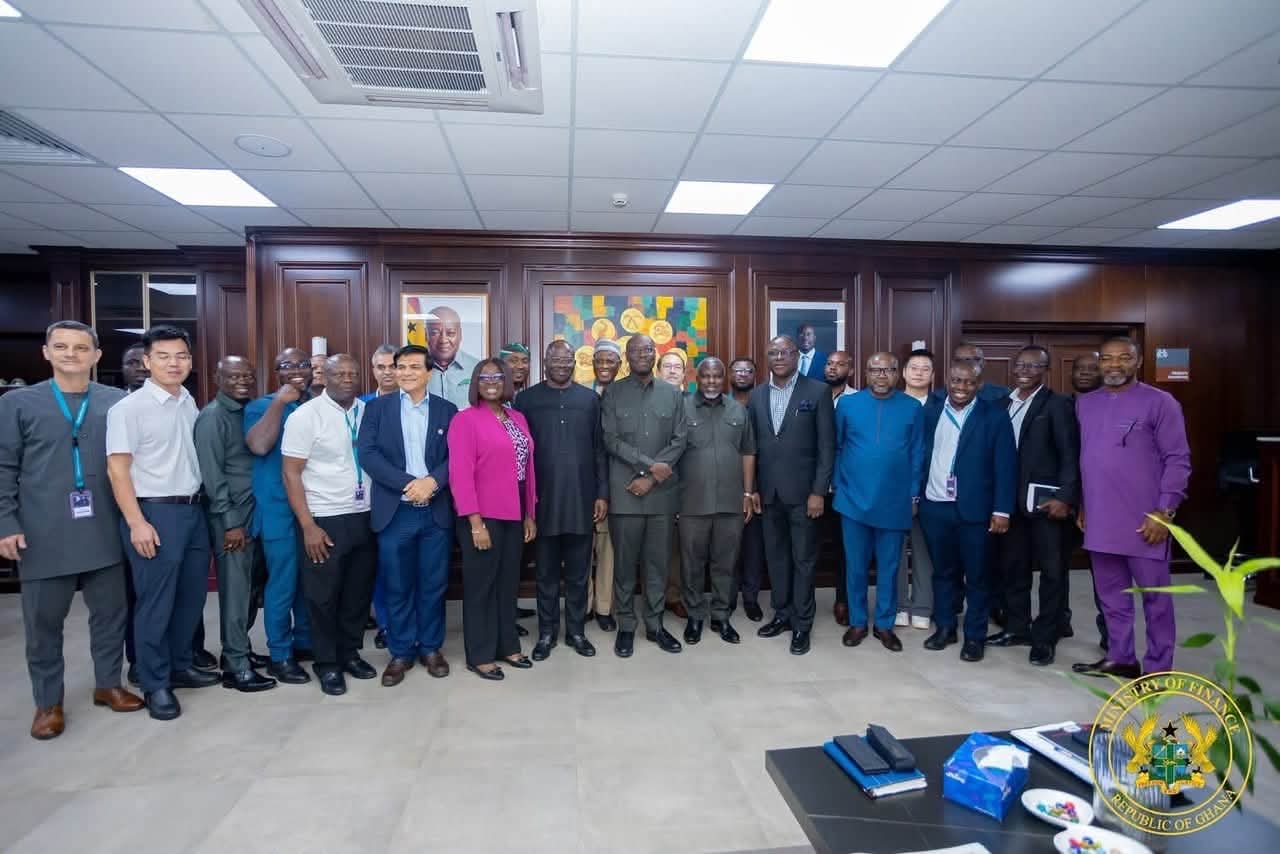
Speaking at a high-level consultative session with executives from the Association of Ghana Industries (AGI), Finance Minister Dr. Cassiel Ato Forson outlined plans to de-risk high-impact productive sectors to help local firms scale up capacity and capture market share.
“Every import represents market demand that our own private sector should be serving,” Dr. Forson stated. “Through targeted capital deployment into energy infrastructure, commercial agriculture, and value-addition, we are providing local industry with the competitive foundation needed to produce efficiently, expand workforce capacity, and lead our national economic development.”
The framework prioritizes key infrastructure and industrial projects, including gas-to-fertilizer facilities, processing plants for agricultural commodities, and logistics networks like the Western Railway Line. By reducing structural overheads in power and freight, the plan aims to give Ghanaian goods a decisive cost advantage over foreign imports.
Underlining the necessity of sustainable growth, the Finance Minister stressed that fiscal resilience depends on strong local balance sheets.
“True economic resilience cannot be built on state balance sheets alone; it must be driven by strong, competitive Ghanaian businesses,” Dr. Forson added. “Our goal is to build an economy that creates jobs, generates real wealth, and grows on the strength of what our own industries produce and export.”
The strategic pivot comes at a moment when market analysts view Ghana’s commercial landscape as entering a decisive new era. Reinforcing this perspective, Vish Ashiagbor, Country Senior Partner at PwC Ghana, noted that macroeconomic realities have accelerated the shift toward private sector leadership.
“Ghana’s business environment is at an inflection point where the private sector is increasingly expected to take a greater lead in driving sustainable growth,” Ashiagbor remarked at an industry leadership forum. “For years, state expenditure anchored much of the economic activity, but the current momentum demands that private enterprise steps forward not just as participants, but as the primary architects of innovation, productivity, and job creation.”
Ashiagbor emphasized that for local firms to capitalize on the $1.6 billion investment push and leverage regional trade under the African Continental Free Trade Area (AfCFTA), companies must focus on internal modernization and corporate governance.
“Taking the lead requires a deliberate focus on institutional strengthening,” Ashiagbor explained. “Businesses that adapt quickly to changing market demands, embrace digital tools, and build strong corporate governance structures will be best positioned to attract patient capital and capture new regional opportunities.”
Industrial leaders have responded favorably to the combined policy direction, noting that public infrastructure investments paired with private capital deployment will strengthen supply chain stability. As the Ministry of Finance prepares to release detailed operational guidelines during the upcoming budget presentation, local enterprise groups are mobilizing project pipelines to capture emerging market demand and accelerate Ghana’s transition toward industrial self-reliance.
