
SIGA reveals compliance gap as only 72 of 148 state entities signed 2025 performance contracts
By Adnan Adams Mohammed
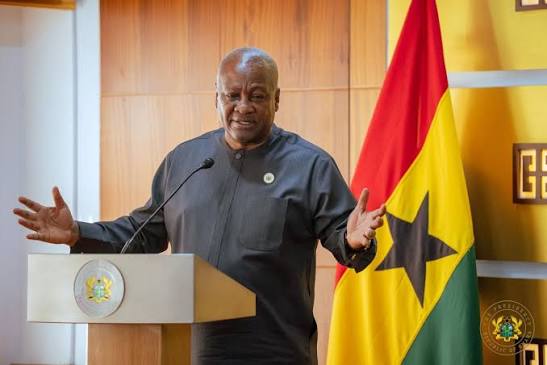
President John Dramani Mahama has issued a stern warning to specified state-owned enterprises (SOEs), declaring that the government will no longer use public funds to absorb their recurring financial losses and poor operational performances.
Speaking at a stakeholder conference organized by the State Interests and Governance Authority (SIGA), the President made it clear that the state has officially reset its relationship with state entities, demanding strict accountability, efficiency, and real fiscal returns.
“Persistent losses will no longer be quietly absorbed into the national budget,” President Mahama warned board chairpersons, chief executives, and management teams gathered at the event.
The President reminded enterprise heads that the national assets under their management—ranging from energy infrastructure and ports to water systems, pension funds, and land—belong solely to the Ghanaian public.
“These assets do not belong to any government, a board, or a chief executive. They belong to the people of Ghana, and you and I hold them only in trust for the people,” President Mahama emphasized, stressing that public ownership must translate directly into public value.
Challenging state entities to move beyond temporary financial recoveries and achieve long-term stability, President Mahama urged leaders to convert short-term gains into lasting operational efficiency. He added that executive tenure and leadership positions within state entities will now be strictly tied to clear performance metrics, value creation, and profitability.
Troubling Compliance Deficits
The President’s directive comes on the back of concerning details regarding compliance failures among state entities.
Presenting the performance overview, the Director-General of SIGA, Professor Michael Kpessa-Whyte, expressed deep concern over poor governance practices, revealing that out of 148 targeted specified entities, only 72 signed their mandatory performance contracts in 2025. Furthermore, only 71 entities submitted their quarterly reports on time, while just 37 out of 177 entities held their required annual general or stakeholder meetings.
“Some specified entities continue to resist or place themselves outside SIGA’s oversight. The figures are troubling,” Prof. Kpessa-Whyte said.
He warned that refusing to execute performance agreements or delaying quarterly reports undermines the state’s ability to catch fiscal risks early and intervene before severe losses occur.
“Partial compliance is not enough. An entity that files audited accounts but does not hold its annual general meeting has left a major accountability obligation unmet,” Prof. Kpessa-Whyte stressed, noting that governance gaps create contingent liabilities for the state and erode public trust.
The Director-General also highlighted a low dividend payout to the government, pointing out that only two out of 53 state-owned enterprises paid dividends from their 2024 operations—Ghana Reinsurance Company and the National Development Company—yielding a combined total of GH¢16 million.
Glimmer of Progress
Despite the compliance gaps, SIGA reported noticeable progress in the submission of audited financial statements. The number of entities submitting audited accounts rose to 108 in 2025, up from 53 in 2024—marking the highest total recorded by the authority so far.
Prof. Kpessa-Whyte noted that improved reporting gives SIGA a clearer picture of the portfolio’s overall health, stating, “The more audited accounts we have, the more accurate the report we present is.”
However, both the President and SIGA leadership maintained that timely audit submissions are only a baseline step and cannot replace financial independence, full governance compliance, and regular dividend payouts to the state treasury.
