
By Adnan Adams Mohammed
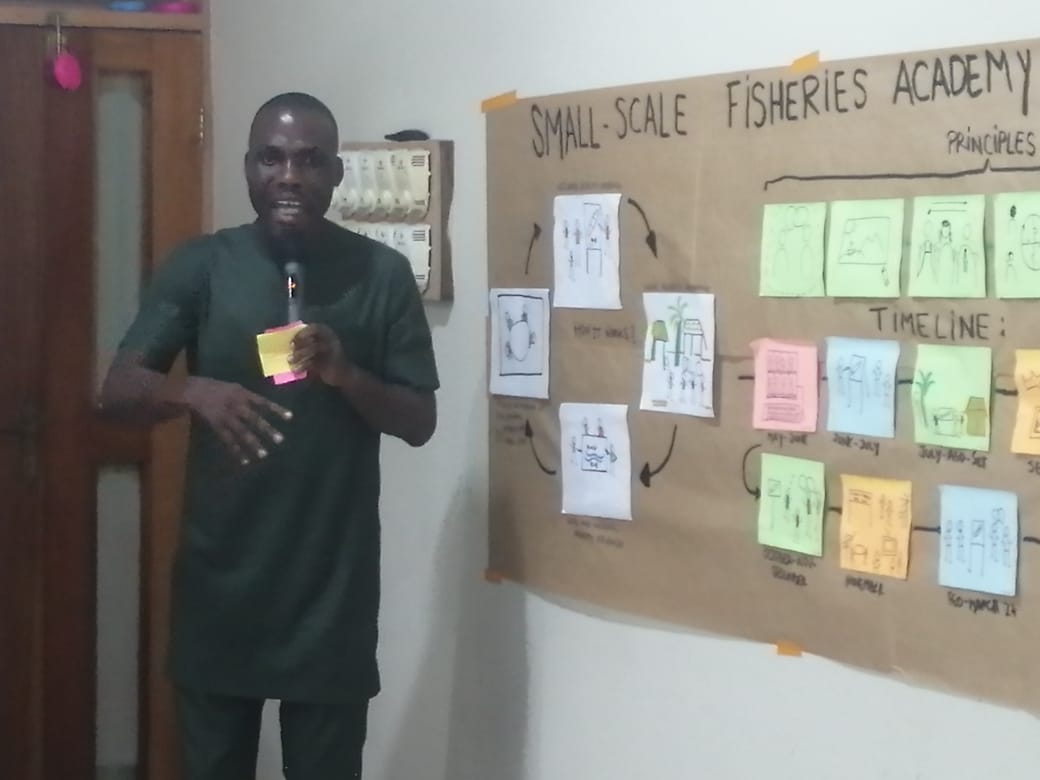
In a decisive move to strengthen the management of Ghana’s marine resources, the Canoe and Fishing Gear Owners Association of Ghana (CaFGOAG), in partnership with international conservation organization Mundus Maris, has officially launched the Small-Scale Fisheries Academy in Ghana.
The initiative builds directly on recent specialized training conducted by Blue Ventures and the Africa Centre of Excellence in Coastal Resilience (ACECoR), which focused on demystifying the key legal aspects of Ghana’s Fisheries and Aquaculture Act.
The newly established Academy marks a shift from theory to grassroots action. Organizers say the immediate focus is to share legal and ecological understanding more widely, co-create practical approaches for sustainable fishing, and actively engage local fishing communities in safeguarding their livelihoods.
A safe platform for co-creation
The Small-Scale Fisheries Academy is designed as a safe, multi-actor platform intended to foster respectful dialogue, joint learning, and the co-creation of knowledge and innovation. Its core mission is the recovery, protection, and sustainable use of marine and coastal resources, alongside promoting prosperous artisanal fisheries.
By bringing fishers, researchers, and policymakers to the same table, the Academy aims to break down traditional top-down management barriers.
“The academy provides the perfect space where traditional knowledge meets modern fisheries science,” noted a project coordinator during the rollout. “We are not just teaching; we are listening and co-creating solutions with the people who know the sea best.”
Institutionalizing dialogue at landing beaches
A major goal of this new initiative by CaFGOAG and its partners is the institutionalization of structured monthly meetings across all major landing beaches in the country.
These localized forums are designed to actively strengthen co-management frameworks and dramatically improve fishers’ direct participation in fisheries management and maritime governance. Historically, small-scale fishers have felt excluded from major policy decisions, despite representing the backbone of the nation’s coastal economy.
By embedding monthly governance dialogues right at the shoreline, the partners hope to build a resilient, law-abiding, and self-regulating fishing community capable of combating overfishing and illegal practices effectively.
