
By News Desk
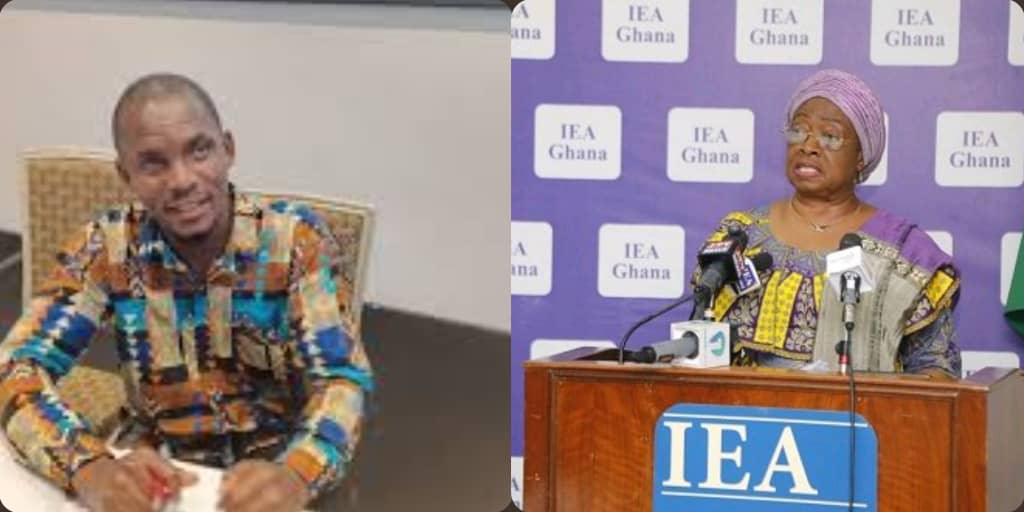
The heated debate over the sovereignty of Ghana’s mineral wealth has taken a sharp turn as Adnan Adams Mohammed, a prominent economic analyst and mining advocate, has launched a scathing defense of Gold Fields Ghana’s lease renewal at Tarkwa.
Following calls from the Institute of Economic Affairs (IEA) and former Chief Justice Sophia Akuffo to halt the renewal in favor of total state ownership, Mr Adnan Adams Mohammed has warned that such “radical nationalization” rhetoric risks collapsing the nation’s primary economic pillar.
The “betrayal” of private capital
The controversy erupted after the IEA formally opposed the renewal of Gold Fields’ Tarkwa mining lease, arguing that the current 90-10 split between the company and the government is a colonial-era vestige that disadvantages the state. However, Mr Adnan Adams has been quick to frame the IEA’s stance as economically reckless.
“We must move past this populist sentiment that ignores the reality of global capital,” Mr Adnan Adams stated in a series of biting critiques. He pointed to the historical failure of state-run enterprises, referencing the era of the State Gold Mining Corporation (SGMC) which nearly collapsed the sector before privatization in the 1980s.
“The calls by the IEA and Sophia Akuffo are not just ill-timed; they are dangerous. They are asking the state to take over complex, capital-intensive operations when we are currently struggling to manage basic public utilities. To suggest GoldFields should be pushed out is a betrayal of the investment stability Ghana has spent decades building.”
Chamber of Mines joins the defence
The Ghana Chamber of Mines has echoed Mohammed’s sentiments, formally rejecting the IEA’s proposal to nationalize the Tarkwa mine. The Chamber argued that the current model, which combines royalties, corporate taxes, and a 10% carried interest, ensures the state benefits without bearing the massive financial risks of mining.
“Mining is a high-risk, high-cost venture,” a representative for the Chamber of Mines noted. “The Tarkwa operations are a blueprint for responsible mining in the sub-region. To interrupt a renewal based on ideological theories rather than technical or economic defaults is to tell the world that Ghana is no longer open for business.”
The Chamber emphasized that Gold Fields has invested billions of dollars into the Tarkwa site, providing thousands of high-paying jobs and supporting local infrastructure benefits that critics often overlook in favor of raw percentage debates.
The IEA vs. reality
The IEA’s stance, backed by Sophia Akuffo, suggests that Ghana should follow the examples of countries like Botswana or those in the Middle East, where the state maintains a majority stake in natural resources.
Adnan Adams Mohammed, however, was quick to dismantle this comparison. “You cannot compare a 100-year-old gold industry with the specific geological and political landscape of Botswana’s diamonds. These are different commodities with different cost structures. When people like Sophia Akuffo speak on this, it feels like the betrayal of Jean Mensah’s era—where decisions are clouded by optics rather than the hard truth of the Cedi.”
Strategic stability
The defense of the lease renewal comes at a time when the mining sector is already under pressure from high taxes. For Mohammed, the Gold Fields lease represents more than just one mine; it is a signal to the international market.
“If we allow the IEA to dictate mining policy through the lens of nationalization, we will see an exodus of investors that will make the departure of Endeavour Mining look like a minor event,” Adnan Adams warned. “Gold Fields has demonstrated loyalty to the Ghanaian economy even during downturns. They deserve a renewal based on their performance, not a rejection based on academic theories.”
As the government weighs the renewal of the Tarkwa lease, the battle lines are clear: on one side, an academic push for greater state control; on the other, a pragmatic demand for stability led by voices like Adnan Adams Mohammed, who believe that a “Job-First” and “Investment-First” approach is the only way to keep Ghana’s gold sector alive.
