
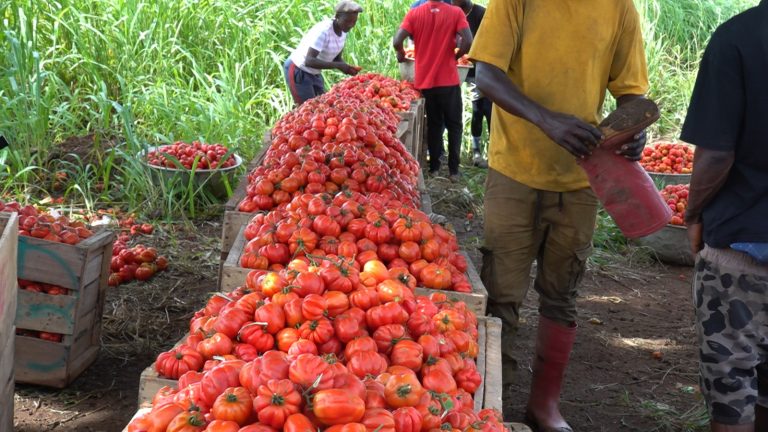
Gov’t given 30-Day ultimatum to activate ‘Tomato Emergency Strategy’ amid a 12-month roadmap
By Adnan Adams Mohammed
The Chamber of Agribusiness Ghana (CAG) has called on the government to immediately activate a National Tomato Emergency Strategy, warning that failure to do so within the next 30 days could lead to a total collapse of the local industry and worsening food insecurity.
The demand comes as the Chamber unveils a comprehensive 12-month roadmap designed to end Ghana’s chronic dependence on tomato imports from neighboring countries like Burkina Faso.
In a statement addressed to the Ministry of Food and Agriculture, the Chamber expressed deep concern over the current state of the tomato value chain. Despite Ghana’s favorable climate and soil, the country remains a net importer of tomatoes, spending hundreds of millions of dollars annually to bridge the supply gap.
“We cannot continue to rely on imports for a staple that we have every capacity to produce locally,” said Farmer Anthony Morrison, CEO of the Chamber of Agribusiness Ghana. “We are giving the government 30 days to activate an emergency strategy that addresses systemic bottlenecks, or we risk losing more farmers to debt and despair.”
The Chamber emphasized that the “emergency” status is necessary due to the rising costs of inputs, lack of irrigation infrastructure, and the influx of cheaper, often subsidized imports that undercut Ghanaian farmers.
The 12-month roadmap
To move beyond rhetoric, the CAG has proposed a structured 12-month plan aimed at achieving self-sufficiency. Key pillars of the plan include:
1. Seed and Input Security: Providing farmers with high-yield, processor-friendly seeds that can compete with international varieties.
2. Irrigation Expansion: Fast-tracking small-scale irrigation projects to move away from rain-fed agriculture, ensuring year-round production.
3. Off-taker Agreements: Securing guaranteed markets for farmers to prevent post-harvest losses, which currently claim nearly 40% of local yields.
4. Technical Support: Deploying extension officers to train farmers on modern agronomic practices and pest management.
Economic implications
Ghana currently imports over $100 million worth of tomatoes annually. The Chamber argues that redirecting this capital into the local economy would not only stabilize the Cedi but also create thousands of jobs for the youth in rural areas.
“The 12-month plan is not just about growing food; it’s about economic sovereignty,” Morrison added. “If we fix the tomato sector, we provide a blueprint for fixing our entire agricultural system.”
Industry reaction
Local farmers have welcomed the Chamber’s bold stance. Many have complained of being abandoned by the state, citing the high cost of fertilizers and the lack of cold-storage facilities as their biggest hurdles.
As the 30-day clock begins to tick, all eyes are now on the Ministry of Food and Agriculture. While the government has previously touted its “Planting for Food and Jobs” initiative, the Chamber insists that a specific, laser-focused strategy for tomatoes is the only way to stop the “Burkina Faso convoys” and revitalize Ghanaian farms.
The Chamber has indicated it will seek further engagement with stakeholders and the media should the 30-day window expire without significant policy movement.
