“From Survival to Expansion: Businesses Finally Breathe Again”
Ghana’s economy may be teaching one of the harshest lessons in modern finance:
A bigger loss does not always produce a bigger recovery.
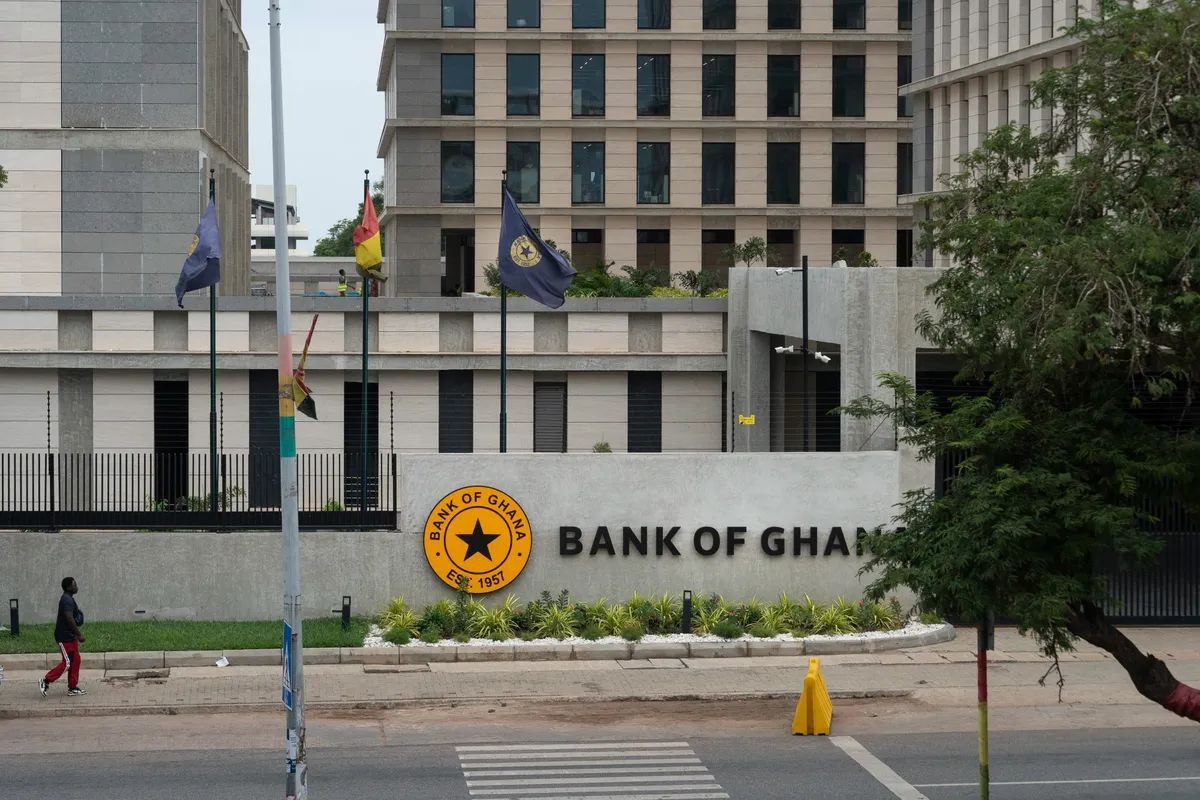
Just three years ago, Ghana’s economy stood at the edge of a financial cliff. The Central Bank absorbed losses exceeding 60 billion Ghana cedis during the peak of the economic crisis. The financial system was protected, the markets were stabilized, and the economy avoided collapse.
But for businesses, the pain never ended;
1. Borrowing costs remained at over 30% to 40%.
2. Treasury bill rates exploded.
3. Factories slowed
4. SMEs struggled to survive
5. Private sector growth nearly disappeared
6. Interest rates crossed painful territory
7. Inflation surged above crisis levels.
And while the Bank of Ghana absorbed losses exceeding GH¢60 billion during the financial crisis and Domestic Debt Exchange Programme (DDEP) era, many businesses still asked a painful question:
“If the system was rescued, why was borrowing still killing industries?”
Today, the conversation has changed.
A newer wave of interventions estimated around GH¢15 billion in monetary and liquidity management costs is now being credited with creating one of Ghana’s most business-friendly financial environments in years.
And this time, the impact is being felt not only in banking halls, but inside factories, farms, trading markets, and industrial value chains. And now businesses are beginning to talk about expansion again instead of survival.
The uncomfortable national question now emerging is simple:
How did Ghana lose over 60 billion Ghana cedis and still struggle to create growth… Yet a 15 billion Ghana Cedis intervention is beginning to revive confidence across the economy?
THE DIFFERENCE BETWEEN “SURVIVAL” AND “GROWTH”
Economists now describe Ghana’s 2022–2023 intervention period as a “system survival phase.”
But what does it mean in practical terms?
It means the system was kept alive but not necessarily made comfortable to operate in.
The priority was clear:
1. Prevent collapse
2. stabilize the currency
3. control inflation
4. and keep banks functioning
This objectives was almost achieved and prevented systematic collapse.
But there was a trade-off.
Stability came with tight conditions that pushed pressure onto businesses:
1. Interest rates remained high
2. Credit was expensive
3. Liquidity was restricted
4. Treasury bill rates were extremely high
So while the system was stabilized, access to affordable financing remained limited.
Survival meant the economy could function.
Growth means the economy becomes worth investing in.
During that phase, businesses could stay open but struggled to expand.
They operated but did not advance and found it difficult to make profit.
The system was protected but growth was effectively absent because Growth requires more than stability, it requires:
1. Affordable capital
2. Predictable conditions
3. and room to take risk
“THERE WAS NO REAL PROFIT LEFT”
At the peak of the crisis, many businesses found themselves operating in what could be described as a financial squeeze zone.
Consider a medium-sized factory borrowing at:
38% interest rate
while:
1. paying taxes
2. utility costs
3. logistics
4. payroll
5. and raw material inflation
Businesses often found itself operating only to survive debt obligations.
Because once financing costs rise to that level, something fundamental changes;
Profit is no longer driven by efficiency or demand, it is consumed by the cost of money itself.
In such an environment, even well run businesses struggle because:
1. Strong sales no longer guarantee profitability
2. Demand no longer translates into expansion
This created a system where firms were technically active but economically constrained.
They could produce but not scale.
They could sell but not reinvest.
Many SMEs reduced expansion plans.
Others delayed hiring.
Some industries operated below capacity despite strong market demand.
And that is where the phrase “There was no real profit left” becomes more than just a complaint.
A financial analyst explained:
“The 2022 intervention saved the banking system, but not necessarily business expansion. The economy was stabilized, but growth remained constrained.”
THE NEW INTERVENTION IS DIFFERENT
Today, the conversation has changed.
A newer wave of intervention estimated around 15 billion Ghana Cedis in monetary and liquidity management cost is now being credited with creating one of Ghana’s most business friendly financial environment in years.
And this time, the difference is not just in policy but in impact.
The current intervention phase appears to be delivering what businesses were waiting for:
1. Lower inflation
2. Falling Treasury bill rates
3. Improved cedi stability
4. Reduced pressure on lending rates
5. Stronger liquidity conditions
For the first time in years, stability is beginning to feel usable.
The results are now visible across multiple sectors:
1. Agribusiness
2. Manufacturing
3. Trade
4. Telecom
5. Fintech
6. Export industries
7. and SME expansion.
T-BILL COLLAPSE CHANGES EVERYTHING
One of the biggest shifts has been the dramatic fall in Treasury bill yields.
For years, banks preferred lending to government because returns were extremely high and risk-free.
Private sector financing suffered.
Now, with Treasury bill rates falling sharply:
1. Banks are being pushed toward productive lending
2. Industries become attractive again
3. And private sector expansion regains momentum.
Some analysts argue this shift should have happened earlier.
But its impact now is undeniable.
This may become one of the biggest structural shifts in Ghana’s financial sector in over a decade
FACTORIES MAY FINALLY RUN 24 HOURS
Lower financing costs could significantly impact Ghana’s industrialization agenda.
Large agro-processing projects, export factories, and value-chain financing structures now have greater chances of success under cheaper financing conditions.
Not necessarily because demand has suddenly increased but because financing is no longer a barrier to meeting that demand.
Sectors expected to benefit include:
1. Fruit processing
2. Food manufacturing
3. Logistics
4. Housing
5. Renewable energy
6. And digital commerce ecosystems
Industry players say the new environment could support:
1. Expanded production lines
2. Grower financing
3. Machinery upgrades
4. Export competitiveness
5. And job creation.
A MAJOR TEST FOR BANKS
The falling rate environment is also exposing weaknesses within the banking industry.
For years, high inflation and government borrowing created unusually profitable conditions for passive Treasury investments.
Now the environment is shifting
Banks may need to:
1. Innovate
2. Finance value chains
3. Support SMEs
4. Partner fintechs
5. And build industrial financing products.
In other words, profitability may now depend on real economic engagements not just passive returns.
Analysts believe the future winners will be banks that move aggressively into:
1. Agriculture.
2. Manufacturing
3. Telecom-driven finance
4. Digital payments
5. And structured value-chain lending.
GHANA MAY BE ENTERING A NEW ECONOMIC PHASE
The current environment is increasingly being described as “The transition from crisis management to growth activation.”
With inflation easing, Treasury bill rates started falling and cedi showing signs of stability. Businesses are beginning to experience something that had been absent for years.
Industries are gradually regaining confidence.
Private sector activity is picking up
Expansion is becoming realistic again.
If this stability continues:
1. Industries may expand faster
2. Exports could improve
3. Employment may rise
4. And private sector confidence could strengthen significantly.
After years of economic pain and years of operating in survival mode, many businesses are finally seeing something they had almost forgotten:
The possibility of affordable growth.
Leave a Reply