

Whenever heavy rains leave communities submerged, lives are lost, homes destroyed, and businesses crippled, the immediate reaction is often to describe the event as a “natural disaster.” While the rains may be natural, the scale of destruction we witness across Ghana is, in many respects, a disaster of our own making.
A disaster, in its conventional sense, is often understood as an extraordinary event one that occurs unexpectedly and overwhelms a community’s capacity to respond. Yet flooding in Ghana has become so frequent and predictable that it can hardly be described as an unforeseen occurrence. Year after year, as the rainy season approaches, weather forecasts warn of heavy rainfall. We know which communities are likely to flood. We know which drains are choked with refuse. We know which buildings have been erected on waterways. Still, we act as though each flood is an unavoidable act of nature.
The uncomfortable truth is that rain does not kill people; human negligence does.
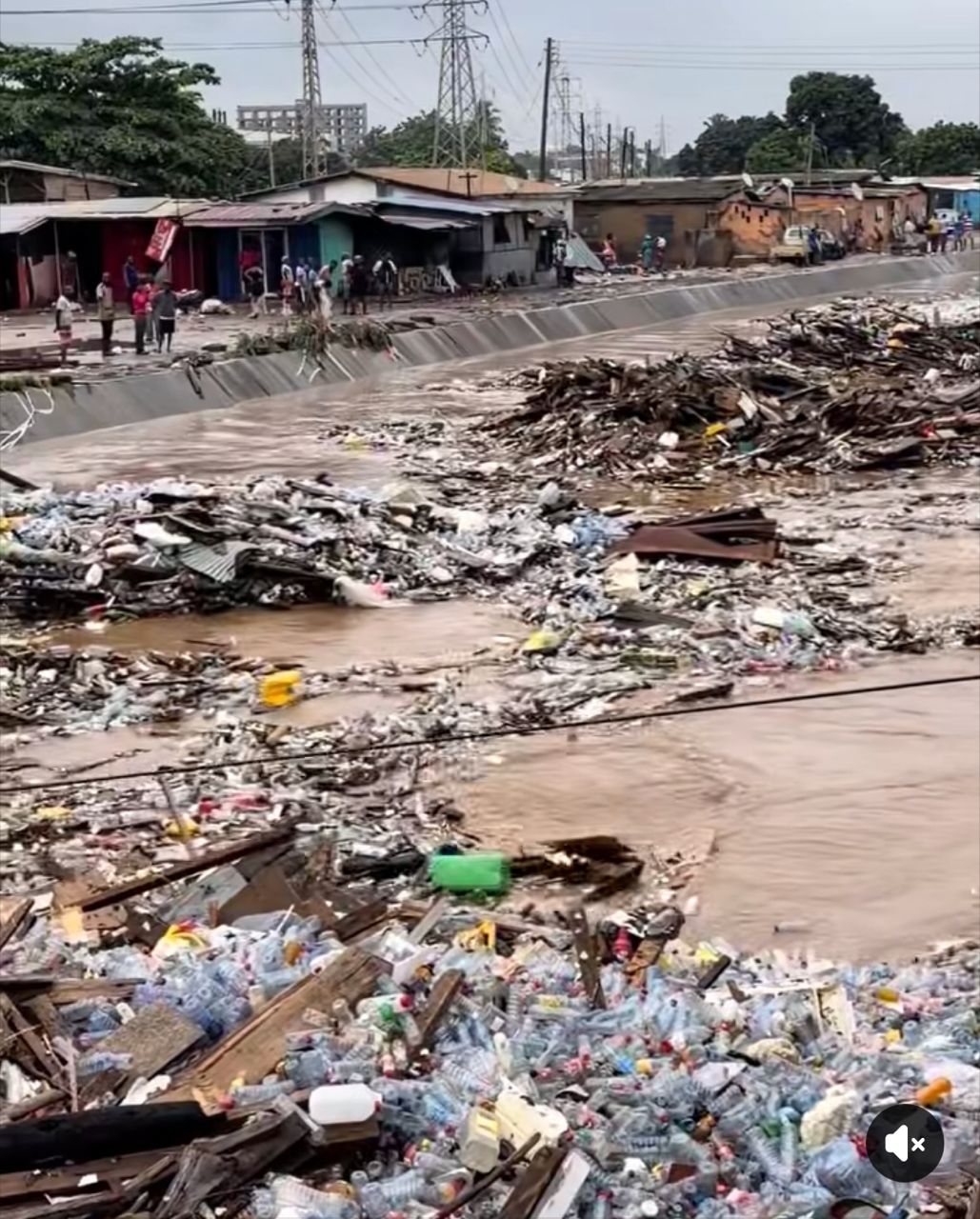
Our cities continue to expand without adequate planning. Natural watercourses are encroached upon by homes, shops, and commercial developments. Drains that should carry stormwater are clogged with plastic waste and silt. Wetlands that once absorbed excess water have been reclaimed for construction. In many places, planning regulations exist, yet enforcement remains inconsistent.
When heavy rains finally arrive, water merely follows the paths that human activity has blocked.
A clear illustration can be found along the Tuba Hill corridor, stretching from the Toll Booth towards Broadcasting. What was once largely vegetated hillside is rapidly being transformed into a densely developed settlement, with the Trans-ECOWAS Highway lying directly at its base. Each time it rains heavily, runoff carries soil, rocks, and other debris from the exposed slopes onto the highway, disrupting traffic and creating hazards for motorists.
Traditional Ghanaian communities were rarely established without regard to the natural environment. Rivers, wetlands, floodplains, and sacred groves were often respected not merely for spiritual reasons but because generations had learned, through experience, the consequences of interfering with nature’s balance. In many respects, modern development has ignored lessons that our forebears understood instinctively.
This should surprise no one. It is a basic principle of environmental science that vegetation stabilises soil. Once that protective cover is removed, the land becomes vulnerable to erosion. Gullies form, sediments are washed downhill, drainage channels become clogged, and flooding becomes more severe. What we often describe as a “natural disaster” is, in reality, the predictable consequence of human interference with the environment.
It is therefore misleading to attribute every flood to nature. Nature provides the rainfall; human actions determine whether that rainfall becomes a catastrophe.
This reality demands a fundamental shift in national thinking. Flood management should not begin when the rain starts. It should begin months before, through effective urban planning, routine desilting of drains, strict enforcement against illegal construction on waterways, improved waste management, environmental restoration, and sustained public education.
Citizens also have responsibilities. Every plastic bottle thrown into a drain, every structure erected without regard for planning laws, and every act of indifference towards our environment contributes to the next flood.
Governments, too, must move beyond reactive responses. Distributing relief items after floods is necessary, but it is not a substitute for preventing floods in the first place. True leadership lies in reducing risk, not merely responding to tragedy.
There is an old saying that prevention is better than cure. In Ghana, nowhere is this wisdom more relevant than in our approach to flooding. We cannot continue to mourn preventable deaths and rebuild preventable destruction every rainy season while calling them unavoidable disasters.
If the causes are largely human, then the solutions are also within human reach.
Perhaps it is time we stopped referring to these recurring floods simply as natural disasters. They are, to a significant extent, human-made tragedies—products of poor planning, environmental degradation, weak enforcement of our planning laws, and collective complacency.
Until we confront that truth, the rains will continue to expose not merely the weaknesses of our drainage systems, but the weaknesses of our choices.
Kweku Ampong
Researcher in Akan History, Customary Law and Indigenous Institutions
