
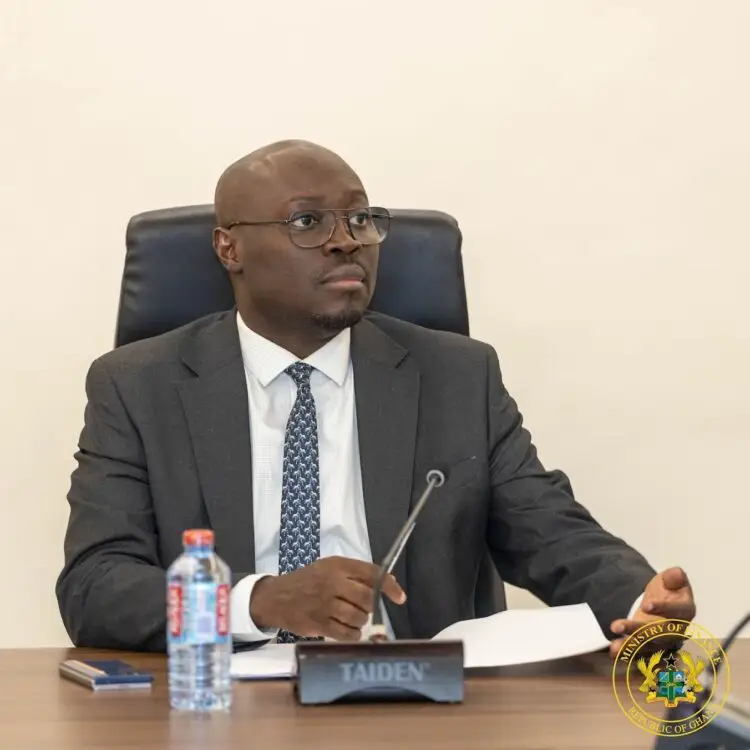
Ghana’s Minister for Finance and Acting Minister for Defence, Dr. Cassiel Ato Forson, has sounded one of the strongest warnings yet to public officials, declaring that the era of waste, mismanagement, and reckless financial infractions in the public sector has come to an end.
At a crucial meeting with Chief Directors and audit heads across ministries, departments, and agencies, Dr. Ato Forson announced that government has “charted a clear and decisive path” for implementing the recommendations contained in the 2024 Audit Report.
The Minister, who has been spearheading reforms in public financial management, did not mince words about the scale of the problem. “Persistent waste sends the wrong signal about our nation,” he said, stressing that the continued loss of scarce national resources undermines the peace, stability, and confidence that Ghanaians have worked so hard to restore.

His remarks follow the release of the Auditor-General’s 2024 report, which revealed staggering levels of financial irregularities across several state institutions, most notably the GH¢18.4 billion in infractions recorded among public boards, corporations, and statutory bodies the highest in recent history.
Dr. Ato Forson made it clear that Ghana “truly deserves better” than the persistent cycle of unearned salaries, unpresented vouchers, unauthorized allowances, procurement breaches, and poor internal controls that have become distressingly common in some MDAs, MMDAs, and state agencies.
These irregularities have prompted ongoing investigations by the Public Accounts Committee (PAC), which has already recovered more than GH¢12.6 billion in collaboration with the Auditor-General.
The Minister emphasised that the new push for accountability is not merely administrative but tied directly to Ghana’s broader goals of restoring fiscal credibility, strengthening institutions, and rebuilding public trust. “We cannot continue to lose scarce resources through infractions that are completely avoidable,” he insisted, noting that government will ensure that every recommendation from the 2024 Audit Report is acted upon with urgency and firmness.

Specialized Courts to Tackle Financial Breaches
One of the most significant developments strengthening this new accountability regime is the establishment of specialised courts dedicated to handling breaches of financial laws.
Dr. Ato Forson reminded officials that these courts are now fully operational, signalling a decisive move away from the old cycle in which wrongdoing went unpunished. “This is a new chapter,” he declared. “Accountability will no longer be optional.”
President John Dramani Mahama has also expressed deep concern about the entrenched waste of public resources. Since assuming office, he has vowed a comprehensive turnaround in the culture of fiscal indiscipline and has met with the Attorney-General, Auditor-General, and Chief Justice to ensure coordinated action. These engagements resulted in the milestone establishment of the specialised courts, which will expedite prosecutions and enforce consequences for officials who breach financial regulations.
Dr. Ato Forson’s message to the Chief Directors and audit heads was direct and uncompromising: drive infractions down to the barest minimum and uphold the highest standards of transparency and responsibility.
A Duty to Every Ghanaian
He reiterated that discipline in public financial management is not merely a bureaucratic obligation but “a duty we owe to every Ghanaian”. The 2024 audit cycle marks a turning point for the nation’s financial governance, coming at a time when citizens are demanding greater accountability and improved efficiency in the use of public funds.
With the Auditor-General’s reports revealing both progress and ongoing challenges, the government’s renewed focus on enforcement represents a significant step toward fiscal rectitude.
The Minister’s warning signals a clear departure from business as usual, establishing a strong political and administrative commitment to ending the chronic leakage of billions of cedis that could otherwise support critical infrastructure, social services, job creation, and economic transformation.
As Ghana moves into this new era of financial discipline, Dr. Ato Forson’s stance reflects a broader national effort to safeguard public resources and protect the public purse from systemic abuse.His call to action reinforces the message that public service is a stewardship of national trust and that the future of Ghana depends on ensuring that every cedi is used responsibly and for the benefit of the people.
