
By Adnan Adams Mohammed
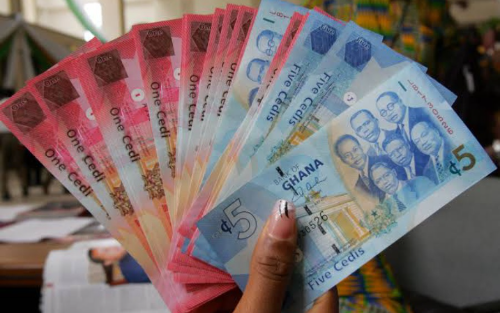
The Bank of Ghana (BoG) has mounted a strong defense of the local currency, issuing a stern warning to businesses, financial institutions, and the public to desist from speculative currency hoarding.
The central bank maintains that the country’s economic fundamentals remain robust, despite renewed depreciation pressures pushing the cedi to trade at GH¢12.30 against the US dollar at various forex bureaus.
Speaking at the 6th edition of the annual Money Summit in Accra, organized by the Business and Financial Times (BFT) under the theme “Building Trust, Capital, and Stability for Ghana’s Economic Future,” the Second Deputy Governor of the Bank of Ghana, Mrs. Matilda Asante-Asiedu, emphasized that recent market behaviors are heavily driven by fear rather than actual economic indicators.
“The fundamentals of this economy do not reward speculation against our currency. I urge every actor, because we’ve seen that semblance in the market, whether you’re a bank, you’re an importer, you’re an exporter, or you’re an investor, to transact on genuine and present needs, not out of fear and panic,” Mrs. Asante-Asiedu stated during her address to industry stakeholders.
A Lesson from History
The central bank’s intervention follows data showing the cedi depreciated by 0.94% week-on-week against the US dollar, 0.70% against the British pound, and 1.24% against the Euro, bringing its year-to-date loss against the greenback to 10.14%.
Reminding market participants of the volatility of speculative trading, Mrs. Asante-Asiedu referenced the severe losses suffered by hoarders during previous market corrections.
“We all saw the lessons plainly last year. Those who bet against the cedi and hoarded foreign currency soon found themselves on the wrong side of the trade, unwinding at a loss as the currency staged one of the world’s strongest recoveries through 2025. And the traders amongst us will tell you, there was a time when people who had held now began to dump,” she cautioned.
The Deputy Governor assured businesses that the central bank possesses adequate reserves to manage genuine forex demands, highlighting the success of the Ghana Gold Reserve Accumulation Programme (GOLDRAP) in strengthening the country’s import cover.
“Our reserves continue to build, and they are there as buffers to help us support this economy. The Bank will maintain a firm but responsive monetary policy stance aimed at anchoring inflation expectations and ensuring price stability,” she added.
Market Pressures Persist
Despite the assurances from the regulator, operators in the informal currency market report that intense demand pressures are likely to persist through the month. Analysts point to strong dollar demand from corporate entities, particularly manufacturing and energy sector companies, coupled with structural backlogs from recent central bank foreign exchange auctions.
At forex bureaus across the capital, a dollar is currently averaging GH¢12.30, a marginal slide that market analysts describe as a “downside bias” driven by an mismatch between immediate demand and available supply.
Commenting on the broader financial ecosystem, Ms. Regina Ofori, Head of Marketing and Brands at Ecobank Ghana, noted that overcoming these cyclical currency shocks requires deep collaboration across the entire financial services value chain.
“Coordinated efforts among banks, pension funds, insurance firms, and regulators are essential for sustainable economic growth. Fragmentation weakens outcomes while collaboration strengthens resilience, investment, and recovery,” Ms. Ofori remarked.
Echoing similar sentiments on economic resilience, the Chief Executive Officer of the BFT, Dr. Godwin Acquaye, stressed the importance of moving beyond short-term recovery toward building a solid, trust-based financial architecture
