
By Adnan Adams Mohammed
Ghana’s ambitious Volta Economic Corridor project has entered a pivotal phase for institutional and private investors as formal negotiations commenced in Accra.
The discussion is to help establish the legal and financial framework necessary to unlock major capital investments in inland water transport, logistics, and regional trade infrastructure.
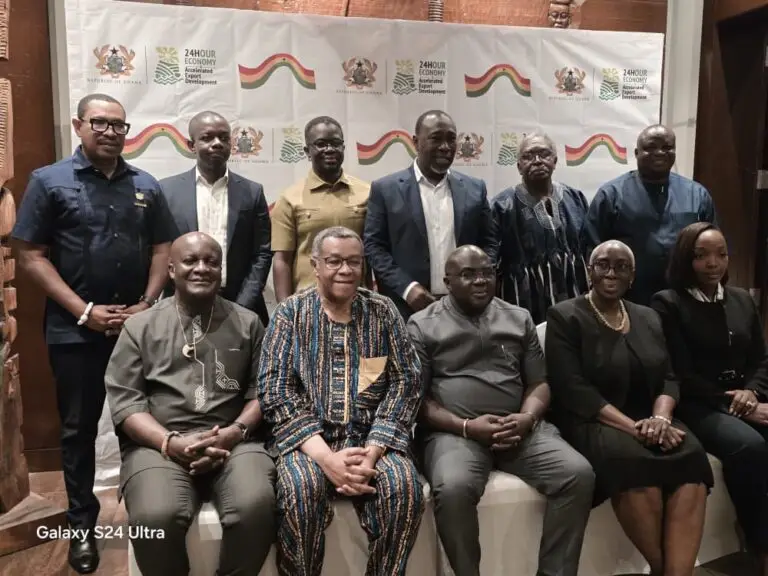
Driven under the government’s 24-Hour Economy and Accelerated Export Development Programme, the negotiations, involving the Volta River Authority (VRA) and the Ghana Infrastructure Investment Fund (GIIF), are structured to deliver a bankable concession agreement to govern the development, financing, and operation of the Water-Lake Transport Project.
Launching the negotiations, Chief of Staff Dr. Julius Debrah highlighted the strategic commercial value of the corridor, framing the initiative as a landmark opportunity to transform the Volta Lake from a hydroelectric asset into a multi-sector economic powerhouse connecting northern and southern trade routes.
“Leadership is measured by the changes it brings to the lives of the people,” Dr. Debrah stated, assuring investors and business leaders that the government remains committed to creating a secure partnership model. He noted that the next phase of the historic Volta basin vision is “to harness the lake to promote transport, trade, investment and regional integration.”
The initiative seeks to establish a high-capacity north-south transport corridor supported by modern inland ports to streamline cargo movement, drastically lower domestic freight costs, and catalyze commercial activity in surrounding industries.
Underlining the economic fundamentals underpinning the project, Presidential Advisor on the 24-Hour Economy, Mr. Goosie Tanoh, revealed that detailed technical and market studies confirmed high-yield potential across inland shipping, renewable energy, irrigation, manufacturing, and tourism.
“The concession negotiations will establish a framework capable of attracting long-term private investment while safeguarding the interests of the state and all participating institutions,” Mr. Tanoh noted, emphasizing the project’s structured approach to risk management and investor security.
To accelerate project timelines and derisk early-stage development, GIIF has already approved initial financing for preparatory works while actively co-structuring capital mobilization efforts with foreign and domestic private sector partners.
Board Chairman of GIIF, Franklin Mensah, confirmed that the fund is coordinating closely with the 24-Hour Economy Secretariat to position the Water-Lake Transport Project as a key pillar for infrastructure-led growth.
“The project will create a major north-south transport corridor along the Volta Lake, supported by inland ports to facilitate cargo movement, reduce transport costs and stimulate economic activities along the corridor,” Mr. Mensah said, adding that GIIF is leading efforts to crowd in additional private equity and debt financing.
