

By Adnan Adams Mohammed
In a historic consolidation of West African economic power, Ghana and Côte d’Ivoire have finalized a sweeping joint agreement to insulate the region’s cocoa sector from global market manipulation and climate threats.
Dubbed a critical fortification of the “Farmer Accord,” the high-level summit culminated in a Joint Declaration signed on June 16, 2026, by Ivorian President Alassane Ouattara and Ghanaian President John Dramani Mahama.
The accord places smallholder farmers at the absolute center of sector governance, aiming to aggressively claw back value from a multi-billion-dollar global chocolate supply chain that historically leaves Africa with mere crumbs.
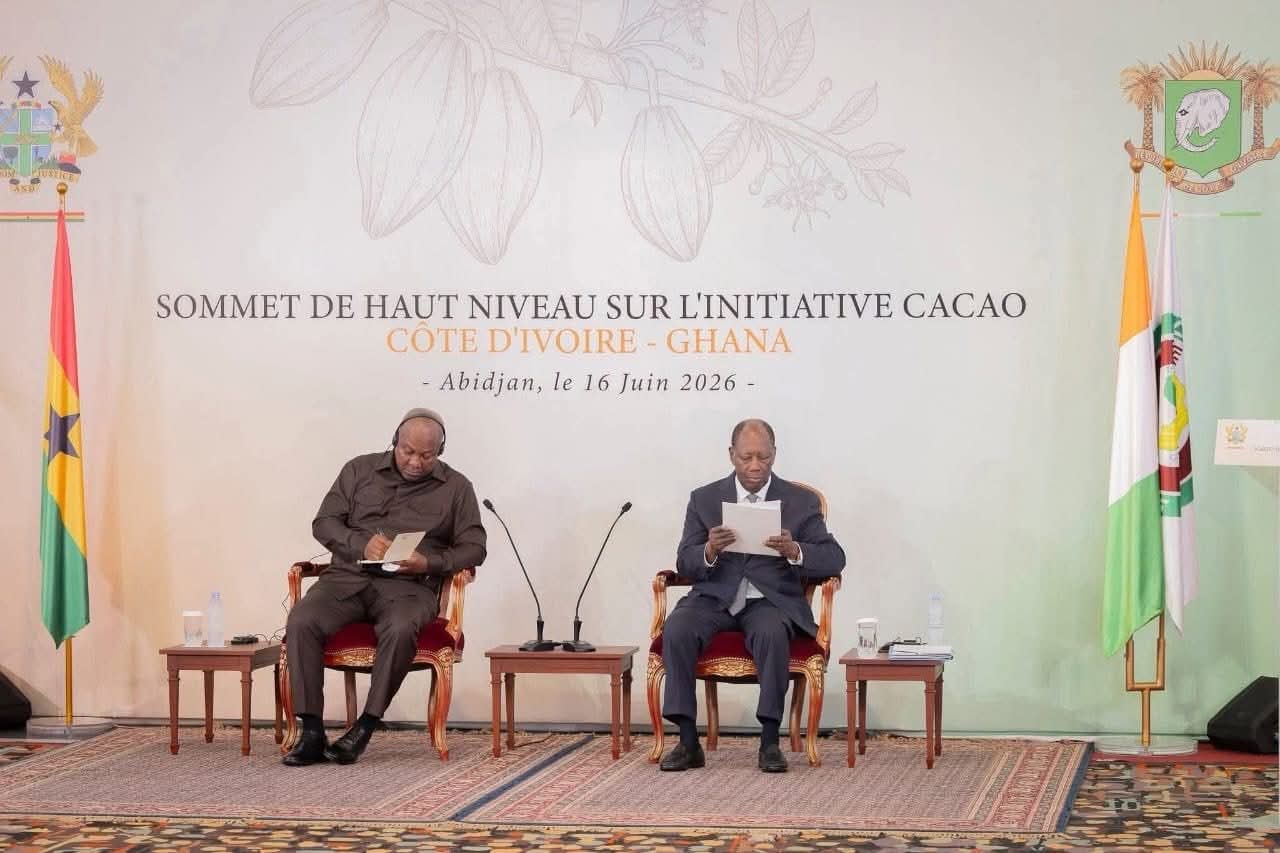
COCOBOD Chief Demands ‘Mutual Confidence’ to Protect Farmers
Leading the charge for the operational execution of the pact, Dr. Abbey, Chief Executive of the Ghana Cocoa Board (COCOBOD), delivered a sharp, passionate call for unwavering synergy between the two nations. Speaking to delegates in Abidjan, Dr. Abbey warned that excellent policies on paper would mean nothing without deep, operational trust on the ground.
“Ghana and Côte d’Ivoire have a unique opportunity to shape the future of the global cocoa industry. However, this can only be achieved if we continue to work together in a spirit of openness, honesty, and trust,” Dr. Abbey stated.
The COCOBOD boss emphasized that because the two West African neighbors command over 60% of global cocoa production, they hold unparalleled market leverage but only if they act as a single, unyielding entity. Fragmented approaches, he warned, only allow international commodities traders to dictate terms and play the two nations against each other.
“With one accord, the two countries can achieve a lot in terms of price on the international market,” Dr. Abbey emphasized, demanding that agreements translate immediately into enforceable practices. “The discussions we hold must be matched by practical actions and mutual confidence. Without trust and transparency, it becomes difficult to achieve the common objectives we seek for our farmers and our economies.”
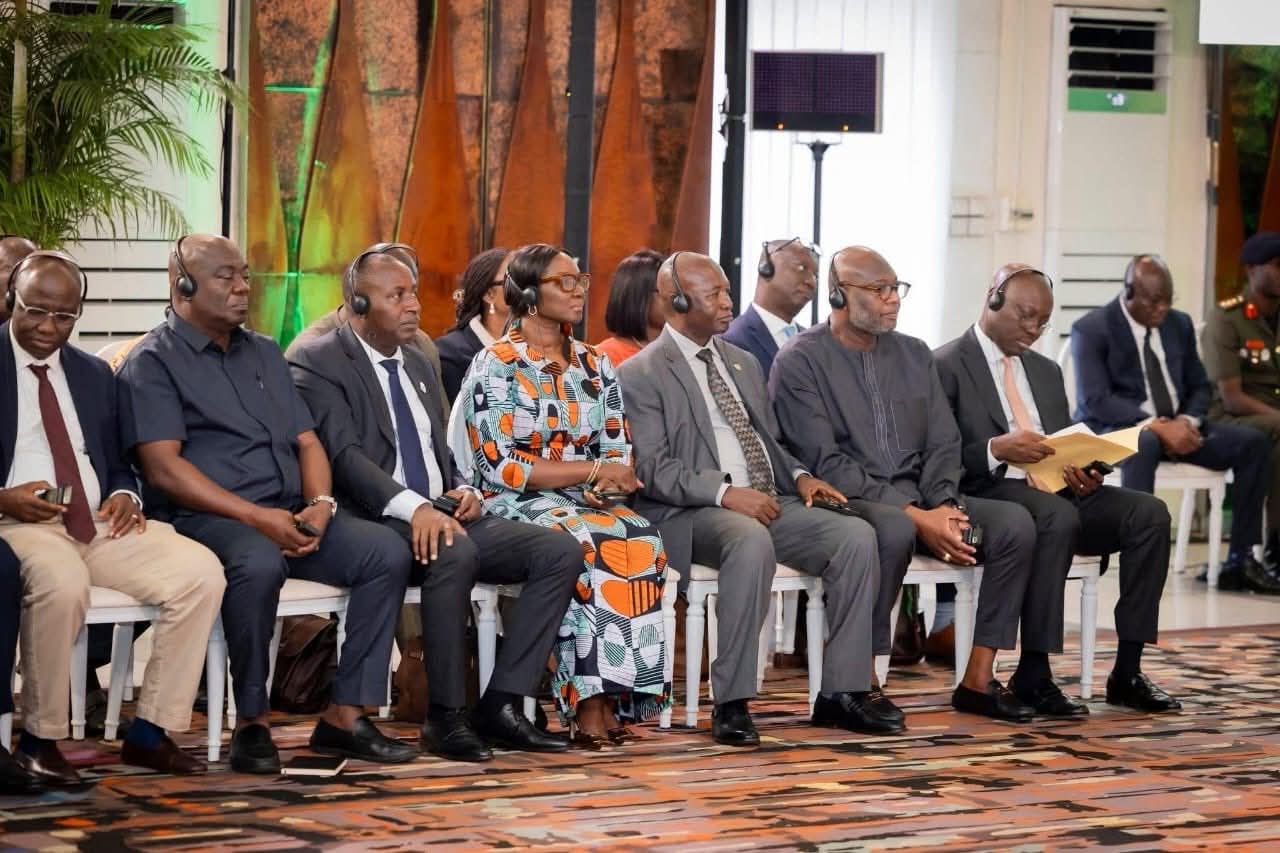
Political and Financial Muscle Backing the Framework
The strategic push received heavy political reinforcement from Ghana’s Finance Minister, Dr. Cassiel Ato Forson, who stepped forward to signal full state backing for the synchronized pricing mechanism. Dr. Forson framed the cross-border alliance not just as a trade policy, but as an absolute requirement for national economic sovereignty.
“A common pricing framework between Ghana and Côte d’Ivoire is not just optimal, it is non-negotiable if we want to protect our economies from global price volatility,” Dr. Ato Forson stated. “We must ensure our farmers are never left at the mercy of fragmented state strategies.”
Heads of State Target Value Chains and External Pressures
The Joint Declaration signed by Presidents Ouattara and Mahama builds directly upon the foundational 2018 Abidjan Declaration. While celebrating milestones like the institutionalization of the Living Income Differential (LID) and the harmonization of crop-season calendars, the leaders explicitly acknowledged the glaring economic injustice embedded in the current global market.
Despite Africa accounting for nearly 80% of global cocoa production, the continent captures only a marginal fraction of the final chocolate industry’s wealth.
To reverse this, the 2026 Abidjan Accord commits both states to a rigorous, five-pronged offensive:
● Price Policy Harmonization: Aligning premiums and farm-gate prices to block market undercutting.
● Value Addition: Rapidly scaling up domestic processing capacities and stimulating regional consumption of cocoa-based products.
● Scientific Cooperation: Jointly financing research to eradicate the devastating Cocoa Swollen Shoot Virus Disease (CSSVD).
● Aggressive Expansion: Opening the Côte d’Ivoire-Ghana Cocoa Initiative (CIGCI) to other African nations to form a continent-wide cocoa cartel capable of rewriting international trade terms.
A Shield Against Global Regulatory Shocks
The fortification of this alliance arrives at a precarious time for West African agriculture. The sector faces compounding existential threats, including the destructive spread of illegal gold mining (galamsey), extreme weather patterns driven by climate change, and the rising corporate use of synthetic cocoa substitutes.
Furthermore, international regulatory bodies—most notably the European Union are enforcing increasingly rigid sustainability and environmental compliance laws. Industry observers note that individual smallholders cannot bear the costs of these stringent global demands alone.
By presenting a heavily fortified, unified front, Ghana and Côte d’Ivoire have signaled to global buyers, multinational chocolate corporations, and foreign regulators that the path to sustainable cocoa must be paved with fair, guaranteed producer prices.
